Why Taiping Houkui Tea Costs So Much: 2026 Price Guide
Taiping Houkui is one of China's most recognizable green teas: long, flat, pale green leaves with a distinctive lattice-like pressing pattern, a fresh chestnut-and-floral aroma, and a surprisingly full, sweet body. But many first-time buyers are stunned by the price gap between a generic spring green tea and a proper Taiping Houkui from its core growing zone. That gap is not just branding. It is built into geography, harvest timing, hand labor, processing difficulty, grading, and a supply chain that rewards origin claims at every step.
This guide explains the economics layer by layer, so you can see where the premium is justified, where it is not, and how to buy without paying for a story.
What Is Taiping Houkui Tea?
Taiping Houkui is a pan-fired green tea produced in Huangshan District, Anhui Province, in the area historically known as Taiping County. It belongs to the needle-shaped or flat-leaf green tea family, but its shape is unusual: each finished leaf is long, broad, and lightly pressed, often described as "two knives and one spear" because two leaves clasp a central bud.
The tea is tied to a specific local cultivar, Shi Da Ye, and to a narrow set of micro-production zones in the mountains around Huangshan. That geographic specificity is the first reason the price is high. Taiping Houkui is not a style that can simply be grown anywhere and called the same thing without a drop in quality or legal status. China protects certain famous teas under geographical indication systems, and Taiping Houkui is one of them [1].
The second reason is that authentic Taiping Houkui is a spring tea. The best lots are picked in a short window around Guyu, roughly mid-to-late April, when the buds and first leaves are tender but developed enough to form the characteristic shape. Teas picked too early can lack the full leaf structure; teas picked too late lose the floral high notes and become more vegetal.
Why the Price Starts High: Origin and Terroir
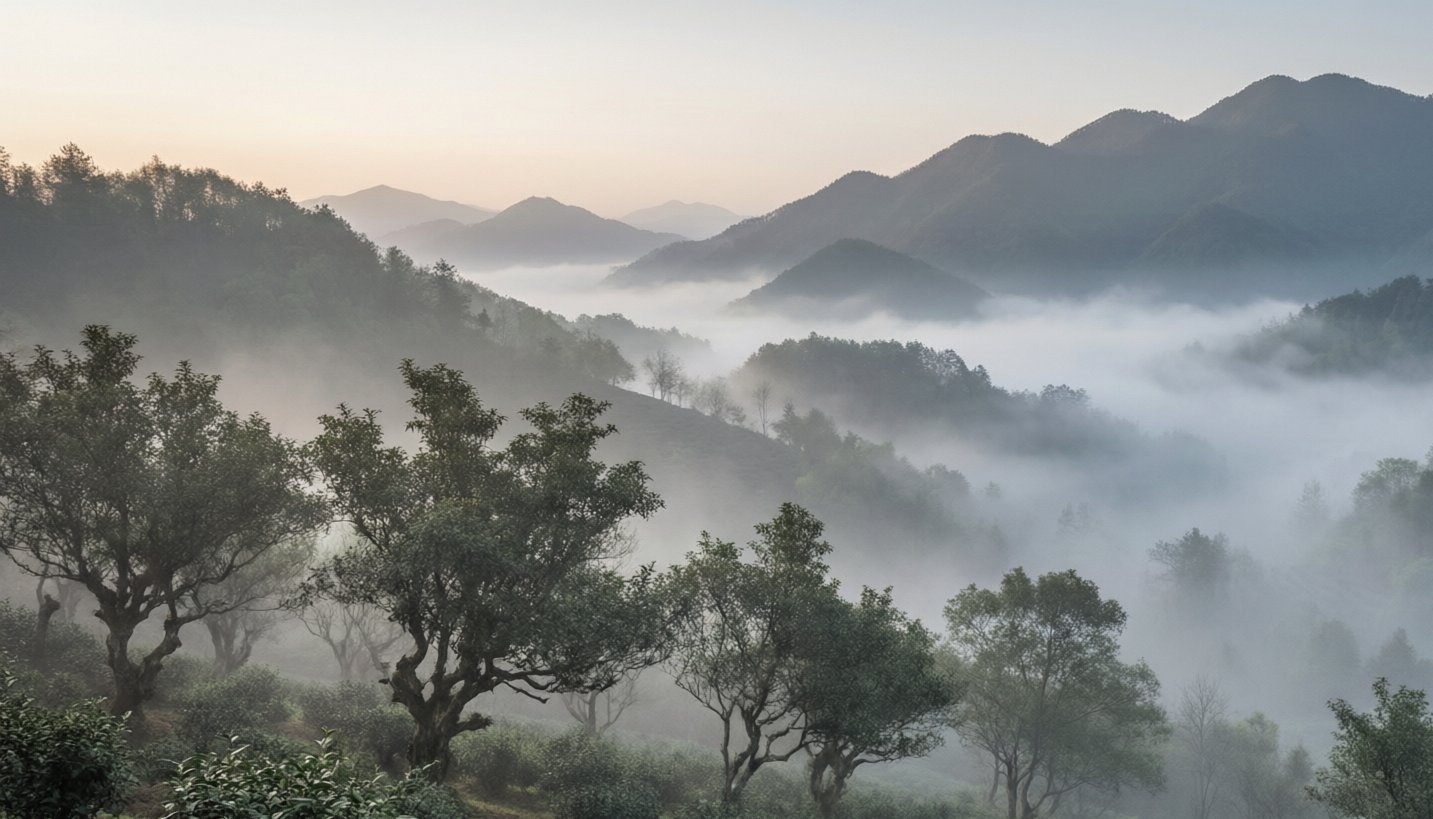
The most expensive Taiping Houkui comes from a very small core area, with Houkeng Village being the most famous reference point. Surrounding villages and higher-altitude plots add nuance, but the core producing zone is not large. This creates a simple supply problem: global demand, including strong domestic Chinese demand, is aimed at a limited annual output.
Several terroir factors reinforce the scarcity:
- Altitude and shade: The best gardens sit in misty mountain valleys with cool springs, high humidity, and diffused light. These conditions slow leaf growth and concentrate amino acids, which produce the sweet, savory "umami" character prized in high-end green tea [2].
- Soil and drainage: Rocky, well-drained mountain soils stress the plants mildly, reducing yield but increasing leaf density and aroma.
- Old bushes and local cultivar: Many premium lots come from mature Shi Da Ye bushes rather than newly planted high-yield clones. Older bushes produce less leaf per plant but often more complex cup character.
Because these factors cannot be scaled, top-tier Taiping Houkui behaves more like a limited agricultural product than a standardized commodity. In practical buying terms, the same grade name can mean very different things depending on whether the leaf actually came from the core zone, the broader Huangshan area, or an imitation from elsewhere [3].
Labor and Processing: The Real Cost Drivers
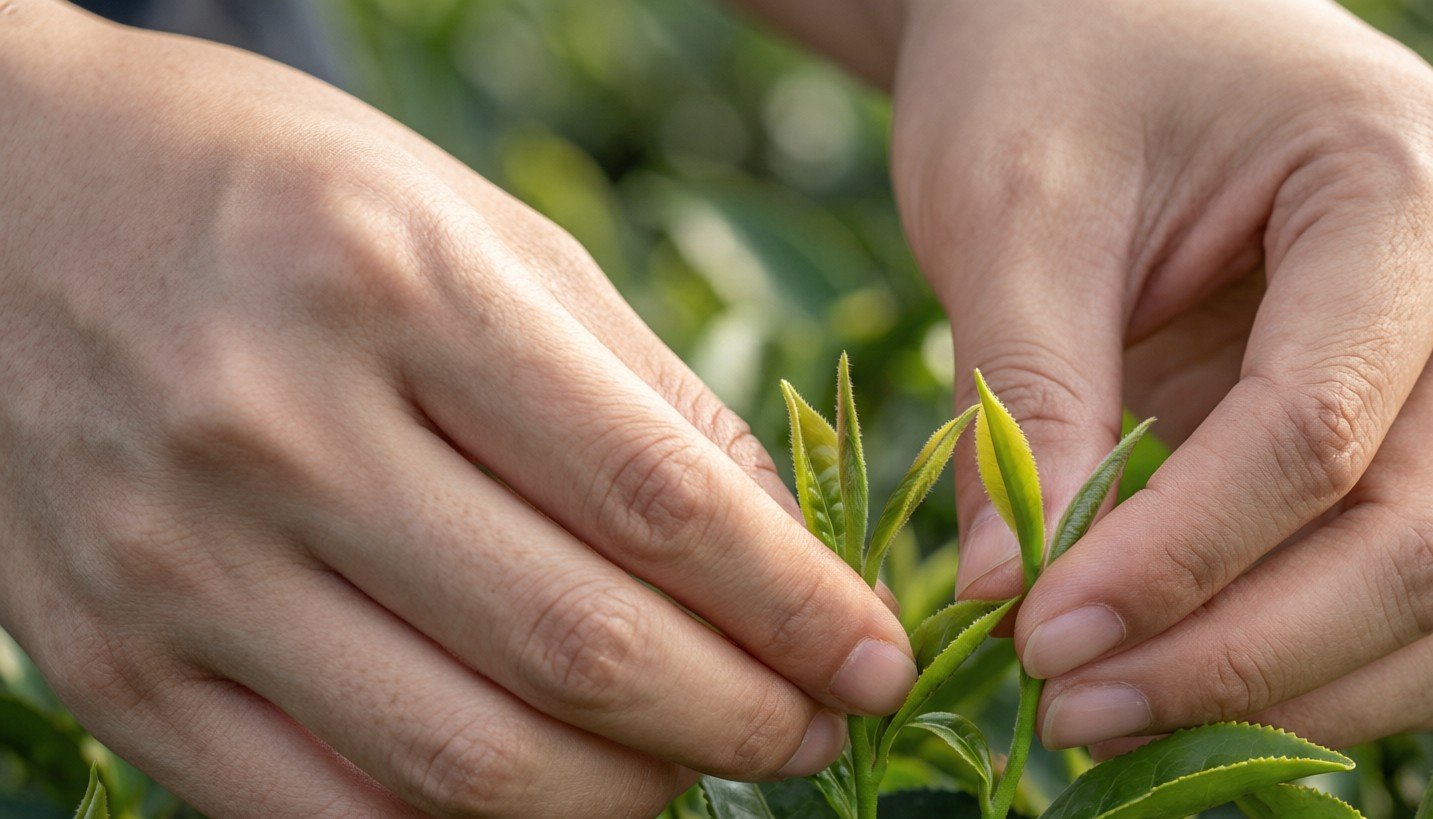
The most underrated part of Taiping Houkui pricing is hand labor. Unlike many green teas that can be partly machine-picked or machine-shaped, top-grade Taiping Houkui still depends on manual work at almost every stage.
Picking
Premium Taiping Houkui uses a specific plucking standard: one bud with two young leaves. The leaves must remain intact and uniform because the final shape exposes every flaw. Hand-picking is slower than machine harvesting, especially on steep mountain plots. During the short spring window, skilled pickers are in high demand, and labor costs rise accordingly.
Fixation and shaping
After picking, the leaves are pan-fired to stop oxidation. The next steps are critical: workers shape the leaves by hand and press them repeatedly at controlled temperatures to create the flat, slightly grid-marked appearance. This is not a single pass. It requires multiple rounds of pressing, drying, and sorting, often over several hours [2].
Machine shaping exists, but it struggles to produce the same leaf thickness and mouthfeel. As a result, the visual and textural standards that define high-grade Taiping Houkui effectively limit how much production can be automated. More labor per kilogram means a higher baseline cost before the tea ever reaches a wholesaler.
Sorting and reject rates
After final drying, the tea is sorted by leaf size, color uniformity, and the presence of broken pieces. Top lots reject a significant share of the finished leaf because buyers expect visual consistency. A high reject rate raises the cost of every kilogram that survives to final packaging.
Taiping Houkui Price Ranges in 2026
Prices for Taiping Houkui vary widely by grade, origin, harvest date, and packaging. Rather than treat any single number as a fixed market price, it is more useful to think in tiers.
| Grade / Position | Typical Character | Relative Price Signal |
|---|---|---|
| Commercial broad-origin spring tea | Uniform but less specific origin, mild aroma, slightly more astringent | Entry wholesale level |
| Huangshan-area premium | Clear floral-green character, good leaf shape, reliable sweetness | Mid-tier wholesale |
| Core-origin spring tea | Houkeng or nearby micro-zone, strong chestnut-floral aroma, low bitterness | High wholesale |
| Pre-Guyu core-origin top grade | Very tender bud-leaf sets, polished shape, long sweet finish | Highest wholesale, often gift-focused |
In 2026, a generic spring green tea from Anhui may trade at a modest wholesale price, while properly documented core-origin Taiping Houkui can be several times higher. The most expensive lots, especially those sold in small gift tins with harvest date and village name on the label, can reach several thousand RMB per 500 grams at retail. This is not because the tea is functionally several times "better" in a linear sense, but because the market treats origin, rarity, and gift presentation as separate value layers [4].
For importers, the practical takeaway is that price alone does not tell you what you are buying. Two lots can look similar in a photo and differ by a factor of three once you confirm origin, harvest date, and grade.
Need a wholesale quotation that separates grade, origin, and harvest date line by line? Contact us at xuansc2144@gmail.com with your target grade, pack size, and estimated order quantity. We source Taiping Houkui from Anhui and can explain the cost layers behind each lot before you commit.
How to Judge Value Before You Buy
Because Taiping Houkui commands a premium, the market attracts imitations and vague origin claims. A disciplined buyer should evaluate more than the tea's appearance.
Freshness first
Taiping Houkui is a green tea, not an aging tea. It is at its best within the first several months after production, stored cool and dry. A 2026 spring lot bought in late 2026 may already be fading unless it has been properly sealed and refrigerated. Always check production date and storage.
Leaf shape and uniformity
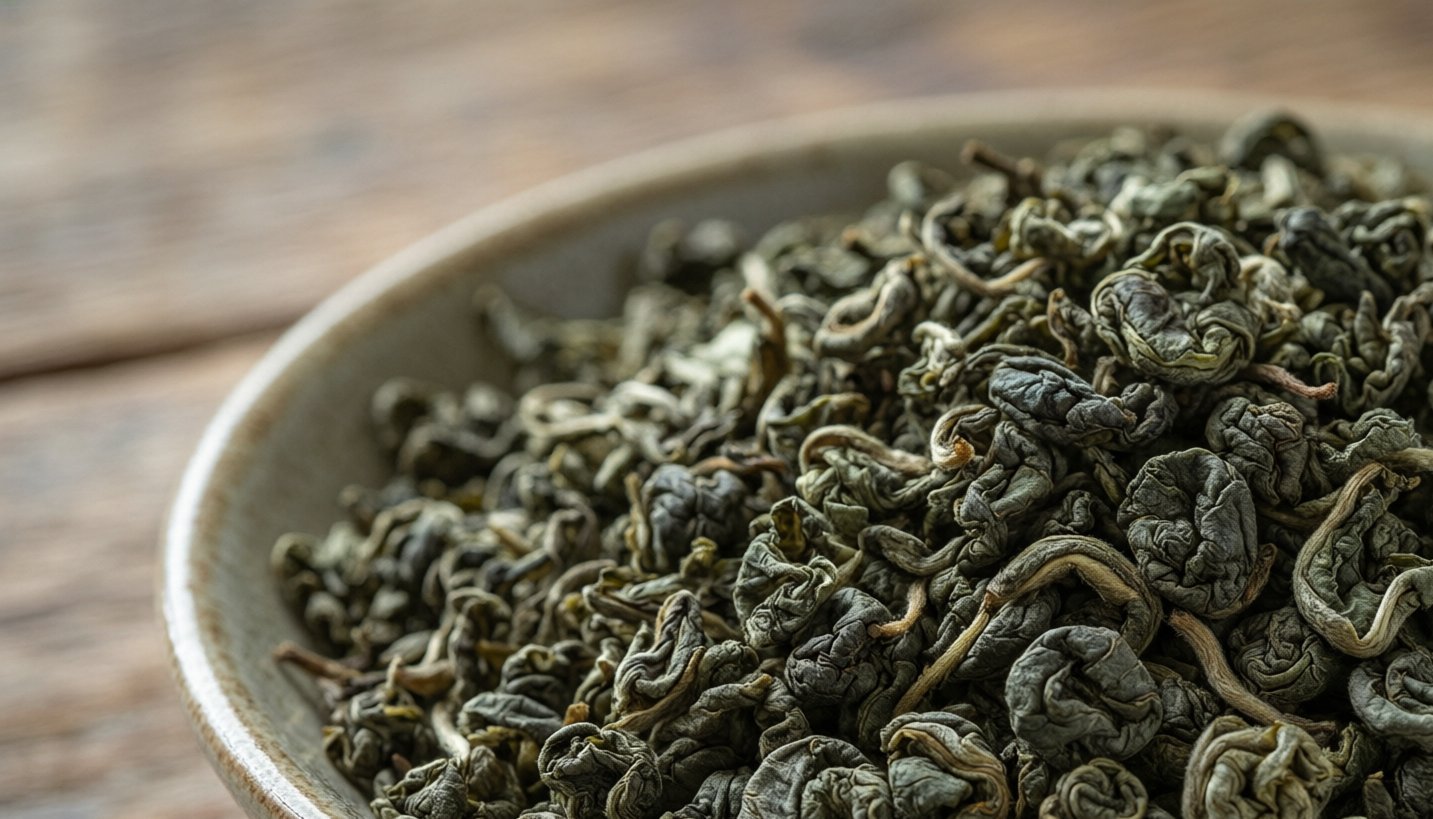
High-grade Taiping Houkui should show intact, flat, broad leaves with a consistent pale green color. Broken leaf, mixed sizes, or leaves that look dark or reddish indicate either lower grade, rough handling, or poor storage.
Liquor and mouthfeel
A well-made Taiping Houkui brews pale yellow-green, with a clean chestnut, floral, and lightly sweet nose. The liquor should feel thick and smooth rather than thin or sharply astringent. Bitterness is not a sign of strength here; it usually signals lower-grade leaf or over-processing.
Origin documentation
Ask for the specific production area, harvest date, cultivar, and whether the tea is a protected-origin product. Premium sellers should be able to identify the village or mountain micro-zone, not simply say "Anhui green tea." Third-party pesticide residue reports are also reasonable to request for volume purchases [3].
A Mid-Article Check for Importers and Retail Buyers
If you are buying for resale, the question is not simply "Is Taiping Houkui expensive?" but "Does the grade support the position on my shelf?" For everyday retail, a mid-tier Huangshan-area lot may deliver the recognizable shape and flavor at a workable margin. For gift sets or high-end accounts, only documented core-origin spring material will justify the top price.
When comparing suppliers, ask for the same information from each one: origin, harvest window, grade, leaf set, production date, and moisture content. Inconsistent answers are a warning. A clear, consistent cost breakdown is often a better trust signal than a poetic origin story.

Source Taiping Houkui From a Supplier That Shows the Cost Breakdown
Taiping Houkui pricing becomes much easier to understand when a supplier separates the layers for you: raw leaf grade, harvest date, core-origin status, processing method, reject rate, packaging, and logistics. You should not be paying a luxury markup for a vague geographical claim.
We are Chinese tea suppliers working with Anhui green teas including Taiping Houkui. If you need wholesale quantities, samples, or a detailed quotation, email xuansc2144@gmail.com with your target grade, order volume, and destination market. We will explain what is driving the price of each lot and help you choose the tier that fits your customers.
FAQ
Why is Taiping Houkui more expensive than regular green tea?
Because it comes from a limited core growing area, uses a specific local cultivar, and depends on hand-picking plus repeated manual shaping and sorting. The short spring harvest window and high domestic demand further push prices above generic green tea.
How much does Taiping Houkui tea actually cost in 2026?
There is no single price. Commercial broad-origin lots sit at the lower wholesale range, while documented core-origin spring tea is substantially more expensive. Top pre-Guyu or gift-grade lots can reach several thousand RMB per 500 grams at retail. Grade, origin, and harvest date matter more than the tea's name.
Does Taiping Houkui improve with age?
No. Like most green teas, Taiping Houkui is made for freshness. It should be consumed within the first year, ideally sooner. Age does not improve it the way it can improve certain white teas or pu-erh.
How do I know if Taiping Houkui is authentic?
Check the production area, harvest date, cultivar, and documentation. Authentic premium Taiping Houkui should identify a specific Huangshan-area origin, show intact two-leaf-and-bud leaf sets, and come with a clear production date. Third-party residue testing adds confidence for volume orders.
What is the best brewing method for Taiping Houkui?
Use a glass or porcelain vessel, water around 80–85°C (176–185°F), and a lower leaf-to-water ratio than broken green teas. Start with short infusions of 20–30 seconds and adjust upward. Cooler water protects the tea's sweet, floral character.
References
[1] China National Geographical Indication Protection System. Taiping Houkui tea protected origin information and production scope. Beijing, China.
[2] Gascoyne, K., Marchand, F., Desharnais, J., & Americi, H. (2014). Tea: History, Terroirs, Varieties (2nd ed.). Firefly Books.
[3] Huangshan District Agriculture and Rural Affairs Bureau. (2023). Taiping Houkui production technical specification and core production zone guidance. Huangshan, Anhui.
[4] China Tea Marketing Association. (2024). Chinese tea industry report 2024. Beijing, China.
No author description available.

白玉京