Why Bingdao Ancient Tree Tea Is Different: An Honest Introduction
Bingdao ancient tree tea has become shorthand for top-tier raw pu-erh, but its reputation has moved faster than most buyers’ knowledge. This is a plain-language look at what actually makes Bingdao old-tree tea different — origin, tree age, leaf chemistry, flavor, price, and the verification work required before you pay a premium.
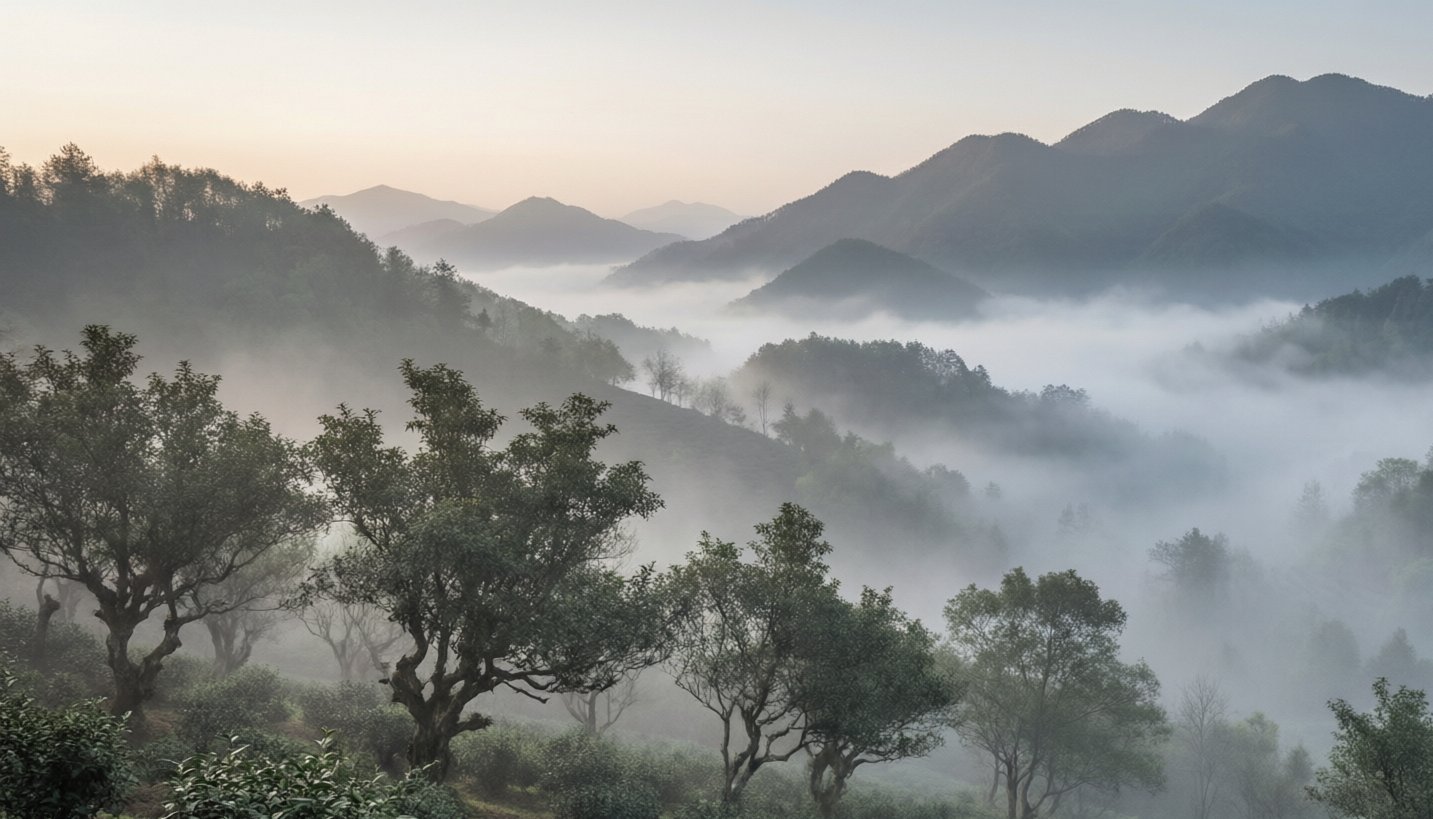
Where Bingdao Tea Actually Comes From
Bingdao is not a factory, a brand, or a grade. It is a group of five natural villages — Bingdao Laozhai, Dijie, Nanpo, Bawai, and Nuowu — in the Mengku tea region of Shuangjiang County, Lincang, Yunnan. The name is a Chinese rendering of a local Dai place name; it has nothing to do with ice.
Bingdao sits in southwestern Yunnan near the Lancang River, in a region famous for the Mengku large-leaf tea variety. Under China’s national standard GB/T 22111-2008, a product may be called pu-erh only if it originates in a designated Yunnan production area and is made from Yunnan large-leaf tea material [1].
That matters because “Bingdao” now appears on cakes made far outside the five villages. Origin is the first thing that separates genuine Bingdao ancient tree tea from a label.
What “Ancient Tree” Really Means, and What It Doesn’t
In the Yunnan tea trade, “ancient tree” (古树茶, gushu cha) usually refers to tea harvested from trees claimed to be at least a century old. Bingdao’s oldest trees are often described as several hundred years old, but accurate dating is difficult without coring, and many age claims remain village and market estimates rather than verified records [2].
Ancient tree tea is not a separate legal grade under Chinese national standards. Even so, tree age corresponds to real production differences: older trees tend to have deeper root systems, lower yield density, thicker leaves, and a shorter annual picking window.
An honest caveat: “ancient tree” does not guarantee flavor. Age matters, but so does the specific village, harvest day, processing skill, and storage. Two old-tree cakes from the same Bingdao village can taste noticeably different.
The Flavor Fingerprint That Sets Bingdao Apart
Bingdao’s modern fame rests on an unusually gentle raw pu-erh profile. Instead of the aggressive bitterness associated with some other famous pu-erh villages, a well-made Bingdao raw cake tends to open soft, thick, and sweet — often described as “rock candy” sweetness. The bitterness, when present, melts quickly and leaves a long, salivating finish.
The table below summarizes how buyers typically describe the five Bingdao villages. These are tasting generalizations, not fixed grades.
| Village | Typical flavor character |
|---|---|
| Bingdao Laozhai | Thick, smooth, pronounced rock-candy sweetness, low bitterness |
| Dijie | Softer, rounded, honeyed, approachable |
| Nanpo | Fuller body, more astringency, strong returning sweetness |
| Bawai | More structure, slightly drier, durable aftertaste |
| Nuowu | Clean, delicate, floral sweetness, lighter body |
Research comparing old-tree and terrace tea from Lincang has reported higher levels of amino acids and water-soluble solids in old-tree samples, which may help explain the thick mouthfeel and long finish [3]. Sensory language is still subjective, so batch cupping remains the only reliable way to judge a specific lot.
Terroir: Altitude, Soil, and Shade
Bingdao’s tea gardens mostly sit between about 1,600 and 1,800 meters in elevation, in a subtropical highland environment with strong temperature swings and frequent morning fog. Surrounding forest cover slows leaf growth, reduces pest pressure, and contributes to the tea’s concentrated flavor. Soils in the Mengku range tend to be mineral-rich and well-drained, though composition varies by slope.
This is the same logic as wine terroir: identical cultivar material planted elsewhere does not reliably reproduce Bingdao’s taste. Terroir, not just tree age, is a core reason the tea costs what it does [2], [3].
In our own sourcing routine, we cup every Bingdao lot blind against village reference samples before quoting old-tree material. That simple exercise regularly shows that the most expensive label is not always the thickest, sweetest cup.
Why Bingdao Commands Such High Prices
Three forces push Bingdao prices up. First, genuine supply is small: only a limited number of ancient trees, a short spring harvest window, and the most prized Laozhai lots are often pre-sold before pressing. Second, demand has globalized through auctions, tea media, and collector culture. Third, price attracts counterfeiters — blended, terrace, or non-Bingdao material is frequently sold under the Bingdao name, which creates a risk premium for verified lots.
We deliberately avoid quoting per-kilogram prices here because figures swing widely by village, tree age, harvest year, and lot purity. The durable rule for importers: the more specific the traceability claim, the higher the price and the more documentation you should require.
If you are comparing Bingdao lots for a wholesale decision, contact Chinese tea suppliers at 427728483@qq.com and ask directly for harvest year, village (not just “Bingdao”), old-tree versus blend status, and a pressed sample before committing to a volume price.
How to Buy Bingdao Without Overpaying for the Name
- Ask for the specific natural village. “Bingdao Laozhai” and “Bingdao” are not the same thing.
- Request the harvest year and season. Spring first-pick and autumn tea taste and price differently.
- Clarify single-origin versus blend. Many cakes labeled Bingdao contain only a small portion of genuine Bingdao material.
- Demand a sample before a large order. Taste it against a neutral baseline.
- Check documentation: origin certificate, pesticide test report, and batch traceability.
- Be skeptical of “100% ancient tree” claims offered without a serious price consequence.
Talk to a Chinese Tea Supplier About Bingdao
Before you buy Bingdao ancient tree tea, ask for the following:
- Specific village and harvest year
- Single-origin or blend, and approximate old-tree percentage
- Samples from the exact lot offered
- Pesticide and other test reports
- Pressing date and storage history
Email Chinese tea suppliers at 427728483@qq.com to request current Bingdao samples, pricing, and lot documentation.
FAQ
Is Bingdao ancient tree tea a green tea or a pu-erh?
It is a raw pu-erh. After picking, the leaves are usually fixed, rolled, sun-dried, and then pressed or kept as loose material. Over time, raw pu-erh ferments slowly through natural oxidation and microbial action.
What does “ancient tree” actually guarantee?
It indicates that the leaves came from older tea trees, usually claimed to be a century or more old, but it is not a government-enforced grade. It does not guarantee flavor or authenticity by itself; provenance still needs to be verified.
Why is some Bingdao tea cheap if it is supposed to be rare?
Usually because the cake is a blend, made from younger trees, sourced from outside the five genuine Bingdao villages, or labeled loosely. There is a legitimate price ladder from younger trees to pure old-tree Laozhai lots, but an extremely low price for a “Bingdao ancient tree” should trigger verification.
How should I evaluate a Bingdao sample?
Use a consistent gaiwan or cupping set, roughly 5 grams per 100 milliliters, near-boiling water, and short steeps. Focus on thickness, bitterness-to-sweetness balance, throat finish, and re-steeping endurance. Compare against a known reference sample of the same village and harvest when possible.
References
[1] General Administration of Quality Supervision, Inspection and Quarantine of the People’s Republic of China, Product of Geographical Indication — Pu’er Tea, GB/T 22111-2008, Beijing, China, 2008.
[2] Yunnan Academy of Agricultural Sciences, Tea Research Institute, Ancient Tea Tree Resources in the Lincang Mengku Tea Region, survey report, Kunming, China, 2021.
[3] L. Chen and H. Zhang, “Comparison of amino acids and water extracts in old-tree and terrace raw Pu-erh from Lincang, Yunnan,” Food Research International, vol. 143, 2021.
No author description available.

白玉京