Spotting Fake CNNP Raw Pu-erh: 5 Red Flags Buyers Miss
CNNP raw pu-erh occupies a strange corner of the tea market. It is one of the most recognized production histories in pu-erh — and one of the easiest wrappers to counterfeit. The sheng (raw) pu-erh made under the China National Native Produce & Animal By-Products Import & Export Corporation umbrella and sold through the Zhongcha ("China Tea") label ranges from affordable drinkers to collector pieces worth hundreds of times their original press price [1]. That spread is exactly why fakes persist.
The encouraging part is that a counterfeit cake usually fails at several points at once. Wrapper, compression, leaf, liquor, and paperwork each tell you something, and none of these checks requires laboratory equipment. Most can be done from photographs before you pay.
How CNNP Raw Pu-erh Became a Counterfeit Target
CNNP was the state export agency under which many historic pu-erh recipes were pressed and shipped, most visibly under the Zhongcha label with the "eight zhong" (八中) wrapper — a central 茶 character surrounded by eight 中 characters. When the corporation was restructured and its legacy marks were commercialized, the old papers and labels became collectible in their own right.
Two pressures drive the replica trade. One is geographic: pu-erh is a protected geographical indication. Authentic pu-erh must be made from Yunnan large-leaf sun-dried green tea (晒青毛茶) and, for compressed forms, produced within the protected region [2]. Real raw pu-erh is therefore not just any sun-dried green tea pressed into a disc. The second pressure is time. Well-stored raw pu-erh changes color, aroma, and mouthfeel over years, and aged cakes command steep premiums, so counterfeiters imitate age with wet-storage tricks, dye, or a new wrapper printed with an old date [3].
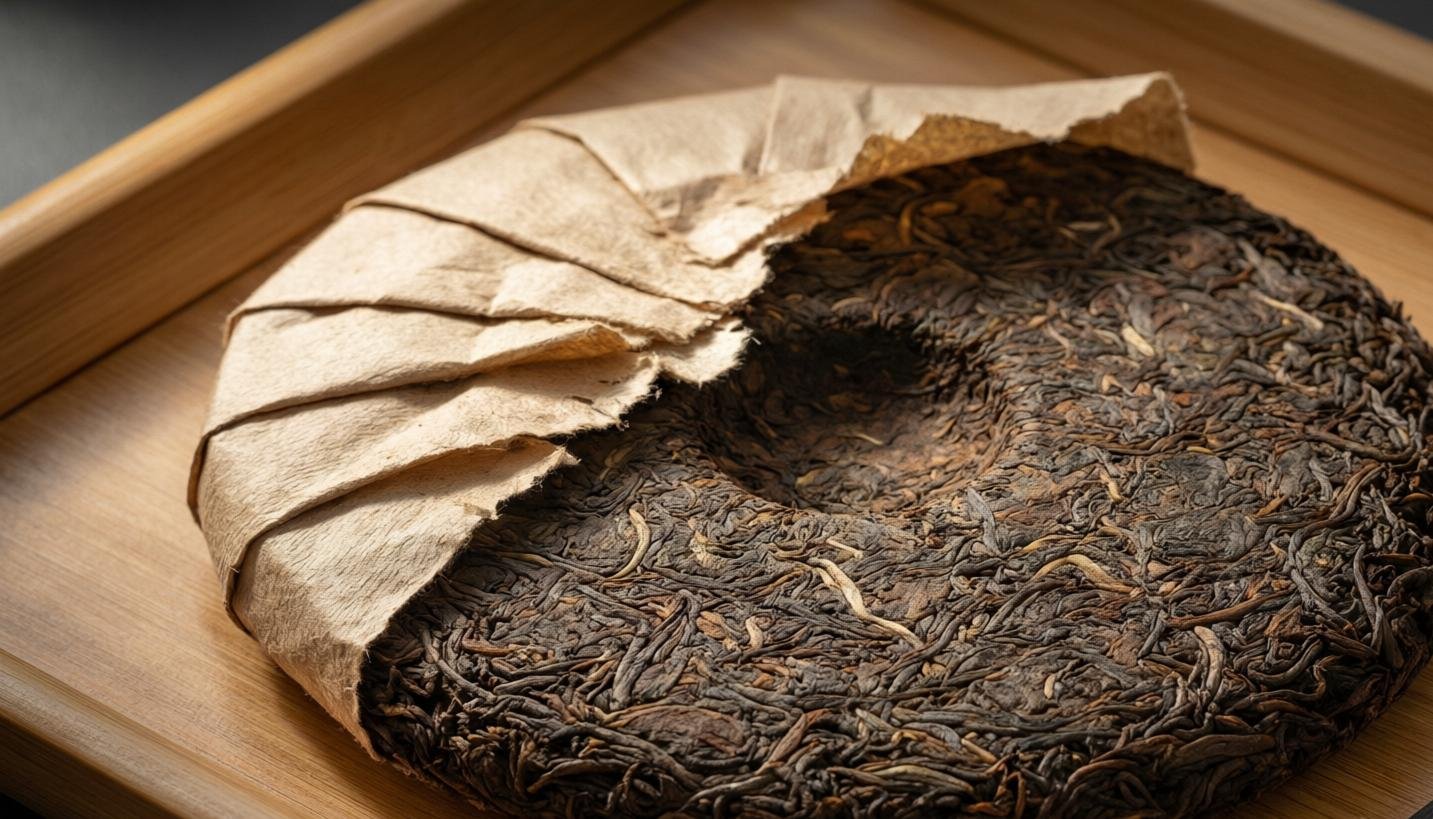
Red Flag 1: The Wrapper, the Logo, and the Nei Fei
Start with the paper, not the story. Period wrappers used era-appropriate paper and printing. Reproductions are frequently scanned and laser-printed onto artificially aged paper. Look for blurry or pixelated logo edges, uniform "aging" that darkens the whole sheet evenly, and incorrect calligraphy around the Zhongcha mark or batch descriptors. Genuine wrappers age unevenly — folds, creases, stains, and fading do not happen in a perfectly even pattern.
Then turn the cake over. The embedded inner label (nei fei) should be pressed into the leaf at the time of pressing. On many fakes, a photocopied nei fei sits loosely on top or under a few superficial leaves rather than being locked into the cake. Ask for a photograph that shows the nei fei in place against the leaf — not photographed separately on a table.
Red Flag 2: Cake Weight, Thickness, and Compression
The classic Zhongcha round cake format is 357 g. Small variance is normal, but a supposed period cake that is noticeably light or heavy should be treated as a question to resolve [1]. Also check:
- Edge profile: period molds produced a gently domed, rounded shoulder. Many represses have a sharp or crumbly edge.
- Thickness: authentic factory cakes are consistent across the disc.
- Compression: stone-pressed and factory-pressed cakes show controlled pressure. Excessively tight, machine-flattened cakes — or loose, unevenly bound ones — point to a non-factory repress.
The central pressing depression (bing wo / 饼窝) on the reverse is another useful fingerprint. Its depth and shape vary by factory and era; a shallow, perfectly round, drilled-looking hole is a common tell on reproductions.
Red Flag 3: Leaf Grade and Blend
CNNP-era raw pu-erh uses Yunnan large-leaf cultivars. The dry leaf should be relatively large, substantial, and visibly blended with intact tips and a few stems — not uniform pellet-like particles [1]. A recipe number alone is not enough, but when the visible leaf does not match the recipe's known grade and blend profile, stop and ask for more evidence.
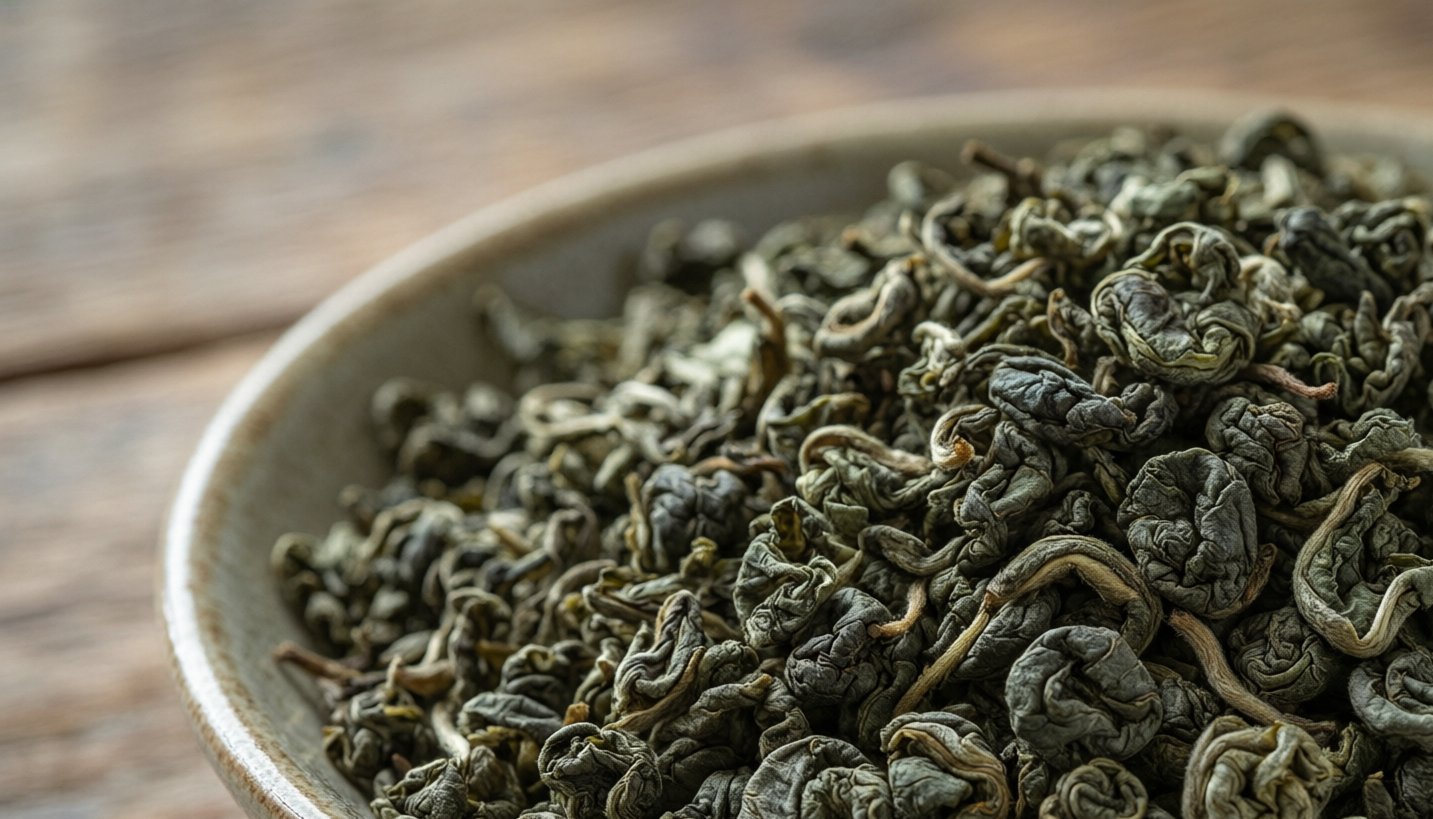
Suspicious leaf often looks too dark and too uniform, sometimes with a sprayed-on sheen or musty undertone. That pattern usually signals wet piling, humid storage, or surface treatment designed to imitate age rather than genuine dry aging.
Red Flag 4: Liquor Color and Wet-Leaf Clues
Brew it. The liquor is the hardest element to fake. Authentic sheng shifts from yellow-green toward amber-orange as it ages, but even genuinely old raw pu-erh should not pour muddy brown-red or near-black. A supposedly 20-year-old cake that brews like young shou (ripe pu-erh) is a contradiction [4].
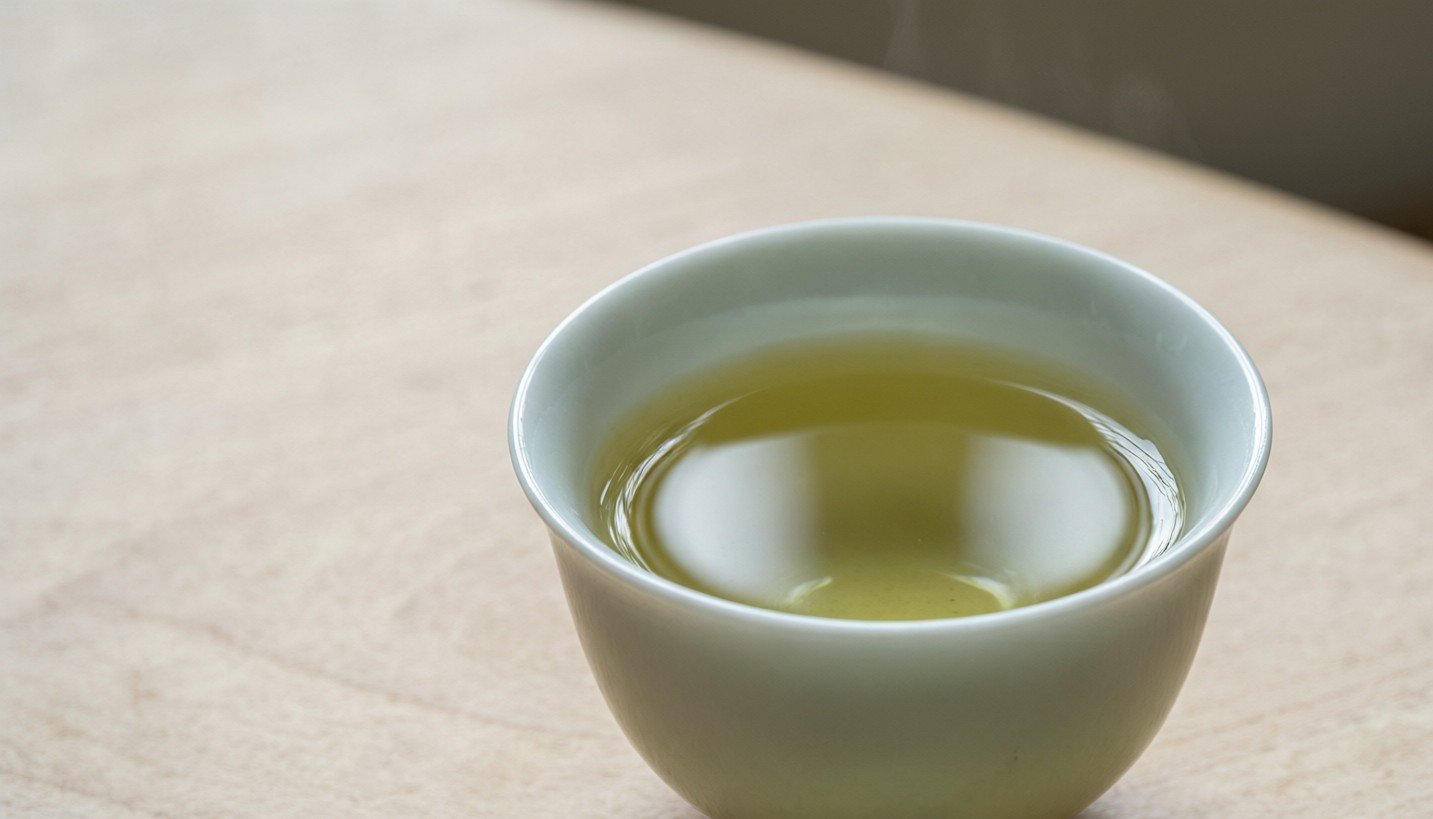
Mouthfeel matters just as much. Well-stored aged sheng tends to show huigan — a returning sweetness in the throat — plus salivation and layered aromatics. Fake or poorly stored cakes often taste thin, flatly sweet, musty, or rough-dry with little aftertaste.
After brewing, stretch out a few wet leaves. Genuine Yunnan large-leaf material is thick, elastic, and rehydrates well. Brittle, chopped, or suspiciously identical leaf is a red flag [1].
Red Flag 5: Price, Provenance, and Documentation
The oldest red flag is price. A 1980s cake at a current-store price is not a bargain; the market is too efficient for that. Treat deep "too good to be true" discounts as the equivalent of a warning sticker.
Modern Zhongcha productions carry batch codes, production dating, and anti-counterfeit or traceability features where applicable. Under China's prepackaged food labeling standard, pre-packaged tea offered in commerce must bear the producer or distributor information and production date required by the standard [5]. Vintage wrappers obviously predate these modern rules — which is precisely why supporting evidence matters more for old cakes: storage records, export or import paperwork, and a physical inspection history.
A seller who will not share batch-code photos, inner ticket photos, or a cut-cake sample is, in itself, a red flag.
How to Buy CNNP Raw Pu-erh With Confidence
Run the five checks as a one-minute screen:
- Wrapper, logo, and nei fei
- Weight, thickness, edge profile, and compression
- Dry leaf grade, blend, and color
- Brewed liquor color, texture, and aftertaste
- Price, batch documentation, and provenance
One of the most effective changes we have seen buyers make is to request the same three photographs before approving any lot: the full wrapper, the embedded nei fei against the leaf, and a few wet leaves stretched out after a quick rinse. It costs nothing and screens out most problems at the first pass.
Verify before you buy. If you are sourcing aged or commercial CNNP raw pu-erh, request a cut-cake sample, the inner ticket photo, and batch documentation before you commit. Tell us the recipe code, vintage, and target volume at 427728483@qq.com, and we will help you check lot consistency and current availability.
Get Verified CNNP Raw Pu-erh
Stop reading wrappers alone. Send these details:
- Recipe code and vintage, if you have one
- Loose, cake, or tong quantity
- Destination country and compliance needs, including pesticide residue and import documentation
Email 427728483@qq.com with those details, and we will reply with verified sample options — batch codes, leaf photographs, and origin paperwork included — before any payment is due.
Frequently Asked Questions
What does CNNP stand for?
CNNP is the common abbreviation for the China National Native Produce & Animal By-Products Import & Export Corporation, the historic state export umbrella under which many Zhongcha ("China Tea") pu-erh recipes were produced and shipped. In pu-erh collecting, "CNNP raw pu-erh" generally means sheng (raw) cakes from that Zhongcha-era production heritage.
What is the difference between CNNP raw pu-erh and CNNP ripe pu-erh?
Raw (sheng) pu-erh is made from Yunnan large-leaf sun-dried green tea that is compressed and then ages naturally. Ripe (shou) pu-erh undergoes an accelerated wet-piling fermentation before pressing. A raw cake fakes "age"; a ripe cake does not need to. Confusing the two is one of the most common mistakes novice buyers make.
How can I tell how old a CNNP raw pu-erh cake really is?
Use multiple signals together: period-accurate wrapper and printing, factory-specific mold and compression details, leaf color and integrity, and brewed liquor color. No single feature is definitive. For valuable cakes, treat documented storage and ownership history as a requirement, not a bonus.
Is the eight zhong logo enough to prove a cake is genuine?
No. The logo is the most copied element of the wrapper. It is useful only when combined with the paper stock, printing method, nei fei, cake specifications, leaf, and liquor checks described above.
Does wet storage automatically mean a cake is fake?
No. Wet, or Hong Kong–style, storage is a legitimate traditional aging method, but it changes flavor and leaf appearance in ways that can overlap with counterfeit aging. A musty, flatly sweet, muddy-brewing cake may be poorly wet-stored rather than fake — either way, it is usually a poor purchase unless you specifically enjoy that profile.
Where can I buy genuine CNNP raw pu-erh?
Buy from sellers who provide batch verification, cut-cake samples, leaf and nei fei photographs, and clear origin documentation. For commercial orders, request lab results for pesticide residues and confirm that the lot matches the sample before approving shipment.
References
[1] GB/T 22111-2008, Product of geographical indication — Pu'er tea. Standardization Administration of the People's Republic of China.
[2] General Administration of Quality Supervision, Inspection and Quarantine of the People's Republic of China. Announcement on approval of geographical indication protection for Pu'er tea, 2008.
[3] Lv, H.-P., Zhang, Y.-J., Lin, Z., & Liang, Y.-R. (2013). Processing and chemical constituents of Pu-erh tea: A review. Food Research International, 53(2), 608–618.
[4] Ahmed, S., Unachukwu, U., Stepp, J. R., Peters, C. M., Long, C., & Kennelly, E. (2010). Pu-erh tea tasting in Yunnan, China: Correlation of drinkers' perceptions to phytochemistry. Journal of Ethnopharmacology, 132(1), 176–185.
[5] GB 7718-2011, National food safety standard — General standard for the labeling of prepackaged foods. Standardization Administration of the People's Republic of China.
No author description available.

白玉京