What Is Oriental Beauty Tea? The Definitive Guide for Wholesale Buyers
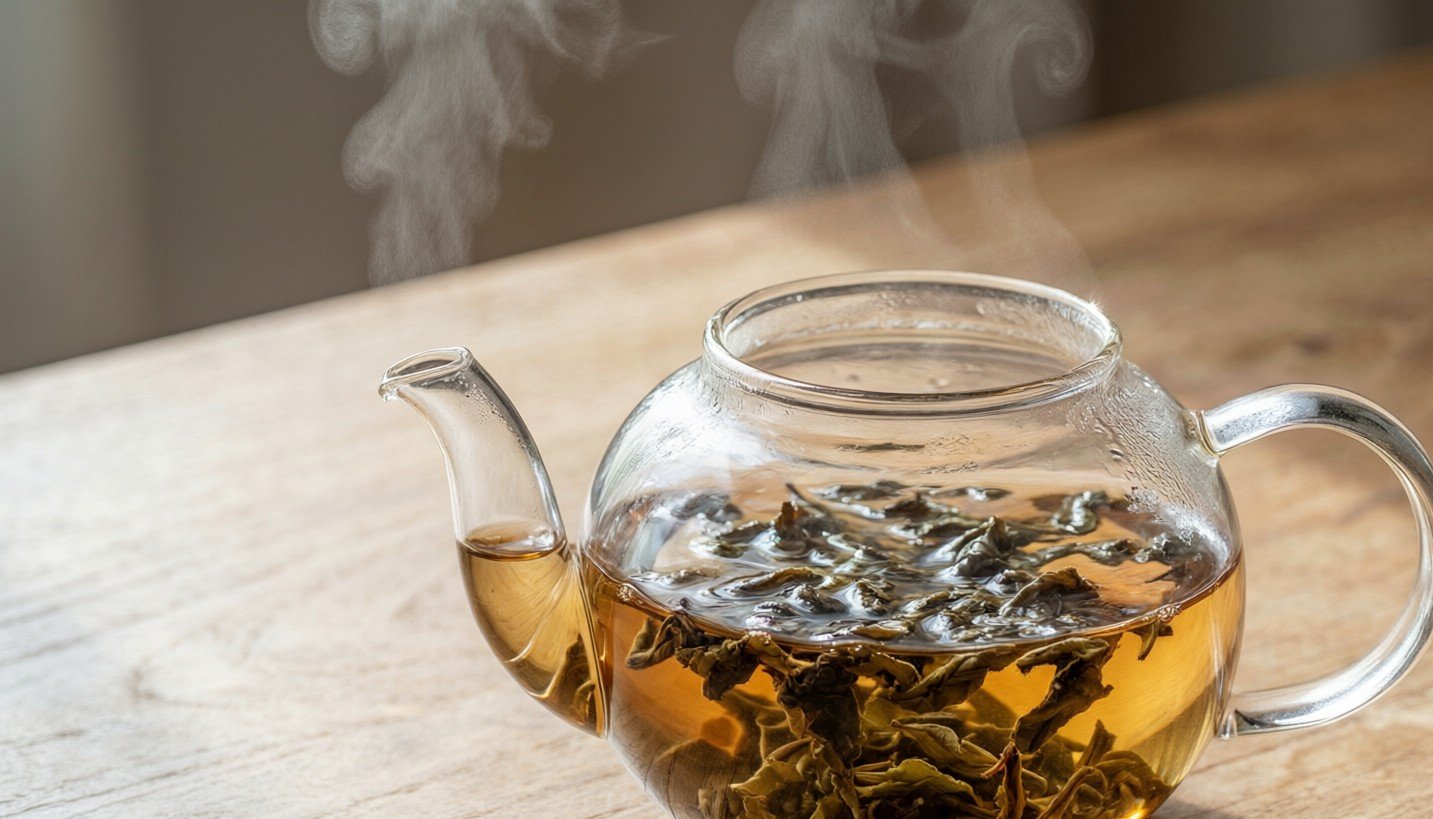
Oriental Beauty tea—Dongfang Meiren in Chinese, also sold as Bai Hao (White Tip) Oolong or Champagne Oolong—is one of Taiwan’s most recognizable specialty teas. It is an oolong, not a black tea, but it sits closer to black tea than most oolongs because of its unusually deep oxidation. The defining trait is the honeyed, stone-fruit sweetness that develops when leaves are bitten by a small green leafhopper before harvest.
That unusual origin story is not just marketing. It explains why Oriental Beauty is picked the way it is, graded the way it is, and priced the way it is. For wholesale buyers, understanding the tea’s formation is the fastest way to avoid confusing a generic high-oxidation oolong with the real thing.
What Is Oriental Beauty Tea?
Oriental Beauty is a heavily oxidized Taiwanese oolong made from tender, insect-bitten leaves [1]. Standard oolongs often stop oxidation around 20–40 percent; Oriental Beauty is typically carried much further, commonly reported in the 60–85 percent range [4]. That makes the leaf darker and the cup amber to deep orange, yet the flavor stays soft rather than heavy.
Several names describe the same style:
- Dongfang Meiren — the standard Chinese name.
- Bai Hao Oolong — “White Tip Oolong,” a reference to the silvery buds.
- Champagne Oolong — a Western trade name for the honeyed, sparkling character.
- Braggart’s Tea — an older nickname tied to the story of a farmer who presented the bitten leaf proudly.
The tea is closely associated with Hsinchu and Miaoli counties in northern Taiwan, especially Beipu and Emei [3].
| Attribute | Typical Oriental Beauty profile |
|---|---|
| Category | Heavily oxidized oolong |
| Oxidation | Roughly 60–85% |
| Origin | Hsinchu and Miaoli, Taiwan |
| Picking standard | Tender bud plus two to three leaves |
| Leaf appearance | Five-color mix with prominent white tips |
| Cup color | Amber to deep orange |
| Flavor | Honey, stone fruit, muscatel, warm spice |
| Astringency | Low when properly processed |
The Insect Behind the Flavor
The honey note is not added during processing; it is the plant’s response to the small green leafhopper (Jacobiasca formosana) [2]. When the insect pierces young leaves to feed, the tea plant triggers chemical changes similar to a mild stress response. Those changes concentrate compounds that later become honey, muscatel, and ripe-fruit aromas.
This is why Oriental Beauty depends on insect pressure in the garden. Farmers manage the tea plants to allow a controlled leafhopper population rather than eliminating it completely. Too few insects produce a flat, ordinary oolong; too many destroy the flush. The window for this balance occurs mainly in summer, which is why Oriental Beauty is one of the few specialty teas prized from the summer harvest.
The result is not a sweetened tea. The sweetness is aromatic: the liquor can smell strongly of honey while remaining dry and clean on the palate.
Where Oriental Beauty Tea Is Grown
Most authentic Oriental Beauty comes from Taiwan’s hilly tea districts in Hsinchu and Miaoli [3]. Beipu and Emei in Hsinchu are the traditional centers, with some lots from nearby Miaoli and occasional small volumes elsewhere in Taiwan.
These areas combine moderate altitude, frequent mist, and the humid conditions that support the leafhopper population. The tea is usually made from cultivars such as Qingxin Damao or Qingxin Ganzi, although other suitable cultivars appear in the market. The cultivar matters less than the bite damage, the picking standard, and the processing control.
Buyers should treat the origin claim as one signal, not a guarantee. Authentic lots can come from outside the most famous villages, and well-made lots from secondary areas can outperform weak lots from famous ones. The reliable test is in the leaf and the cup.
What Makes the Leaf Look Different
Dry Oriental Beauty is one of the easiest teas to recognize. Good lots show a mix of colors in the dry leaf—white buds, green-brown leaves, and reddish or amber edges. The white tips are not a coating; they are young, downy buds.
After brewing, the leaves open into thick, heavily oxidized pieces with reddish-brown edges and a pale center. A uniform black or uniformly green appearance is a warning sign for a tea sold as Oriental Beauty. The traditional processed leaf should show clear color contrast.
Price differences often track the proportion and integrity of the buds, the clarity of the color contrast, and the intensity of the honey aroma.
How Oriental Beauty Tea Is Processed
The production method follows a typical oolong sequence, but with heavier oxidation and gentler handling [1], [4]:
- Withering — the leaf is spread and allowed to lose moisture.
- Tossing and bruising — light agitation bruises the edges and begins oxidation.
- Oxidation — the leaf is held until it reaches a deep, near-black-tea level of color change.
- Fixation — heat stops the oxidation at the chosen point.
- Rolling and drying — the leaf is shaped and dried, usually without heavy roasting.
Oriental Beauty is generally not roasted. A light finishing step preserves the floral-honey aromatics. If a lot smells strongly of roast or smoke, it is not a classic Oriental Beauty profile.
Grades and What They Mean for Buyers
Taiwan’s local tea competitions grade Oriental Beauty into several tiers, with names that vary by association [4]. Common tiers include special prize, top grade, first grade, and standard grade. These awards reflect leaf tenderness, insect-bite character, color contrast, aroma intensity, and liquor clarity.
For wholesale buying, competition grade is useful but not the whole picture. A buyer should evaluate:
- Bud ratio — higher bud content generally means a more delicate, honeyed cup.
- Color contrast — clear five-color leaf is a sign of proper oxidation and handling.
- Aroma — honey and stone fruit should be present in both dry leaf and first infusion.
- Re-steeping — good Oriental Beauty holds its character for several infusions.
- Clean finish — no heavy char, no flatness, no rough bitterness.
For example, when our sourcing team builds sample kits for importers, we often include three quality levels from the same flush—competition, premium, and commercial—so the buyer can calibrate what their market will actually pay for. That side-by-side comparison usually reveals whether a higher grade is a meaningful upgrade or just a prettier leaf.
Sourcing Tip: Compare Real Lots Before You Commit
Oriental Beauty is easy to overpay for if you buy on name alone. The practical safeguard is to request three samples at different grade points, brew them blind, and check the re-steeping behavior before confirming a larger lot.
If you’re comparing Oriental Beauty lots for a wholesale program, email your harvest expectations, grade target, and estimated monthly volume to 427728483@qq.com. Include the market you sell into and the retail or wholesale price band you need to hit; our team will return sample recommendations and realistic lot parameters.
How to Brew Oriental Beauty Tea
The tea rewards a slightly lower temperature than many oolongs. A practical starting point is 90–95°C (194–203°F) water with a 1:25 ratio of tea to water for Western brewing, or 5–7 grams per 100 ml in a gaiwan for gongfu style. Start with 30–40 seconds and extend each infusion.
The first steep often carries the clearest honey note. Later steeps can become more stone-fruit and spicy. A thin, quick rinse is acceptable, but Oriental Beauty does not need the aggressive washing step some buyers use for aged pu-erh.
Talk to a Sourcing Specialist About Your Oriental Beauty Program
If you are ready to compare Oriental Beauty lots for your wholesale or private-label range, email 427728483@qq.com with three details: your target grade and price band, your expected monthly or annual volume, and the destination market you sell into. We will reply with sample recommendations, current lot availability, and packaging and compliance notes for your market.
FAQ
Is Oriental Beauty tea a black tea or an oolong?
It is an oolong. The oxidation level is unusually high, which makes it look dark and brew amber, but the production method remains oolong processing [1].
Why does Oriental Beauty tea taste like honey?
The honey aroma develops when small green leafhoppers bite the young leaves, triggering a stress response in the plant [2]. Processing then preserves those aromatic compounds. No honey or flavoring is added.
Does Oriental Beauty tea improve with age?
A well-stored Oriental Beauty can soften and develop a rounder, more muscatel or dried-fruit character over time, but it is not an aging tea in the way pu-erh or aged white tea is. Most buyers prefer it within one to three years of harvest for the freshest aromatic lift.
How should I store Oriental Beauty tea?
Keep it sealed, cool, dry, and away from strong odors, light, and moisture. Use oxygen-barrier packaging for lots intended to sit for more than a few months.
What should wholesale buyers confirm before ordering?
Confirm the harvest season, bud ratio, insect-bite character, oxidation level, processing date, and storage conditions. Ask for three graded samples and brew them side by side before committing to a full lot.
References
[1] Taiwan Tea Research and Extension Station. Oriental Beauty (Dongfang Meiren) Tea. Taoyuan, Taiwan: TRES, 2021. [Online]. Available: https://www.tres.gov.tw/
[2] Taiwan Tea Research and Extension Station. Leafhopper-Bitten Tea and Honey Aroma Formation. TRES Research Bulletin, 2020. [Online]. Available: https://www.tres.gov.tw/
[3] Council of Agriculture, Executive Yuan. Taiwan Specialty Tea Production Regions and Cultivars. Taipei, Taiwan: COA, 2020. [Online]. Available: https://eng.coa.gov.tw/
[4] Hsinchu County Tea Trade Association. Bai Hao Oolong Competition Grading Standards. Hsinchu, Taiwan, 2022. [Online]. Available: https://www.hsinchu.gov.tw/
No author description available.

白玉京