What Makes Mengding Ganlu Tea Different? An Honest Guide
Mengding Ganlu is one of the most historically significant green teas in China, yet it is often overshadowed by Longjing and Biluochun in Western markets. That gap is misleading. Mengding Ganlu has a documented production history that stretches back more than a thousand years, a defined micro-region on Mengding Mountain, and a processing style that produces a softer, more brothy cup than many buyers expect from pan-fired green tea.
This article explains what Mengding Ganlu actually is, why its origin matters, how it is made, and what you should check before buying it for personal drinking or wholesale sourcing.
What Is Mengding Ganlu Tea?
Mengding Ganlu is a needle-shaped green tea produced around Mengding Mountain in Ya'an, Sichuan Province. Its name combines the mountain with "Ganlu," meaning sweet dew or nectar, a reference to its soft, sweet finish.
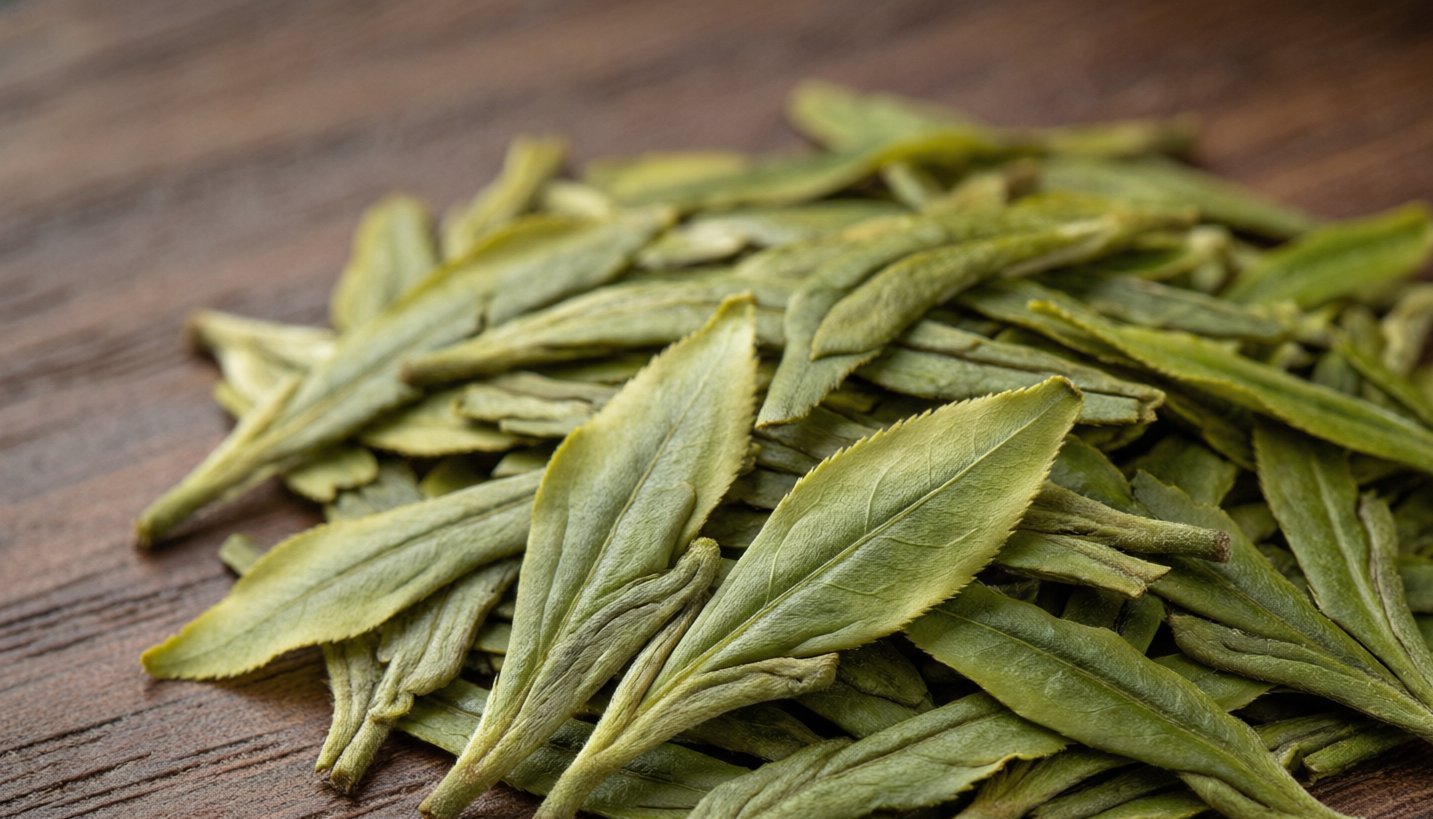
It is generally made from early spring buds or one-bud-one-leaf picks, depending on grade. The dry leaves are tightly rolled, fuzzy, and slightly gray-green rather than the flattened yellow-green appearance of Longjing. After brewing, the leaves open cleanly, and the soup is usually pale yellow-green with a pronounced umami and chestnut note.
Mengding Ganlu falls into the broader family of Sichuan green teas, but it is distinct from Emei Xueya, Zhuyeqing, and other local styles. The difference is mainly terroir: Mengding Mountain has cool, misty conditions that slow bud growth and concentrate amino acids.
The Origin That Shapes the Flavor
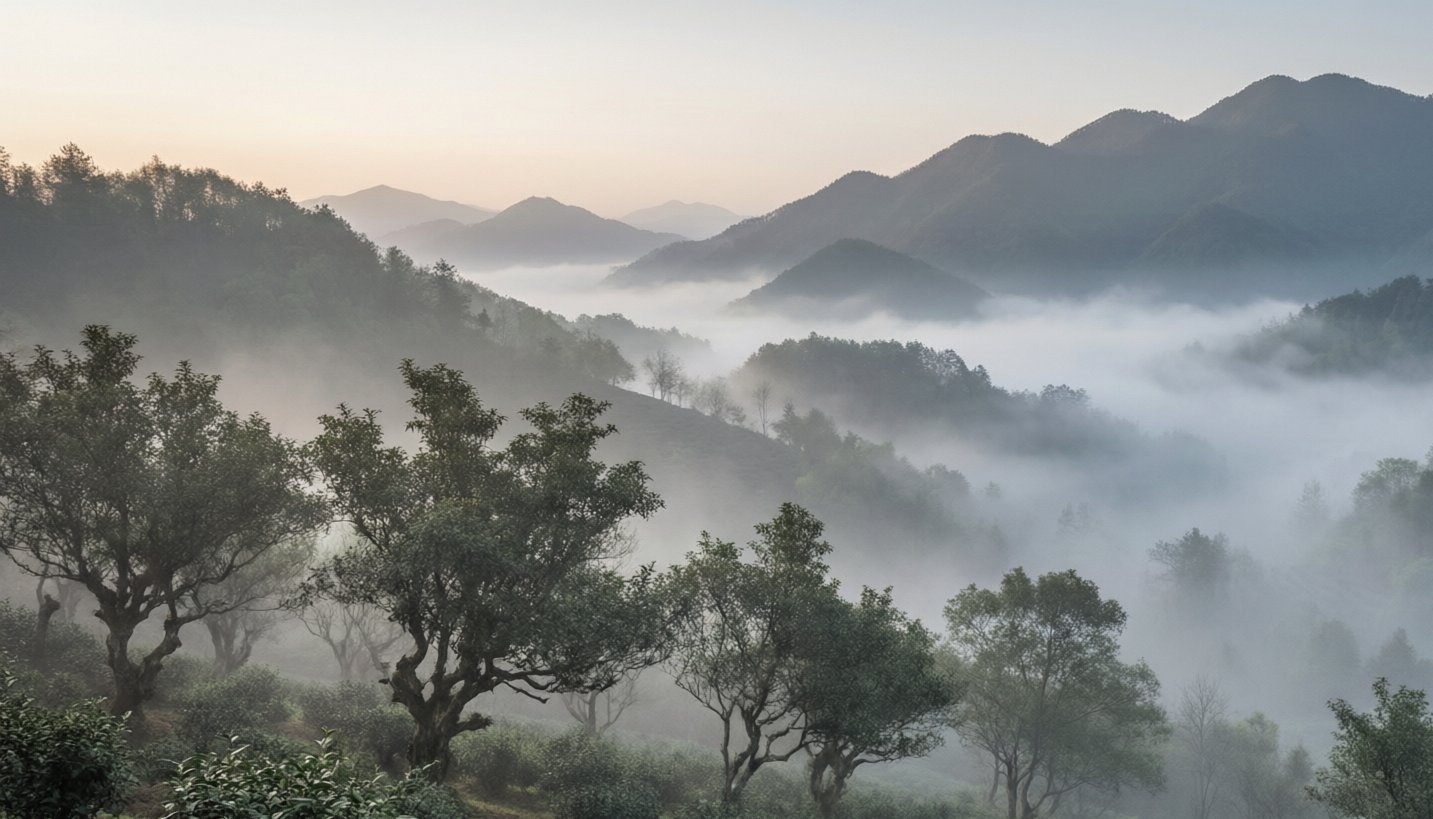
Mengding Mountain lies in Ya'an, at the eastern edge of the Qinghai-Tibet Plateau. The area is known for high humidity, frequent cloud cover, and steady rainfall across spring. These conditions reduce direct sunlight and slow photosynthesis, which helps the leaves retain more theanine and less harsh catechin bitterness.
Historical records commonly describe Mengding Mountain as one of the earliest tea-growing sites in China. The mountain was an important tribute tea source during the Tang and Song dynasties, and its tea culture remains heavily ingrained in Sichuan regional identity [1].
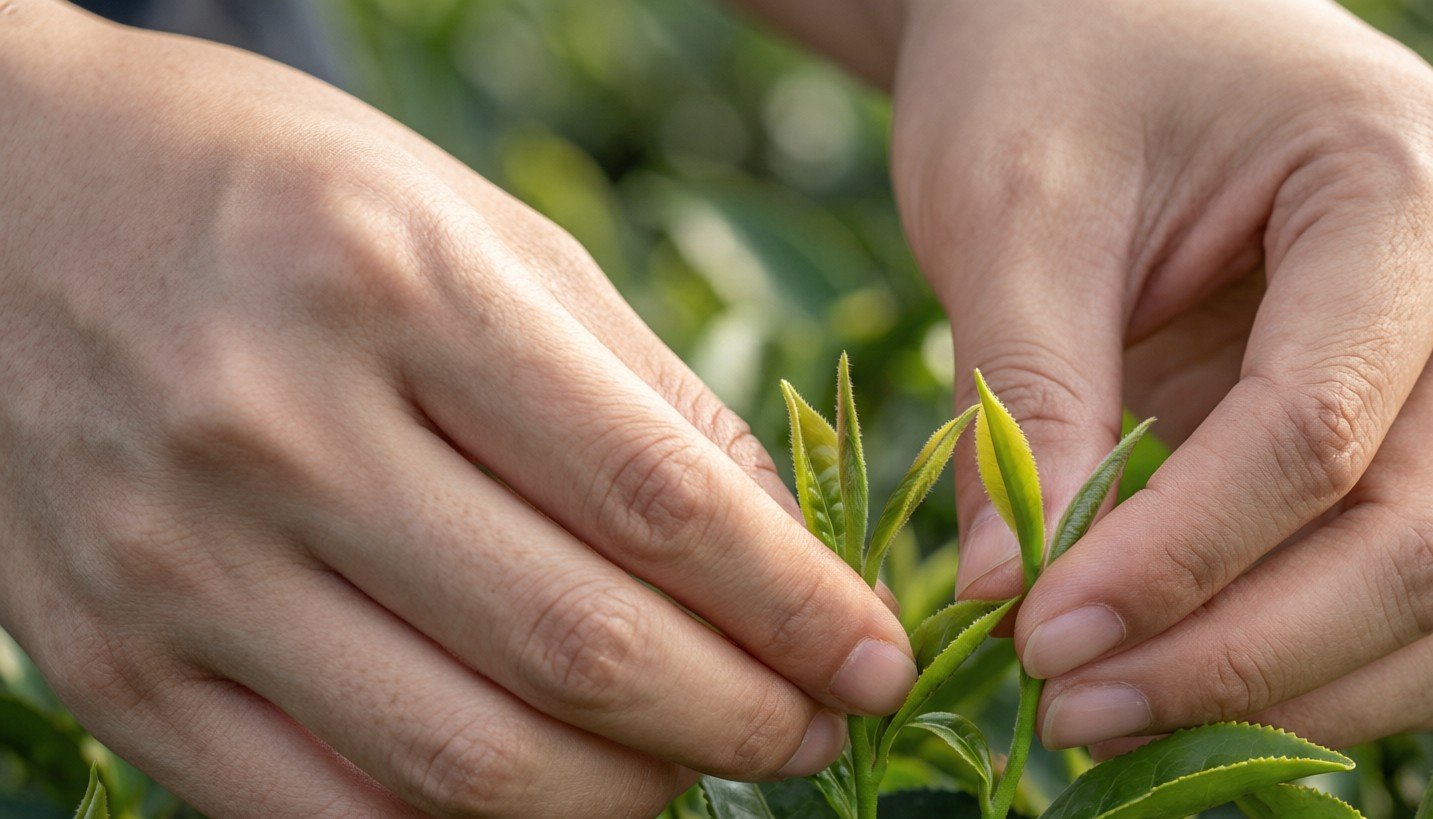
From a buyer's perspective, origin is not just marketing. Mengding Ganlu made from high-altitude plots tends to have a thicker, more lubricating mouthfeel and a longer sweet aftertaste than lower-elevation lots, which can be greener and more astringent.
How Mengding Ganlu Is Made
Mengding Ganlu follows a classic green tea sequence: picking, spreading or withering, fixing, rolling or shaping, and drying.
The key step is fixing, or "kill-green." In Mengding Ganlu production, the leaves are heated to stop enzymatic oxidation. Different factories may use a hot pan, a drum, or a combination depending on their equipment and house style. What matters for raw tea quality is precise temperature control and timely cooling after fixing.
Shaping is another defining point. Mengding Ganlu is rolled into tight slender strips rather than pressed flat like Longjing or curled like Biluochun. The rolling process also breaks cell structures lightly, which releases flavor compounds during brewing.
Traditional styling and machine-assisted styling both exist. Machine-styled lots can still be excellent, provided the raw leaf is clean and the fixing is even. The diet-grade appearance of a tea often says less about cup quality than the harvest date and leaf tenderness.
Flavor Profile: What It Actually Tastes Like
Mengding Ganlu is often described as "nectar-like," but that term hides more than it reveals. In practical tasting terms, a good spring lot usually shows three layers:
- Aroma: steamed chestnut, fresh sugarcane, or orchid-like florals depending on cultivar.
- Body: full and brothy, with a sweet umami that coats the tongue.
- Finish: long, clean, and mildly sweet, with minimal astringency.
The tea is less vegetal than some Japanese greens and less smoky than some lower-end pan-fired Chinese greens. It tends to be softer than Longjing while still carrying more structure than a delicate silver-needle white tea.
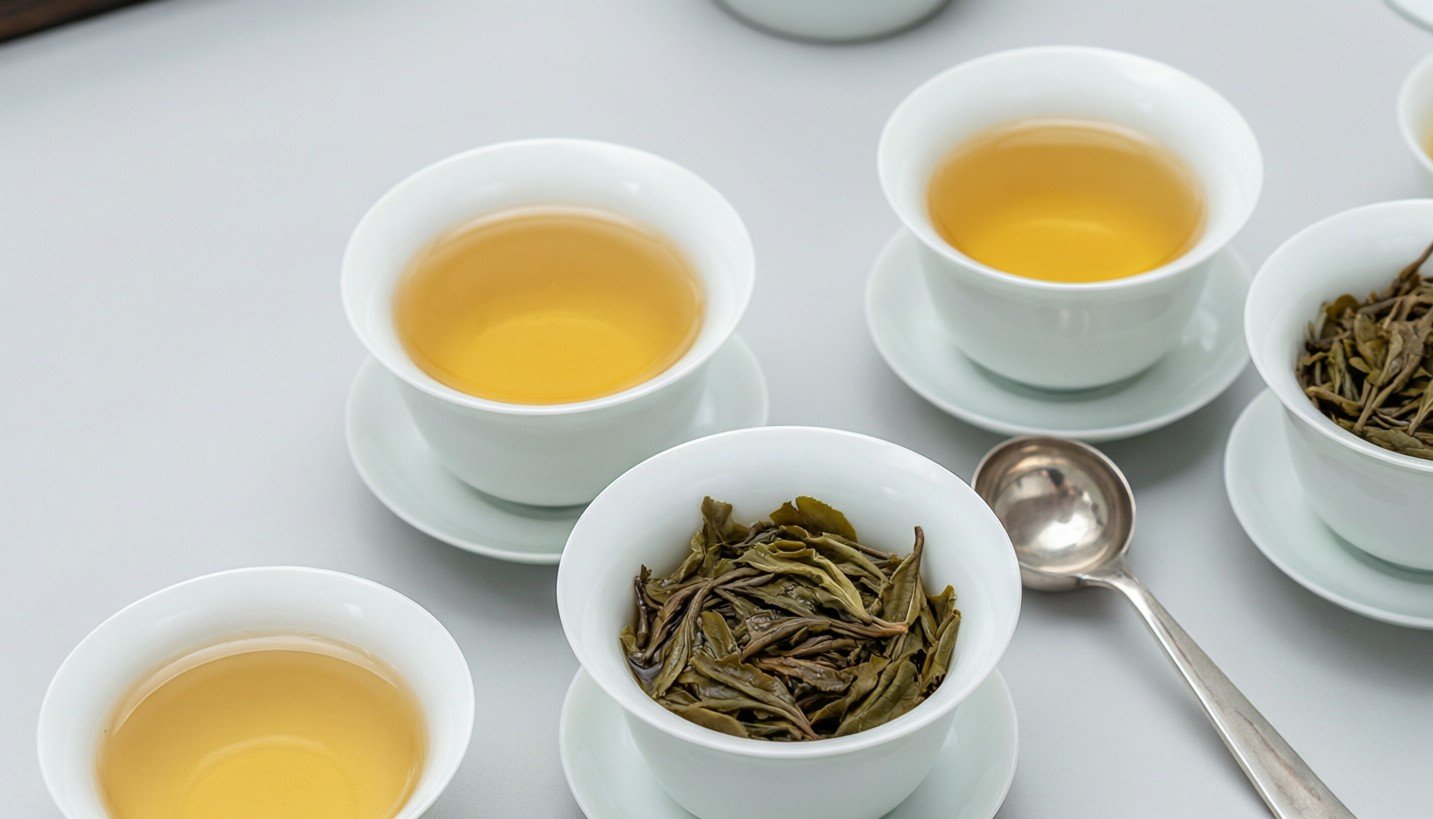
One honest caveat: late-spring or summer lots can taste flatter and more astringent. If a Mengding Ganlu sample is overly bitter or smells grassy without a sweet core, it is usually a lower-grade leaf or poor fixing, not a true representation of the style.
Mengding Ganlu vs Other Famous Green Teas
| Tea | Leaf Shape | Aroma Profile | Body | Typical Processing Identity |
|---|---|---|---|---|
| Mengding Ganlu | Tight needle strips | Chestnut, sugarcane, light floral | Soft, brothy, sweet | Pan or drum fixed, rolled |
| Longjing | Flat, narrow | Roasted chestnut, edamame | Clean, firm | Pan-fried |
| Biluochun | Fine spiral | Floral, fruity | Delicate, sweet | Pan-fried |
| Zhuyeqing | Flat, bamboo-leaf-like | Vegetal, fresh | Crisp, umami | Pan or steam assisted |
The difference between Mengding Ganlu and Longjing is often described as "softness versus structure." Longjing tends to have a more pronounced roast character, while Mengding Ganlu leans toward sweetness and mouth-coating texture.
How to Spot Good Mengding Ganlu
When you evaluate Mengding Ganlu, focus on five points:
- Harvest timing: Early spring lots are usually more tender and more aromatic. Pre-Qingming material is expensive, but a good early-to-mid spring lot can still perform well.
- Leaf condition: Dry leaf should be tight, intact, and covered with fine down. Broken needles or excessive dust suggest rough handling or lower grade.
- Dry aroma: It should smell clean and slightly sweet, never stale or sour.
- Brewed color: Pale yellow-green, clear, not brown or murky.
- Aftertaste: The best lots leave a sweet, slightly cooling sensation in the throat.
A simple test for wholesale buyers is to brew at 85°C and taste after 30 seconds. Harsh bitterness at that temperature usually signals poor leaf or incorrect fixing.
Brewing Mengding Ganlu Properly
A common mistake is brewing Mengding Ganlu too hot or too long, which flattens its sweetness.
A practical starting point is 3 grams of leaf per 150 ml of water at 80–85°C. Use a short first infusion of 20–30 seconds, then add 5–10 seconds for later infusions. The tea should give three to five solid brews if the leaf is good.
Glass or porcelain works well because it lets you watch the needles open. If the cup becomes bitter quickly, lower the water temperature before changing the leaf-to-water ratio.
Sourcing Mengding Ganlu: What to Ask Suppliers
If you are buying Mengding Ganlu for resale or private label, ask for the harvest date, altitude or village-level origin, fixing method, and a pre-shipment sample from the exact lot you will receive. Avoid suppliers who only describe the tea with broad terms like "high quality" and cannot explain the processing.
Chinese tea suppliers can arrange direct Mengding Ganlu sourcing, including early-spring lots, bulk packaging, and private label options. For specific MOQs, available grades, and current harvest pricing, contact us at xuansc2144@gmail.com with your target volume and packaging requirements.
FAQ
Is Mengding Ganlu the same as Mengding Huangya?
No. Both come from Mengding Mountain, but Mengding Ganlu is a green tea while Mengding Huangya is a yellow tea. They use different post-picking processing steps and have different flavor profiles.
How much caffeine does Mengding Ganlu contain?
Mengding Ganlu is a green tea, so it contains caffeine. Exact levels vary by cultivar, bud-to-leaf ratio, and brewing method. A short infusion at moderate temperature extracts less caffeine than a long, boiling-hot steep [4].
Does Mengding Ganlu taste sweet on its own?
Good early-spring Mengding Ganlu has a naturally sweet, brothy character without sweeteners. The sweetness comes mainly from amino acids and soluble sugars in the leaf, not added flavoring.
Is Mengding Ganlu expensive?
It depends on grade and harvest timing. Pre-Qingming, single-bud lots are premium-priced, while later-spring and machine-styled lots can be quite affordable for daily drinking or bulk programs.
Can Mengding Ganlu be used for cold brew?
Yes. Cold brewing brings out its sweet, nutty side and reduces bitterness. Use roughly 5–8 grams of leaf per liter of cold water and steep for 4–8 hours in the refrigerator.
References
[1] National Standard of the People's Republic of China, GB/T 18650-2008, Product of Geographical Indication — Mengding Ganlu Tea.
[2] Tea Research Institute, Chinese Academy of Agricultural Sciences, Green Tea Processing and Quality Control.
[3] Ya'an Municipal Agriculture Bureau, Mengding Mountain Tea Production Region Overview.
[4] U.S. Department of Agriculture, FoodData Central, Tea, Green, Brewed.
No author description available.

白玉京