What Is Zhejiang Green Tea and Why Does Origin Matter?
Zhejiang green tea is not a single tea. It is a broad category of unoxidized tea made from Camellia sinensis leaves grown and processed in Zhejiang province, on China's eastern coast. The name covers famous styles such as West Lake Longjing, Anji Baicha, Kaihua Longding, and Jingshan tea. Under ISO 11287:2011, green tea is defined as tea that is unoxidized and produced by heat treatment to inactivate enzymes shortly after harvest [1]. That technical point matters because it explains why a pan-fired Longjing and a jade-green Anji Baicha can share the same category but look and taste nothing alike.
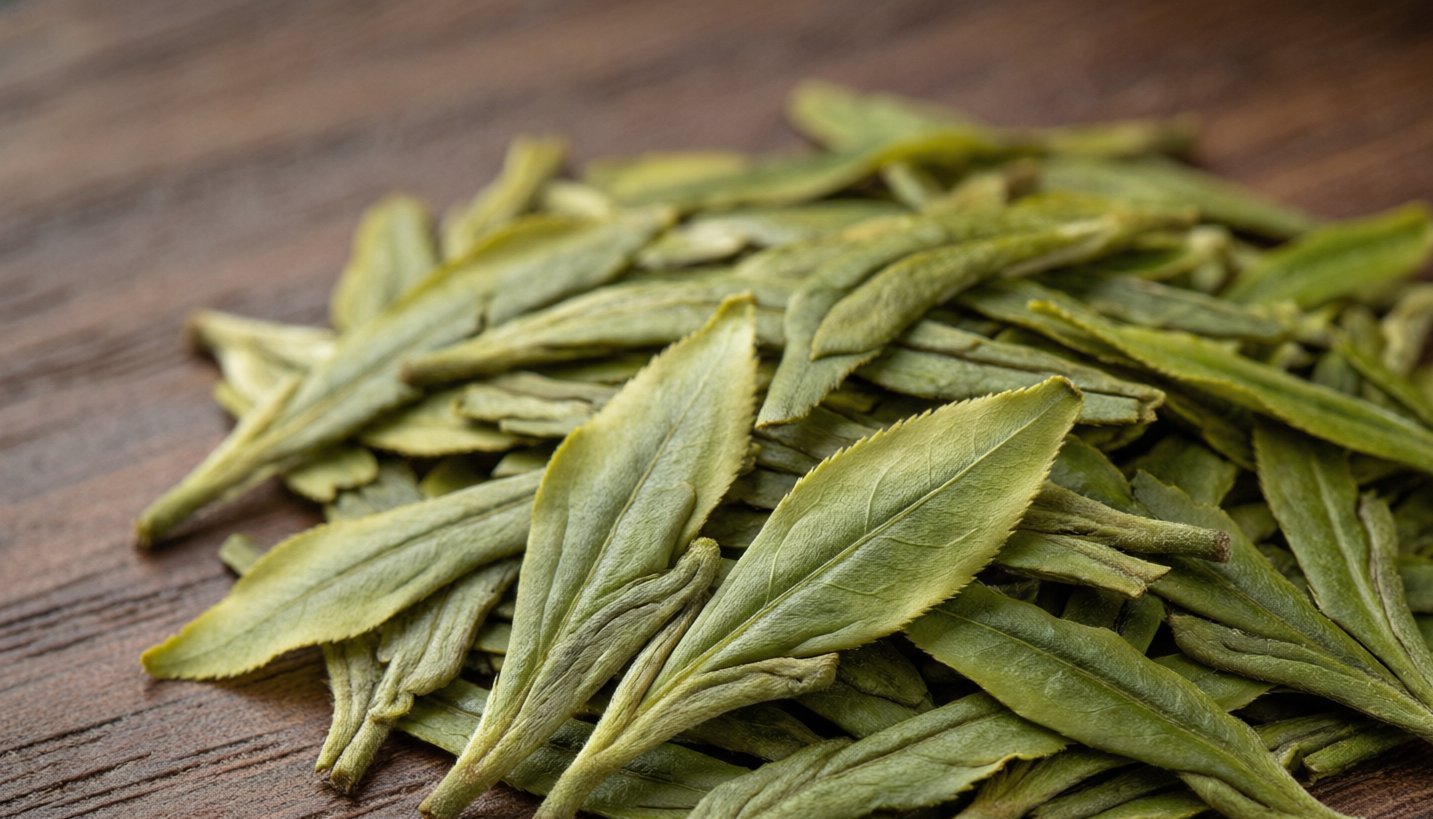
What Counts as Zhejiang Green Tea?
Zhejiang is one of China's most important green-tea-producing provinces [2]. For wholesale buyers, the category usually breaks into four recognizable style clusters:
- Longjing (Dragon Well): flat, smooth leaf with chestnut and toasted bean notes. The West Lake area of Hangzhou is the most famous sub-origin.
- Anji Baicha: made from a temperature-sensitive cultivar with pale young leaves. It is still a green tea; the word "white" in the name refers to the leaf color at harvest, not the processing category.
- Kaihua Longding: needle-shaped buds with a clean, sweet, lightly floral profile, produced in Quzhou in western Zhejiang.
- Jingshan tea: a smaller-production Hangzhou-area tea tied historically to Jingshan Temple and tea ceremony culture.
What unites them is not flavor. It is the shared province, the use of local cultivars, and a processing tradition built around heat fixation soon after picking.
How Zhejiang Green Tea Is Made
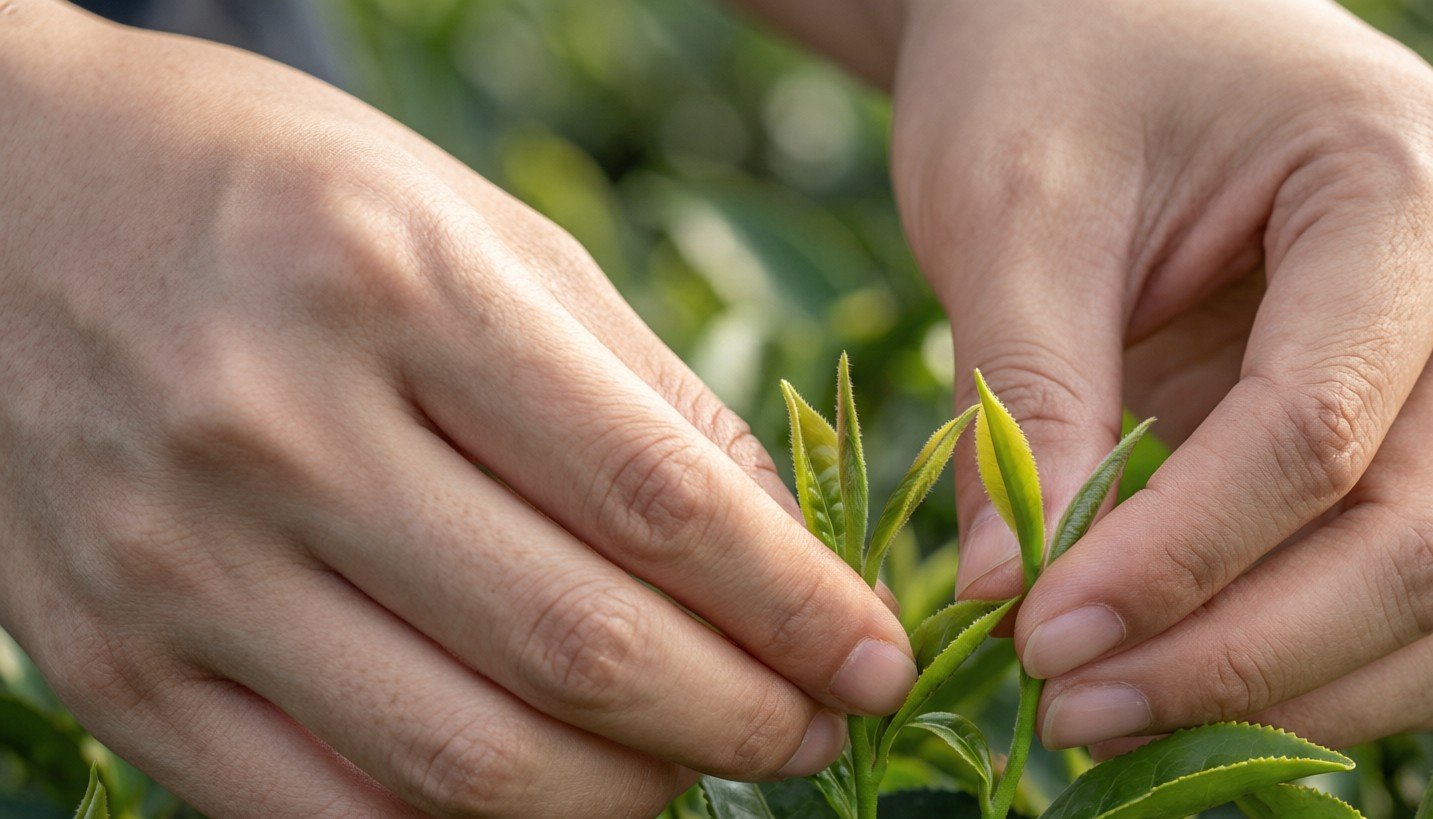
Most Zhejiang green tea is pan-fired rather than steamed. The basic sequence is picking, withering, heat fixation (sha qing), shaping, and drying.
The fixation step is decisive. Heat denatures the enzymes that would otherwise oxidize the leaf. Longjing gets its flat shape from hand or machine pressing during heating. Anji Bai cha and Kaihua Longding are shaped into finer, needle-like or slightly twisted forms. National standard GB/T 14456.1-2017 sets out the basic product categories and sensory requirements for green tea [3].
This processing difference is also why Zhejiang green tea tastes distinct from Japanese steamed green tea. Japanese sencha often emphasizes marine, grassy, and umami notes. Zhejiang pan-fired teas lean toward nutty, toasted, floral, and fresh vegetal profiles.
What Makes Zhejiang Green Tea Taste and Look Different
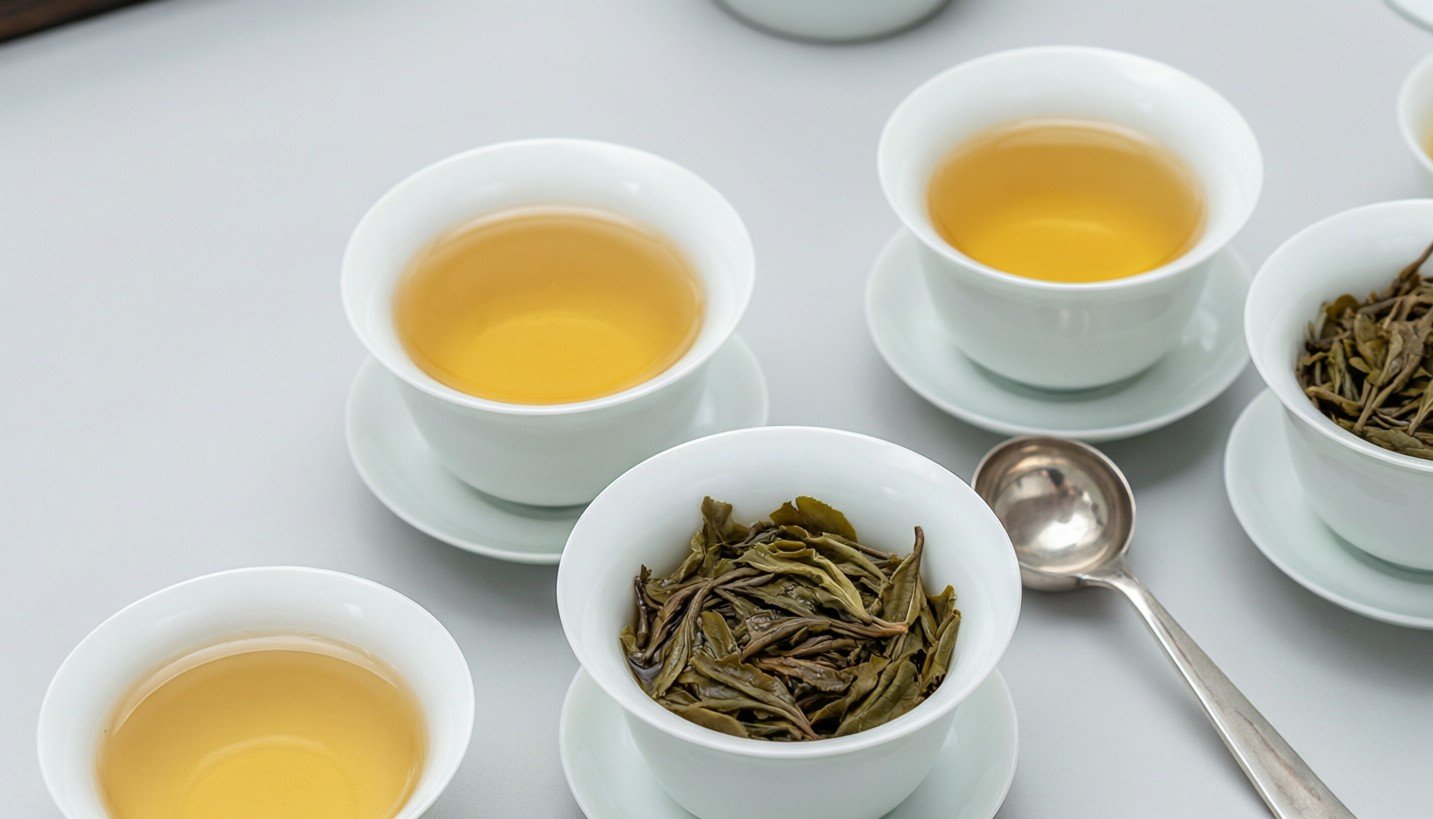
A well-made Zhejiang green tea usually shows a pale yellow-green to clear jade liquor. The dry leaf can be flat, needle-like, or gently curled depending on style.
Typical tasting notes include:
- Chestnut and toasted green bean in Longjing
- Sweet corn and light orchid notes in Anji Baicha
- Clean stone fruit and snap pea notes in Kaihua Longding
- Soft, mineral finishes in Jingshan teas
Season, leaf grade, and storage affect these notes more than the famous name alone. A flat, uniform leaf with intact tips is a positive sign, but the final proof is always a side-by-side cupping.
Grades and Labels Buyers Should Know
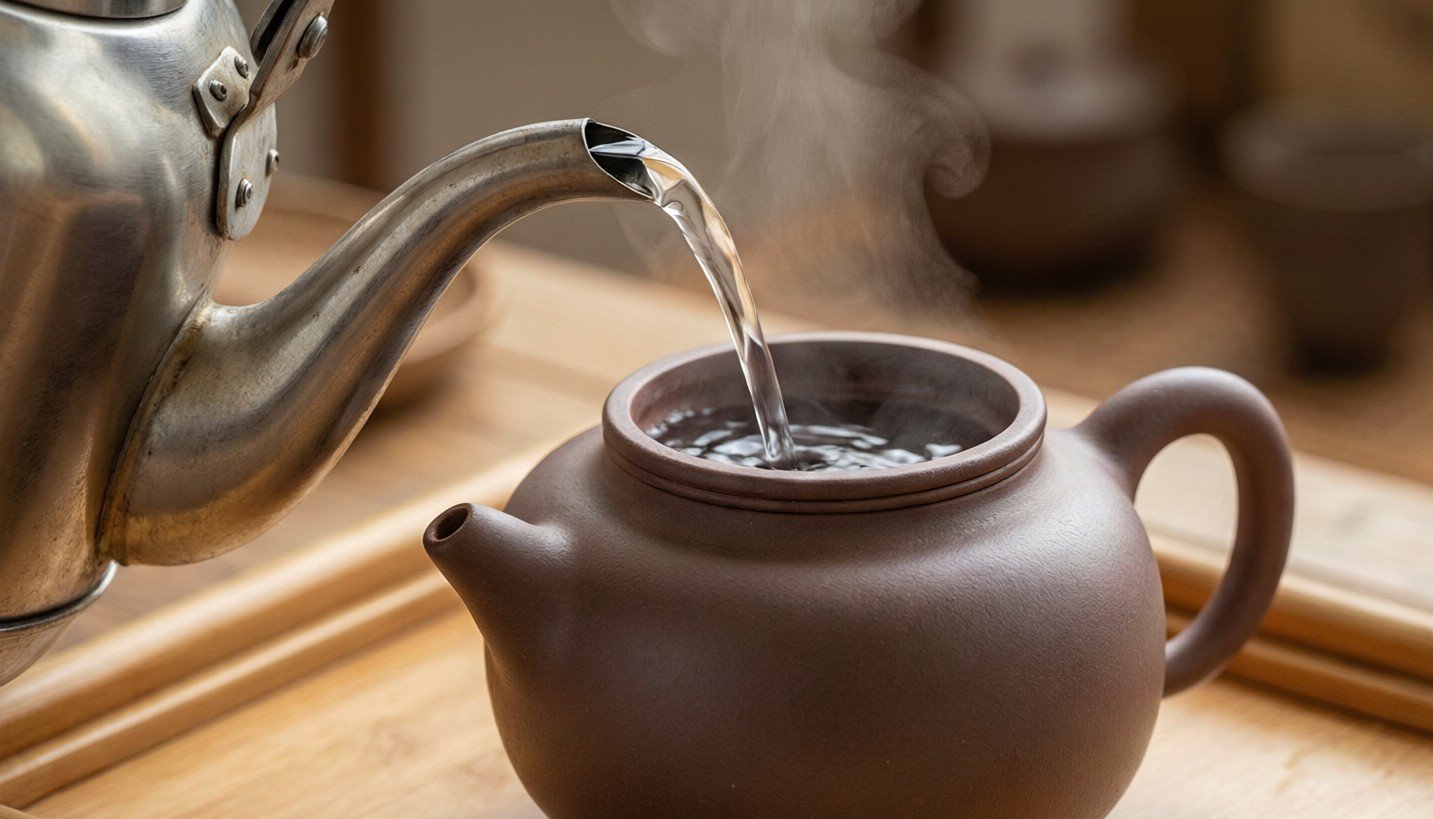
Green tea grading in China is based mainly on fresh-leaf composition, harvest timing, shape, color, and cup quality. Early spring harvests, especially before Qingming, usually command higher prices, but an early date does not automatically mean a superior tea.
For sourcing, pay attention to these label signals:
- Full leaf, bud-to-leaf ratio: more buds and tender standards generally mean higher grade.
- Harvest date: spring lots behave differently from late-spring or summer lots.
- Origin specificity: "West Lake Longjing" is a narrower, geographically protected claim than generic Longjing. Buyers should verify origin claims before paying a premium.
- Processing style: machine-fixed and hand-fixed lots can differ in depth and price.
Ask for batch numbers, harvest dates, and cupping notes. Compare the same grade across two or three suppliers before committing.
Sourcing Zhejiang Green Tea for Wholesale
China remains the world's largest tea producer, with green tea occupying a dominant share of production [4]. That scale gives buyers choices, but it also makes verification more important.
Before ordering, request samples from the current harvest and confirm the leaf grade, processing date, and batch tea lot number. For export markets, ask for pesticide testing reports and packaging specifications that match the destination country's import rules. Green tea is not a long-aging product like some pu-erh, so freshness and storage conditions should be part of every inspection.
If you are building a Zhejiang green tea program and want to compare current harvest samples, contact us at xuansc2144@gmail.com. We can help you clarify harvest date, leaf grade, and direct sourcing options.
Need a Wholesale Zhejiang Green Tea Supplier?
Chinese tea suppliers works with buyers sourcing Zhejiang green tea for retail, private label, and foodservice programs. Send your target grade, annual volume, and destination market to xuansc2144@gmail.com. We will point you toward suitable lots, packaging formats, and sample requests.
Frequently Asked Questions About Zhejiang Green Tea
Is all Longjing tea from Zhejiang?
No. Longjing is a style produced in several tea-growing areas, not only Zhejiang. West Lake Longjing from the Hangzhou area is the most famous and tightly connected to Zhejiang, but buyers should verify origin claims rather than assume the place-based premium applies to every Longjing label.
Is Anji Baicha an unoxidized green tea?
Yes. Despite the word "white" in its name, Anji Baicha is processed as a green tea. The name refers to the pale color of the young leaves, not to white tea processing. It remains heat-fixed soon after harvest and is not oxidized like black tea or oolong.
What is the difference between Zhejiang green tea and Japanese green tea?
The main difference is processing. Most Zhejiang green tea is pan-fired, while many Japanese green teas such as sencha are steamed. This creates different flavor profiles: Zhejiang teas often show nutty, chestnut, and floral notes, while Japanese steamed teas lean toward grassy, marine, and umami notes.
Are there any health compounds in Zhejiang green tea?
Green tea contains polyphenols, including catechins, and the amino acid L-theanine [5]. Some clinical research suggests these compounds may support attention and mood, though effects vary widely and green tea should not replace medical treatment [6]. The health profile depends on leaf grade, brewing method, and how fresh the tea is stored.
How should Zhejiang green tea be stored?
Store it sealed, dry, cool, and away from light, moisture, and strong odors. Because green tea is not a long-aging category, use it while it is fresh. For wholesale stock, keep inventory rotation tight and avoid warm or humid warehouse conditions.
References
- International Organization for Standardization. ISO 11287:2011, Green tea — Definition and basic requirements. 2011.
- China Tea Marketing Association. China tea production and market report. 2025.
- Standardization Administration of China. GB/T 14456.1-2017, Green tea — Part 1: Basic requirements. 2017.
- Food and Agriculture Organization of the United Nations. FAOSTAT: Production of tea leaves. Accessed 2026.
- Harvard T.H. Chan School of Public Health. The Nutrition Source: Tea. Accessed 2026.
- Mancini E, Beglinger C, Drewe J, et al. Green tea effects on cognition, mood and human brain function: a systematic review. Phytomedicine. 2017;34:26–37.
No author description available.

白玉京