Souchong Tea Origin Explained: Mapping the True Region
Souchong tea is one of China's oldest black tea traditions, but the word "Souchong" now covers far more than its native valley. For importers, knowing where the tea was actually made is the difference between buying a protected-origin original and a generic smoked black tea wearing a familiar name. This guide maps the true origin of souchong tea, the villages behind it, and the label clues that expose blurred sourcing claims.
What Is Souchong Tea?
Under China's black tea classification system, GB/T 13738.3 defines xiaozhong, or souchong black tea, as a distinct processing category, covering both the traditional pine-smoked style and the modern unsmoked styles that follow the same withering, rolling, oxidation, and drying sequence [1]. The Chinese name zhengshan xiaozhong means "small-leaf variety from the proper mountain," while the English name Lapsang Souchong derives from the local pronunciation and the term zhengshan.
True souchong is therefore a place-linked product before it is a flavor profile. The smoke note is famous, but it is not the only legitimate expression of the tea. A buyer who treats souchong only as "smoky black tea" will miss the origin distinctions that drive quality and price.
The Core Origin: Tongmuguan in the Wuyi Mountains
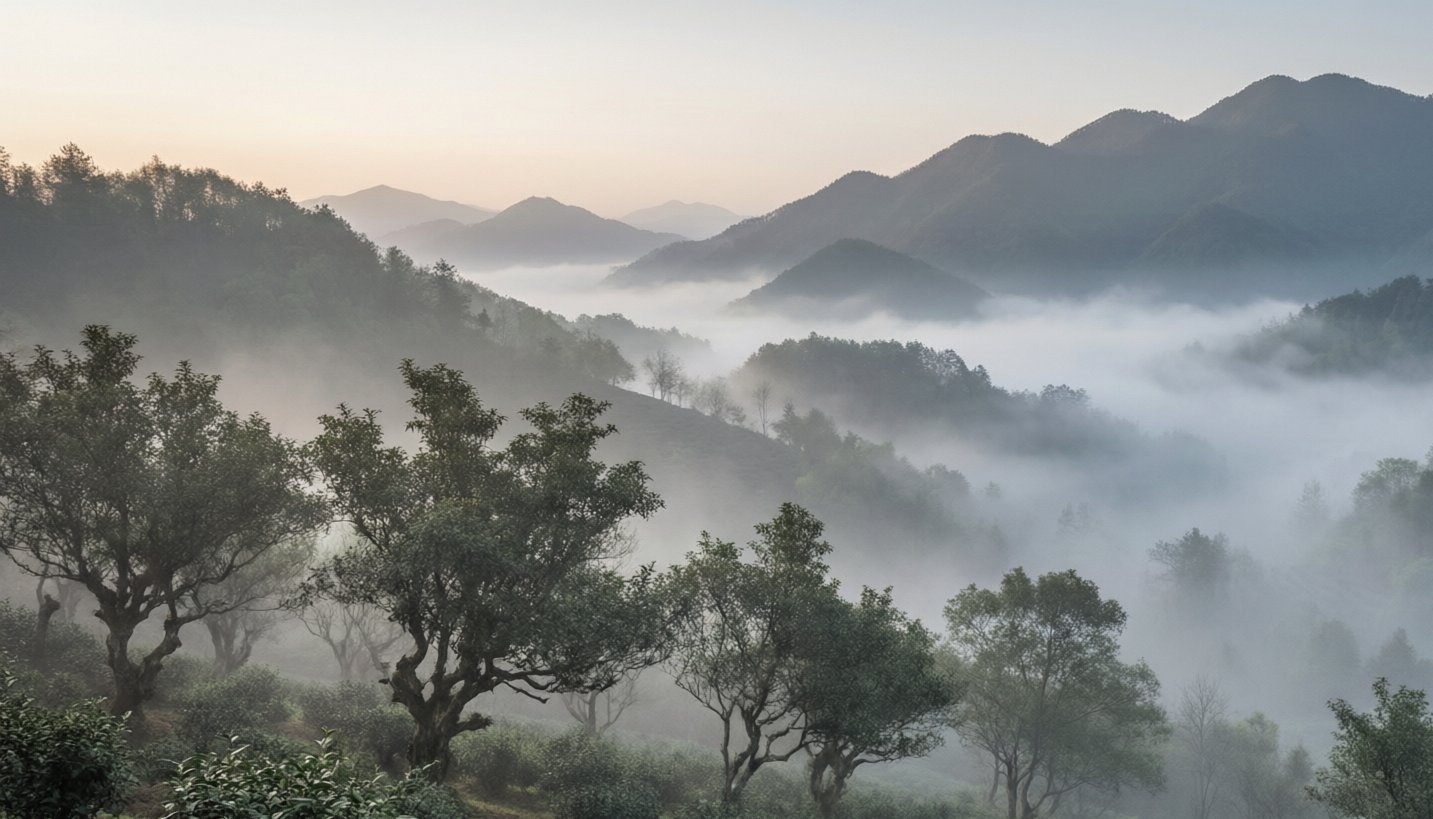
The historical center of souchong production is Tongmuguan, a high-elevation village inside the Wuyishan National Nature Reserve in Fujian Province. The reserve boundary matters because it crosses one of the most biodiverse tea-growing landscapes in China: steep valleys, heavy seasonal humidity, cool nights, and large areas of native broadleaf and pine forest.
Tongmuguan sits at the heart of the protected zone recognized for Wuyi black tea. The geographical indication for Wuyi black tea places the core souchong-growing area around Tongmuguan and its surrounding high-altitude administrative villages, not across the entire city of Wuyishan [2]. For importers, this means "Wuyishan" on a shipping mark is broader than "Tongmuguan" on a credible origin claim.
The area's isolation shaped the tea's development. Before easy road access, tea made in Tongmuguan had to survive long journeys, and the slow drying over local pinewood fires became both a preservation method and a regional signature. Over time, the process became inseparable from the place.
Mapping the Broader Production Region
Outside the core Tongmuguan area, souchong-style black tea is produced in other parts of Fujian and, increasingly, in other provinces. These teas can be well made and consistent, but they do not automatically qualify as zhengshan xiaozhong under the protected-origin framework.
The practical map for buyers has three tiers:
- Core origin: villages inside the Wuyishan National Nature Reserve, centered on Tongmuguan.
- Wuyi black tea GI area: the designated broader production zone for Wuyi black tea, including souchong styles.
- Souchong-style production: tea processed with similar techniques outside the designated area, which should be labeled descriptively rather than as zhengshan-origin tea.
This tiering is important because taste alone rarely reveals the boundary. A clean, heavily smoked tea from outside the area can resemble a Tongmuguan lot, especially after blending or heavy flavoring. Documentation, not aroma, is the reliable test.
How Terroir Shapes Souchong Flavor
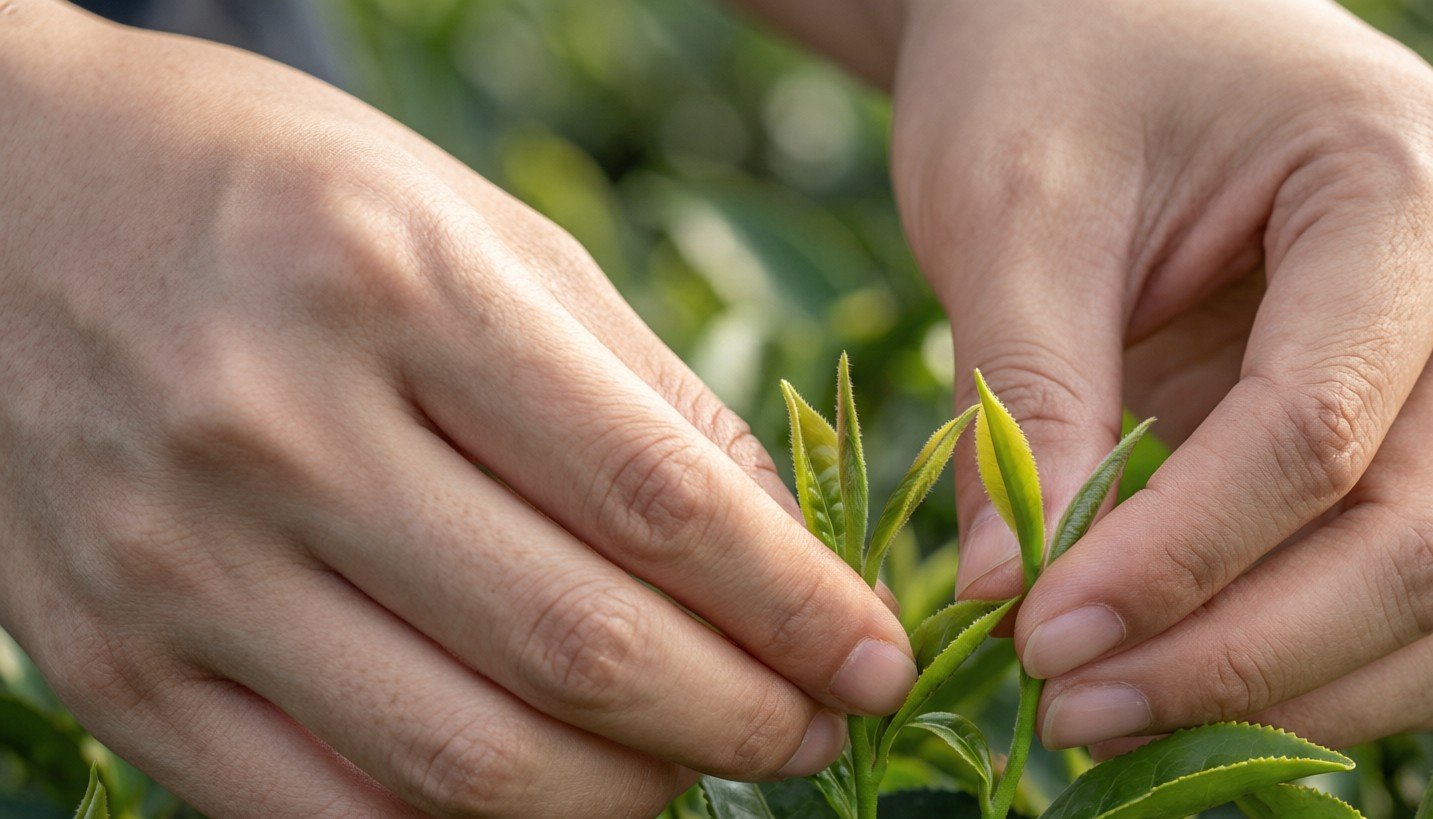
The classic Tongmuguan souchong profile is built from local small-leaf tea bushes, often called caicha, grown under partial forest shade. The high humidity and cool temperatures slow leaf growth, which concentrates aroma compounds and gives the finished tea a rounded, pine-resinous depth that is difficult to reproduce at lower altitude.
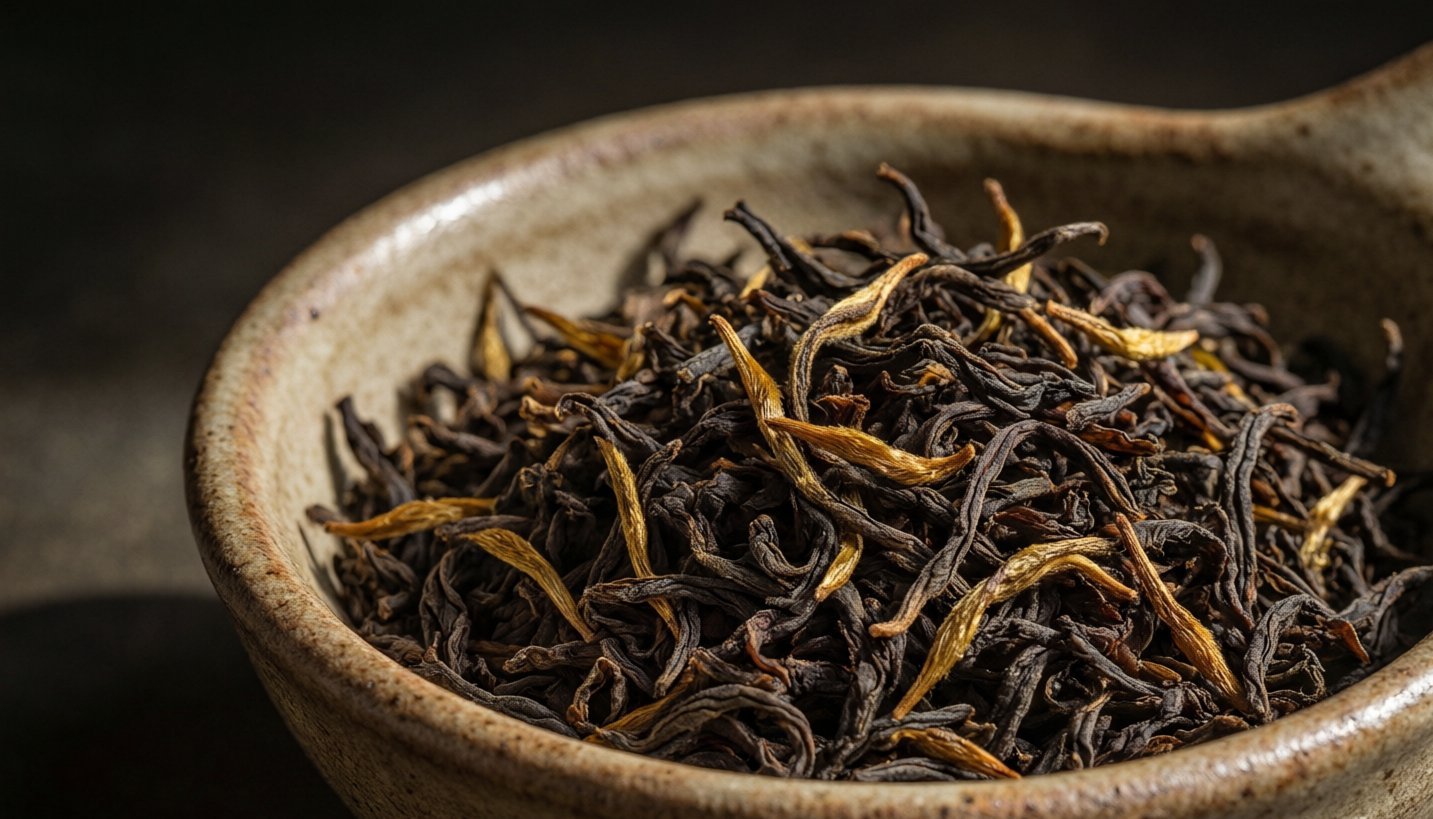
Traditional smoking uses local masson pine wood, which adds a warm, camphor-like layer to the tea. The unsmoked version emphasizes malt, dried longan, and mineral notes instead. In both cases, the underlying leaf character, not the smoke alone, separates good souchong from generic imitation.
For buyers, this means origin and processing cannot be separated. The same smoking step applied to large-leaf, low-altitude tea produces a heavier, sharper result that may pass a quick tasting but disappoints in side-by-side cupping with a Tongmuguan lot.
Origin Grades and What Labels Actually Mean
Label language around souchong is inconsistent in export markets. A useful hierarchy is:
- Zhengshan xiaozhong: the most specific traditional name, implying the proper mountain and the protected area.
- Lapsang Souchong: an English trade name historically tied to the same tea but often used loosely for any smoked black tea.
- Souchong-style or smoked black tea: a processing description that should not imply Tongmuguan origin unless documents support it.
- Artificially flavored "lapsang" products: liquid smoke or flavor compounds applied to neutral black tea, usually for the low-cost retail market.
The last category is the biggest sourcing risk. It can legally be called lapsang-flavored in some markets, but it is not souchong tea in the Chinese standard sense. Importers should request the processing flow and origin documents before committing to volume.
Need clarity on how to verify a lot's origin claim? Send your target grade, volume, and destination market to xuansc2144@gmail.com, and the sourcing desk can walk you through documentary verification before sampling.
Why True Origin Matters for Importers
For wholesale and private-label buyers, origin directly affects price, authenticity, and customer retention. A product built on a blurred origin claim may pass the first order but collapse on reorder when the supplier changes leaf source or the lot cups differently.
Several practical signals help:
- Protected-origin certification tied to Wuyi black tea.
- Village-level purchase or processing records, not just city-level invoices.
- Batch traceability from raw leaf to finished carton.
- Physical inspection of dry leaf, spent leaf, and smoke character against a reference sample.
Origin verification is not a one-step check. It is a document trail that should lead back to a specific village and production period.
Start with a documented origin set: GI status, village-level purchase record, and a physical sample. If you need a second opinion on a supplier's origin claim, send your documents to xuansc2144@gmail.com and the sourcing desk will review the trail with you.
Source Souchong Tea with an Origin-First Supplier
Working with a sourcing partner who treats origin as the first specification reduces the risk of buying a famous name instead of a real tea.
For each inquiry, include:
- Target grade: zhengshan xiaozhong, smoked or unsmoked, or souchong-style.
- Annual volume and packaging format.
- Destination market and required certifications.
- Preferred flavor profile: heavy smoke, light smoke, or smoke-free.
- Budget range per kilogram.
Contact the sourcing desk at xuansc2144@gmail.com with your specifications, and you will receive a shortlist of lots matched to your origin and compliance requirements.
FAQ
Is Lapsang Souchong the same as zhengshan xiaozhong?
They overlap historically but are not always the same today. Zhengshan xiaozhong refers to a place-linked tea from the Wuyishan area. Lapsang Souchong is often used more loosely in export markets for smoked black tea, so the name alone is not proof of origin.
Where exactly is the true origin of souchong tea?
The historical and protected core is Tongmuguan village, inside the Wuyishan National Nature Reserve in Fujian Province. The broader Wuyi black tea geographical indication area includes the surrounding designated production zone.
What is the difference between smoked and unsmoked souchong?
Smoked souchong is dried over pinewood fires and has a clear pine-resin aroma. Unsmoked souchong skips the smoke step and shows more malted, fruity, and honey-like notes. Both belong to the souchong processing family under Chinese classification.
How can importers verify souchong tea origin?
Ask for protected-origin documentation, village-level purchase records, processing flow details, and a reference sample. A trustworthy supplier should be able to trace a lot back to a specific production site and period rather than only to a city or export company.
Does all souchong tea come from Tongmuguan?
No. Souchong-style tea is produced outside the core area as well, but it should not be presented as zhengshan xiaozhong unless it meets the protected-origin requirements. Importers should treat "souchong-style" and "Tongmuguan origin" as different claims.
References
[1] GB/T 13738.3, Black Tea — Part 3: Souchong Black Tea, Standardization Administration of China.
[2] Regulation: Approval notice for the geographical indication product "Wuyi black tea," General Administration of Quality Supervision, Inspection and Quarantine of China, 2011.
[3] Wuyishan National Nature Reserve, Tongmuguan Protected Area Boundary Map, Fujian Provincial Forestry Administration.
No author description available.

白玉京