Real vs Fake Huangshan Tea: 5 Checks Buyers Can Use
Real vs fake Huangshan tea is decided by origin evidence and leaf character, not by packaging that uses the right place name. Huangshan Maofeng, the green tea most buyers mean, is tied to a narrow production area in southern Anhui and to an early-spring bud-and-leaf picking standard. The problem is that many lower-elevation or stale green teas can be dressed up with the same label. Working through five checks before committing to volume gives a buyer a practical screen that is harder to fake than a certificate alone.
Check the Origin Claim
Start with the specific origin, not the words "Huangshan style." Authentic Huangshan Maofeng should be traceable to a named growing point in the Huangshan area of southern Anhui, and a vendor should be able to state the harvest window and lot rather than only repeat "high mountain." A tea described as Anhui green tea or Huangshan-style green tea is not necessarily the same product, because neighboring counties produce similar-looking leaf. Lower-elevation tea can be clean and well made, but it should not be sold as core-area Huangshan Maofeng.
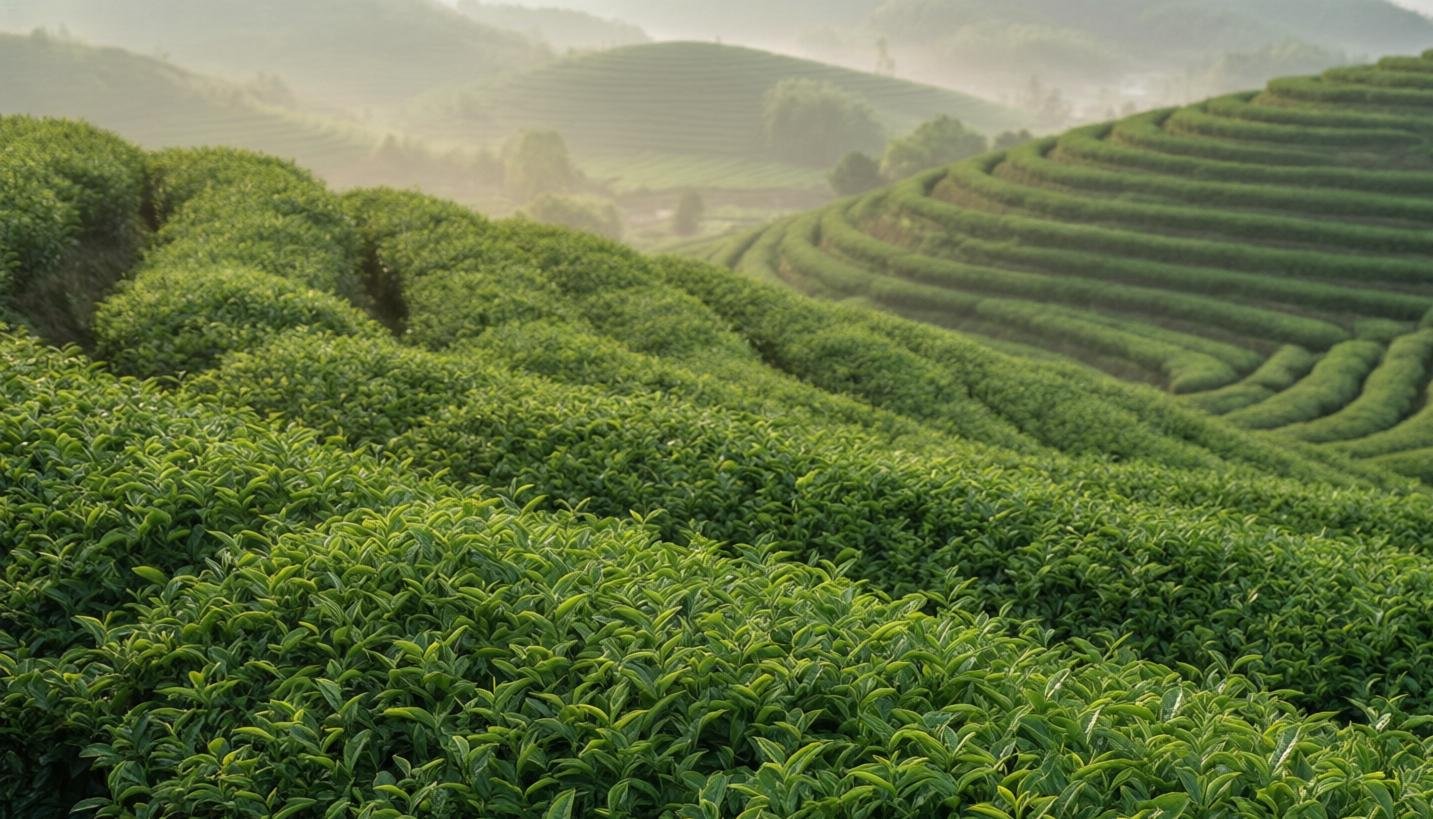
Request origin evidence at the sample stage: specific mountain or village, harvest date, and grade. This does not prove authenticity by itself, but it gives you something to test against the physical leaf later. If the supplier cannot name a narrower production point or changes the origin between samples, treat that as a red flag.
Read the Dry Leaf
The dry leaf is the first physical screen. Authentic Huangshan Maofeng usually shows a slightly curled bud with one or two attached young leaves, a visible layer of fine white down, and a soft green color with a slight ivory or grey-green cast. The buds are not uniform little spears and the leaf is not flat like a longjing-style green tea. You should see some natural variation from leaf to leaf, but the shape should look coherent.
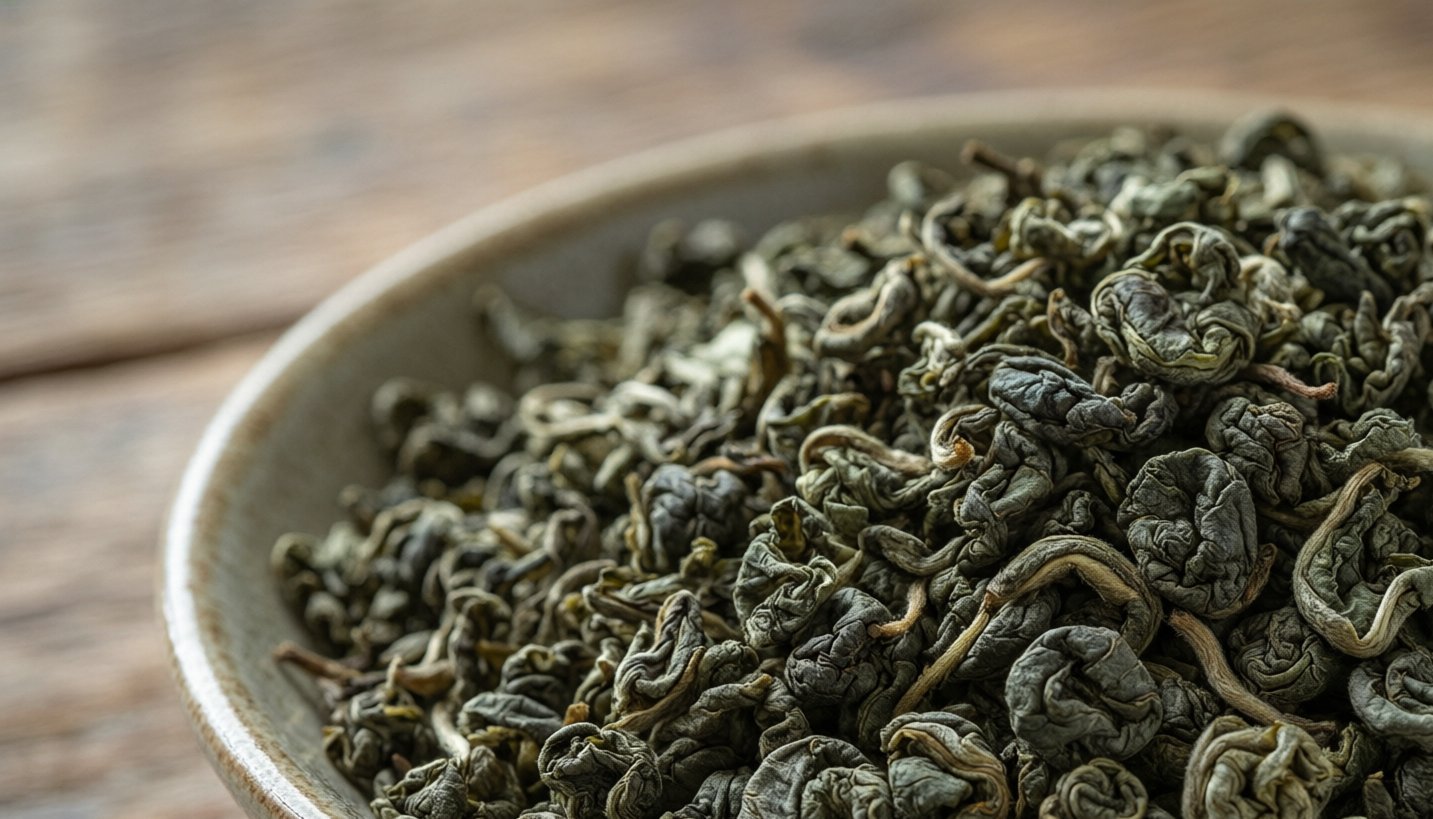
Fake or misleading lots often fail in one of three ways. First, the leaf may be too uniform because it has been sorted to look premium. Second, it may be too broken, dusty, or dark because it is old or was handled roughly. Third, the down may be missing or replaced by a dusty surface that disappears when the leaf is moved. A short visual check should filter obvious mismatches, but it cannot confirm origin on its own.
Check the Wet Leaf and Aroma
Brew a neutral sample before judging the label. Use a clean cupping set, roughly 3 g of leaf for 150 ml of water at 80 to 85°C, and steep for two to three minutes. The goal is to see what the leaf says under standard conditions, not to make the tea taste good with a forgiving brewing method.
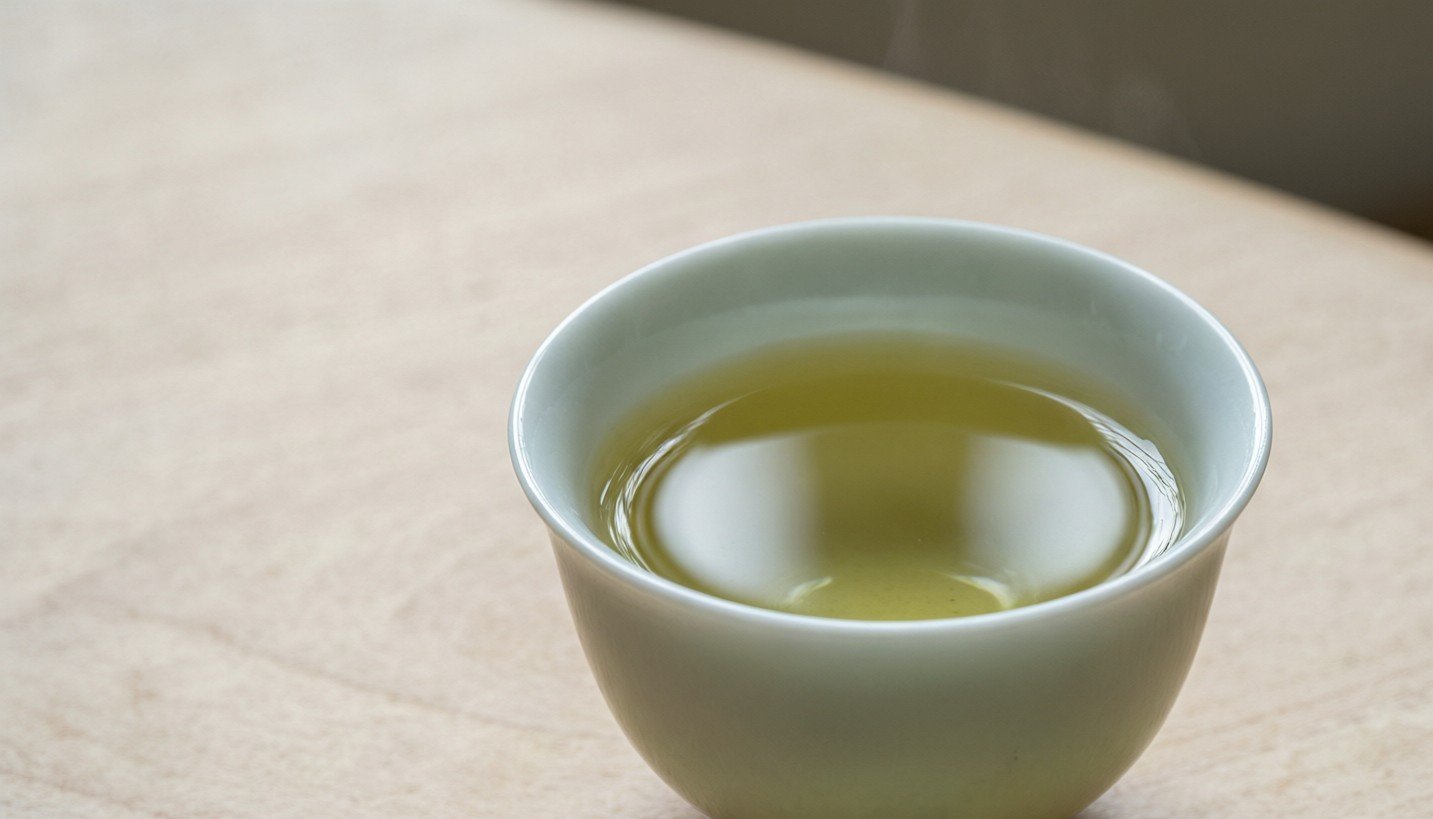
After brewing, the wet leaf should open into soft, uniform bud-and-leaf pieces. Mixed shapes, coarse stalks, or leaves that stay brittle often point to a lower grade or an old lot. The aroma matters more than the dry smell: real Huangshan Maofeng tends to be clean and fresh, with a floral, chestnut, or light vegetal character. A flat, toasty, smoky, or stale note can mean the tea has been over-fired or stored too long to cover a weak base.
Taste the Liquor and Aftertaste
The liquor should be pale yellow-green and clear, not cloudy or brown. Authentic Huangshan Maofeng usually has a soft, rounded entry, a light sweetness, and only gentle astringency that clears quickly. The aftertaste is often the most reliable signal: real lots leave a clean, sweet finish instead of a dry or sour one.
Fake or low-grade lots tend to be either thin and flat or sharply bitter. A heavy roasted flavor in a green tea can hide stale leaf. Taste the sample more than once, because a single brew can mislead if the water ratio was off. If the tea needs a lot of adjustment to become acceptable, ask whether it is the actual lot you will receive.
Check Packaging, Price, and Traceability
Packaging can support a claim, but it is not proof. A tin or bag with the Huangshan name is easy to source, and labels can be reused. Look for information that connects the package to the lot: harvest date, grade, net weight, storage condition, and a supplier code. Compare the sample against the description in the sales material.
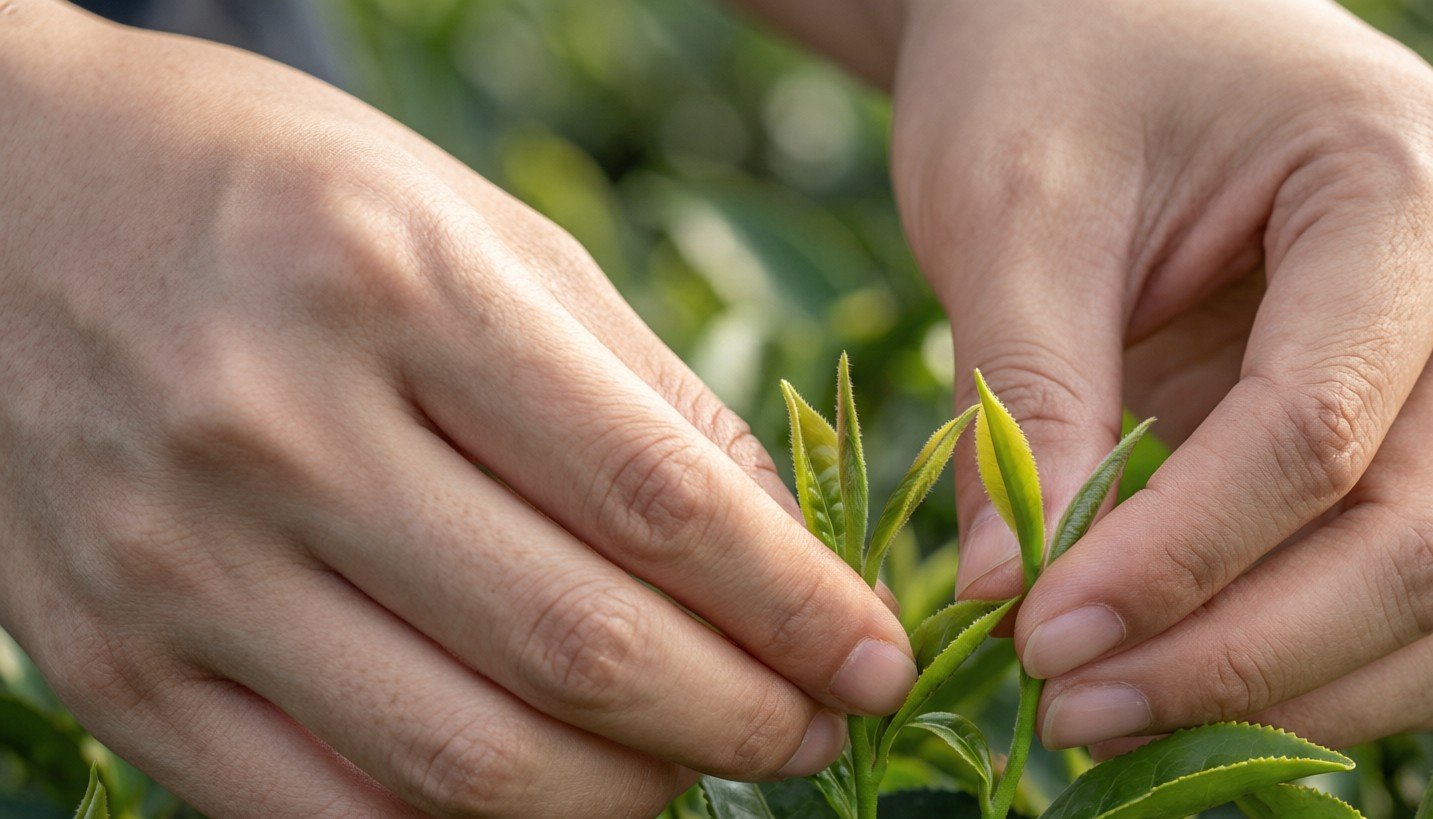
Price works best as a sanity check rather than a verdict. Very cheap core-area spring tea should be questioned because that combination is uncommon, but a high price does not make a tea authentic. Ask for a small current-harvest sample, then compare the leaf, aroma, liquor, and aftertaste before ordering more. If the vendor refuses to sell a sample or only offers an older lot, that is a stronger signal than any slogan.
Put the Five Checks Into One Test
Use the same five checks on every supplier you evaluate, and keep the sample details in a simple table.
| Check | Real Huangshan Maofeng signal | Red flag |
|---|---|---|
| Origin claim | Named mountain, village, or production point in the Huangshan area | Only "Huangshan style" or a generic Anhui origin |
| Dry leaf | Curled bud with one or two leaves, visible white down, natural variation | Overly uniform, dusty, broken, or dark leaf |
| Wet leaf and aroma | Soft, uniform pieces; fresh floral, chestnut, or vegetal aroma | Mixed shapes, brittle leaf, flat or toasty smell |
| Liquor and finish | Pale yellow-green, clear, soft with a clean sweet aftertaste | Cloudy or brown liquor, sharp bitterness, sour finish |
| Traceability | Harvest date, grade, lot code, and a repeatable sample path | No lot detail, no sample sale, or origin that changes |
A single failing cell does not prove fraud. A pattern across the table is what matters. If a lot passes the physical checks but the traceability is weak, you can buy only a small trial or ask for better documentation before committing to volume.
Sourcing Huangshan Tea With Fewer Counterfeit Risks
Before ordering, send a short authentication request: current-harvest sample, named origin or village, harvest date, grade, and a photo of the dry and wet leaf from the same lot. Compare the answer against the physical sample and keep the results with the supplier record.
If you are comparing several lots, contact Chinese tea suppliers at 427728483@qq.com with the sample details above. A concrete request is easier to verify than a general request for "good quality" tea.
FAQ
Is fake Huangshan tea unsafe?
Not necessarily. Many fake lots are drinkable teas from other areas that are sold under a more valuable name. The main risks are paying for a higher grade than you receive, getting a different flavor profile, and losing traceability. Some old or poorly stored lots may also taste stale, but the label alone does not tell you whether a tea is unsafe.
Can an origin certificate prove authenticity?
A certificate is a useful document, but it is not enough on its own. Certificates can be copied, reused, or issued without checking the current lot. Use the certificate as one part of the test, and always compare it with the dry leaf, wet leaf, aroma, liquor, and aftertaste from the actual sample.
Is a low price always a sign of fake tea?
No. A low price should make you check more carefully, but a tea can be cheap because it is a smaller grade, a later harvest, or a large auction lot. Ask the supplier to explain why the price is low. If the explanation does not match the physical sample, treat the mismatch as a warning.
Should I test the tea differently to avoid ruining the judgment?
Yes, use a neutral method that is the same for every sample. Keep the leaf weight, water temperature, and time consistent, and avoid adding sugar, milk, or flavoring. This makes the results comparable when you decide which lot to buy.
No author description available.

白玉京