Pu-erh Tea Cake Shelf Life: Storage Rules That Work
A compressed Pu-erh tea cake is one of the few teas that can improve in storage — but only when the storage is right. The Chinese national standard GB/T 22111-2008 distinguishes raw (sheng) and ripe (shou) Pu-erh and treats appropriate storage as part of the product's intended life, not an afterthought [1].
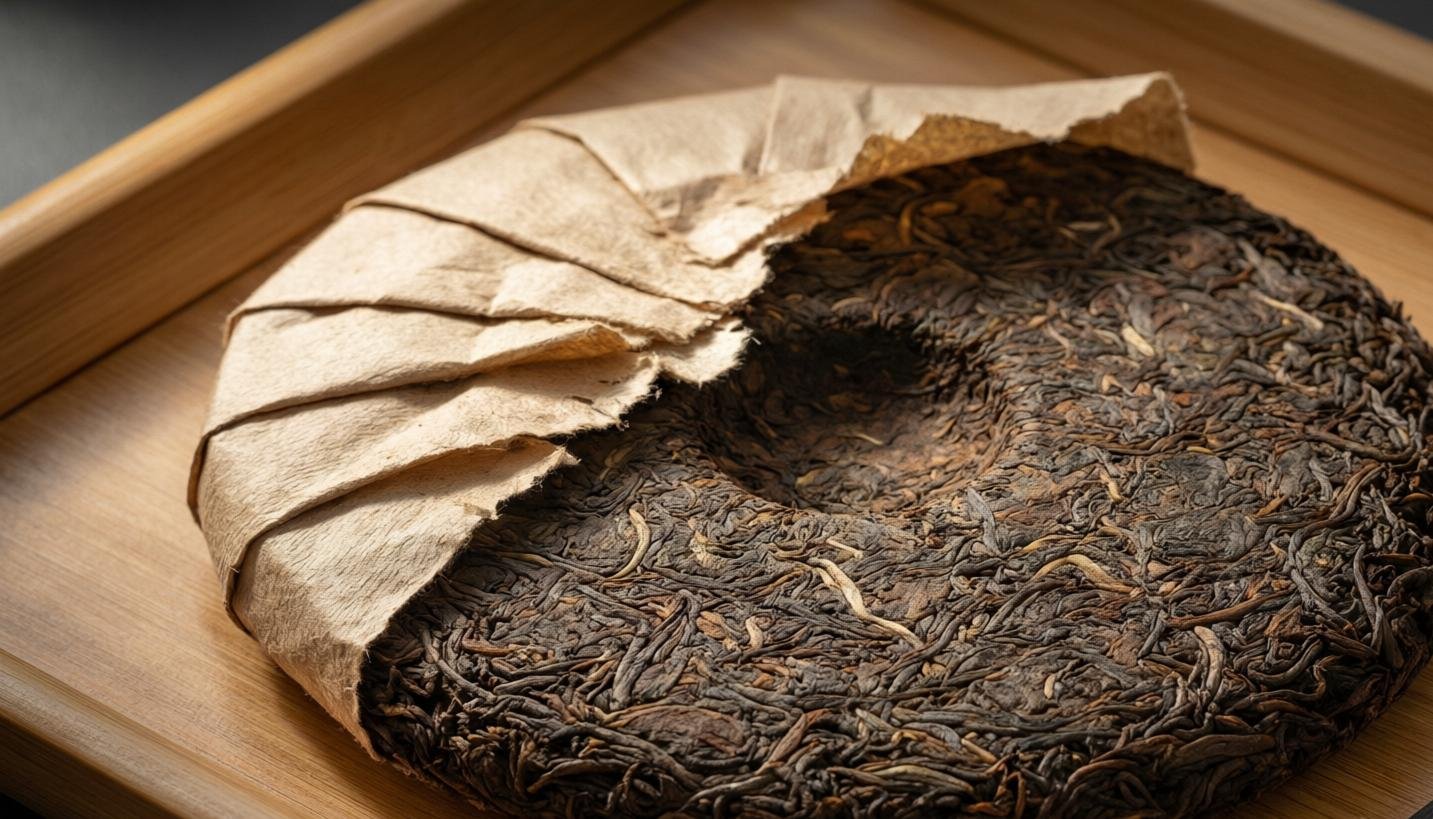
Why a Pu-erh Tea Cake Can Outlast Most Teas
Green and light oolong teas decline as their aromatic oils oxidize. A Pu-erh cake behaves differently. Compression reduces leaf surface area, so the cake oxidizes slowly and allows controlled microbial and enzymatic change to continue over time [2]. That is why buyers do not ask only "How old is it?" — they ask where and how it was stored.
Age alone does not equal quality. A badly stored 15-year cake can taste flat, musty, or sour, while a well-stored younger cake can drink cleanly and age with promise.
How Long Raw (Sheng) and Ripe (Shou) Cakes Keep
Raw and ripe Pu-erh do not age the same way. Raw cakes are the ones most buyers deliberately hold for long periods, while ripe cakes tend to be bought closer to drinking age.
| Factor | Raw (sheng) cake | Ripe (shou) cake |
|---|---|---|
| Typical aging behavior | Can continue to develop for 20 years or more in good storage [2] | Tends to plateau earlier; usually consumed within 5–15 years |
| Preferred storage character | More tolerant of slow, airy, moderate-humidity storage | More sensitive to sealed, stale, or overly wet conditions |
| Practical buying view | Select based on age, storage history, and leaf character | Select based on clean fermentation, batch consistency, and current drinking quality |
No properly stored Pu-erh cake has a fixed calendar expiry. Its drinkability depends on storage conditions, leaf quality, and compression, not simply the number of years since pressing.
Storage Rules That Preserve the Cake
A widely used professional target is roughly 20–30 °C (68–86 °F) with 50–70% relative humidity; the exact set point depends on raw versus ripe cake and the desired aging speed [3]. More important than a single number is stability.
Control moisture. Too much humidity risks mold and off-flavors. Too little slows aging and can leave the tea thin or astringent. A slow, steady environment is safer than large swings.
Protect the tea from odors. Pu-erh readily absorbs smoke, spice, perfume, cleaning products, and warehouse smells. Store cakes away from kitchens, garages, fuel, cardboard with strong printing, and any scented material.
Allow gentle airflow without direct drafts. The cake should breathe, but constant moving air dries it unevenly. Long-term plastic bag storage or vacuum sealing is not recommended for aging because it can trap moisture and suffocate the tea.
Keep packaging simple and food-safe. The original wrapper and bamboo tong are usually best. For opened cakes, use unprinted food-grade paper or an odor-free, breathable container. Keep the cake out of direct sunlight, which degrades leaf oils and color.
Choosing Pu-erh cakes for import means more than age claims. We help buyers verify storage history, batch condition, and raw versus ripe cake options against your market's humidity and price target. Email 427728483@qq.com with your volume and destination, and we will send current wholesale guidance.
Signs a Cake Has Turned and Mistakes to Avoid
Buyers often reject more tea for storage faults than for age. Check for:
- Fuzzy white, gray, yellow, green, brown, or black mold, or any musty, sour, fishy, diesel-like, or chemical smell.
- Dull, brittle leaves, visible water stains, oil spots around the wrapper, or insect damage.
- Liquor that is murky, thin, sharply astringent, metallic, or flat even after proper brewing.
- A dry, dead aroma with no depth when the leaf is warmed.
Common storage mistakes include refrigerating the cake, sealing it in plastic for long periods, placing it near odorous goods, exposing it to direct heat or sunlight, and rapidly moving it between very dry and very humid spaces.
A uniform silvery dust can occasionally appear on wrappers, but if it is fuzzy, colored, or accompanied by an odd smell, the safer commercial rule is to reject the lot.
Storing Pu-erh Cakes for Wholesale and Import
For importing and wholesale, treat storage as part of quality control, not as a warehouse afterthought.
- Inspect each arrival before it enters general stock: check wrapper condition, visible contamination, cake aroma, and moisture feel.
- Hold new lots in quarantine until accepted, then log temperature and relative humidity in the holding area.
- Keep cartons off the floor, away from walls, and separated from chemicals, spices, or strong-smelling goods.
- Track production date and storage region on each batch label. A cake from hot, humid storage needs a different buying decision than one from dry storage.
- Rotate samples for cupping. If a batch begins to flatten or develop off-notes, adjust airflow and humidity before it spreads.
The standard 357g cake remains the reference format in most import conversations, but 100g, 200g, 250g, and 400g cakes are common for retail and sample programs.
Plan Your Pu-erh Tea Cake Sourcing
If you are building a Pu-erh line, specify the format, target age profile, raw or ripe split, and destination climate. We can help compare storage histories, available batches, and wholesale pricing before you commit.
Email 427728483@qq.com with your annual volume and market, and we will recommend cakes and provide the storage and batch documentation you need to buy with confidence.
FAQ
Can a Pu-erh tea cake be stored in the refrigerator?
No. Refrigeration is too cold and too moist for Pu-erh. It halts healthy aging, introduces food odors, and can create condensation inside the wrapper. Store cakes in a clean, odor-free, moderate-humidity space instead.
Does vacuum sealing help long-term storage?
Not for aging. Vacuum sealing removes airflow and can trap residual moisture, encouraging stale or off flavors. It may be acceptable for short-term dry shipment, but long-term storage should use breathable food-safe packaging.
How can I tell if a raw Pu-erh cake is aging well?
Warm the leaf and smell it. A well-aging raw cake usually smells clean, deep, and slightly fruity, woody, or honeyed rather than sour, musty, or thin. The liquor should have body and return flavor across infusions, not collapse after the first steep.
Is a little white dust on the wrapper a sign the cake is ruined?
Not always. Some wrappers naturally pick up paper dust or light tea leaf debris. If the dust is uniform and dry with no fuzz, moldy smell, or colored spots, the cake may be fine. If the dust is fuzzy, yellow, green, gray, or black and the wrapper smells damp or musty, reject the cake.
References
[1] GB/T 22111-2008, Product of geographical indication—Pu-erh tea, Standardization Administration of China, 2008.
[2] J. Zhang, Puer Tea: Ancient Caravans and Urban Chic, University of Washington Press, 2013.
[3] T. Gebely, Tea: A User's Guide, Eggs and Toast Media, 2016.
No author description available.

白玉京