Is Organic Pu-erh Tea a Good Investment? A Reality Check
Organic Pu-erh tea is often marketed as the best of both worlds: a cleaner daily drink and a collectible that gains value as it ages. That framing deserves closer scrutiny. Pu-erh is a post-fermented tea from Yunnan Province defined by China's geographical indication standard [1]. Organic certification, by contrast, is a production-system claim governed by separate agricultural standards [2], [3], [4]. The two features overlap in the marketplace, but one does not create the other.
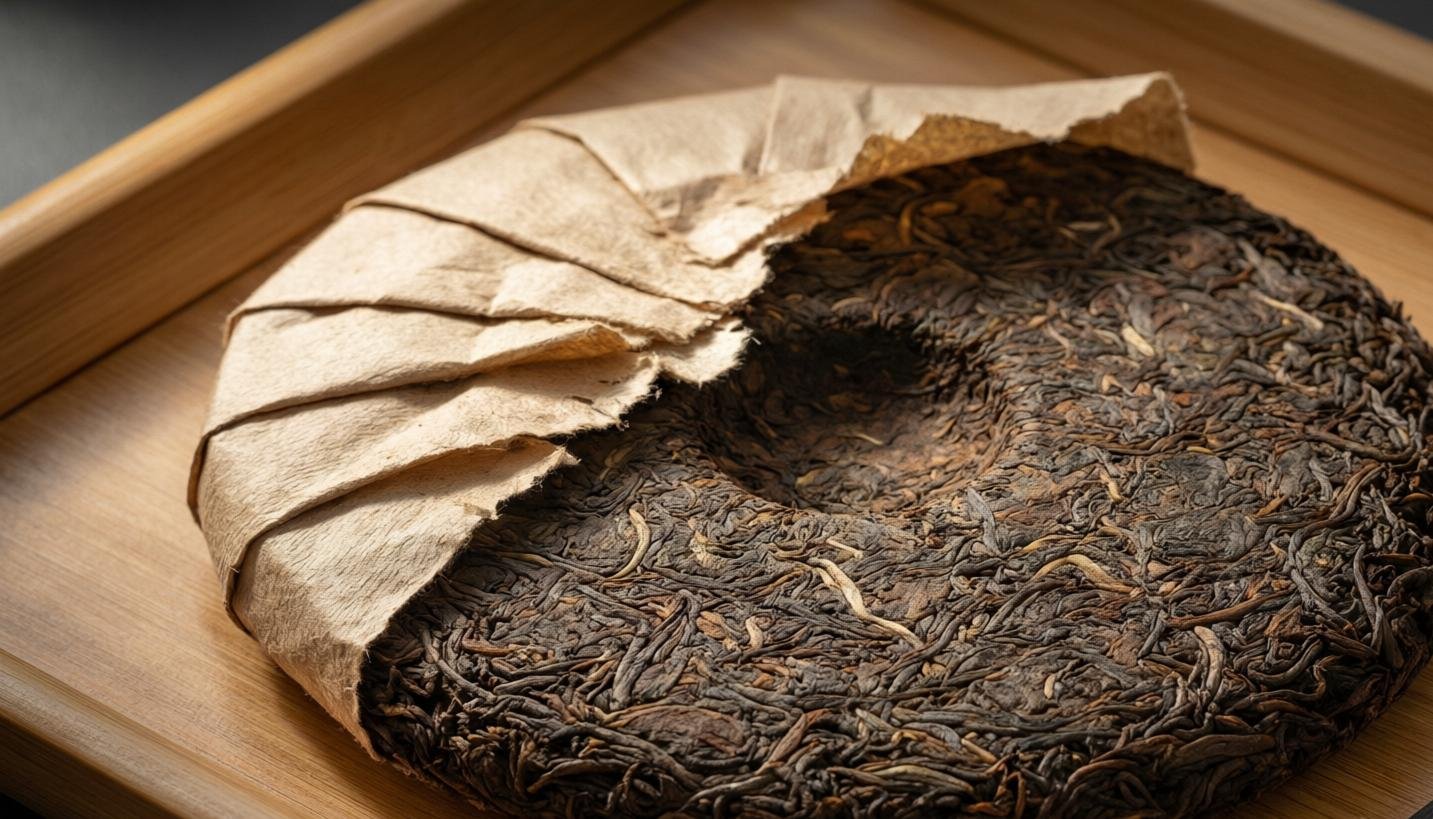
What "Investment Potential" Means for Pu-erh
Pu-erh is not a financial instrument. There is no regulated exchange, no universal index, and no guaranteed buyback. When buyers talk about investment potential, they usually mean one of three things: buying young cakes and reselling them after years of aging, sourcing organic lots at wholesale and selling them to organic-focused buyers, or holding inventory as part of a tea business rather than as a speculative collection.
| Return path | What actually drives it | Main constraint |
|---|---|---|
| Private resale after aging | Rarity, brand trust, storage proof | Illiquid, reputation-based market |
| Wholesale margin on certified lots | Documented organic status and food-safety testing | Premium must survive the supply chain |
| Business inventory holding | Stable demand from repeat clients | Working capital tied up in cakes |
None of these paths is passive. If you cannot identify the next buyer, you are holding tea, not an investment.
The Organic Premium: What Certification Does and Doesn't Change
Organic certification is a meaningful production claim, not a quality guarantee. The USDA National Organic Program prohibits most synthetic pesticides and fertilizers and requires an approved organic system plan [2]. EU organic rules follow the same principle and require documented separation, inspection, and labeling control [3]. In China, GB/T 19630 requires operator certification, input management, and lot traceability from farm through processing [4].
Because tea is a perennial crop, EU organic conversion generally takes at least three years before the first organic harvest can be marketed [3]. That transition cost is real, and it is usually recovered through a higher asking price. This creates what experienced buyers call the organic premium trap: you pay more at purchase, but a future buyer may not value the certificate unless you can also prove provenance, storage, and sensory quality.
| What organic certification covers | What it does not cover |
|---|---|
| Production inputs and farm practices [2], [3] | Aging potential of the leaf material |
| Operator traceability and audit trail [4] | Counterfeit wrappers or misleading vintage claims |
| Prohibition of most synthetic additives | Whether the cake was stored too wet or too dry |
A valid organic certificate reduces certain risks. It does not replace cupping, lab testing, or a storage review.
What the Evidence Says About Aging Quality
Pu-erh's aging story is grounded in real chemical change. Reviews of Pu-erh processing document shifts in polyphenols, theabrownins, volatile compounds, and microbial activity during fermentation and storage [5]. Those changes alter taste, color, and mouthfeel over time.
What the literature does not show is an "organic aging advantage." Scientific descriptions of Pu-erh aging focus on raw leaf material, initial processing, microbial dynamics, temperature, and humidity [5]. Organic status is not the variable that predicts whether a cake ages well. A poorly processed organic cake will still age poorly; a well-processed conventional cake may outperform it.
This is the central reality check for buyers: organic certification is a farm-gate claim, while aging is a processing and storage outcome. They must be evaluated separately.
Where the Real Returns Come From
For most commercial buyers, the dependable return is not speculating on vintage cakes. It is sourcing organic Pu-erh with complete documentation and selling it to buyers who specifically require organic certification: specialty retailers, wellness-focused food service accounts, and exporters supplying markets with strict importer standards.
Global organic demand has continued to expand, driven by health-conscious consumers and retailer procurement policies [6]. That commercial demand can support steady margins, but it does not create a liquid secondary market for individual aged cakes. A cake is only worth what a specific buyer will pay, and that price depends on trust in you, the paperwork, and the storage history.
The Risks That Most Buyer Guides Skip
The biggest risks are not flashy, but they are common.
The liquidity gap. Private Pu-erh resale is slow. If you need to sell quickly, you may receive bids far below the price you were quoted when buying.
Storage failure. Organic certification says nothing about humidity, temperature, or airflow after production. Too-wet storage can create mold and off flavors; too-dry storage can stall fermentation. Both can erase value.
Paperwork gaps. A certificate without matching lot numbers, invoice chain, and residue reports is weak evidence. Buyers who resell to regulated markets often reject lots with incomplete traceability [4].
Fake or overstated age claims. Wrappers, brand stamps, and vintage labels can be faked. Certification does not authenticate age or origin.
Need a second pair of eyes on a lot before you commit? Send the asking price, storage photos, and any lab reports to 427728483@qq.com, and we will help you spot the gaps before money moves.
How to Screen an Organic Pu-erh Lot Before You Pay
A simple screening routine removes most bad deals.
| Check | What to require | Why it matters |
|---|---|---|
| Certificate match | Organic certificate with the same lot or batch number | Confirms the claim follows the product |
| Residue report | Lab test against destination-market MRLs and Codex limits [7] | Protects import clearance and customer safety |
| Storage record | Humidity, temperature, and inspection notes | Shows whether aging was controlled |
| Sensory baseline | Cupping notes or a sample comparison | Reveals mold, sourness, or flat character |
| Exit plan | A named buyer channel or realistic resale audience | Turns a "collectible" into inventory you can move |
If the seller cannot produce a certificate that matches the lot, treat the organic claim as unverified. If they cannot describe storage, treat the age claim as unverified.
Source organic Pu-erh with verifiable paperwork. Tell us your target format, volume, and destination market, and we will compare certified lots against current wholesale levels. Email: 427728483@qq.com. This article is informational and not investment advice.
Frequently Asked Questions
Is organic Pu-erh automatically a good investment?
No. Organic certification reduces certain production-input risks, but it does not guarantee ageability, resale demand, or authenticity [2], [3], [4]. It is one verification layer, not an investment thesis.
Does organic certification make Pu-erh age better?
No. Aging quality depends on leaf material, initial processing, microbial activity, and storage. Organic production rules do not govern those variables [5].
What should I check before buying "investment-grade" organic Pu-erh?
Require a valid organic certificate with matching lot numbers, a pesticide residue report, storage history, sensory notes, and a realistic resale channel [4], [7].
Can I resell aged organic Pu-erh easily?
Usually not. Private tea resale is illiquid and reputation-dependent. Unless you already have a buyer list or wholesale channel, assume you are buying inventory you may drink, hold, or move slowly.
Is young organic Pu-erh better to age at home?
Only if you can maintain stable, controlled humidity and temperature for years. Poor home storage creates mold, sourness, or flat flavor, which can reduce value below the original purchase price.
References
[1] Standardization Administration of China, Product of Geographical Indication—Pu'er Tea, GB/T 22111-2008, Beijing, China, 2008.
[2] U.S. Department of Agriculture, Agricultural Marketing Service, "National Organic Program," 7 CFR Part 205, Washington, DC, USA.
[3] European Parliament and Council, "Regulation (EU) 2018/848 of 30 May 2018 on organic production and labelling of organic products and repealing Council Regulation (EC) No 834/2007," Official Journal of the European Union, L 150, pp. 1–92, 2018.
[4] Standardization Administration of China, Organic Products—Requirements for Production, Processing, Labeling and Management System, GB/T 19630-2019, Beijing, China, 2019.
[5] H. Lv, Y. Zhang, Z. Lin, and Y. Liang, "Processing and chemical constituents of Pu-erh tea: A review," Food Research International, vol. 53, no. 2, pp. 608–618, 2013.
[6] H. Willer, J. Trávníček, C. Meier, and B. Schlatter, Eds., The World of Organic Agriculture: Statistics and Emerging Trends 2025, FiBL and IFOAM – Organics International, Frick, Switzerland, and Bonn, Germany, 2025.
[7] Codex Alimentarius Commission, General Standard for Contaminants and Toxins in Food and Feed, CXS 193-1995, FAO/WHO, Rome, Italy, last amended 2023.
No author description available.

白玉京