How to Gift Huangshan Maofeng Green Tea Like a Pro
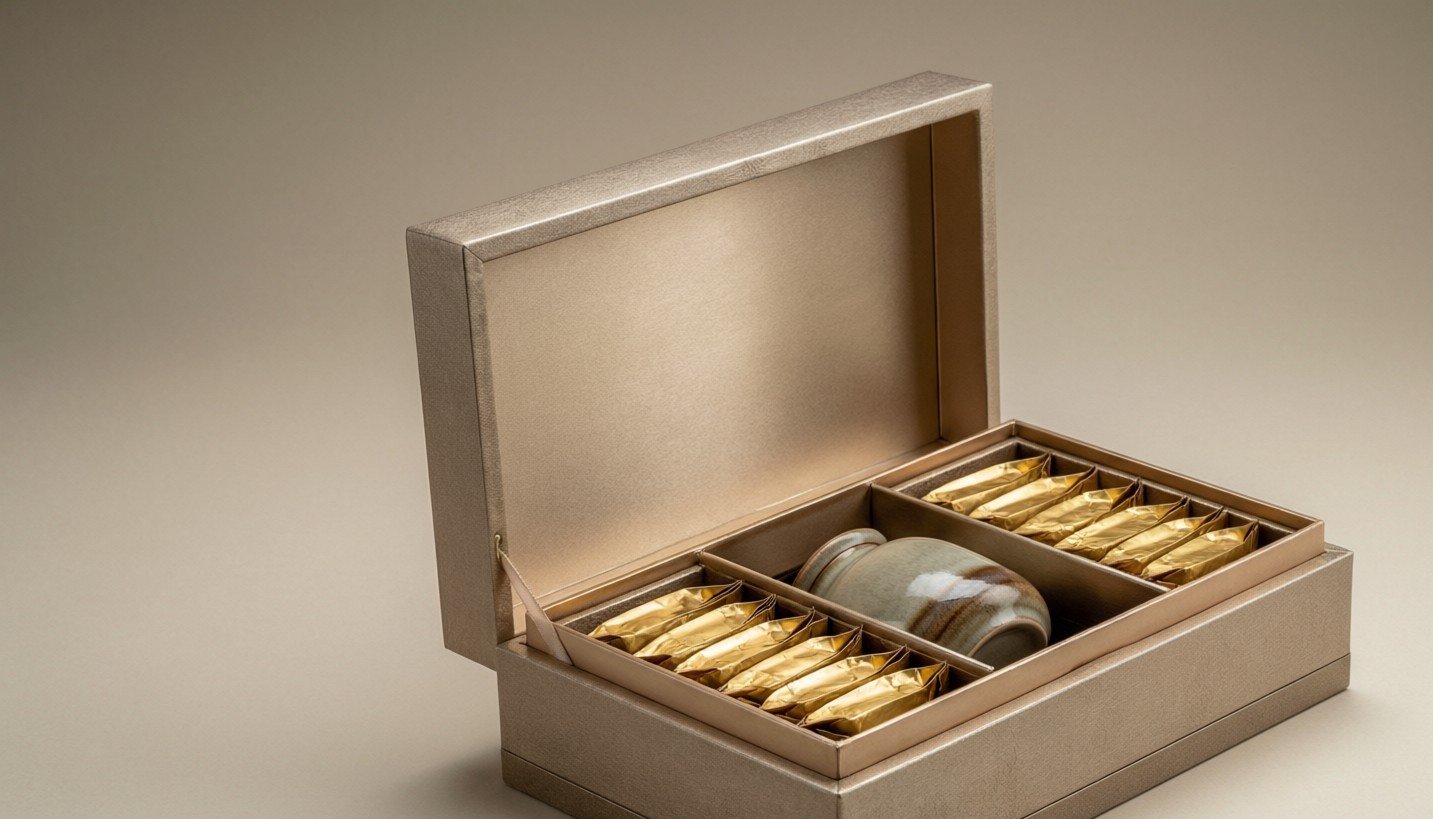
A gifted tin of Huangshan Maofeng can feel thoughtful and high-end, but the difference between a forgettable green tea and a gift that gets remembered is rarely the box. It is the grade, harvest freshness, leaf quality, packaging format, and the questions you ask before paying. This guide shows how to choose, present, and verify gift-grade Maofeng—whether the recipient is a green-tea beginner or someone who already knows early-spring material from late-summer leaf.
What Makes Huangshan Maofeng Different From Everyday Green Tea
Huangshan Maofeng grows around Huangshan, the mountain range in Anhui Province, China. The region’s combination of cloud cover, humidity, forest shade, and cool spring temperatures slows leaf development, which encourages tender shoots with concentrated aroma rather than quick, coarse growth. This is one reason authentic Huangshan Maofeng is often treated as a premium green tea rather than a generic one [1].
The tea is usually picked in early spring as one-bud-one-leaf or one-bud-two-leaf sets. After pan-firing, shaping, and drying, the dry leaf keeps a slight twist, a gray-green color, and visible silver-white tips. The liquor is typically pale yellow-green with an aroma that leans floral, fresh, and lightly chestnut, followed by a clean, sweet finish. Lower-quality or poorly stored Maofeng tends to taste flatter, more vegetal, or slightly stale [3].
For gifting, the goal is not to buy the most expensive tin. The goal is to buy a tea that clearly displays its grade, harvest date, and freshness—then package it so it stays that way until the recipient opens it.
Four Checks That Separate Gift-Grade Maofeng From Drinking-Grade Leaf
Tea names on a label are easy to copy; leaf quality is harder to fake when you know what to look for.
1. Harvest timing
Early spring material is generally softer, more floral, and less bitter than late-spring or summer material. Pre-Qingming lots—harvested before the Qingming Festival in early April—are the most celebrated and usually the most expensive. Pre-Guyu lots, picked a little later, can still be high quality but tend to have more body and a slightly more vegetal character [1].
2. Leaf set and shape
Look for visible buds and tender leaves that appear whole rather than broken. A high proportion of small, uniform leaves with silver tips is a stronger gift signal than large, rough, or fragmented leaf.
3. Dry appearance and aroma
Good Maofeng should smell fresh and floral when the bag is opened, not dull, stale-grassy, or perfume-like. The dry leaf should be dry to the touch, not soft or damp, and it should not leave a heavy dust residue.
4. Liquor clarity and finish
If you can sample before gifting, brew a small amount. The liquor should be bright and clear, without murkiness. The defining impression is freshness: a clean, sweet aftertaste that makes another sip feel easy.
| Check | Gift-grade signal | Lower-grade signal |
|---|---|---|
| Harvest | Early spring, clearly dated lot | Vague “spring tea” label with no date |
| Leaf | Whole, uniform, visible buds | Broken, mixed, dusty leaf |
| Aroma | Floral, fresh, chestnut hint | Stale, grassy, flat, or heavily perfumed |
| Taste | Clean, smooth, sweet finish | Bitter, thin, or drying aftertaste |
| Liquor | Bright, pale yellow-green | Dark, dull, or cloudy |
How Grades and Formats Actually Work for Gifting
Under China’s national standard for Huangshan Maofeng, the tea is graded by leaf tenderness, uniformity, appearance, color, and sensory quality [1]. For gift buyers, it helps to think of grade not as a straight line from cheap to expensive, but as a tool for matching the tea to the recipient.
A simpler rule: buy the best grade you can verify, not the highest number the seller tells you.
| Grade | Typical impression | Best gifting use |
|---|---|---|
| Special Grade | Small, uniform, tender leaf with prominent silver tips; delicate floral freshness | Business clients, milestone gifts, or recipients who know early-spring green tea |
| Grade 1 | Good uniformity and freshness, slightly fuller body | Premium personal gifts, professional thank-you notes, holiday gifts |
| Grade 2 | More assertive flavor, less uniform appearance | Everyday premium gifting or larger-format tins |
| Grade 3 | Stronger, more vegetal profile | Bulk-friendly formats, not usually the centerpiece of a formal gift |
Packaging matters as much as grade after about the mid-price point. A Special Grade tea packed in a thin unlined paper box is likely to arrive less impressive than a Grade 1 tea packed in a sealed, light-protective tin with a clearly printed harvest date.
Matching the Tea to the Recipient and Occasion
Gifting is stronger when the format matches how the recipient will actually use the tea.
| Recipient | Better Maofeng choice | Why |
|---|---|---|
| Green-tea beginner | Grade 1, 50 g tin, shorter brewing card | Approachable, fresh, not so expensive that it feels intimidating |
| Business client or partner | Special Grade, gift set with portion packs | Reads as deliberate and considered without being ostentatious |
| Tea enthusiast | Pre-Qingming Special Grade loose leaf, harvest date on label | The harvest date and leaf set matter more than the outer box |
| Family or close friend | Grade 1 or Grade 2, 100–125 g resealable tin | Allows daily drinking rather than a one-time display piece |
| Multiple recipients or office gifts | Grade 2 in individual 5–10 g sachets | Easy distribution, consistent experience, cleaner storage |
For festivals, a red or gold accent on the outer box is common and expected across many Chinese tea gifting contexts. For corporate gifts, a neutral design with the recipient’s name or a short note often performs better than loud supplier branding.
Packaging, Storage, and Timing: Keep the Gift Fresh Until It Is Opened
Green tea is freshness-driven. A beautiful gift can be undone by poor storage or bad timing.
- Use tight, light-protective packaging. Opened green tea exposed to air, heat, light, or strong odors loses aroma quickly. Sealed tins, foil-lined pouches, or small single-serve sachets protect better than clear glass jars or thin paper boxes.
- Add a short brewing card. Suggest 80–85°C (176–185°F) water, about 3 g of leaf per 150–200 ml, and a first steep of one to two minutes. This prevents the recipient from scalding the leaves and blaming the tea for bitterness.
- Store it cool, dark, and dry. Before gifting, keep the sealed tea away from kitchen heat, windowsills, spice cabinets, and car trunks. If stored properly, green tea is best enjoyed within roughly 12–18 months of production; its bright spring character fades over time [2].
- Time the purchase carefully. Buy close to the gifting date when possible, or store the sealed tea under controlled conditions. Do not buy in midsummer, leave the tin in a hot car, and expect the same fresh aroma in December.
Where to Source Gift-Grade Huangshan Maofeng and What to Verify
Gift buyers should not rely on the word “Maofeng” alone. Ask the seller to confirm the origin, grade, harvest season, packaging format, and storage conditions before ordering in volume.
Five questions that separate a reliable gift source from a box-seller:
- What is the exact harvest date or harvest window?
- What grade is this lot, and can you provide a sample before the full order?
- Is the tea from the Huangshan area, and can you state the processing region?
- How is it packaged—loose, portion-packed, or in a gift tin—and is the packaging resealable?
- How long after production will the shipment reach me, and how is it stored in transit?
If you are building a Maofeng gift program—custom tins, single-serve sachets, or a split shipment for multiple recipients—contact Chinese tea suppliers at 427728483@qq.com with your desired grade, quantity, recipient count, and delivery deadline. You’ll get a sample recommendation and a clear quote before you commit.
The supplier’s answer to the five questions above usually tells you more about tea quality than the front of the gift box does.
Common Gifting Mistakes That Undermine the Gesture
Avoid these missteps when choosing Huangshan Maofeng as a present.
- Buying only by box design. Expensive packaging around low-grade tea still drinks like low-grade tea.
- Ignoring the harvest date. A “spring tea” label without a date is not the same as a clearly dated early-spring lot.
- Storing the gift poorly before giving it. A tea that sits in a hot room or next to coffee loses its identity quickly.
- Forgetting brewing instructions. Many green-tea complaints come from water that is too hot, not from the tea itself.
- Assuming green tea is caffeine-free. Huangshan Maofeng contains caffeine. If the recipient is caffeine-sensitive, choose a smaller format or mention it before gifting rather than hiding the fact.
- Overloading the recipient with too much tea. One excellent 50–100 g tin is usually more memorable than a large economy bag that turns flat before it is finished.
Get a Quote for Gift-Grade Huangshan Maofeng
If you are sourcing Maofeng for a gift set, corporate account, retail assortment, or a one-time premium client gift, send the following details to 427728483@qq.com:
- Desired grade and harvest preference
- Quantity and recipient count
- Preferred packaging: loose, tins, or single-serve sachets
- Delivery date and destination
- Whether you want a pre-order sample before the full shipment
We’ll respond with available lots, packaging options, and pricing based on the grade you actually need—not the highest-margin box we can find.
FAQ
What is the best grade of Huangshan Maofeng for gifting?
Special Grade and Grade 1 are the most common choices for formal gifts. Special Grade is best when the recipient values early-spring tea or when the gift is for a business relationship. Grade 1 is usually more practical when the recipient will drink the tea daily and may not care about subtle grade differences.
How much should I spend on a Huangshan Maofeng gift?
There is no fixed price that guarantees quality. Spend based on grade, harvest date, and packaging rather than price alone. A clearly dated Grade 1 tea in a well-sealed tin often makes a stronger impression than a vague “premium” tea in a heavy decorative box.
How long can I store Huangshan Maofeng before giving it?
If the tea is unopened, sealed, dry, cool, and away from light and strong smells, it can remain pleasant for about 12–18 months. After that, the bright spring sweetness and aroma fade, especially if the packaging is opened. Buy close to the gifting date when possible [2].
Should I buy loose leaf or tea bags as a gift?
Loose leaf is generally the better premium signal for Maofeng because it shows the leaf quality clearly. But if the recipient is not likely to measure or strain tea, choose individual portion packs or pyramid sachets filled with recognizable whole leaf rather than fine tea-bag dust.
What if the recipient usually drinks black tea or coffee?
Choose a grade with a little more body, such as Grade 1 or Grade 2, and include brewing instructions for 80–85°C water. Maofeng’s floral freshness can be a welcome contrast for dark-roast drinkers, but it will not feel like a coffee substitute. If you are unsure, pair the tea with a small teapot or infuser cup to make the first brew easy.
References
[1] Standardization Administration of China. Product of Geographical Indication—Huangshan Maofeng Tea, GB/T 19460-2008.
[2] China Tea Marketing Association. Guidelines for Green Tea Storage and Quality Maintenance.
[3] Tea Research Institute, Chinese Academy of Agricultural Sciences. Green Tea Processing and Quality Characteristics.
No author description available.

白玉京