Collecting Rougui Tea: What Ages Well and What Doesn’t
Rougui (肉桂, “cinnamon”) appears in many English-language tea lists as “Rougui Black Tea,” but it is not a black tea. It is a Wuyi rock tea — a roasted oolong cultivar from the protected core of Wuyishan in northern Fujian — and it is covered by China’s geographical indication standard for Wuyi rock tea [1]. That distinction matters more than terminology: the style, roast, and storage logic that make Rougui worth collecting are oolong logic, not black tea logic.
Most Rougui reaches buyers as tightly rolled, dark-brown-to-charcoal leaves with a pronounced cinnamon-spice aroma over a mineral, roasted base. When it is good, it is bracing rather than soft. When it is badly stored or too lightly roasted, it can fade quickly and leave you wondering what you paid for. The collector’s job is to separate the batches that have the structure to age from the batches that only had a strong first impression.
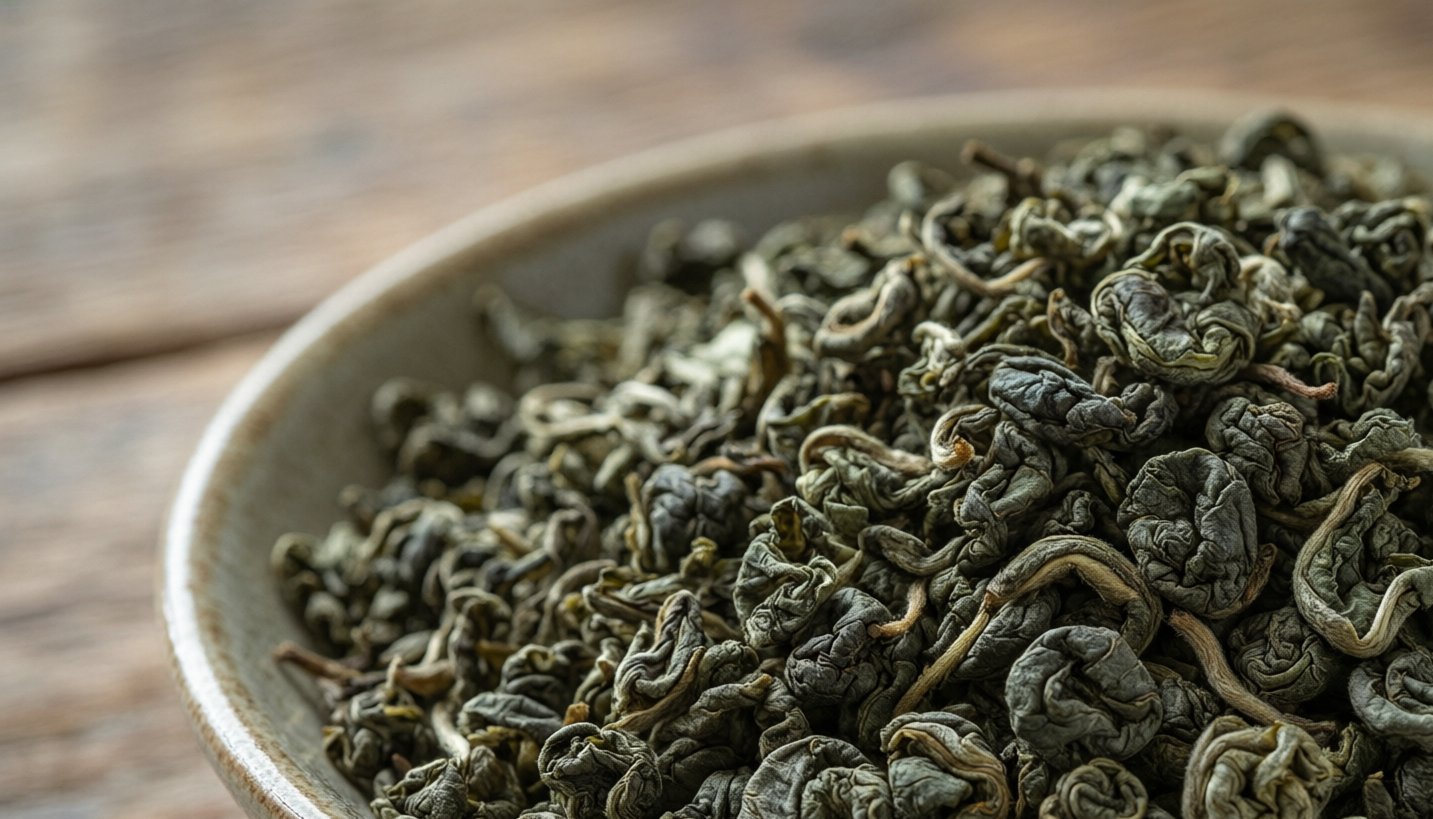
What Rougui Is — and What It Is Not
Rougui is a Wuyi rock tea cultivar, processed as a heavily oxidized and charcoal-roasted oolong. The Chinese name refers to its warm, spicy cinnamon character, though the tea itself contains no added spice. Because the finished leaf can look almost black and the liquor can brew deep amber to reddish, it sometimes gets reclassified as black tea in casual trade language; processing and category standards place it firmly in the oolong family [1][5].
For a collector, this is not academic. Black teas are generally made to be drunk closer to production and tend to go flat, papery, or sour when stored carelessly over many years. Rougui, like other well-roasted Wuyi rock teas, sits at the opposite end of that spectrum when the roast is right [2][3].
Why Some Rougui Ages While Other Rougui Just Fades
Aging in Rougui is not the same biological process as pu-erh fermentation. It is a slow, low-moisture interaction between the leaf matrix, its residual compounds, and its environment. In a properly roasted Rougui, the aggressive top notes of charcoal and cinnamon settle as oxidation and browning reactions continue. The liquor deepens; the mineral “rock” character — what Wuyi drinkers call yan yun (岩韵, “rock rhyme”) — becomes easier to taste through the roast [2][4].
The crucial condition is that the leaf must be dry, stable, and protected. High humidity introduces mold risk, while repeated opening and poor sealing strip aroma. This is why storage is not an optional step; it is part of the aging system.
Rougui Styles That Usually Age Well
Traditional medium-to-heavy charcoal roast
A slow, repeated charcoal finish produces a stable leaf with enough roasted structure to evolve. Look for a clean roast rather than a charred one.
Strong internal material and body
Rougui from better Wuyi growing zones — traditionally described as Zhengyan for the core rocky gardens and Banyan for the half-rock zone — tends to have the mineral density and body that support long aging [3].
Well-preserved whole leaf
Higher-grade batches retain more intact leaf and thicker structure. Broken or powdered leaf exposes far more surface area and deteriorates faster.
A clear roast date and batch record
Collectible aging requires knowing when the tea was finished and whether it has been re-roasted. Without that record, age claims are marketing, not provenance.
Rougui Styles That Usually Don’t Age Well
Light, “fragrance-style” Rougui
A light-roast Rougui can be lovely fresh, full of floral top notes, but those notes are the first to vanish. It generally has neither the oxidation nor the roast structure for long-term cellaring [4].
Low-fire or green-edged batches
If the wet leaf still shows green patches or the liquor tastes grassy, the tea has not been stabilized for aging.
Over-roasted or scorched tea
A heavy roast is not automatically better. A scorched batch stays bitter and flat; age will not repair a roasting fault.
Poor storage before you bought it
Tea that already smells musty, sour, or lifeless will not improve in your cupboard. Aging can preserve quality, but it cannot rescue damage.
How to Buy Rougui with Aging in Mind
Before buying a batch, ask the seller three questions: what is the roasting style, what is the origin zone, and what are the production and re-roast dates. Ask for the dry leaf and, if possible, a quick cupping of the tea as it stands now. You want to see a clean nose with no off-odor and taste a solid mineral backbone rather than only roast.
Do not buy collectible Rougui by packaging or by the word “aged” alone. The safest entry path is to buy a fresh, well-roasted Rougui from a documented batch, drink some now, and lay down a second sealed sample to revisit after two, three, and five years.
Storage Rules for Collecting Rougui
- Keep the tea sealed in a food-grade tin, thick inner bag, or tight-lidded ceramic jar.
- Store it cool, dry, dark, and away from kitchen odors. Do not refrigerate.
- Avoid plastic containers, direct sunlight, heat vents, and frequent opening.
- Label each batch with year, roast date, origin, and the date you sealed it.
- Check older samples once a year: re-seal quickly and watch for any sour, musty, or thin smell.
- Re-roasting should be left to a skilled roaster; it is corrective, not routine.
What to Look for Before You Commit
- Confirmed Wuyi origin, not a generic cinnamon-scented oolong [1].
- A clean, balanced roast with no scorched or green defects.
- Whole, tightly rolled dry leaf rather than broken material.
- A clear batch record and re-roast history.
- Good body and mineral finish in the cup.
- Storage that has kept the dry leaf free of humidity and odor.
- A seller who can explain the aging path instead of only promising age.
If you already have a Rougui sample and want a second opinion, send the year, roast style, and origin notes to 427728483@qq.com. We help buyers evaluate whether a batch is built to age or built to sell.
Request a Rougui Sample Set or Batch Verification
Chinese tea suppliers works directly with Wuyi rock tea producers to source collector-grade Rougui, verify roast and origin details, and help wholesale buyers build cellars that improve rather than disappoint. For current sample sets, re-roast records, or batch pricing:
- Email: 427728483@qq.com
- Include your market, volume, and preferred roast level
We reply with available lots and let you cup the tea before committing.
Frequently Asked Questions
Is Rougui a black tea or an oolong?
Rougui is an oolong. It is a Wuyi rock tea cultivar processed with heavy oxidation and charcoal roasting, which is why its leaves and liquor can look close to black tea. The governing Wuyi rock tea standard places it in the rock-tea/oolong category [1][5].
How long can Rougui be aged?
There is no single fixed number. Many well-roasted Rougui batches soften and deepen over five to ten years, and selected high-fire examples are still pleasant after longer. The practical limit depends on raw material, roast stability, and storage. A light-roast or poorly stored batch may decline within two or three years [2][4].
Does light-roast Rougui improve with age?
Usually not. Light-roast Rougui is built for fresh fragrance, and those aromas are volatile. If you want to age Rougui, start with a traditional medium-to-heavy roast that still shows body and minerality rather than only floral notes.
Should I re-roast old Rougui?
Not routinely. Periodic professional re-roasting can refresh a batch that has absorbed slight moisture or lost edges, but it can also flatten or disturb the tea. Keep storage tight and dry, and re-roast only with an experienced Wuyi roaster when there is a specific issue.
Does Rougui need to be stored in a refrigerator?
No. Cold storage is for preserving fresh, high-aroma green-style oolong. Collector-grade roasted Rougui should be kept sealed at cool room temperature, away from light and odor. Refrigeration can introduce condensation risk.
How can I tell if an old Rougui has gone stale?
The warning signs are a sour, papery, or musty smell in the warmed leaf and a thin, empty liquor. A well-aged Rougui should retain sweetness, body, and a clear mineral finish, even after the roast has softened.
References
- General Administration of Quality Supervision, Inspection and Quarantine of the People’s Republic of China. GB/T 18745-2006, Product of geographical indication — Wuyi rock tea. 2006.
- Heiss, Mary Lou, and Robert J. Heiss. The Story of Tea: A Cultural History and Drinking Guide. Ten Speed Press, 2007.
- Gascoyne, Kevin, François Marchand, Jasmin Desharnais, and Hugo Américi. Tea: History, Terroirs, Varieties. Firefly Books, 2018.
- Blofeld, John. The Chinese Art of Tea. Shambhala, 1985.
- Standardization Administration of China. GB/T 30357.1-2013, Oolong tea — Part 1: Basic requirements. 2013.
No author description available.

白玉京