How to Gift Fujian Black Tea: A Professional Buyer’s Guide
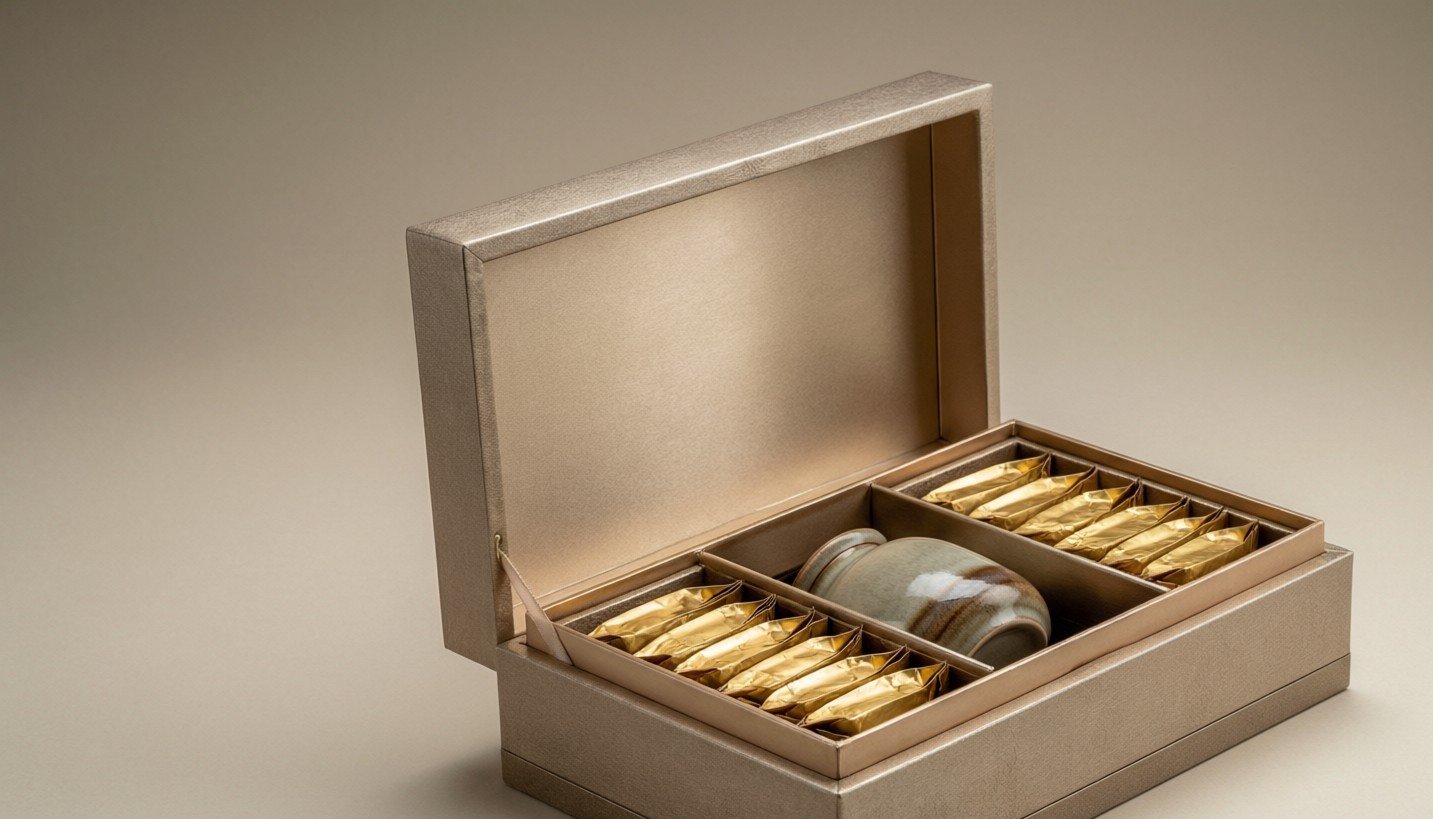
Gifting Fujian black tea well is less about spending the most and more about matching the right style, grade, and presentation to the recipient. Fujian is one of China’s most historically important black tea provinces, home to both the smoked Lapsang Souchong tradition and refined whole-leaf gongfu black teas. This guide walks through the styles, what separates gift-grade leaves from ordinary stock, and how to package the tea so it feels as serious as the tea inside.
Why Fujian Black Tea Makes a Strong Gift
Fujian black tea gives a giver several useful advantages. The province produces multiple recognizable styles under Chinese national standards, so a buyer can choose a profile that fits the person rather than settling for a generic “black tea” label [1][2]. The leaves also present well: whole, glossy, tightly twisted strips or buds photograph beautifully in tins and trays.
Beyond appearance, Fujian black tea carries origin meaning. Zhengshan Xiaozhong from Wuyishan, Jinjunmei from Tongmu, and gongfu styles from Fu’an, Fuding, and Zhenghe each have distinct flavor identities. A labeled single-origin tea tells the recipient you chose something specific, not a commodity blend.
Know the Main Fujian Black Tea Styles
| Style | Origin character | Gift positioning | Packaging cue |
|---|---|---|---|
| Zhengshan Xiaozhong | Wuyishan; pine-smoked, longan-like | Adventurous or whisky-focused drinkers | Small sealed tins, dark presentation |
| Jinjunmei | Tongmu-area bud-grade tea; honeyed and smooth | Premium corporate or milestone gifts | Single-origin gift tins, minimal design |
| Tanyang Gongfu | Fu’an; rounded, sweet, easy-drinking | Daily executive gifting | Vacuum-sealed pouches or compact boxes |
| Bailin Gongfu | Fuding; soft malt and gentle finish | Broad-appeal gifts for mixed audiences | Gift boxes with tasting notes |
| Zhenghe Gongfu | Zhenghe; fuller body, persistent finish | Tea-curious recipients who brew gongfu style | Sample sets with a brewing card |
The first two styles are the most famous, but the gongfu black teas often give better value for large gift orders because their quality is easier to verify by dry-leaf uniformity and cup clarity.
What to Look For in Gift-Grade Leaves
Gift-grade Fujian black tea should show uniform dry leaf, not broken fragments that look like sweepings. Under GB/T 13738.2, gongfu black teas are produced through withering, rolling, fermentation, and drying, and a well-made lot should still show whole strips with some golden tips in bud-heavy grades [1]. For Zhengshan Xiaozhong, expect a clear pine-smoke aroma without mustiness; the small-leaf style is defined by its traditional processing under GB/T 13738.3 [2].
Buy by origin and harvest date when possible. A current or previous spring harvest is usually the safest choice for a gift because black tea loses brightness over time, even when sealed. Request a production date on the label rather than only a vague “new tea” claim.
If you are choosing between lots, ask for three things before deciding: dry-leaf photos, a brewed-leaf photo, and a small sample. A clean, bright reddish-amber liquor and leaves that open without turning muddy are better indicators than packaging alone.
Need help comparing lots before you commit to a gift order? Our team can arrange side-by-side samples, share production dates and grading details, and advise on presentation formats. Email 427728483@qq.com to request a gift-grade sampling set.
Build a Presentation That Feels Professional
A professional gift does not rely on a heavy box to hide ordinary tea. Choose an opaque, foil-lined inner pouch or tin, then add a simple outer layer only if it serves a purpose. Clear glass jars can look attractive, but they expose the leaves to light and often shorten freshness.
Write or attach a short brewing card. Include water temperature, leaf-to-water ratio, and one sentence about the tea’s origin. This small addition changes the gift from “a box of tea” to “a tea experience.”
For corporate orders, consistency matters more than an ornate one-off. Order the same lot number across all gift units so every recipient receives the same cup. Mixed sets are thoughtful for individuals, but for multi-person gifting, a single well-chosen lot is easier to explain and reorder.
Storage and Freshness Rules to Pass Along
The recipient’s storage habits affect how the tea tastes weeks later. Standard tea care guidance is to keep leaves in an airtight container, away from light, heat, moisture, and strong odors [3]. Fujian black tea is more forgiving than green tea, but it still fades when stored near a stove, in a clear jar on a windowsill, or in a shared spice cabinet.
When you hand over the gift, include one practical line: keep the tin sealed, store it somewhere cool and dry, and avoid the refrigerator unless the tea is vacuum-packed for long-term storage. This advice feels useful rather than fussy and helps protect the cup quality you paid for.
Source Gift-Grade Fujian Black Tea with Confidence
The most professional gifting programs are built around a repeatable sourcing checklist. Before placing a gift order, confirm the production date, origin, grade description, and packaging format for every lot.
A strong inquiry to a supplier covers:
- Production date and harvest season for the lot
- Region or garden origin, not just “Fujian black tea”
- Dry-leaf and brewed-leaf photos before sampling
- Packaging options that protect freshness during transit
- Availability of the same lot for reorders
Our sourcing team works with buyers to match the right Fujian black tea style to the recipient and budget. Email 427728483@qq.com with your gift brief, order size, and packaging preference for a shortlist of available lots.
Frequently Asked Questions
What is the difference between Fujian black tea and other Chinese black teas?
Fujian black teas include the pine-smoked Zhengshan Xiaozhong style and several whole-leaf gongfu black teas such as Tanyang, Bailin, and Zhenghe. Compared with the malty, bold profile of many Yunnan dianhong teas, Fujian styles are often more aromatic, sweet, and layered, which makes them popular for gifting.
Which Fujian black tea is best for a traditional gift?
For a traditional premium gift, Jinjunmei is the most recognizable choice when budget allows. For broader appeal, Tanyang Gongfu or Bailin Gongfu offers a smooth, approachable cup at a more flexible price. Zhengshan Xiaozhong works well for recipients who enjoy smoked flavors.
How should the recipient store Fujian black tea?
Keep the tea in an airtight, opaque container in a cool, dry place away from light, heat, moisture, and strong odors [3]. It does not normally need refrigeration for short-term drinking, and repeated opening of a large tin speeds flavor loss.
What should I look for on the label when buying gift-grade Fujian black tea?
Look for the tea style, origin, production date, and grade or lot information. Vague labels that say only “Fujian black tea” give you little to verify. A specific region and harvest window are stronger signals that the seller selected the lot rather than selling a generic blend.
Is Jinjunmei always a good premium gift?
Not automatically. Authentic bud-grade Jinjunmei has a smooth, honeyed profile and a clean, uniform appearance, but low-price imitations often look golden and taste thin. If the price seems too low for bud-grade tea, compare the dry leaf and brewed cup before ordering in volume.
Can I include multiple Fujian black tea styles in one gift set?
Yes. A two- or three-style set works well for a tea-curious recipient, especially when each tin carries its own brewing card. For corporate gifting, a single consistent lot is usually easier to manage and reorder.
References
[1] GB/T 13738.2-2017, Black tea — Part 2: Gongfu black tea, Standardization Administration of the People’s Republic of China. https://openstd.samr.gov.cn/
[2] GB/T 13738.3-2012, Black tea — Part 3: Xiaozhong black tea, Standardization Administration of the People’s Republic of China. https://openstd.samr.gov.cn/
[3] UK Tea & Infusions Association, Storing tea, https://www.tea.co.uk/
No author description available.

白玉京