How to Brew Guangxi Dark Tea: Temperature, Ratio & Timing
Guangxi dark tea — most often Liu Bao from the Wuzhou area — is a post-fermented tea that rewards a slower, hotter hand than green or lightly oxidized oolong. It tolerates heat and time better than almost any other Chinese tea, but the difference between a clean, camphor-sweet cup and a flat, bitter one comes down to ratio, water temperature, and when you stop the steep. This guide covers the method for both gongfu and Western brewing, with clear starting numbers you can hand directly to staff.
What Counts as Guangxi Dark Tea
Guangxi's best-known dark tea is Liu Bao, a post-fermented tea that usually starts with local Mao Cha and goes through pile fermentation before being compressed into baskets, cakes, or bricks. The liquor is deep reddish-brown, with notes that move from damp forest, betel nut, and wet stone in younger batches toward dark honey, brown sugar, and camphor as the tea ages. Younger Liu Bao can show a light sour edge; aged lots settle into a rounder, sweeter profile.
Loose Liu Bao and lightly compressed pieces use the same starting ratios. Whole-basket chunks that need a pick should be broken into smaller flakes rather than brewed as one solid lump.
The Right Leaf-to-Water Ratio
For sensory testing, ISO 3103 is a useful baseline: 2 g of tea per 100 ml of water [1]. That is a tasting-lab standard, not a drinking recipe. Liu Bao gives more control with a tighter ratio.
| Brewing style | Tea amount | Water | Effective ratio |
|---|---|---|---|
| Gongfu, small gaiwan | 5–6 g | 100–120 ml | 1:20–1:24 |
| Gongfu, small teapot | 7–8 g | 140–160 ml | 1:19–1:22 |
| Western mug or pot | 2.5–3 g | 240–300 ml | 1:80–1:120 |
| Cafe batch brew | 8–10 g | 1 L | 1:100–1:125 |
For aged, tightly compressed Liu Bao, start at the heavier end of the range. For a young, loose batch with a sharper edge, drop the leaf slightly before adjusting time. The goal is a brew you can steep several times, not a single strong extraction.
Water Temperature and Quality
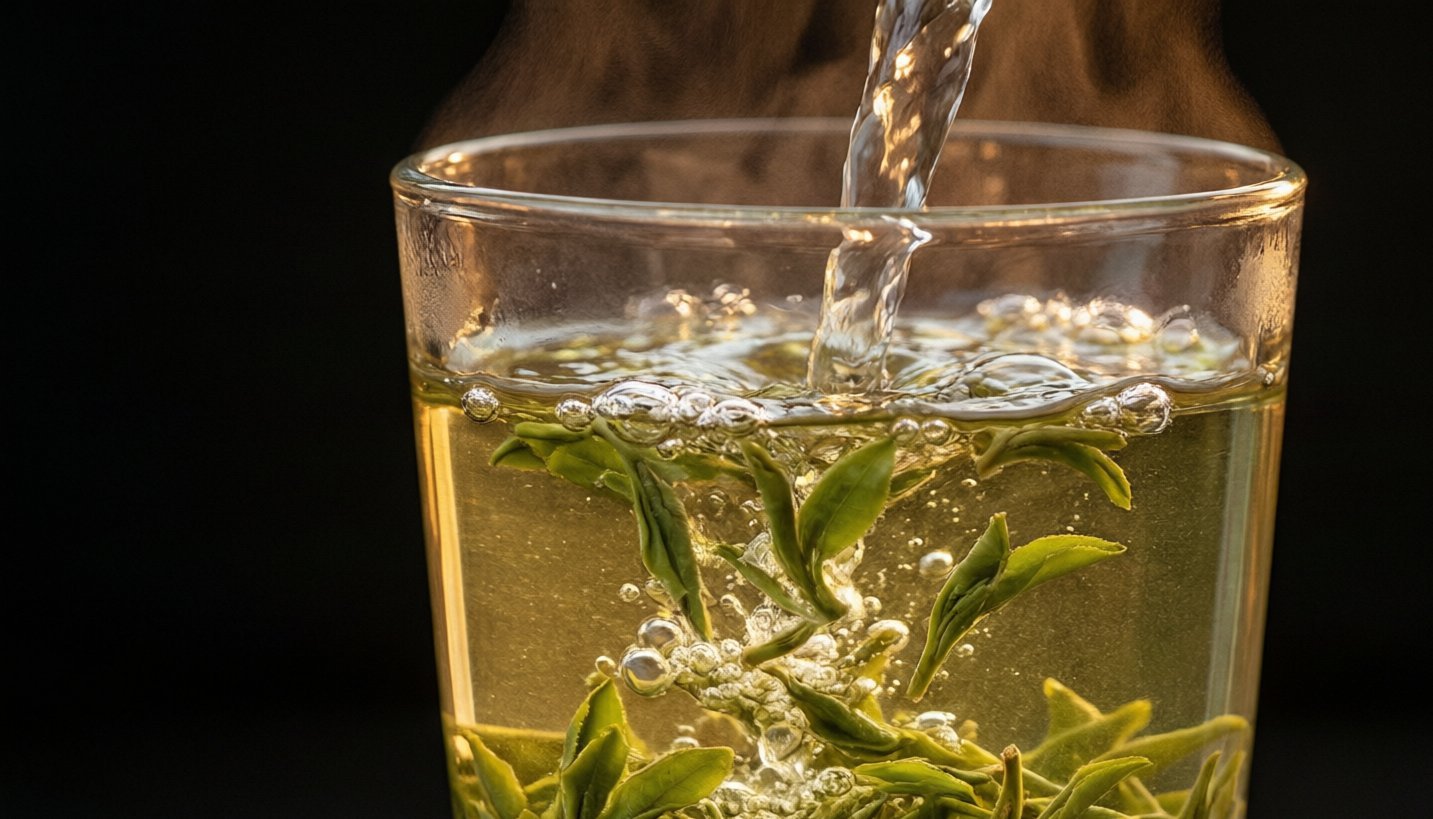
Use water just off a full boil: 95–100°C (203–212°F). Liu Bao is fermented and does not need the gentle temperature of green tea. Water below 90°C gives a thin, woody cup and leaves the deeper sweetness behind.
Water chemistry matters more than the exact degree. Use fresh, filtered, or soft spring water with moderate mineral content. Avoid distilled water, which flattens the tea, and avoid heavily chlorinated tap water. If tap water is the only option, run it cold and let it flash for a few seconds before heating.
Vessel Choices
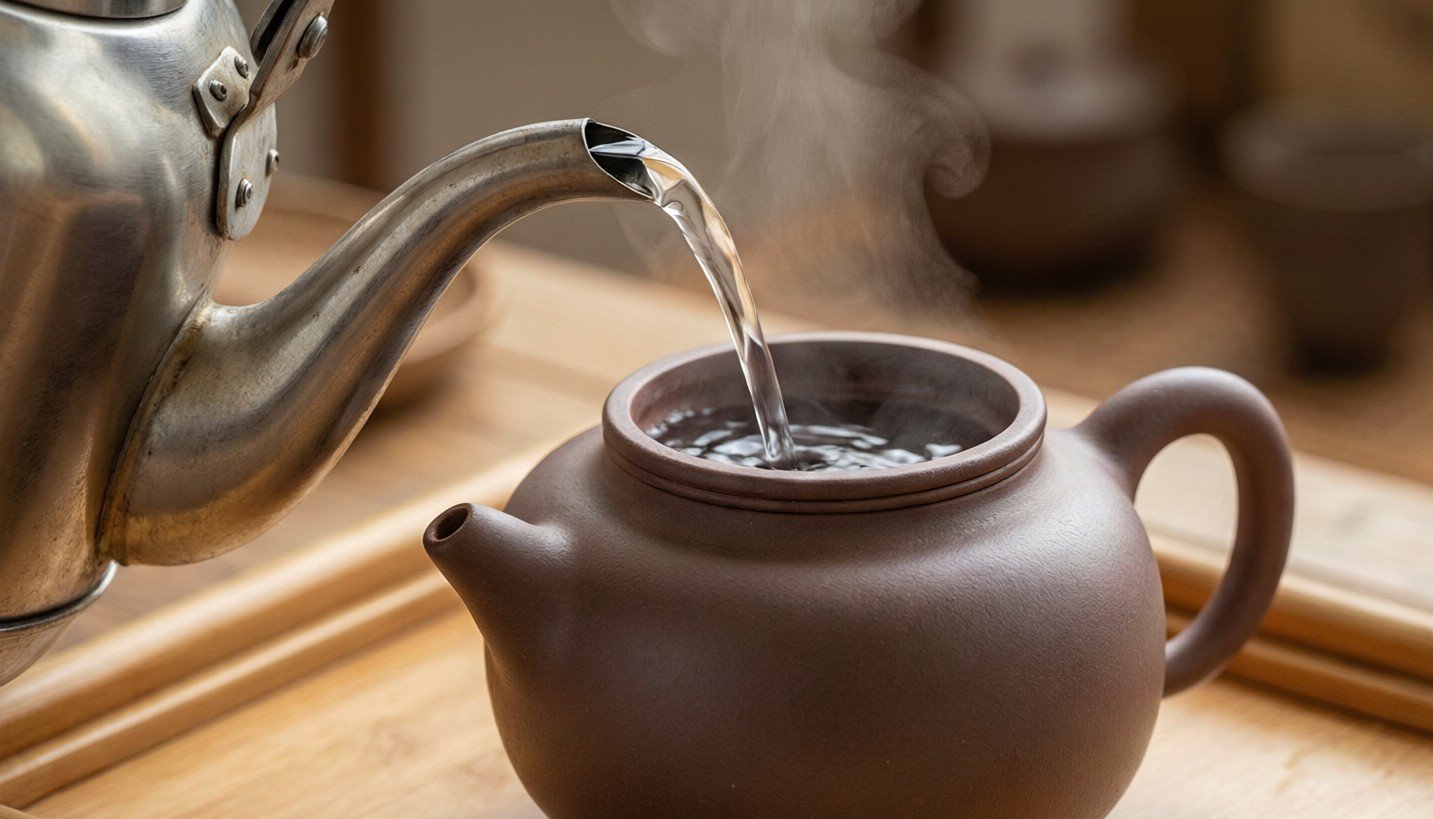
A porcelain gaiwan is the easiest place to learn Liu Bao because it holds heat, pours fast, and adds nothing to the leaf. A small Yixing or clay pot is better when you want to develop a seasoning layer, but reserve that pot for dark teas so the pores do not carry green-tea astringency into later sessions.
For Western brewing, a large porcelain pot or a brew basket with enough room for the leaves to open works well. Avoid small mesh balls: compressed Liu Bao expands and needs space.
Step-by-Step Gongfu Brewing
This method works for a standard 100–120 ml gaiwan.
- Warm the vessel and cup with boiling water, then discard.
- Add 5–6 g of Liu Bao. If the tea is in hard chunks, break them gently.
- Pour boiling water along the side, cover, and discard after 5–10 seconds. This first rinse opens the leaf and removes fine dust.
- Pour again and steep for 15–20 seconds.
- Decant completely. Do not leave water standing on the leaves between infusions.
- Repeat, adding 5–10 seconds per steep as the leaf fades.
For Western brewing, put 2.5–3 g in a pot, add 240–300 ml of boiling water, and steep for 3 minutes. A quick 10-second rinse before the main steep improves compressed or older Liu Bao.
Steep Timing and Re-Steeping
| Infusion | Gongfu steeping time |
|---|---|
| Rinse | 5–10 seconds, discard |
| 1 | 15–20 seconds |
| 2 | 15–20 seconds |
| 3 | 20–30 seconds |
| 4–6 | add 10 seconds each round |
| 7+ | add 15–30 seconds each round |
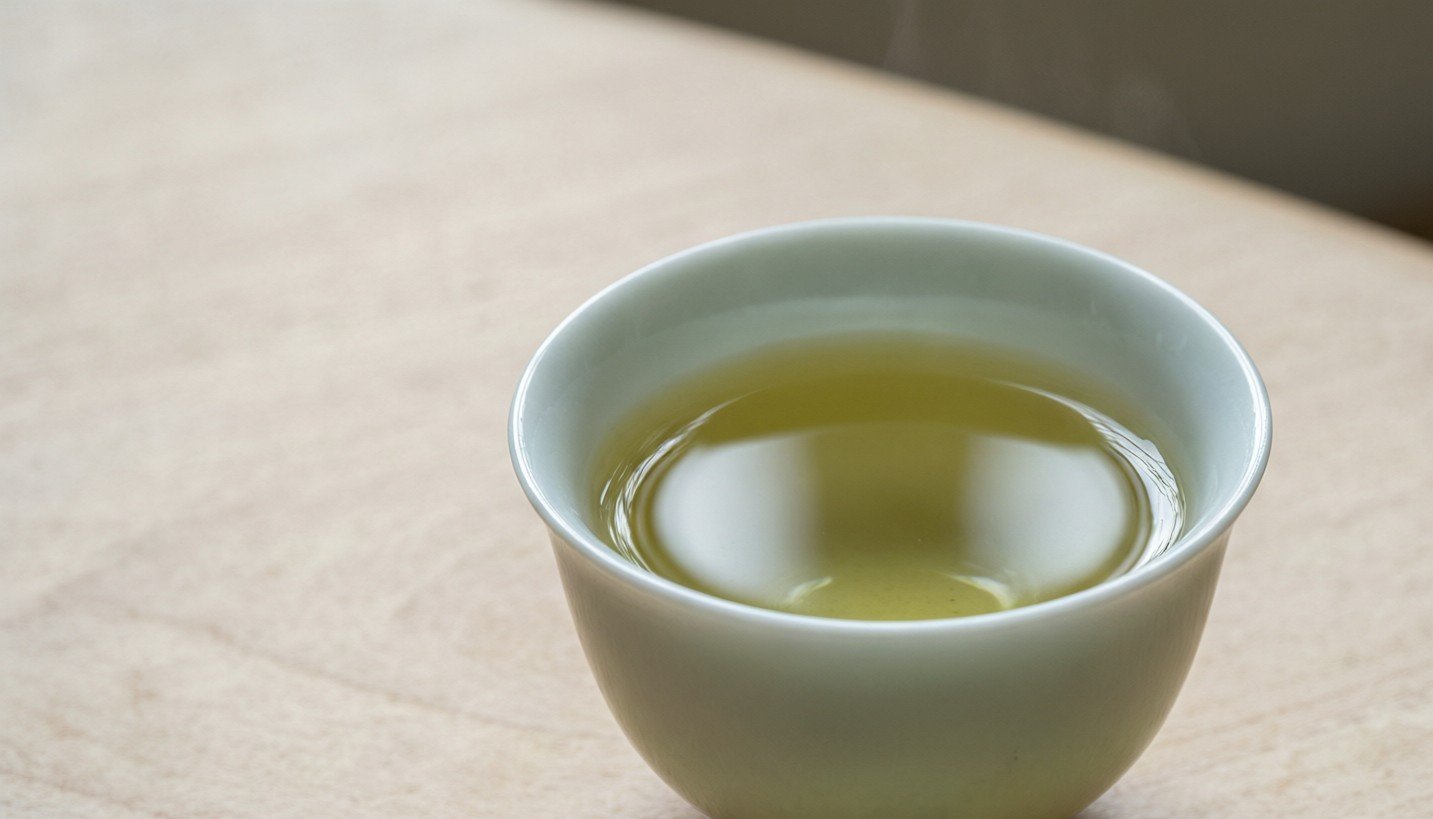
A good aged Liu Bao often gives ten or more small infusions. Western style usually yields two or three rounds, with the second steep slightly longer than the first. The color should stay clear and reddish-brown; when the liquor turns pale and the woody note disappears, the leaf is done.
Five Mistakes That Ruin Guangxi Dark Tea
Skipping the rinse. Liu Bao often carries storage dust and a slight surface mustiness. A flash rinse removes both and wakes up compressed leaf.
Using water that is too cool. Anything below 90°C extracts the fungi-and-wood layer without the sugar, leaving a thin, bitter cup.
Steeping the first infusion too long. Liu Bao releases color quickly. A 60-second first steep can turn a smooth tea harsh.
Overpacking a small pot and then pouring on lid-stuck steam. Use the ratio range above; more leaf is not always more flavor.
Storing damp spent leaves and rebrewing them hours later. Spent dark tea leaves sour quickly. Either finish the session or refrigerate briefly, but do not keep them warm.
Finding Guangxi Dark Tea You Can Brew Consistently
A repeatable brewing method exposes problems in the tea itself. If a Liu Bao is hollow after three infusions, the issue is usually poor fermentation or storage, not your gaiwan. When buying for a cafe, retail line, or wholesale program, ask for the pressing year, storage region, and a brewed sample — not just a dry-leaf photograph.
For current Guangxi dark tea availability, pressing notes, or a comparison set, contact us at 427728483@qq.com and tell us your target market and pack format.
Frequently Asked Questions
Why do I need to rinse Liu Bao?
The rinse removes storage dust, lightly wakes compressed leaf, and washes away the flat top note that aged dark teas can carry. It also keeps the first proper infusion cleaner and sweeter.
Can I brew Guangxi dark tea Western-style?
Yes. Use 2.5–3 g per 240–300 ml, boiling water, and a 3-minute steep. A quick rinse first helps older or compressed Liu Bao. You will get fewer infusions than gongfu, but the cup should still be full-bodied.
How many infusions should good Liu Bao give?
Aged, well-stored Liu Bao brewed gongfu usually gives at least eight infusions, and often more. If the tea fades after two or three rounds, it is usually a lower-grade batch or the water is too cool.
Does water temperature really matter that much?
Yes. Liu Bao is fermented and dense, so it needs near-boiling water to pull the sweet, camphor-like depth. Cooler water gives a thin, almost damp-cardboard cup.
How should I store Guangxi dark tea after opening?
Keep it in an opaque, sealable container away from heat, light, and moisture. Do not refrigerate it every day. A short rinse, not storage cooling, solves most stale notes.
Is Guangxi dark tea the same as Liu Bao?
Liu Bao is the most famous Guangxi dark tea, and the two terms are often used interchangeably. Guangxi also produces other dark teas, but when importers say "Guangxi dark tea," they are usually referring to Liu Bao from the Wuzhou region [2].
References
[1] ISO 3103:1980, Tea — Preparation of liquor for use in sensory tests, International Organization for Standardization, Geneva, 1980.
[2] GB/T 32719.4-2016, Dark tea — Part 4: Liu Pao tea, Standardization Administration of China, Beijing, 2016.
No author description available.

白玉京