How Is Dark Tea (Hei Cha) Made? The Step-by-Step Production Process
Dark tea, or hei cha, is one of the six traditional tea families in China, but it is defined less by leaf color and more by a controlled post-fermentation step. That step transforms a rough, often mature leaf into something deeper, earthier, and more age-tolerant than almost any other tea. Before assessing a dark tea supplier, it helps to know exactly where the finished character comes from, because most quality problems in this category can be traced to one of the production stages below.
What Dark Tea (Hei Cha) Actually Is
In Chinese tea classification, dark tea is the post-fermented category [1]. It sits apart from hong cha, which Western buyers usually call black tea. Dark tea is also sometimes confused with Pu-erh. Pu-erh is often discussed separately in the Yunnan context, but both traditions share the same essential idea: after leaf fixation and shaping, the tea undergoes microbial fermentation that changes its chemistry over days, months, or years.
The main dark tea families are concentrated in a few production regions:
- Anhua dark tea from Hunan, including Fu Zhuan and Qianliang tea
- Qing Zhuan and other compressed teas from Hubei
- Liubao tea from Guangxi
- Southern and western border teas from Sichuan
Each region has its own leaf standards, fermentation rhythm, and compression formats, but the production logic remains consistent.
The Core Production Stages at a Glance
| Stage | Main action | What it does |
|---|---|---|
| Harvesting | Select mature leaves | Provides enough structure for fermentation and aging |
| Fixation | Apply heat to stop enzyme activity | Locks in the base character before microbial work begins |
| Rolling and shaping | Twist or roll the leaf | Shapes the leaf and controls how it extracts later |
| Pile fermentation | Moist, controlled microbial fermentation | Builds the dark tea character and reduces sharpness |
| Drying | Remove excess moisture | Stabilizes the leaf for storage and pressing |
| Compression | Steam and press into formats | Creates bricks, cakes, baskets, and pillars |
| Aging | Store under controlled conditions | Rounds the profile and deepens flavor |
The order is not always rigid. Some producers dry before compression, then age; others may rest or re-dry the tea at different points depending on the region and target format.
Stage 1: Harvesting and Leaf Selection
Dark tea usually relies on more mature leaf than bud-heavy green tea or delicate white tea. Larger, tougher leaves are better able to survive pile fermentation without collapsing into mush. The plucking standard and the proportion of stems are not defects in this category; they are often part of the raw material specification.
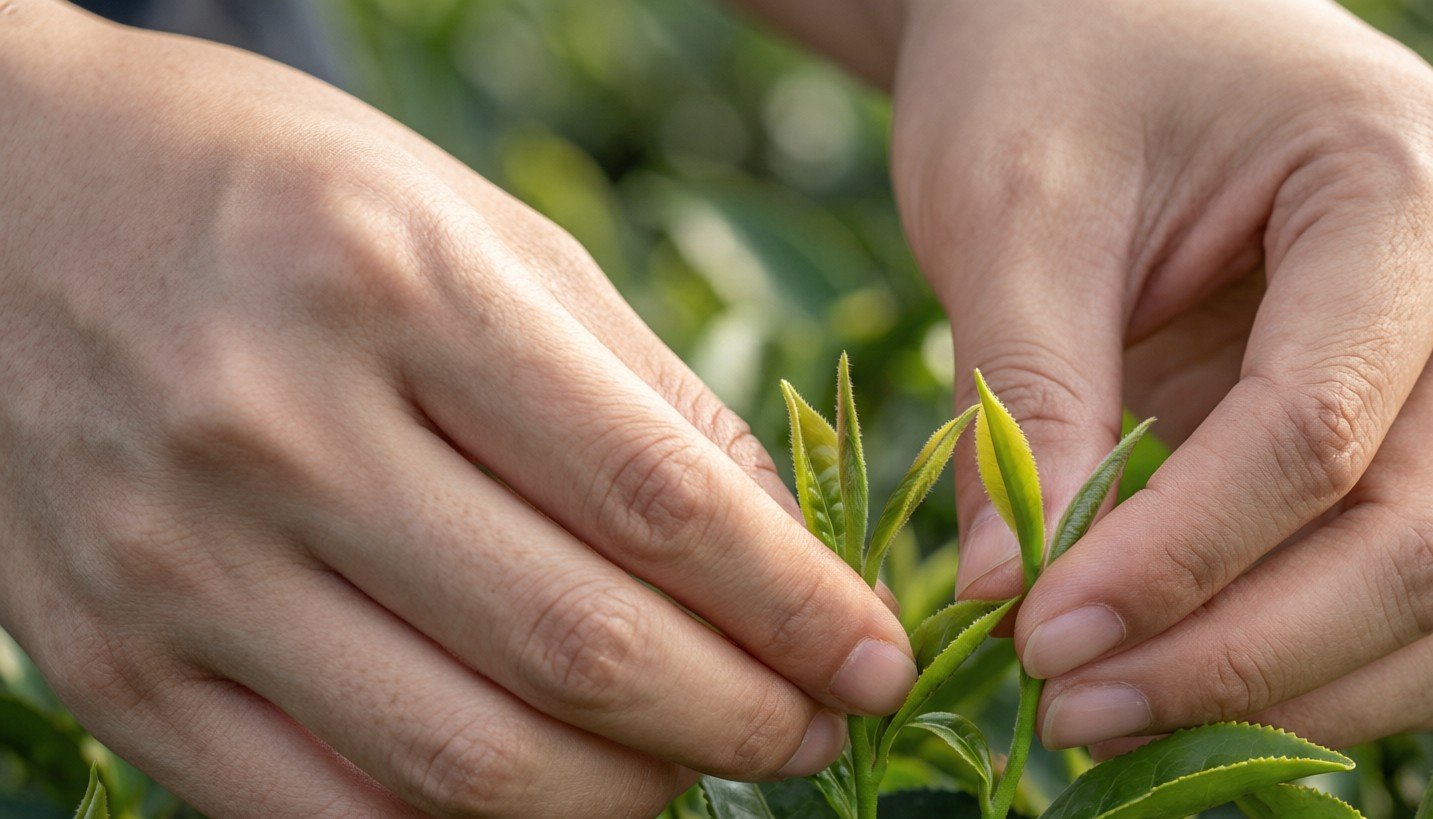
For an importer, the key point is that leaf grade does not work the same way across tea types. A very fine, tender leaf may make excellent green tea but a weak dark tea because it cannot sustain long fermentation or repeat steeps in the format buyers expect.
Stage 2: Fixation
Fixation, sometimes called kill-green, uses heat to stop oxidation. In dark tea production, the goal is not to eliminate moisture but to set the basic leaf structure before fermentation begins. The heat source and intensity vary by region, and producers adjust the treatment to the maturity of the leaf.
This stage is easy to get wrong in a way that shows up much later. If fixation is uneven, the pile may not ferment uniformly, and the finished tea can carry a rough green edge or an inconsistent color from batch to batch.
Stage 3: Rolling and Shaping
Rolling breaks cell walls and helps the leaf release its contents during brewing. It also determines the visual format. Some dark teas are rolled into tight strips, while others are twisted loosely before later compression.
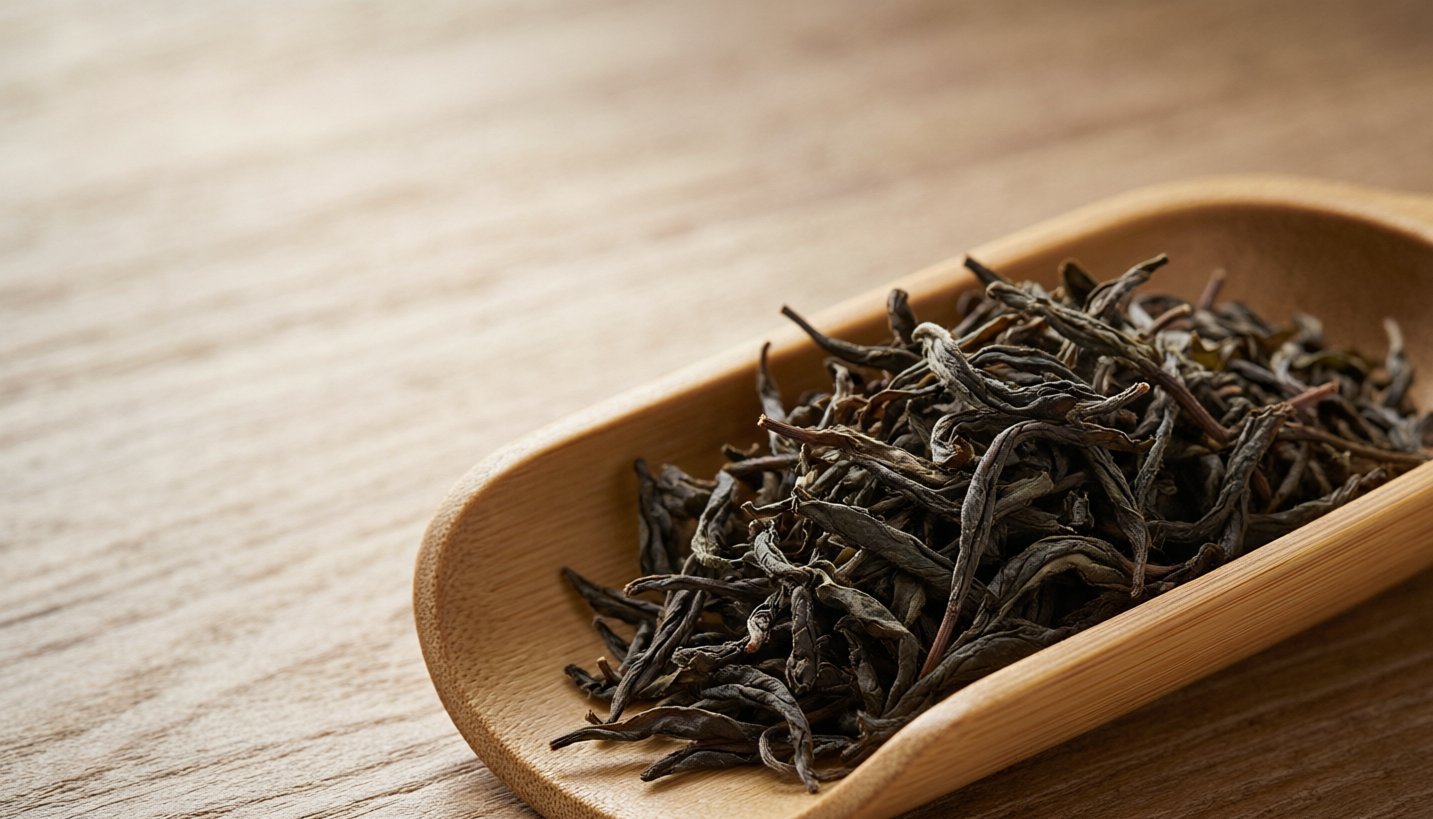
Proper rolling gives the tea body without making it bitter. Over-rolled leaf can become cloudy or harsh in the cup, while under-rolled leaf can taste thin even after long aging.
Stage 4: Pile Fermentation
Pile fermentation is the defining step of dark tea. Leaves are moistened, stacked, and allowed to develop microbial activity under controlled conditions [2]. Producers turn the pile, monitor temperature and moisture, and decide when the fermentation has reached the intended point.
This is where Fu Zhuan tea develops its famous golden flowers, small yellow colonies formed by Eurotium cristatum. Buyers sometimes mistake these for mold, but they are a deliberate and desirable fermentation feature in Fu Zhuan. Mold is different: it usually has a dull or grayish surface, an off-putting odor, and is accompanied by poor storage signs.
The fundamental production risk here is rushing the pile. A fast, uneven fermentation may make the tea look dark enough on the outside while leaving a raw, bitter, or stale character beneath the surface.
Stage 5: Drying
Drying stabilizes the fermented leaf and reduces moisture to a level that supports storage. The method matters because dark tea is not always a dry-to-death category. Some producers use sun drying or low-temperature drying that preserves enough latent activity for the tea to continue improving with age.
From a compliance perspective, this is also a critical control point. Finished tea must meet national food safety limits for contaminants and microbial safety [3]. A supplier with a clean drying line and basic lab reporting is more valuable than one that only offers a lower price.
Stage 6: Compression and Aging
Many dark teas are steamed to soften the leaf and then pressed into bricks, cakes, baskets, or tall pillar shapes. Compression is not just packaging. It changes how the tea ages because the interior of a dense brick behaves differently from loose leaf or a loosely packed basket.
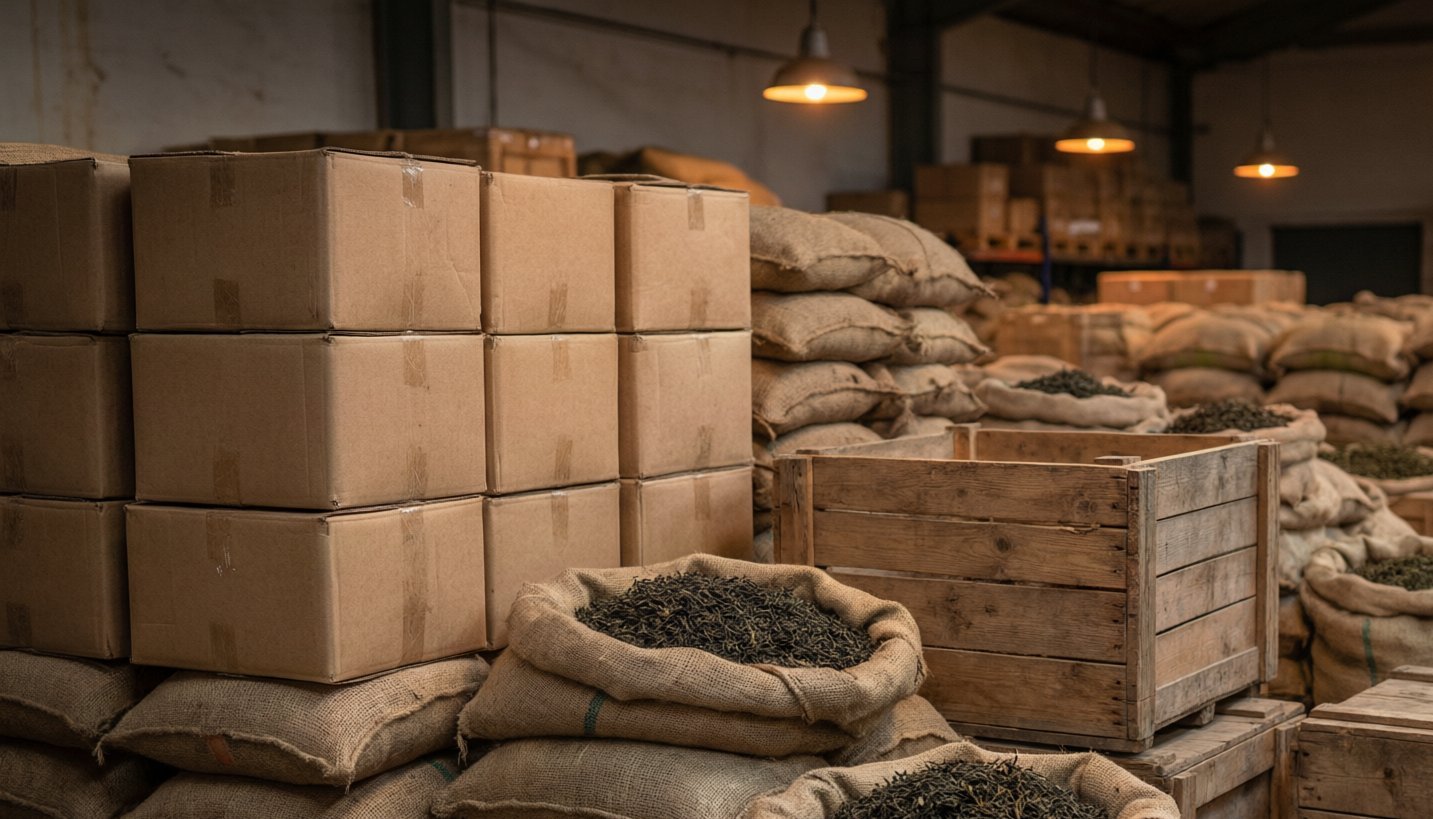
After compression, aging does much of the final work. The fresh pile-fermented character softens, and the tea can develop woody, mineral, or sweet notes depending on the region and storage environment. Aging does not automatically improve every batch, but it changes every batch, and the difference shows in the cup.
How Production Region Changes the Method
The same logic produces different results because each region has its own rhythm:
- Hunan dark tea, especially Anhua dark tea, often emphasizes long pile fermentation and distinctive compression formats such as bricks and Qianliang pillars.
- Hubei Qing Zhuan tends toward harder compression and a cleaner, more structured profile.
- Guangxi Liubao is often aged in baskets and can develop a distinctive betel-like or medicinal sweetness.
- Sichuan border teas were historically made for long-distance transport and tend to be robust and forgiving in heavy brews.
For a buyer, region is not just flavor vocabulary. It also affects the realistic production lead time, the most efficient packaging formats, and the type of quality documentation you should request.
Quality Control Points Buyers Should Know
When comparing dark tea batches, focus on the stages that leave evidence:
- Leaf maturity and plucking standard: Does the raw material match the format?
- Fermentation uniformity: Is the color even through the pile, or is the surface darker than the inside?
- Golden flowers versus mold: Are visible yellow colonies bright, even, and odor-clean, or do they look gray and smell off?
- Drying consistency: Does the tea feel crisp where it should, without being brittle or spongy?
- Compression density: Is the brick or cake firm enough to age without breaking, but not so dense that it cannot be separated?
- Lab documentation: Does the supplier test for moisture, pesticide residues, and microbial indicators against applicable Chinese food safety standards [3]?
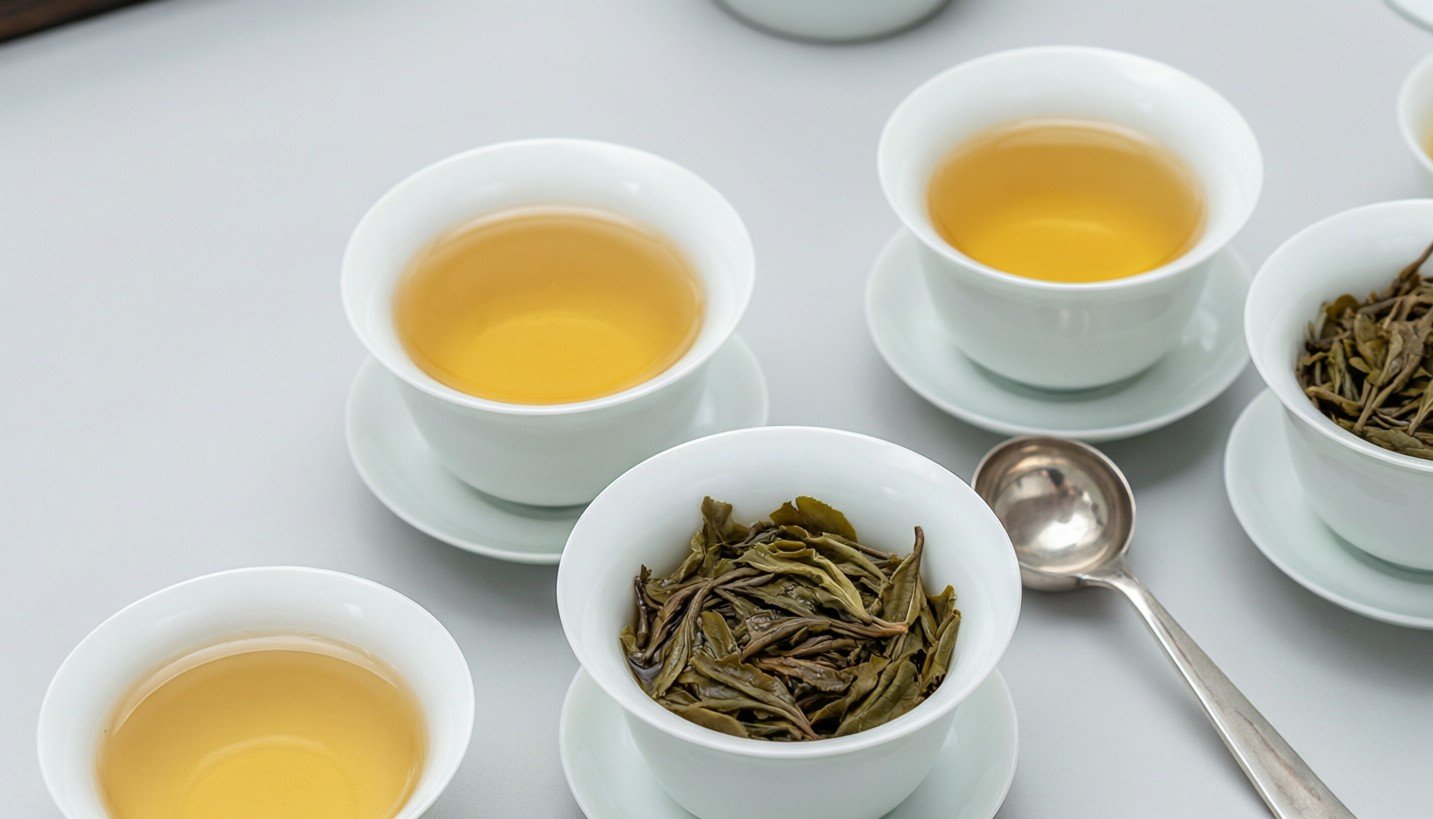
Tasting remains the fastest check. Steep the tea at full intensity and look for a clean, rounded profile without raw green sharpness, sourness, or a musty aftertaste.
Need production parameters or a batch sample before you commit? Send your target format, volume, and destination market to xuansc2144@gmail.com, and we will ask the right factory-side questions for you.
Common Misconceptions About Dark Tea Production
Several myths repeat across the trade:
- All dark tea is Pu-erh. Not accurate. Pu-erh is a major Yunnan tradition, but Anhua, Hubei, Guangxi, and Sichuan each have their own dark tea methods and market norms.
- The darker the leaf, the better the tea. Color alone is not proof of good fermentation. Cheap dark tea can be darkened quickly while remaining rough underneath.
- Golden flowers are always a sign of quality. They are expected in Fu Zhuan, but their presence is not a substitute for clean flavor and proper storage.
- Older always means better. Aging can improve dark tea, but poor storage, overly wet conditions, or a weak base leaf can also age a tea into dullness.
Ready to Source Dark Tea (Hei Cha)? Start With the Right Spec
The best dark tea deal is not the lowest price. It is a batch where the leaf grade, fermentation, compression, and storage history all line up with your market. Before you request pricing, define the format you need, the region you want to lead with, and the quality level your customers expect.
Send your requirements to xuansc2144@gmail.com and our team will help you turn them into a supplier-ready spec, including format, volume, region, and testing preferences.
Frequently Asked Questions
Is dark tea the same as black tea?
No. What Western markets call black tea is hong cha in China. Dark tea, or hei cha, goes through a post-fermentation step that gives it a different flavor, aroma, and aging trajectory [1].
Are the golden flowers in Fu Zhuan tea safe to drink?
Yes. In Fu Zhuan tea, bright yellow golden flowers are the result of controlled microbial activity during fermentation [2]. They are a traditional quality indicator. If the spots look gray, smell musty, or come with wet-packaging odors, that is a warning sign instead.
Which dark tea region should an importer start with?
Most buyers start with Anhua dark tea from Hunan because the production is well documented, the formats are flexible, and Fu Zhuan has strong consumer recognition. Guangxi Liubao is a good next step for buyers who want a slightly different regional story.
How can I tell a properly fermented dark tea from a poorly stored one?
Brew it at full strength and check the aftertaste. Well-fermented dark tea should feel round and clean, even when young. Sourness, green sharpness, or a stale, musty finish suggests a fermentation or storage problem that packaging alone cannot hide.
Does all dark tea need to be pressed into bricks?
No. Dark tea is sold loose, in baskets, as cakes, and in large compressed pillars. The format affects aging and handling, but the core production stages remain the same.
References
[1] ISO 20715:2023, Tea — Classification of tea types, International Organization for Standardization.
[2] GB/T 32719.1-2016, Dark Tea (Hei Cha) — Part 1: General Requirements, Standardization Administration of China.
[3] GB 2762-2022, National Food Safety Standard — Limits of Contaminants in Food, National Health Commission of the People's Republic of China.
No author description available.

白玉京