Gongmei White Tea Grades: How to Read the Labels
Gongmei white tea grades are easiest to understand when you treat a label as a set of verifiable specifications, not a single quality score. Too many buyers see the word “Gongmei” and assume a fixed leaf size, flavor profile, and price. In practice, the same category covers a broad range of spring and autumn lots, loose leaf and compressed formats, and low- to high-value material. This guide explains how to read a Gongmei label the way a sourcing manager should: from product standard and plucking standard down to the storage and residue claims.
Where Gongmei Fits in the White Tea Family
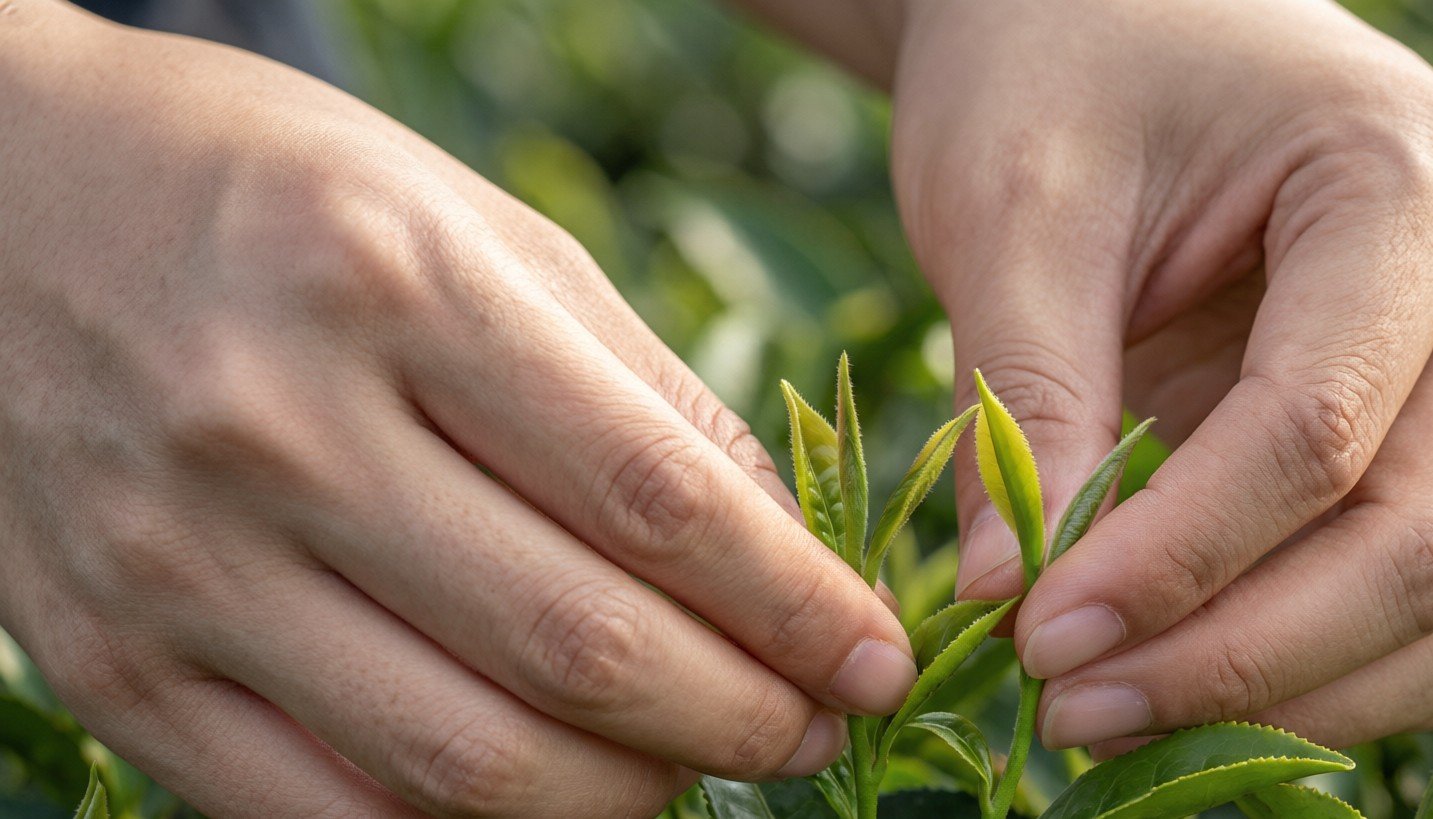
Under GB/T 22291-2017, white tea is classified into Baihao Yinzhen (Silver Needle), Baimudan (White Peony), Gongmei, and Shoumei [1]. Gongmei, sometimes translated as “Tribute Eyebrow,” is made from one bud and two to three leaves. After gentle withering and drying, the leaves take on a slightly curled, eyebrow-like shape. Shoumei is typically made from larger, later-picked leaves with little or no bud.
In commercial terms, Gongmei usually sits between Baimudan and Shoumei in pluck fineness and typical price, but the standard defines a category rather than a fixed flavor rank. A spring Fuding Gongmei with a high bud ratio can trade well above an autumn Gongmei with broad, coarse leaves. For importers, the category is only the starting point.
Why “Gongmei” Is Not a Single Quality Grade
The biggest source of confusion is that Gongmei is both a named category and, in everyday trade, a shorthand for “better than ordinary Shoumei.” That shorthand breaks down quickly.
Two lots can both be labeled Gongmei yet differ sharply in bud-to-leaf ratio, harvest season, origin, age, and processing quality. Some factories add internal quality words such as “first grade” or “premium” to the label, but those words are meaningful only when tied to a cited standard or a written factory specification. Without that link, they are marketing language.
Historically, Gongmei and Shoumei were sometimes treated together in older white tea discussions. GB/T 22291-2017 clarifies Gongmei as a distinct category based on plucking standard and appearance. That does not make every Gongmei lot homogeneous. It makes the label requirements more important, not less.
What a Legible Gongmei Label Should Tell You
A professional Gongmei label should read like a compact spec sheet. The minimum useful fields include:
| Label field | What it should specify |
|---|---|
| Product standard | GB/T 22291-2017 or an equivalent cited standard |
| Tea category | Gongmei |
| Plucking standard | One bud and two leaves, or one bud and three leaves |
| Origin | Province, county, township, or mountain-level detail |
| Harvest season and year | Spring or autumn, plus the production year |
| Form | Loose leaf, pressed cake, or brick |
| Aging or vintage | Production date; if “aged,” storage age and location |
A label that says only “Gongmei” and “white tea” does not give an importer enough to compare lots or defend a price.
Need a second opinion before you commit? Email photos of the supplier’s label and spec sheet to 427728483@qq.com. We will check the pluck, origin, and grade wording against current bulk pricing context so you can negotiate from a stronger position.
Seven Label Elements to Verify Before You Pay
- Product standard code. The label should cite a standard. GB/T 22291-2017 is the main white tea standard used in mainland China [1]. The international tea-type classification framework is provided by ISO 20715:2023 [2], but the Chinese product standard is the more practical buying reference.
- Exact pluck. Confirm the bud-to-leaf ratio in writing. “One bud and two leaves” is generally finer and more expensive than “one bud and three leaves.” If the label does not state the pluck, ask.
- Origin specificity. “Fujian” is far weaker than “Fuding, Fujian” or a village-level claim. Gongmei from Fuding and Zhenghe can differ in style and value, so origin vagueness should be questioned.
- Harvest season and year. Spring material tends to be softer and more aromatic, while autumn material can be broader and less costly. A label without harvest season prevents fair comparison between lots.
- Pressed or loose. Gongmei is traded both as loose leaf and as compressed cake or brick. Compression can change how the material ages and how it is stored and shipped. The label should state the form clearly.
- Wording around age. If the label says “aged,” it should also say how long and under what conditions. “Aged white tea” without a production date is not an aging claim; it is a wrapper.
- Batch or lot number. A missing lot number makes traceability and quality disputes harder. Professional bulk lots should carry at least an internal batch reference that links the tea to its certificate and sample.
Common Label Red Flags in Bulk Gongmei Sourcing
A few recurring problems should stop a buyer or trigger stronger verification:
- Shoumei-like leaf under a Gongmei label. If the dry leaf is mostly large, broken, or bud-free, the category claim may be loose.
- Vague “aged” language. No vintage, no storage region, no storage type. This often hides young or poorly stored stock.
- Unlinked grade words. Terms such as “AAAA,” “superior,” or “top grade” without a cited standard or factory specification.
- Mismatched origin and standard. A label that claims a protected origin but cites only a generic code may deserve extra scrutiny.
- No pluck standard. For Gongmei, the bud-to-leaf ratio is central to value. Its absence usually means the supplier has not standardized the lot.
- Photocopied or unverifiable certificates. Certificates are only useful when they can be checked against the issuing body or the batch number.
The Pre-Shipment Check That Separates Good Lots from Bad
Before paying for a bulk Gongmei lot, ask for the same information every time. A simple questionnaire keeps comparisons consistent:
| Parameter | What to ask the supplier |
|---|---|
| Product standard | Which standard does this lot meet? |
| Category and pluck | Is it Gongmei? What is the exact bud-to-leaf ratio? |
| Harvest | Which season and year was the material picked? |
| Origin | Which county, township, or mountain does it come from? |
| Form and batch | Is it loose leaf or pressed? What is the batch number? |
| Moisture and defects | What are the tested moisture and foreign-matter figures against the standard? |
| Residue compliance | Does the lot meet EU MRL or destination-market pesticide limits? |
| Sample | Can you send a sealed pre-shipment sample from the same batch? |
Use the answers to build a one-page lot sheet. If the supplier cannot answer the basic pluck and harvest questions, that is more informative than a low price.
Gongmei Sourcing Checklist and Next Steps
A workable Gongmei buy is rarely about finding the fanciest name. It is about matching label claims to physical evidence.
- Confirm the product standard and category in writing.
- Lock the bud-to-leaf ratio: one bud and two leaves is not the same as one bud and three leaves.
- Record origin at least to county level.
- Note harvest season, production year, and storage history.
- Compare pressed and loose formats separately.
- Request a sealed batch sample and a certificate tied to that batch.
- Treat vague “aged” or “premium” wording as a request for more detail, not a reason to pay more.
Need Gongmei lots verified or sourced directly? Our Chinese tea suppliers team helps importers confirm product standards, check pluck and harvest claims, arrange pre-shipment samples, and build portable lot spec sheets. Tell us your target category, vintage, volume, and destination market at 427728483@qq.com.
Frequently Asked Questions
What is the difference between Gongmei and Shoumei?
Gongmei is made from one bud and two to three leaves, giving it a more defined eyebrow shape and generally a higher bud ratio. Shoumei is typically made from larger leaves with little or no bud. The category should not be read as a universal taste ranking, but the plucking standard and typical price position differ.
Does a higher “grade number” on a Gongmei label mean better tea?
Not unless the grade number is tied to a cited standard or factory specification. Many labels use “first grade,” “premium,” or similar wording as marketing. Ask what measurable criteria the grade refers to, such as pluck, leaf size, broken-leaf rate, or harvest season.
Can Gongmei white tea be sold as loose leaf and compressed?
Yes. Gongmei is traded as loose leaf, pressed cakes, and pressed bricks. The form affects storage, aging behavior, and shipping. A label should always state whether the lot is loose or compressed.
What paperwork should accompany a Gongmei bulk order?
At minimum, a professional lot should be supported by a product standard reference, origin and harvest information, a batch number, any applicable residue or pesticide report, and a sealed pre-shipment sample from the same batch. Certificates should be checkable and tied to the lot number.
References
[1] GB/T 22291-2017, White tea, Standardization Administration of the People's Republic of China, 2017.
[2] ISO 20715:2023, Tea — Classification, International Organization for Standardization, 2023.
No author description available.

白玉京