Da Hong Pao Terroir: Soil, Altitude & Climate in Wuyi
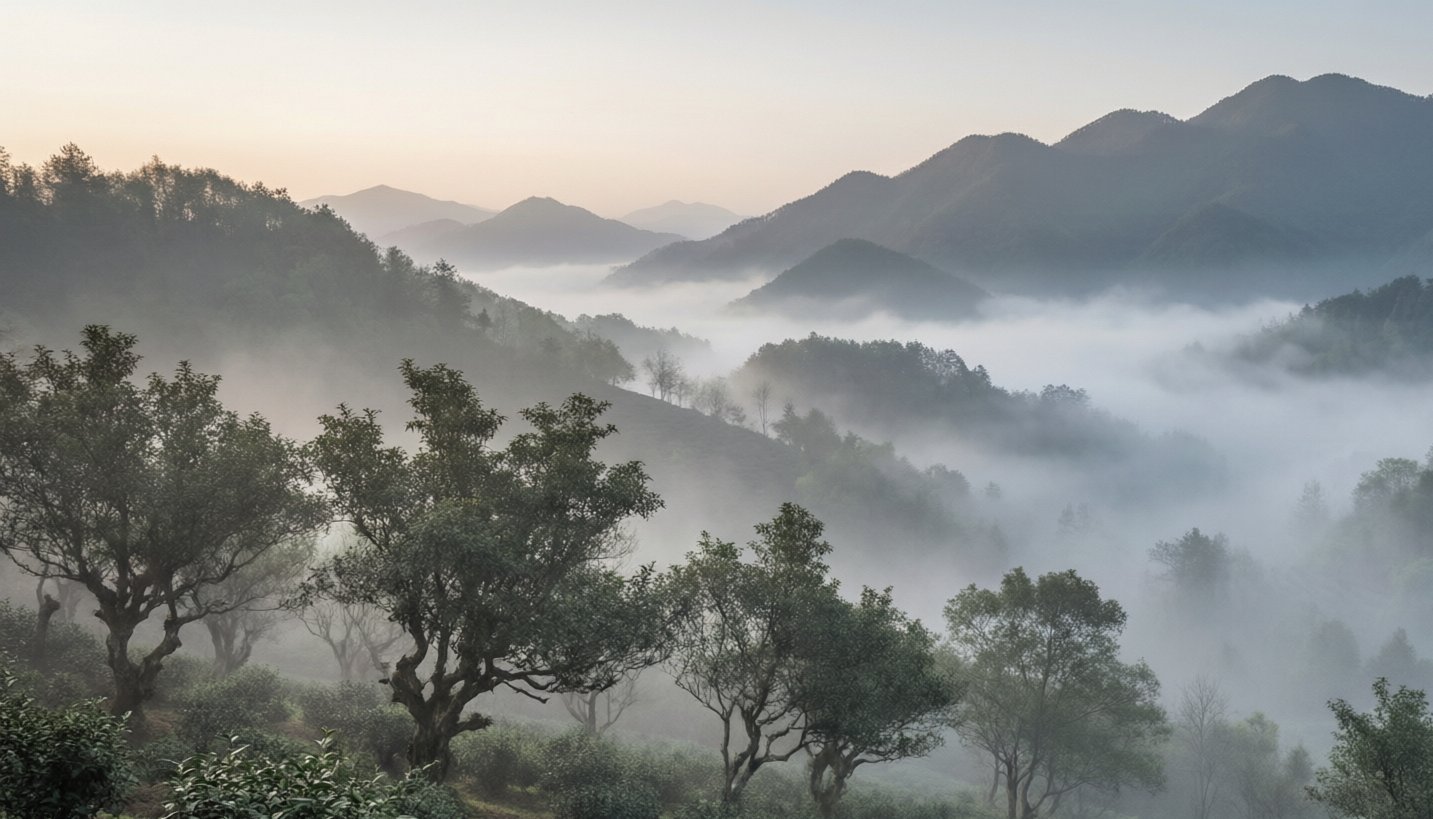
Da Hong Pao is often described in sourcing briefs as a black tea, but under the ISO tea classification it is a heavily oxidized and roasted oolong [1]. That distinction matters beyond labeling: Da Hong Pao belongs to the Wuyi rock tea family, known in Chinese as yancha, and its character depends on cliff geology, drainage, shade, and microclimate far more than on roast alone. Chinese tea professionals call the best expression of this origin yan yun, or "rock rhyme." In practical buying terms, terroir is the difference between a Da Hong Pao lot with mineral depth and one that is merely roasted.
What Da Hong Pao Terroir Actually Means
Terroir in tea is not a single chemical marker. It is the combined effect of parent rock, soil structure, slope, aspect, water movement, sunlight, humidity, temperature, cultivar, and harvest timing. For Da Hong Pao, terroir sets a ceiling: it determines the raw material quality and aromatic potential that roasting can either reveal or conceal.
A useful distinction for importers is that Da Hong Pao terroir does not express itself like a fully oxidized Yunnan or Anhui black tea. It expresses through body, mineral persistence, and a long cooling aftertaste rather than through malty sweetness or brisk astringency. Because commercial Da Hong Pao is often a roasted blend of select Wuyi cultivars, buyers should treat "origin" and "blend style" as two separate layers of a lot description.
The Wuyi Origin Frame
Da Hong Pao comes from the Wuyi Mountains, a protected landscape that straddles the Fujian-Jiangxi border. Mount Wuyi is a UNESCO World Heritage property with exceptional biodiversity and long tea cultural history [2]. The Wuyi Rock Tea geographical indication defines the legal production area for genuine Wuyi rock tea [4].
However, the GI boundary is broader than the famous core gardens. "Wuyi" on a label is a legal origin statement, not an automatic grade. The most prized material is often described as zheng yan, meaning produced on or near the central rock cliffs, while less expensive material may come from wider surrounding zones. For a buyer, this means documentation should go beyond "Wuyi" and identify the village, garden, or micro-zone when possible.
Soil: Why the Rock Is More Than a Story
"Rock tea" is literal in the sense of terrain. The strongest Da Hong Pao material grows in rocky, well-drained sites where tea roots penetrate mineral-bearing crevices and shallow soils rather than deep valley loam. This stress slows growth, reduces leaf size, and concentrates the compounds that later contribute to body and aromatic density.
The flavor consequence is structural rather than single-note. Well-sourced rock material tends to produce a thicker, more coating liquor, while flatter, softer lots often reflect deeper soil, heavier nitrogen uptake, and less mineral contact. The national standard for Wuyi Rock Tea defines the product by protected origin and sensory character rather than by any single soil parameter [3]. That means soil matters, but it should be evaluated as part of the whole site, not as a marketing phrase.
Altitude: Why Higher Is Not Automatically Better
Altitude is frequently overused in Da Hong Pao sales. Wuyi rock tea gardens sit in hilly, cliff-dominated terrain where exposure, aspect, and shade often matter more than absolute elevation. A sheltered rock pocket facing the right direction can outperform a higher, wind-exposed ridge.
This separates Wuyi from Taiwan high-mountain oolong logic. In Taiwan, cool nights at consistently high elevation are central to floral, high-toned aromatics. In Wuyi, the relevant factors are rock reflection of heat, partial shade, drainage, and protection from rain-saturated soil. Buyers should ask for the named cliff, valley, or micro-village and its exposure, not just an elevation figure. Elevation is only useful when paired with drainage, sunlight hours, and water movement.
Climate: Mist, Shade, and Temperature Swing
Wuyi has a humid, monsoon-influenced climate with frequent spring mist, abundant forest cover, and strong day-night temperature differences during key harvest periods [2]. Mist and cloud cover slow leaf desiccation and reduce harsh direct sunlight, while temperature fluctuation helps concentrate aromatic precursors without pushing excessive bitterness.
Spring harvest, usually centered on April into early May depending on weather, tends to produce the most complete terroir expression. Autumn material can be cleaner and more floral but often has less body. Rain immediately before plucking raises water content and can dilute leaf concentration, so producers prefer dry picking windows. This is why harvest-day weather matters alongside the broader annual climate story.
How Terroir Appears in the Cup
In a well-made Da Hong Pao, terroir appears first as wet-stone or mineral notes beneath the roast, then as a long, cooling aftertaste. Expect roasted caramel, toasted grain, dark stone fruit, or occasional florals in finer lots. The liquor should be smooth and coating rather than dry or papery.
The defining rock rhyme, or yan yun, is not a separate flavor. It is a persistent mineral and mouth-coating finish that remains after the initial roast character fades. If a sample is only charcoal-like or harshly smoky with no underlying clarity, the cause is usually weak material, stale leaf, or excessive roasting rather than authentic terroir.
To judge terroir properly, buyers should brew Da Hong Pao gongfu style and evaluate at least three infusions. The first infusion shows roast and immediate aromatics; the second and third reveal mineral depth, texture, and aftertaste. Real terroir should survive the roast, not disappear under it.
Sourcing Implications for Buyers
Because commercial Da Hong Pao is typically a roasted blend, clever sourcing means verifying three layers at once: origin, grade and blend ratio, and roast quality.
A practical lot-check looks like this:
- Ask whether the lot falls within the Wuyi Rock Tea GI zone and request supporting origin documentation or GB/T 18745-compliant product information [4].
- Request location detail beyond "Wuyi," ideally the village, garden, or broad micro-zone.
- Look for cupping language about minerality and aftertaste, not only roast strength.
- Compare two or three lots across price points and test re-infusion endurance.
- If a supplier cannot explain whether Da Hong Pao is an oolong or a fully oxidized black tea, treat that as a basic knowledge red flag.
Need help verifying a Da Hong Pao lot before you commit? Contact Chinese tea suppliers at 427728483@qq.com for origin documents, cupping notes, and current wholesale pricing.
Common Terroir Myths
The Da Hong Pao market contains several repeated claims that buyers should approach with caution.
Myth: Genuine Da Hong Pao comes from the original mother bushes. The original mother trees are protected and not commercially available. Modern Da Hong Pao is a style made from selected Wuyi cultivars and blends. Any seller offering "mother tree" material at ordinary wholesale prices is not describing reality.
Myth: Higher altitude always means better Da Hong Pao. Wuyi is not an alpine tea region. Aspect, shelter, drainage, and rock contact matter more than a single elevation number.
Myth: A heavy roast proves authenticity. A strong roast can conceal weak or stale leaf. In high-quality rock tea, the roast should support the material rather than bury it.
Myth: Any tea from Wuyishan is yancha. Wuyishan produces different tea types, including black tea. Only teas meeting the Wuyi Rock Tea GI and processing rules should be presented as yancha, and Da Hong Pao specifically is a rock oolong style.
Next Step: Turn Terroir Claims into Verified Lots
The least productive way to buy Da Hong Pao is to choose by evocative origin language alone. The better approach is to ask every supplier the same set of lot-level questions and compare answers against samples.
For wholesale sourcing of Wuyi Da Hong Pao with origin documentation, cupping support, and batch-level detail, contact Chinese tea suppliers at 427728483@qq.com. Include your target grade, order volume, and destination market in the inquiry so the supplier can respond with relevant samples and pricing.
Frequently Asked Questions
Is Da Hong Pao a black tea or an oolong?
Da Hong Pao is technically an oolong. It is heavily oxidized and roasted, which creates a dark liquor, but it is not a fully oxidized black tea under the ISO tea classification [1]. Export shorthand often calls dark teas "black tea," but that label is not technically accurate for Da Hong Pao.
Why is "rock rhyme" so important?
Yan yun, or rock rhyme, describes the mineral, mouth-coating, long-finish character associated with Wuyi rock tea. It is a sensory description rather than a chemical marker. For buyers, it is a useful shorthand for material that retains depth after the roast fades.
Can I verify authenticity before buying?
Authenticity is best verified through documentation and sampling. Ask for GI and origin information, request location detail to the village or garden level where possible, review cupping notes, and brew samples gongfu style. Laboratory testing can confirm safety and standards compliance, but it does not verify terroir by itself.
What does the original Da Hong Pao mother tree claim mean?
The original mother trees are protected and no longer sold on the commercial market. Modern Da Hong Pao is typically a roasted style or blend made from selected Wuyi cultivars. Buyers should not pay a premium for "mother tree" claims.
How do I evaluate terroir in Da Hong Pao?
Use gongfu brewing and monitor at least three infusions. Look for mineral persistence, smooth body, and aftertaste that continues after the roast fades. Compare lots from the same harvest at different price points to separate material quality from marketing language.
References
[1] International Organization for Standardization. ISO 20715:2023: Tea — Classification of tea types.
[2] UNESCO World Heritage Centre. "Mount Wuyi."
[3] General Administration of Quality Supervision, Inspection and Quarantine of the People's Republic of China. GB/T 18745-2006: Product of geographical indication — Wuyi Rock Tea.
[4] China National Intellectual Property Administration. Geographical indication protection scope: Wuyi Rock Tea.
No author description available.

白玉京