Anhua Black Tea Price Guide 2026: What Buyers Really Pay Wholesale
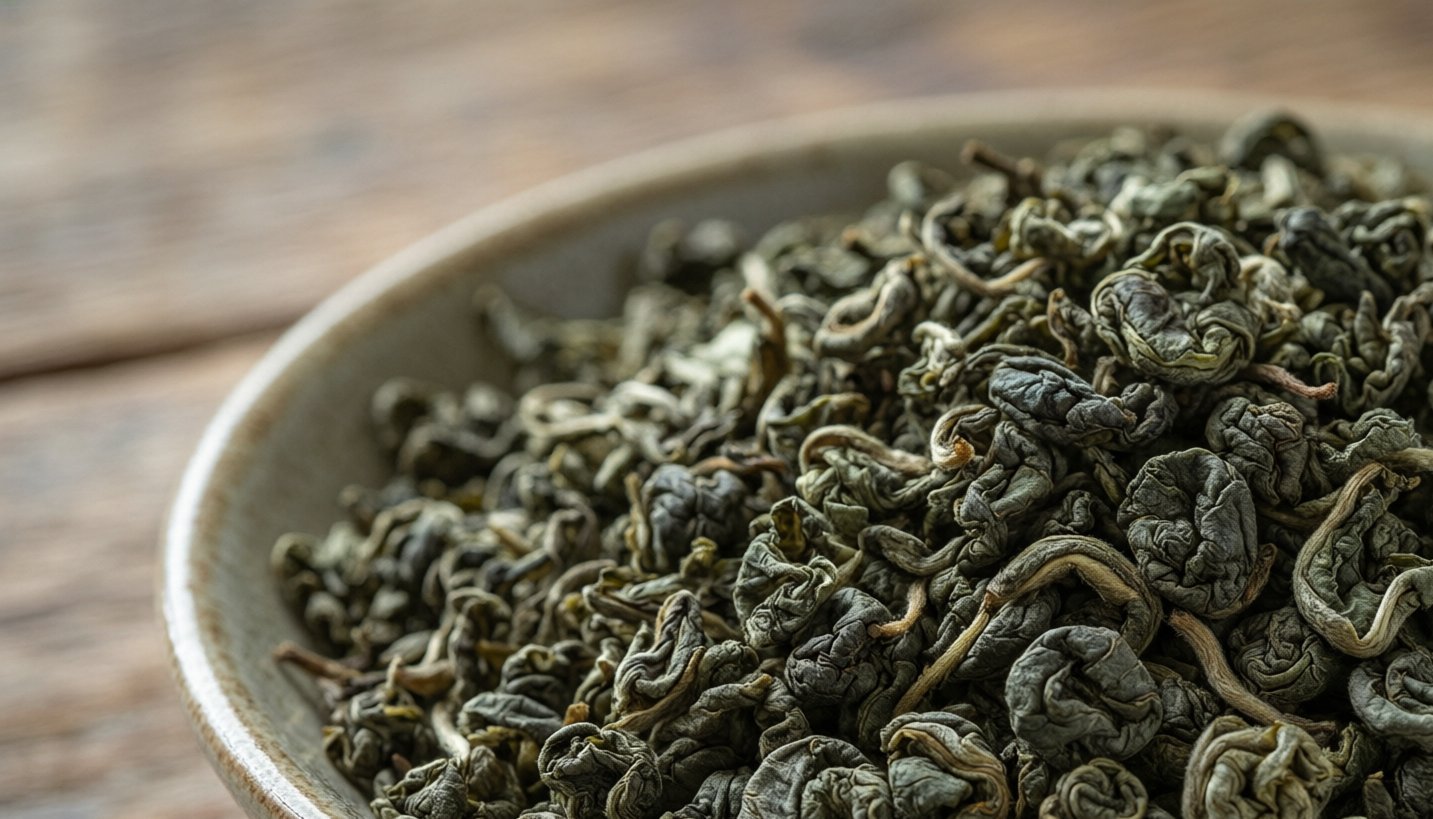
What Determines Anhua Black Tea Prices
Anhua black tea — known in China as Anhua dark tea (hei cha) — is one of the most misunderstood categories in tea sourcing. The same supplier may quote $3/kg for commodity Fu brick and $180/kg for a well-aged premium Tianjian from the same county. The gap is not arbitrary; it follows raw material grade, fermentation method, pressing format, storage provenance, and brand equity [1][2]. Without controlling these variables, you will either overpay by default or buy pressed material that cannot hold its shelf price.
The main price drivers:
- Raw material and mountain origin. High-elevation Anhua material costs more than plantation leaf because of lower yields and stronger cupping performance.
- Grade and leaf standard. Official classifications under the GB/T 9833 dark tea series separate commodity, boutique, and collection-grade material [3].
- Fermentation method and golden flower density. Fu brick tea with even Eurotium cristatum growth trades higher than weakly fermented brick.
- Compression format. Loose leaf, bricks, cakes, and Qianliang logs have different labor, drying, and packaging costs.
- Age and storage provenance. Only properly stored tea with documented origin commands an age premium.
- Certifications and lab reports. MRL, pesticide, and microbiological reports add cost but protect repeat orders.
If you are building a 2026 import budget, specify the exact product form and grade before comparing quotes; otherwise you are comparing unrelated teas. For a landed-cost quote on a specific grade, send your required product form, volume, and destination port to xuansc2144@gmail.com.
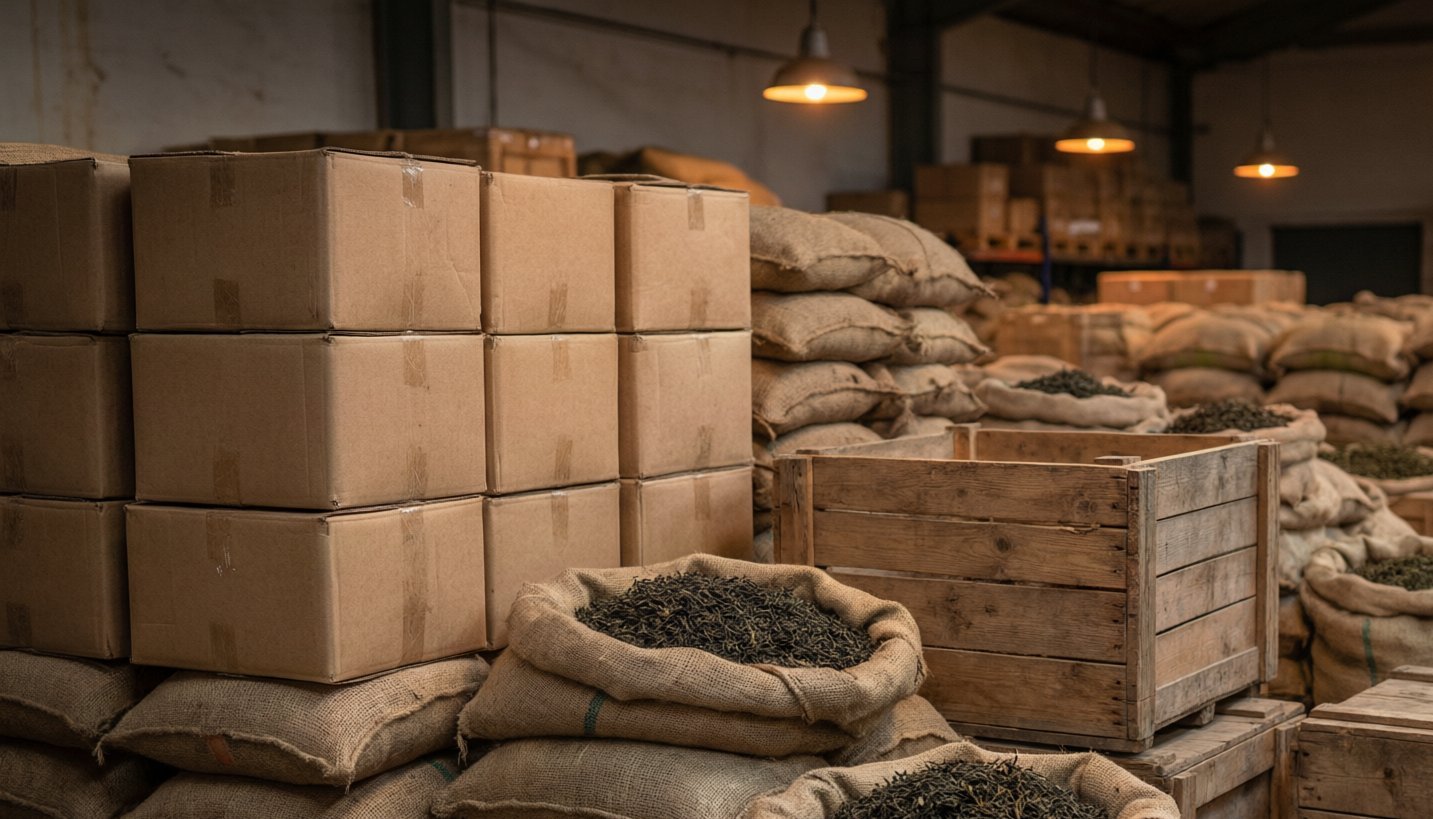
Current Wholesale Price Ranges by Grade
The figures below are indicative FOB China ranges observed across Hunan wholesale channels in early 2026. They are pre-certification, pre-freight, and assume direct factory or licensed trading-company sourcing [2].
| Product form | Typical FOB range | Buyer note |
|---|---|---|
| Ordinary Fu brick, 1–3 years | $3–8/kg | Commodity grade; verify tea content and pressing density |
| Premium Fu brick with abundant golden flower | $9–20/kg | Often the best volume-to-margin entry point |
| Hei brick / Hua brick | $4–12/kg | Price follows raw material and mold density |
| Loose Tianjian, Grade 1 | $30–90/kg | Higher leaf standard; request harvest year |
| High-grade Tianjian / Gongjian | $100–250/kg | Small lots; strong provenance expected |
| Qianliang tea, whole log (approx. 36.25 kg) | $800–4,000+ per log | Prices rise sharply with age and brand |
Treat these as negotiation anchors, not fixed rates. Two factories can quote the same "Fu brick" and be $10/kg apart if one uses high-mountain leaf and controlled fermentation while the other uses blended plantation material. Always ask for a physical sample, cupping notes, harvest year, and storage record.
How Anhua Dark Tea Prices Compare to Competing Dark Teas
Buyers often ask why Anhua dark tea is cheaper or pricier than alternatives. The comparison is useful when positioning product for Western consumers [5].
| Tea type | Indicative wholesale range | Position |
|---|---|---|
| Anhua Fu brick | $4–20/kg | High value-to-margin ratio; strong gift format |
| Guangxi Liu Bao | $8–35/kg | Regional specialty; smaller supply base |
| Ripe pu-erh loose leaf | $10–100+/kg | Larger global awareness; more brand-driven pricing |
| Anhua premium Tianjian | $30–250/kg | Collection-grade Hunan dark tea |
Anhua dark tea tends to offer a practical middle path: it has the post-fermented character that pu-erh buyers recognize, but without pu-erh's more speculative brand premiums. For importers building a dark tea program, a Fu brick core with a small premium Tianjian bracket is a defensible first structure.
Reading a Supplier Quote and Calculating Landed Cost
A low FOB number can still become an expensive purchase if you ignore the rest of the cost chain. Request a quote that separates these items:
- FOB product price per kilogram
- Palletization and vacuum packing
- Sea freight or air freight and insurance
- Destination duties and customs clearance
- Third-party lab testing per lot
- Warehouse intake and local distribution
Example ballpark: a 200 kg premium Fu brick order at $15/kg equals $3,000 FOB. Freight and insurance may add roughly $1.00–1.50/kg, lab testing $0.50–1.00/kg, and duties add a destination-specific percentage. The workable landed cost is therefore closer to $17–19/kg before local distribution. The lesson is not that FOB is misleading; it is that FOB is only the first number in a chain you must own.
Buying Calendar and Negotiation Levers
Anhua dark tea is produced year-round, but spring raw material is the curled, higher-aroma leaf that many buyers prefer. Autumn material is less expensive and can still be suitable for blending, but it should not be sold as top grade. Anhua County government industry data shows the strongest first-quarter ordering activity is from domestic retailers preparing for the spring gift season, which temporarily tightens supply for premium formats [4][6].
Practical buying levers:
- Pre-book spring material. Lock pricing before the peak order window.
- Buy exact formats. Fu brick for mainstream demand, Tianjian for premium margins.
- Ask for storage humidity and temperature logs. Age without provenance is not a premium.
- Negotiate on volume plus documentation. A credible supplier should absorb sample and basic cupping costs for serious buyers.
- Avoid late-autumn material sold as spring. Harvest year and season must be on the specification sheet.
If you are considering a first container or mixed pallet, we recommend starting with a 50–100 kg trial across two or three grades. This lets you benchmark price, packaging, and cupping before committing to volume. For guidance on structuring that trial, email xuansc2144@gmail.com with "Anhua trial order" in the subject line.

Work With a Verified Anhua Dark Tea Supplier
Chinese tea suppliers can provide Anhua black tea with specification sheets, sample sets, third-party lab reports, and transparent per-lot pricing. Rather than quoting a generic catalog number, we work from the variables that actually control your cost: raw material source, grade, fermentation level, format, age, certification, and destination.
To receive a landed-cost quote, include:
- Product form and grade
- Target volume or MOQ
- Destination country and port
- Certification requirements
- Preferred packing format
Send your requirements to xuansc2144@gmail.com.
Frequently Asked Questions
Is Anhua black tea the same as ripe pu-erh?
No. Both are post-fermented teas, but Anhua dark tea is produced in Hunan with distinct raw material, fermentation, pressing, and regional standards. They should not be substituted in a buying plan without cupping confirmation.
What should a first trial order budget look like?
For a 50–100 kg mixed order across Fu brick and Tianjian grades, plan roughly $600–$2,500 FOB plus freight, lab testing, and any destination duties. The range varies with grade split and age.
Does older Anhua dark tea always cost more?
Not automatically. Only tea with documented origin, stable storage, and sound base material should carry an age premium. Poor storage can reduce value even if the tea is old.
Does golden flower add to Fu brick prices?
Yes, but density must be confirmed in the cup, not just in photos. Dense, even Eurotium cristatum growth indicates controlled fermentation and usually commands a higher tier.
What documents should a credible supplier provide?
Request a product specification, origin certificate, pesticide/MRL report, microbiological lab test for golden flower, packing list, commercial invoice, and batch-specific photos.
References
[1] China Tea Marketing Association. "2025 China Tea Industry Development Report." Beijing, 2025.
[2] Hunan Tea Industry Association. "Anhua Dark Tea Production and Market Overview 2025." Changsha, 2025.
[3] Standardization Administration of China. GB/T 9833 series "Dark Tea." 2013.
[4] Anhua County Government. "Anhua Dark Tea Industry Data." http://www.anhua.gov.cn/.
[5] Food and Agriculture Organization of the United Nations. "FAO Tea Market Reports." https://www.fao.org/markets-and-trade/commodities/tea/en/.
[6] Hunan Provincial Bureau of Statistics. "Hunan Statistical Yearbook 2025." Changsha, 2025.
No author description available.

白玉京