Ancient Tree Pu-erh Tea: What Actually Makes It Different?
“Ancient tree” is one of the most powerful and most misused phrases in the pu-erh trade. Buyers hear it as a promise of depth, durability, and authenticity. Sellers often use it because it lifts the price. The honest answer is that ancient tree pu-erh can be genuinely different, but the difference comes from a chain of factors—origin, plant age, leaf material, picking, and processing—not from age alone.
This guide explains what the term does and does not mean, what changes in the cup, and how to buy with your spec rather than with the story.
“Ancient Tree” Is a Claim, Not a Universal Grade
Pu-erh’s legal identity in China is narrower than many Western buyers realize. National standard GB/T 22111-2008 limits pu-erh to products made from Yunnan large-leaf sun-dried green tea within the protected geographical area [1]. That standard defines the category, but it does not create a universal consumer grading system for “ancient tree,” “old tree,” or “gushu.”
Yunnan has introduced protections for ancient tea-tree resources, and those protections matter for conservation, origin, and traceability [2]. However, resources protection is not the same as a buyer-facing certification. In practice, suppliers use different thresholds. Many describe trees over 100 years old as old tree and trees over 300 years as ancient tree. Others use looser language, or attach the term to a region instead of a verified tree age.
That is why the first question should not be “Is it ancient tree?” but “What exactly does your company mean by that, and how can I verify it?”
Where Ancient Tree Pu-erh Actually Comes From
Ancient tree pu-erh comes almost entirely from Yunnan’s tea-growing mountains, especially in Xishuangbanna, Lincang, and the Pu’er/Simao area. Well-known old-tree zones include Yiwu, Jingmai, Bulang, Nannuo, and Bingdao, but old trees exist across many smaller villages and protected tea gardens.
What tends to matter more than the famous village name is the actual site: elevation, shade, soil, tea cultivar, and whether the trees are truly left to grow as trees rather than pruned into terrace-style rows. A properly old tree on a mediocre site will not automatically outperform a carefully managed plantation tea from an excellent site. Origin gives potential; it does not issue a guarantee.
Leaf Structure, Yield, and Why It Changes the Cup
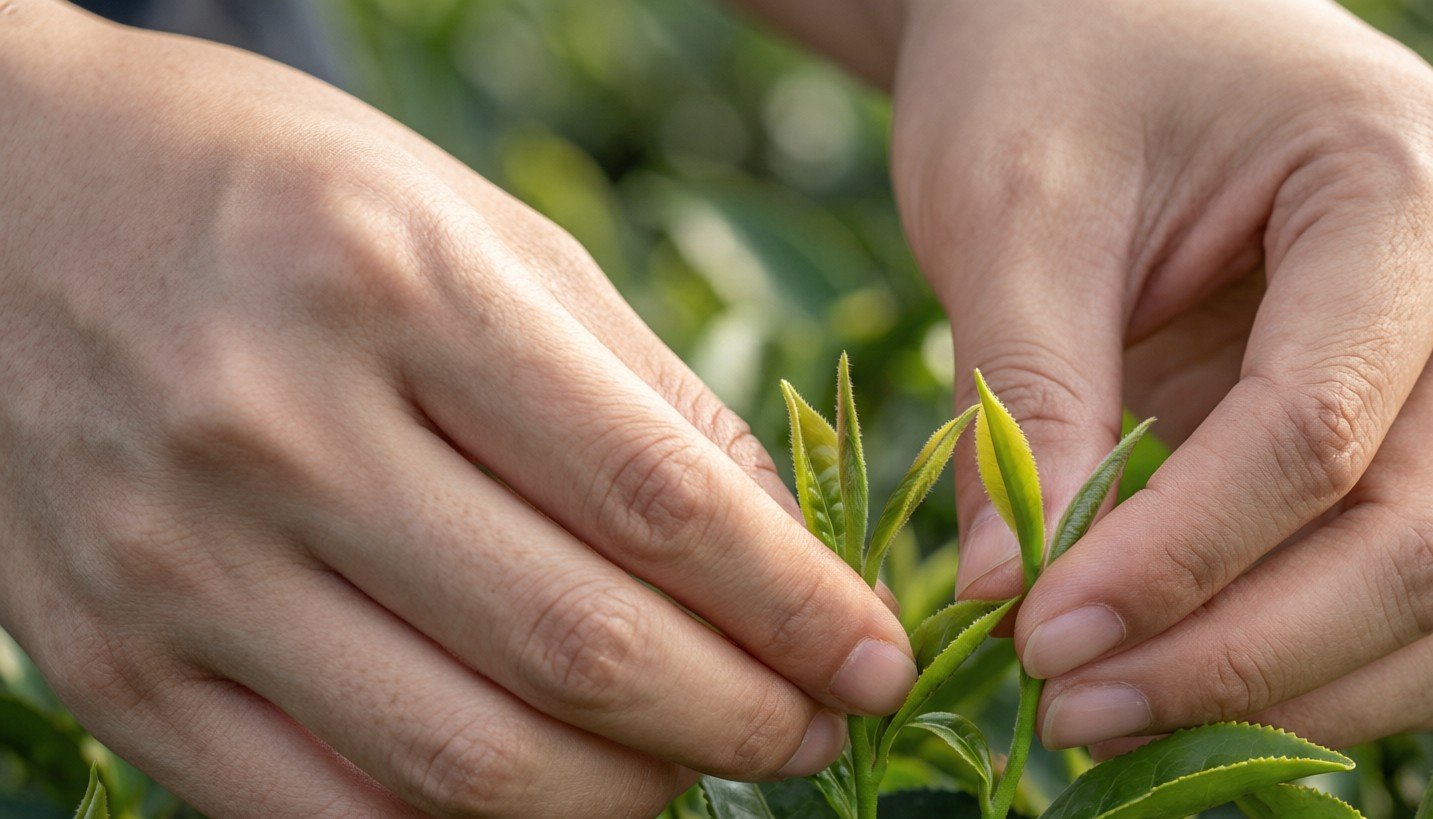
The physical difference between ancient tree and plantation tea is real. Older trees usually grow deeper roots, produce sparser new growth, and develop thicker leaves with more visible texture. Lower yield concentrates energy in fewer buds and leaves, which is one reason growers and buyers prize old-tree material.
The taste differences are often described as:
- less aggressive upfront bitterness
- a broader, deeper mouthfeel
- a longer finish
- more mineral or forest-floor character
- better ability to hold up through many infusions
These are tendencies, not rules. Processing can mute or amplify all of them. A poorly processed ancient tree tea can taste flat, smoky, or sour, while an excellent plantation tea can be clean and complex.
| Factor | Plantation / terrace tea | Ancient tree / old tree |
|---|---|---|
| Plant form | Pruned bushes, dense rows | Usually taller, naturally spaced trees |
| Root depth | Generally shallower | Often deeper |
| Yield per plant | Higher | Lower |
| Leaf texture | Tender, uniform | Often thicker, more variable |
| Typical cup | Cleaner, more immediate, less expensive | Deeper, longer, usually higher-priced |
| Main risk | Homogeneity and overproduction | False age claims, blends, high price |
Aging, Taste, and Brewing Behavior
Buyers often assume ancient tree pu-erh always ages better. The evidence is more nuanced. Old-tree material can have more structural complexity and endurance, which helps it evolve during storage. But aging is driven by storage conditions, compression, moisture, and initial processing just as much as by raw material age.
In the cup, ancient tree pu-erh often tolerates repeated infusions better than young plantation material. That durability is one of the clearest practical differences a buyer can test. If a tea is marketed as ancient tree but collapses after four or five infusions, the claim deserves scrutiny.
Another honest distinction is that ancient tree tea is not automatically “mellow.” Young raw pu-erh from old trees can still be strong, astringent, or challenging. The tree age may give the tea a deeper structure, but it does not remove youth.
Price, Grading, and Red Flags
Ancient tree pu-erh is priced at a premium because the raw material is limited, picking is more labor-intensive, and demand regularly exceeds verifiable supply. That gap is where most problems appear.
Common red flags include:
- vague or shifting definitions of tree age
- “ancient tree” prices that are suspiciously close to plantation prices
- cakes that look excessively uniform from batch to batch
- no harvest year, no specific village or mountain, and no batch traceability
- “wild tree” language used to avoid a precise origin claim
- no physical benchmark sample before a large order
The safest approach is to define the word in the contract. If you buy “ancient tree,” the supplier should agree to a written meaning: tree age range, source village or garden, harvest season, and whether the lot is single-origin or blended.
Sourcing note: For wholesale ancient tree pu-erh, start with the specification, not the story. Send the origin area, tree-age definition, raw or ripe format, compression preference, target volume, and target FOB price to 427728483@qq.com and ask for a physical benchmark sample to test against your contract.
How to Buy Ancient Tree Pu-erh Without Overpaying
The premium for ancient tree tea is easier to justify when you can taste and verify the tea, and harder when you are relying on the label. A practical buying process looks like this:
- Ask the supplier to define “ancient tree” in writing.
- Request the specific harvest year, season, and production area.
- Compare the lot against a plantation tea from the same region.
- Test durability across multiple infusions.
- Check moisture, compression, and leaf consistency.
- Confirm export testing and documentation if you plan to resell.
When budgets are limited, a high-quality old-tree blend or a good plantation single-origin tea can deliver better value than a falsely labeled ancient tree cake. The goal is not to buy the rarest label; it is to buy tea that performs for the price.
Source Ancient Tree Pu-erh With a Clear Spec
We work with Chinese tea suppliers on spec-first sourcing. Send your target profile—origin area, tree age definition, raw or ripe, cake or loose format, target FOB price, and annual volume—to 427728483@qq.com. A written spec and a benchmark sample make the difference between buying a story and buying tea you can defend to your customers.
FAQ
Is all ancient tree pu-erh better than plantation pu-erh?
No. Ancient tree material can have deeper structure and better endurance, but quality depends on origin, cultivar, picking, and processing. A poor ancient tree tea can be worse than an excellent plantation tea.
How much older does a tree have to be to count as “ancient”?
There is no single binding consumer definition. Many suppliers treat 100 years as the old-tree threshold and 300 years as ancient, but the definitions vary. Always ask the seller to define the term in writing.
Why is ancient tree pu-erh so expensive?
The raw material is limited, picking is labor-intensive, and demand regularly exceeds verifiable supply. The price also includes the risk and scarcity of genuine old-tree lots, not just the taste difference.
How can I verify an ancient tree claim?
Request the precise source village or garden, harvest year, tree age definition, and batch traceability. Compare a benchmark sample against the contract, test infusion durability, and ask for documentation if you plan to resell.
Does ancient tree pu-erh taste different in the cup?
Often, yes. It tends to show less aggressive bitterness, a deeper mouthfeel, a longer finish, and better endurance. However, processing can blunt or exaggerate those qualities, so the difference is not automatic.
References
[1] Standardization Administration of China. GB/T 22111-2008, Product of geographical indication—Pu’er tea. Standard.
[2] Yunnan Provincial People’s Congress. Regulations on the Protection of Ancient Tea Trees in Yunnan Province. Regulation.
No author description available.

白玉京