Yingde Green Tea Health Benefits: What the Evidence Actually Shows
Yingde green tea is often marketed as if it were a separate health product from every other green tea, with sellers emphasizing antioxidants, metabolic support, and a clean "spring harvest" story. The reality is more useful: Yingde green tea is a Chinese green tea from northern Guangdong, and most of the clinical evidence behind those claims comes from green tea in general rather than from any single Yingde-specific cultivar. That does not make the benefits fake. It does mean the strongest, most honest position is to understand which effects have real human evidence—and which claims are mostly marketing.
What Yingde Green Tea Actually Is
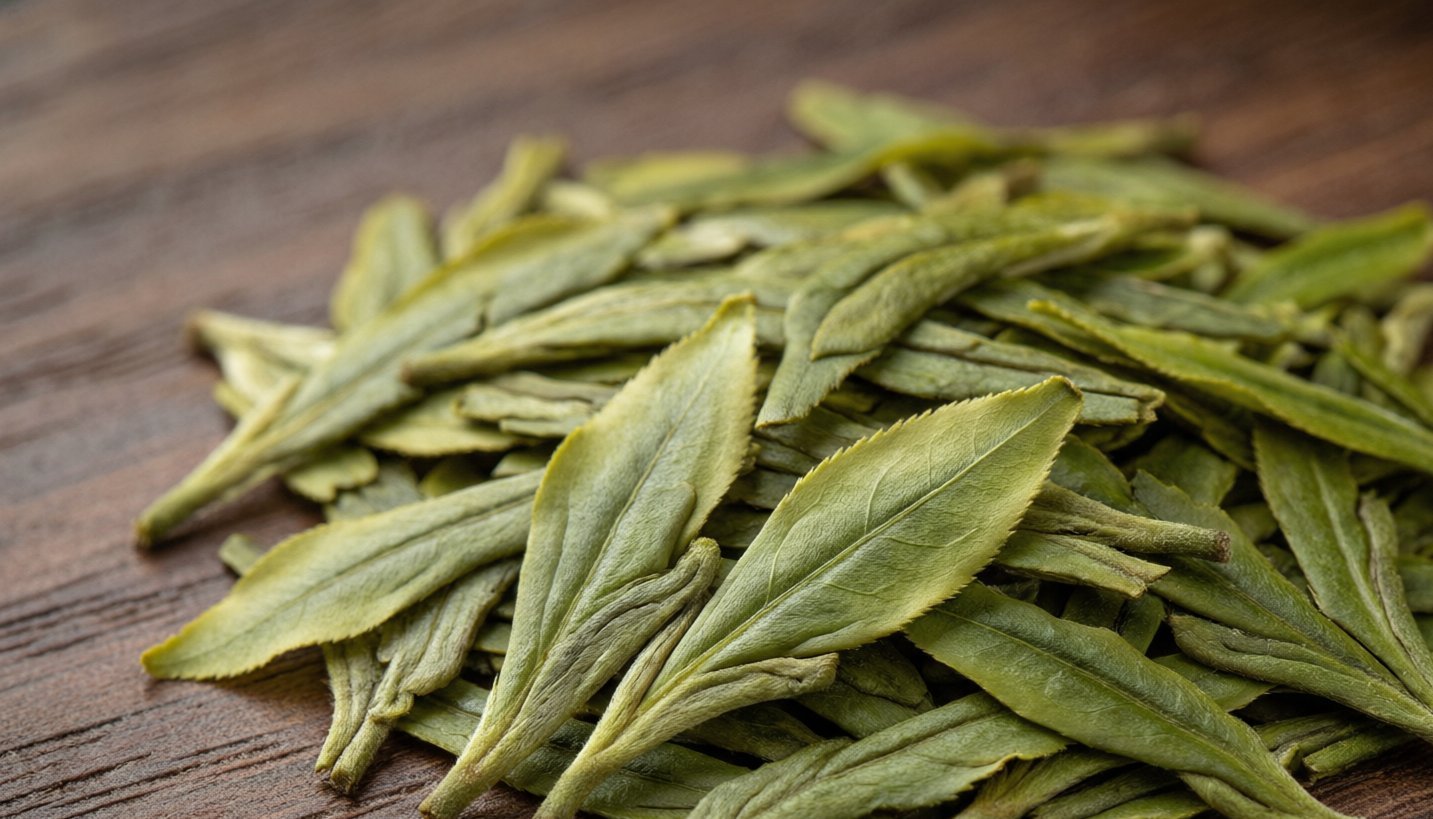
Yingde is a tea-growing area in northern Guangdong province, a region better known internationally for Yingde black tea than for green tea. Its green tea is a smaller specialty category, usually processed in the spring and shaped into tightly rolled or lightly twisted leaves. The best lots tend to be fresh-tasting and mild, with less of the aggressive grassiness that puts some people off other Chinese greens.
For health purposes, the important point is that Yingde green tea is made from the same species as other green teas, Camellia sinensis, and is processed with the same basic principle: early heat fixation to keep the leaves green and protect their polyphenols. That means the bioactive compounds discussed below are present, but their concentration varies by lot, harvest date, cultivar, and processing quality.
The Bioactive Compounds Behind the Claims
Green tea's health reputation comes mainly from a group of polyphenols called catechins. The most studied catechin is epigallocatechin gallate, usually called EGCG. Green tea also contains L-theanine, an amino acid associated with calm alertness, and a moderate amount of caffeine. Together, these compounds explain most of the effects researchers have investigated [10][6][7].
The challenge for any regional tea, including Yingde green tea, is that "contains polyphenols" is not the same as "delivers a specific clinical dose." Catechin content can differ substantially between spring and summer harvests, whole leaf and broken grades, and fresh versus old stock. That is why broad green tea research does not automatically translate into identical benefits from every cup.
Where the Evidence Is Strongest
Cardiovascular and Cholesterol Markers
The most consistent human evidence for green tea is in cardiovascular risk markers. Population studies and controlled trials report modest improvements in blood pressure, total cholesterol, and LDL cholesterol among regular green tea drinkers [1][3]. A meta-analysis of 14 randomized controlled trials found that green tea intake lowered fasting total cholesterol and LDL cholesterol compared with control groups [4].
These effects are modest, not dramatic. They are best understood as one habit among several, not as a replacement for diet, exercise, or prescribed medication. For Yingde green tea buyers, the practical point is that a fresh spring lot with intact leaf and proper storage will preserve more of the catechins responsible for these effects.
Weight and Body Composition
Green tea extracts and green tea beverages have shown small but statistically significant effects on energy expenditure and fat oxidation in some trials, particularly when combined with caffeine [5]. However, the real-world effect on body weight is generally small and inconsistent. Green tea alone, especially as brewed tea rather than extract, is not a reliable weight-loss tool [2][5].
This is one area where hype frequently outruns the evidence. A product described as "metabolism-boosting" may technically point to a real mechanism while promising far more than the data support.
Cognition, Mood, and Alertness
Green tea appears to support attention and subjective calm in a way that differs from coffee. Researchers attribute much of this to the combination of L-theanine and caffeine. L-theanine has been shown to influence alpha brain activity and self-reported mental state, often producing a relaxed but alert feeling [6][7]. The effect is real, but it is a practical daily effect—not a cognitive transformation.
Oral Health
Green tea polyphenols have antibacterial and anti-adhesive properties relevant to oral health. Reviews have found that green tea consumption may reduce plaque formation, improve breath markers, and support gum health [8]. This is one of the less-hyped but better-grounded areas of green tea research.
Where the Hype Outruns the Evidence
The biggest claims attached to green tea—detoxification, cancer prevention, rapid fat loss, and immune boosting—need the most caution.
Green tea catechins show antioxidant and cell-protective effects in laboratory and animal models, and some human observational data is suggestive [1][2]. But observational findings cannot prove that green tea alone prevents cancer or cleanses the body in the way "detox" marketing implies. Most regulatory and scientific reviews describe these as areas of ongoing research, not settled clinical recommendations.
The same problem applies to Yingde-specific claims. Unless a seller provides lot-specific test results for total catechins, EGCG, pesticide residues, and harvest date, there is no way to claim that a particular Yingde green tea is meaningfully "better for health" than another fresh, well-processed Chinese green tea.
How to Brew for Practical Benefit
Catechins are heat-sensitive and extract best when green tea is brewed correctly. In general, leafy Chinese green tea should be brewed with water between roughly 75°C and 85°C, using a short first infusion of two to three minutes. Water at full boil can extract more bitter compounds and degrade some of the delicate polyphenols.
For daily drinking, a ratio of about 3 grams of leaf per 250 ml of water is a reasonable starting point. The same leaves can often be infused two or three times. The second and third infusions will contain less caffeine and a softer flavor, though they also deliver lower polyphenol levels than the first steep.
Daily Intake and Safety
For most healthy adults, three to five cups of green tea per day is a common and generally safe range. The European Food Safety Authority's caffeine safety review, for example, identifies single doses up to 200 mg as unlikely to raise safety concerns for healthy adults [9]. A brewed cup of green tea usually contains far less than that, typically in the range of 20 to 50 mg of caffeine depending on leaf amount and steeping time.
People who are pregnant, sensitive to caffeine, or taking medication should check caffeine intake and possible interactions with a clinician. Green tea can also reduce iron absorption from plant foods when consumed with meals, so people at risk of iron deficiency often prefer to drink it between meals.
For Buyers: Read the Spec, Not the Health Story
If you are sourcing Yingde green tea, ask for the harvest date, cultivar, processing date, and total catechin or polyphenol test result. Those details tell you more about likely quality and freshness than any broad claim about antioxidants or metabolism.
For wholesale samples, lot specifications, or current harvest options, email our team at 427728483@qq.com with your target grade, volume, and destination port. We will respond with pricing and available test data.
Fresh spring green tea tends to retain more catechins than old or poorly stored stock, but the only way to know what you are buying is to review the lot's harvest date and chemical test report.
Send Your Sourcing Inquiry
If you need Yingde green tea for retail, food service, or private label, send us the following details and we will match you with the right grade:
- Intended use: loose leaf retail, tea bags, cafe, or private label
- Target volume and annual usage
- Harvest window preference or desired freshness date
- Destination port and packaging requirements
- Any certification needs, such as pesticide residue limits or organic status
Email 427728483@qq.com and a sourcing specialist will reply with recommendations, available lots, and samples.
FAQ
Does Yingde green tea have more antioxidants than other green teas?
Not necessarily. Yingde green tea contains the same major catechins as other Chinese green teas, but total levels vary by harvest, cultivar, processing, and storage. A fresh spring lot may test well, but the name alone does not guarantee higher polyphenol content.
How much Yingde green tea should I drink per day?
For most healthy adults, three to five cups per day is a common range. People with caffeine sensitivity, pregnancy, or certain medical conditions should use less or consult a clinician. Green tea is best consumed between meals if iron absorption is a concern.
Does Yingde green tea help with weight loss?
Green tea may have a small effect on energy expenditure and fat oxidation, but brewed tea alone is not a reliable weight-loss treatment [5]. Any real benefit is modest and works best alongside overall diet and activity habits.
Is Yingde green tea safe during pregnancy?
Green tea is generally safe in moderate amounts during pregnancy, but caffeine intake should be limited and discussed with a healthcare provider. Because caffeine content varies with leaf amount and steeping time, it is easier to exceed a target than many people expect.
Does Yingde green tea contain caffeine?
Yes. All green tea made from Camellia sinensis contains caffeine. A typical brewed cup may contain roughly 20 to 50 mg, depending on leaf amount, water temperature, and steeping time.
How should I brew Yingde green tea to preserve the catechins?
Use water between about 75°C and 85°C and a short first infusion of two to three minutes. Avoid boiling water, which can extract more bitterness and reduce some delicate polyphenols.
Does "first spring harvest" matter for health benefits?
Spring harvest often correlates with fresher, smoother, more aromatic leaves, and fresh tea generally retains more catechins than old or poorly stored tea. However, harvest date is only one factor. Processing quality and storage conditions matter just as much.
References
[1] Khan N, Mukhtar H. Tea and health: studies in humans. Curr Pharm Des. 2013;19(34):6141–6147. doi:10.2174/1381612811319340008
[2] Yang CS, Hong J. Prevention of chronic diseases by tea: possible mechanisms and human relevance. Annu Rev Nutr. 2013;33:161–181. doi:10.1146/annurev-nutr-071811-150717
[3] Hodgson JM, Croft KD. Tea flavonoids and cardiovascular health. Mol Aspects Med. 2010;31(6):495–502. doi:10.1016/j.mam.2010.09.004
[4] Zheng XX, Xu YL, Li SH, Liu XX, Hui R, Huang XH. Green tea intake lowers fasting serum total and LDL cholesterol in adults: a meta-analysis of 14 randomized controlled trials. Am J Clin Nutr. 2011;94(2):601–610. doi:10.3945/ajcn.110.010926
[5] Hursel R, Westerterp-Plantenga MS. Catechin- and caffeine-rich teas for control of body weight in humans. Am J Clin Nutr. 2013;98(6 Suppl):1682S–1693S. doi:10.3945/ajcn.113.058396
[6] Mancini E, Beglinger C, Drewe J, Zanchi D, Lang UE, Borgwardt S. Green tea effects on cognition, mood and human brain function: a systematic review. Phytomedicine. 2017;34:26–37. doi:10.1016/j.phymed.2017.07.008
[7] Nobre AC, Rao A, Owen GN. L-theanine, a natural constituent in tea, and its effect on mental state. Asia Pac J Clin Nutr. 2008;17 Suppl 1:167–168.
[8] Narotzki B, Reznick AZ, Aizenbud D, Levy Y. Green tea: a promising natural product in oral health. Arch Oral Biol. 2012;57(5):429–435. doi:10.1016/j.archoralbio.2011.11.017
[9] EFSA Panel on Dietetic Products, Nutrition and Allergies. Scientific opinion on the safety of caffeine. EFSA Journal. 2015;13(5):4102. doi:10.2903/j.efsa.2015.4102
[10] Balentine DA, Wiseman SA, Bouwens LC. The chemistry of tea flavonoids. Crit Rev Food Sci Nutr. 1997;37(8):693–704. doi:10.1080/10408399709527797
No author description available.

白玉京