Why Huangshan Maofeng Tea Costs So Much: A Buyer’s Guide
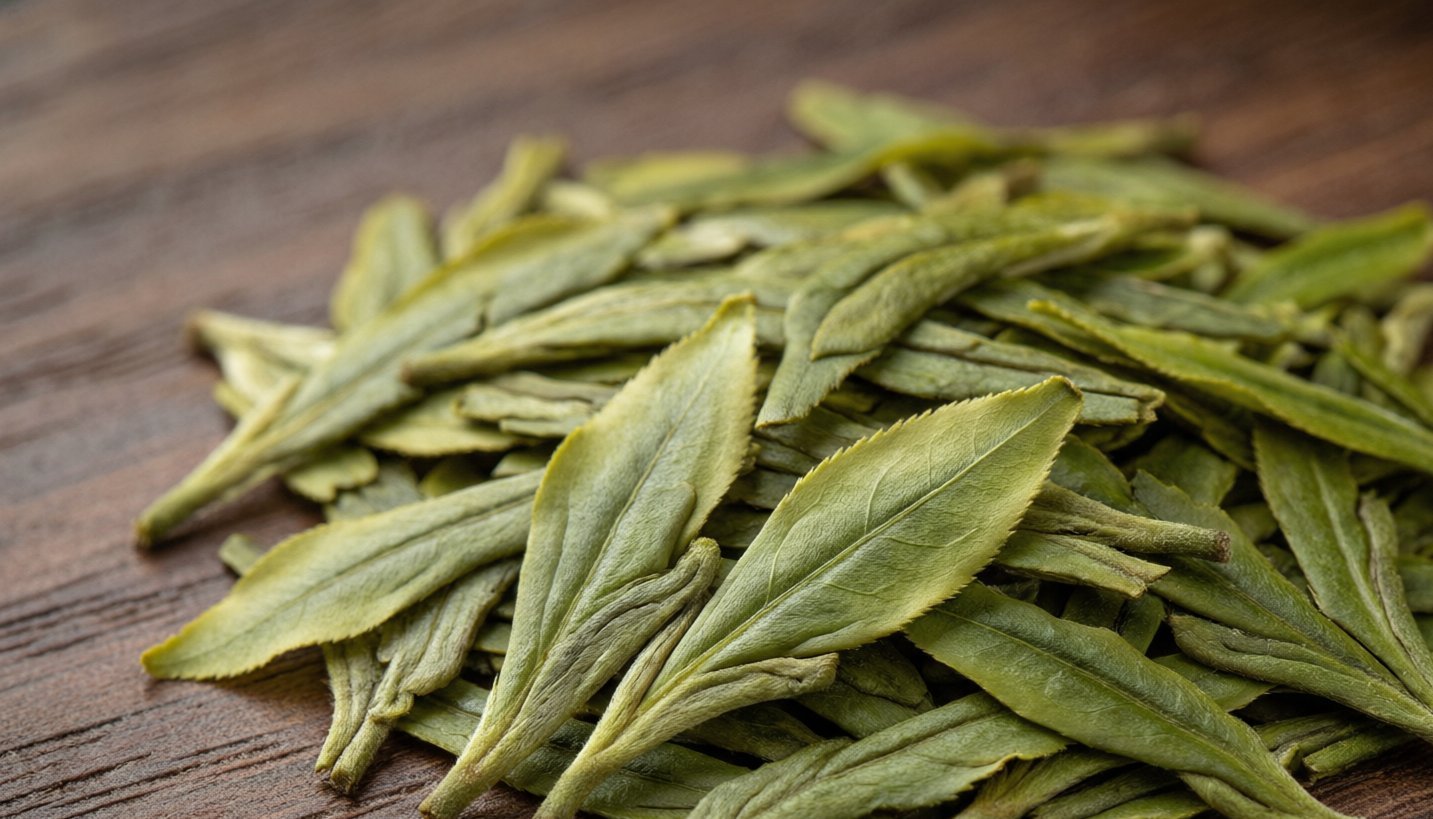
Huangshan Maofeng is one of China’s most famous green teas, but two lots with the same name can land on a wholesale invoice at very different prices. One batch may be an everyday late-spring tea, while another is a pre-Qingming, small-batch lot from a core village. The gap is not just branding. Harvest date, picking standard, origin, processing skill, and domestic demand all move the price.
For importers, the practical question is not whether Huangshan Maofeng is “too expensive.” It is whether the lot you are paying for matches the leaf you are actually receiving. This guide breaks down the real price drivers so you can judge a quotation by the cup and the batch evidence, not by the label.
What Huangshan Maofeng Is, and Why Origin Comes First
Huangshan Maofeng is a pan-fired green tea produced in Huangshan City in southern Anhui Province. The name is protected as a geographical indication product, meaning only tea made from the designated production area, using the recognized local cultivar and processing method, can legally carry the name [1]. The dry leaf is known for a slightly curled shape, a bud plus one or two young leaves, and fine silvery-white down that helps give the tea its “mao” character.
The protected area sits among the misty slopes of Huangshan, or Yellow Mountain, where cloud cover, high humidity, sharp day-night temperature differences, and well-drained mineral soils slow leaf growth. Slower growth tends to produce leaves with more amino acids and less coarse bitterness, which is one reason the region’s early spring tea tastes more refined than faster-grown lowland green tea [3].
Where the Price Gap Comes From
The mistake many first-time buyers make is treating Huangshan Maofeng as a single product with a single market price. In wholesale, it is a category with several levels, and the price can vary widely between grades.
Harvest Date and Picking Standard
The hardest price driver is harvest timing. The earliest pre-Qingming tea, picked before the Qingming Festival in early April, is scarce and commands the highest price. The next window, pre-Grain Rain, is still strong but more affordable. Late-spring and summer-picked tea is the least expensive.
The picking standard matters just as much. Top lots are usually one bud with one leaf, picked by hand. A single kilogram of premium Huangshan Maofeng can require tens of thousands of individual hand-picked shoots. Machine harvesting cannot reliably deliver that uniform bud-and-leaf standard, so hand-picking is a major labor cost in the premium grades.
Core Area Versus Wider Production Zone
Even within the geographical indication zone, not every plot is equal. Tea from the traditional core villages and higher-elevation gardens carries a scarcity premium. Larger volumes come from the broader protected area, often produced at greater scale and sold at lower prices. A buyer who only asks for “Huangshan Maofeng” may be offered the widest-area product, not the core-area lot.
Processing Skill
Huangshan Maofeng is not just plucked and dried. The leaves are fixed in a wok, shaped into the classic slightly curled style, and then carefully baked. This step-by-step process controls the tea’s fresh, floral, slightly chestnut-like character. Two batches made from the same raw leaf can taste different depending on the teamaker’s control of temperature, timing, and shaping. Skilled processing costs more because it is slow and cannot be fully automated at the top quality level.
Domestic Demand Compresses Export Supply
Most famous Chinese green teas are consumed almost entirely inside China. Gift-giving, corporate purchases, and premium retail absorb much of the best pre-Qingming volume before it ever reaches an export list. Importers are often competing with domestic buyers who are willing to pay quickly for small, fresh lots.
Packaging and Brand Premium
Gift boxes, branded tins, and elaborate presentation raise the invoice even when the leaf inside is ordinary. That cost is real, but it does not improve the cup. In wholesale buying, it is useful to ask for the tea value and the packaging value separately.
How Grades and Harvest Dates Set the Wholesale Price
The table below shows how Huangshan Maofeng tends to split into market segments. Exact grade names can vary by producer, so treat this as a buying framework rather than a legal label.
| Grade Segment | Typical Picking Time | Leaf Standard | Cup Profile | Best Wholesale Role |
|---|---|---|---|---|
| Super / Pre-Qingming | Before Qingming | One bud with one leaf, heavy down | Sweet, floral, low bitterness | Flagship retail, gifts, high-end cafe |
| Grade 1 | Pre-Grain Rain | One bud with one or two leaves | Fresh, balanced, delicate | Premium everyday retail |
| Grade 2–3 | Late spring onward | Larger, more open leaves | More vegetal, slightly astringent | Daily drinking, tea bags, blends |
If you are comparing wholesale lots and the supplier quotes only one price, ask for a side-by-side cupping set of at least two or three grades with harvest dates and lot photos. This is the fastest way to see whether the premium you are paying is visible in the leaf and the cup. Chinese tea suppliers can send a small Huangshan Maofeng sample set before bulk commitment at 427728483@qq.com.
What Actually Makes a Lot Worth Paying More For
Not every higher quotation is justified. These are the evidence points that support a stronger price:
- Dry leaf is uniform, vividly green or yellowish-green, with visible down and a consistent bud-and-leaf shape.
- The dry aroma is fresh, with a floral, orchid-like or faint chestnut note, and no mustiness or stale smell.
- The brewed liquor is clear and bright, with a lingering sweet aftertaste rather than harsh astringency.
- The wet leaf after brewing is tender, even, and not mostly broken fragments.
- The lot includes current testing documentation for pesticide residues and moisture.
- The supplier can provide a geographical indication or origin certificate and a batch number that matches the sample.
A high price only makes sense when all of these line up. If the price is high and the sample contains broken leaf, weak aroma, or a flat finish, the lot is not premium regardless of what the quotation says.
How to Buy Huangshan Maofeng Without Overpaying
The goal is to buy the leaf, not the story. A few practices protect your margin.
First, strip out presentation costs. Specify loose bulk tea, simple inner packaging, and your own retail packaging if possible. Ask for two quotations: one for the tea alone and one for the finished gift format. The difference is often larger than buyers expect.
Second, pin down the harvest window and picking standard in the purchase contract. “Huangshan Maofeng” is not specific enough. Record the expected grade, the leaf standard, and whether the lot is pre-Qingming, pre-Grain Rain, or late spring.
Third, evaluate samples from the actual production batch. A beautiful photo is not a batch guarantee. Request a sealed sample drawn from the lot you will eventually ship, and cup it against the same parameters you would use for incoming quality control.
Fourth, verify origin claims. A real geographical indication lot should be traceable to the protected production area, and the supplier should be able to show documentation rather than only a sales description [1].
Fifth, buy on cup value. Two lots at the same price may perform very differently in a blind cupping. Choose the lot that gives your customers the clearest flavor advantage, not the one with the most prestigious-sounding village name or the heaviest gift box.
Get a Transparent Huangshan Maofeng Quote
If you are sourcing Huangshan Maofeng for retail, food service, or private label, send your target grade, volume, packaging format, and destination market to Chinese tea suppliers at 427728483@qq.com. You will receive a current crop list with harvest dates, leaf standards, lot-level photos, and available test documentation, plus the option to evaluate samples before committing to a bulk order.
Frequently Asked Questions About Huangshan Maofeng Prices
Why is there such a large price range for Huangshan Maofeng?
Because the name covers multiple grades. Early spring, core-area, hand-picked tea is scarce and expensive, while late-spring tea from the wider production zone is produced in higher volume and sells for far less. The range reflects different leaf standards, harvest dates, and origins rather than a single product sold at random prices.
Does pre-Qingming Huangshan Maofeng always taste better?
Not automatically. Pre-Qingming tea is often sweeter and lower in bitterness, but processing and storage still matter. A well-made grade 1 tea can taste better than a poorly made super-grade lot that has been stored badly or fired too hard.
Is machine-picked Huangshan Maofeng authentic?
Machine-picked tea can come from the protected production area and may be sold as Huangshan Maofeng if it meets the standard. However, it rarely reaches the top grades because machine harvesting cannot match the precise bud-and-leaf selection of skilled hand-picking.
What is a fair wholesale price for Huangshan Maofeng?
There is no single fair price. The appropriate number depends on the specific grade, picking date, origin, volume, and packaging. A reliable supplier should quote a specific batch with a harvest date and a sample, not a vague tea name.
How do I verify a lot is really from the Huangshan geographical indication area?
Ask for a geographical indication or origin certificate and a batch number. For higher-value lots, compare the supplier’s documentation against the protected-area requirements in the national standard for Huangshan Maofeng [1].
References
[1] General Administration of Quality Supervision, Inspection and Quarantine of the P.R.C., GB/T 19460-2008, Product of Geographical Indication — Huangshan Maofeng Tea, Beijing, 2008.
[2] “Huangshan Maofeng,” Wikipedia, available: https://en.wikipedia.org/wiki/Huangshan_maofeng.
[3] Huangshan Municipal People’s Government, “Huangshan Maofeng Tea,” available: https://www.huangshan.gov.cn/.
No author description available.

白玉京