Real vs Fake Yunnan Ancient Tree Tea: How to Tell the Difference
Yunnan ancient tree tea carries one of the strongest price premiums in Chinese tea, but the label often moves faster than the evidence. A buyer can be shown impressive photos, old-tree stories, and village names without ever receiving proof that the leaves came from the claimed trees. This guide gives you a practical buyer's test: what to check, what the warning signs look like, and how to make the paper trail work before you pay.
The core problem is that "ancient tree" is a raw-material claim, not a processing category. Chinese national standard GB/T 22111 defines Pu-erh tea as a geographical indication product made from Yunnan large-leaf sun-dried green tea, but it does not set a universal legal age threshold for "ancient tree" marketing [1]. That gap is where most fakes enter.

What "Yunnan Ancient Tree Tea" Actually Means
Yunnan ancient tree tea usually refers to leaves harvested from sexually propagated tea trees in Yunnan, commonly described in the trade as roughly 100 years old or older. Some buyers also accept the looser term "big tree tea" for trees that are clearly older than terrace plantation bushes but without a verified century of age. The distinction matters because terrace tea, plantation tea, and genuinely old-tree tea can look similar after processing.
The processing may be sheng Pu-erh, ripe Pu-erh, Yunnan black tea, or even white tea. In other words, ancient tree is a source claim that can sit inside different tea types classified by processing [2]. That is why a laboratory test for tea type cannot, by itself, prove tree age.
A more reliable way to define the product is through the full supply chain: named mountain or village, harvest period, tree-age claim, processing date, pressing date, lot number, and the person who held the leaf at each step. If any of those cannot be named, the age claim weakens.
Why the Fake Market Exists
The incentive is simple: ancient tree material costs more to harvest, yields less per tree, and is harder to scale than plantation leaf. When a buyer will pay a premium based on origin claims, some sellers blend a small amount of old-tree leaf into terrace leaf and sell the result under the stronger name. Others relabel well-made plantation tea as ancient tree because the liquor is already clean enough to fool a quick tasting.
The problem grows in cross-border buying. Several intermediates may sit between the farmer and the exporter, each adding a story. By the time the lot reaches a foreign buyer, the label may reflect marketing rather than traceable picking records.
The Buyer's Test: Five Checks That Separate Real from Fake
Use the same leaf-to-water ratio, water temperature, and steeping time across every sample being compared. Work through the spent leaf, the liquor, the aroma, and the price logic. One passing check is not enough; the lot should survive the full table.
| Check | What suggests authentic old-tree material | What suggests a problem |
|---|---|---|
| Dry leaf | Moderate variation in bud, stem, and leaf size; visible leaf scars from hand picking | Machine-perfect uniformity, mostly broken leaf, or powder-heavy appearance |
| Spent leaf after brewing | Leaves rehydrate with visible veining, some stem, and a supple rather than papery texture | Thin, brittle leaf; no stem; leaves that look like uniform plantation leaf after opening |
| Liquor color and body | Clear, bright liquor with depth; body sits on the palate rather than thinning quickly | Dull or muddy liquor, or early color that fades into thin, hollow flavor |
| Aroma and aftertaste | Aroma evolves across steeps; huigan and salivation often build behind the swallow | Flat aroma, sharp sourness, or strong fragrance that disappears after one or two steeps |
| Price logic | Price matches the reported village, season, and leaf grade | A rare-village ancient tree claim priced close to ordinary plantation tea |
Adapt the flavor expectations to the actual processing style. A Yunnan black tea will not behave like a sheng Pu-erh, and a cake pressed many years ago will not taste like fresh material. Judge each sample against comparable lots of the same type, harvest season, and storage history.
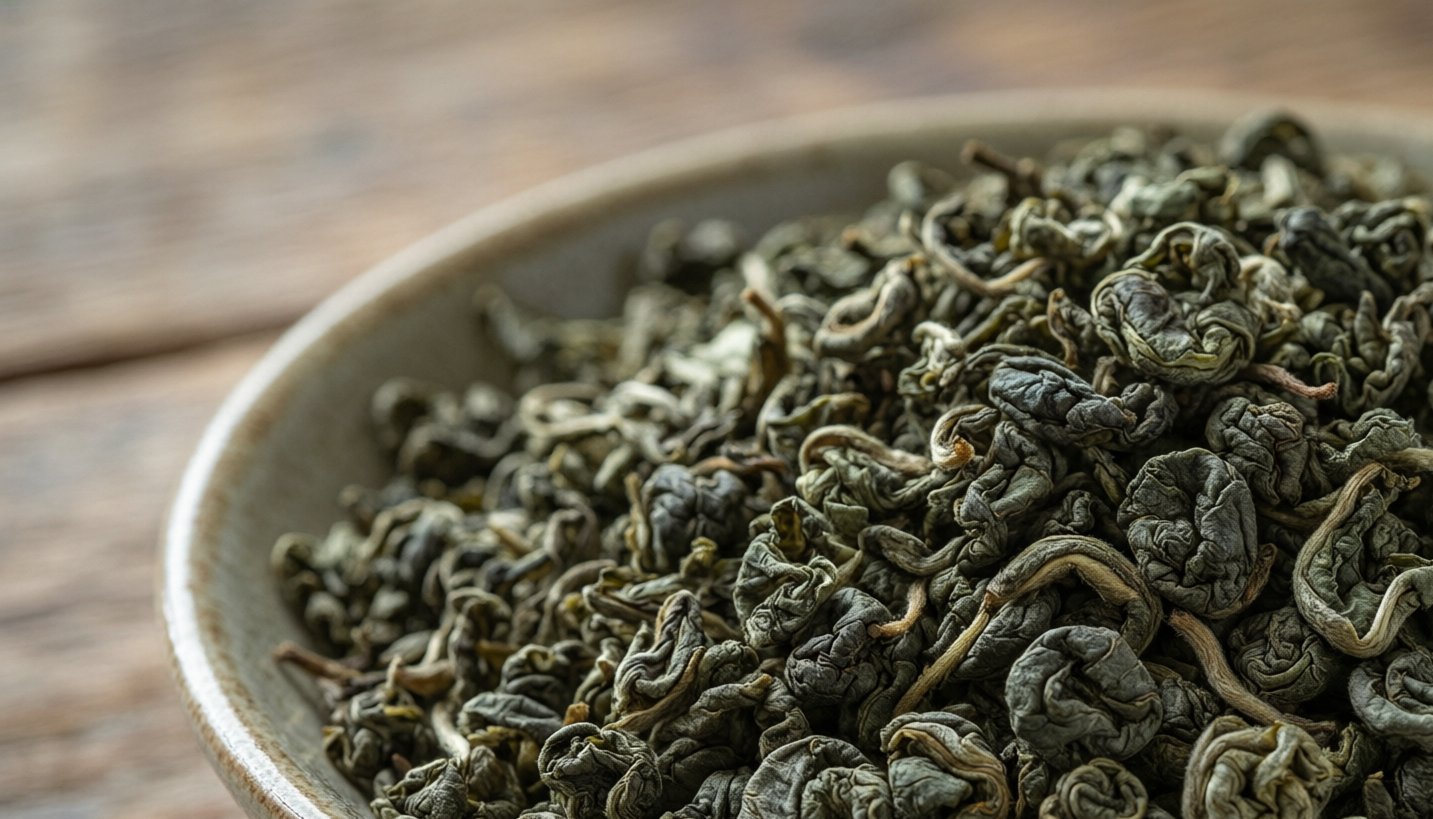
Sensory evaluation is best done with a consistent cupping method. National sensory standards such as GB/T 23776 describe a structured approach for evaluating leaf appearance, liquor color, aroma, taste, and infused leaf [4]. You do not need a lab for every rejection signal; a disciplined blind comparison across three or four samples often exposes the odd lot.
Verifying Origin Claims and the Paper Trail
The most reliable evidence is not a single certificate. It is a chain of records that point in the same direction: picking site, approximate tree age, harvest date, processing site, pressing batch, transport record, and a sample that matches the lot being offered.
For Pu-erh specifically, request the documents that support the GB/T 22111 standard: a product standard code, production date and batch, origin information, and sensory plus physical-chemical test results where applicable [1][3]. For exported tea, also ask for pesticide residue and heavy metal testing against the destination market's limits.
A few verification steps that often expose weak lots:
- Ask the supplier to name the village or mountain, not just the county or the province.
- Ask whether the trees are described as gushu, big tree, or old tree, and ask what evidence supports that description.
- Request photos of the raw leaf, not only finished cakes.
- Ask for the pressing batch and production date, then compare with the storage story.
- Request a sample drawn from the same pressing, not a separately packaged "reference" cake.
For example, one sourcing team avoided a mislabeled purchase by requesting samples from two different pressing days for a claimed single-origin lot. The later pressing cupped clearly younger and more uniform, while the earlier sample showed the expected old-tree texture. That lot was dropped before payment. One such documented comparison can be more valuable than several certificates.
Quick check before you commit. If you are already comparing lots, email our sourcing team at 427728483@qq.com with the mountain or village claim, tree-age claim, and any lab data you have. We will help you map the evidence and pressure-test the supply story before you commit.
Get a Second Opinion on Your Yunnan Ancient Tree Tea Lot
If the lot looks strong but the story still leaves questions, have it reviewed against your purchasing needs before signing. Our team works with buyers to:
- Check whether an ancient tree claim is supported by the right harvest, origin, and pressing records.
- Compare samples blind and document sensory differences.
- Clarify which tests are practical for your order size and destination market.
- Build a shortlist of lots that match both the label and the evidence.
Send the lot details, seller claims, and any photos or reports to 427728483@qq.com for a structured review.
Frequently Asked Questions
Does an old tree guarantee better tea?
No. Tree age can support richer material and deeper flavor, but poor picking weather, rough processing, or bad storage can still damage a genuinely old-tree lot. Judge the cup first, then use age and origin evidence to confirm what the cup suggests.
Can a lab test prove tree age?
Not reliably in routine trade. Standard tests can support tea type, quality, contaminant levels, and some chemical characteristics, but a widely accepted commercial tree-age certificate is not currently established [1][4]. Age claims are best supported by supply chain records and sensory consistency.
Is all Yunnan ancient tree tea Pu-erh?
No. Yunnan ancient tree leaves can be processed into sheng Pu-erh, ripe Pu-erh, black tea, white tea, or other styles. The ancient tree claim describes the source material, while tea type depends on processing [2].
What is the fastest way to reject a fake lot?
Ask the seller to name the harvest village, harvest season, pressing date, and batch number. If those details are vague or change between conversations, treat the lot as high risk even if the sample tastes pleasant.
References
[1] General Administration of Quality Supervision, Inspection and Quarantine of the People's Republic of China; Standardization Administration of the People's Republic of China. GB/T 22111-2008, Product of geographical indication—Pu-erh tea. 2008.
[2] International Organization for Standardization. ISO 20715:2023, Tea — Classification of tea types. 2023.
[3] Lv H-P, Zhang Y-J, Lin Z, Liang Y-R. Processing and chemical constituents of Pu-erh tea: A review. Food Research International. 2013;53(2):608–618. doi:10.1016/j.foodres.2013.02.043.
[4] Standardization Administration of the People's Republic of China. GB/T 23776-2018, Methodology for sensory evaluation of tea. 2018.
No author description available.

白玉京