What Is Duyun Maojian Tea? Guizhou’s Green Tea Explained
Duyun Maojian is a high-grade pan-fired green tea from the Duyun area of Guizhou Province in southwestern China. It is tightly curled, covered with fine silvery tips, and brews into a clear, pale liquor with a fresh chestnut-orchid aroma and a lingering sweet finish. The name is descriptive: “Duyun” is the production area, and “maojian” means “hairy tip,” referring to the downy young buds that make up the best grades.
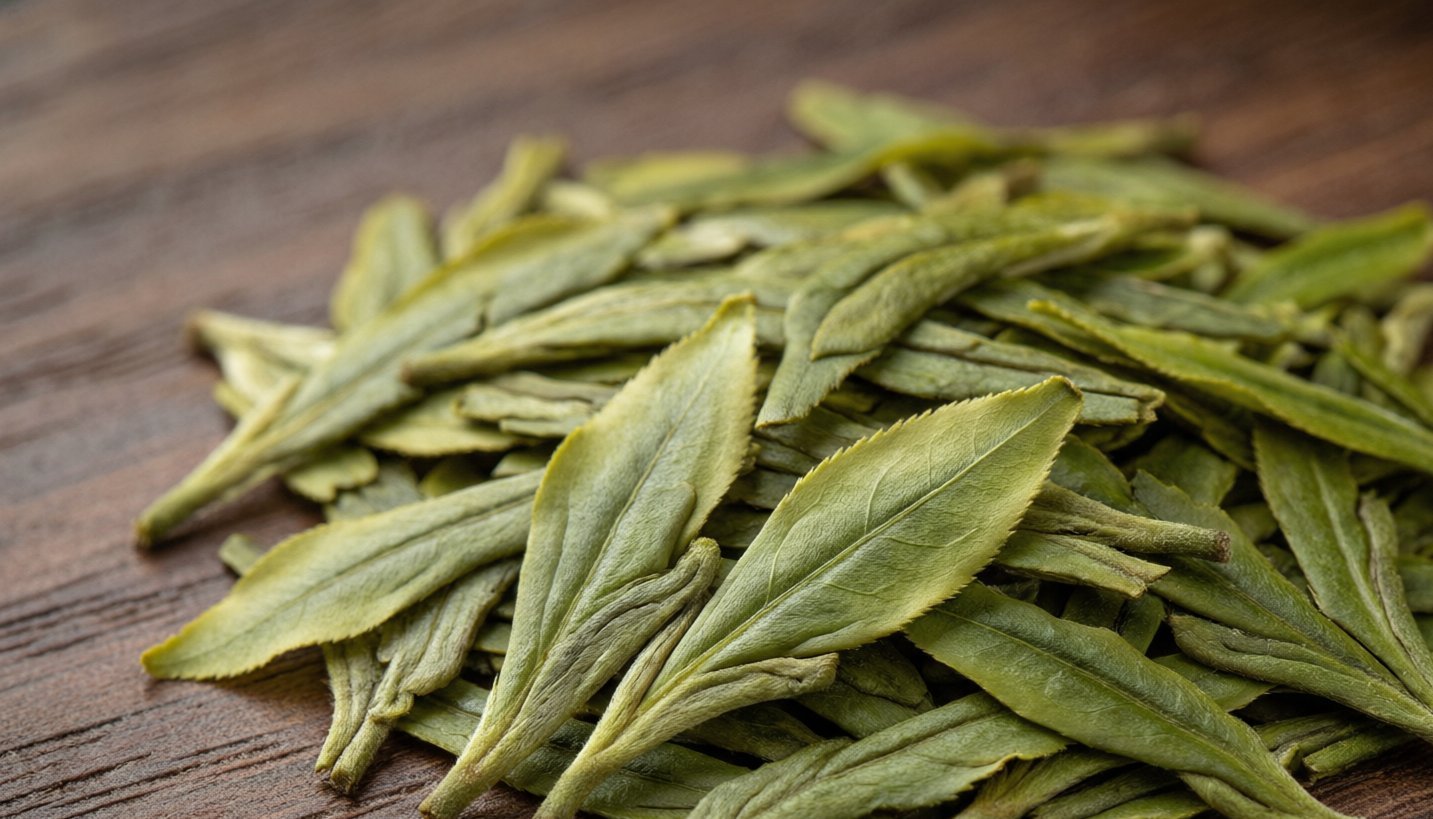
What Is Duyun Maojian Tea?
Duyun Maojian is a protected geographical indication tea produced in the misty, high-elevation tea gardens around Duyun, Guizhou. It is made almost exclusively from tender young shoots, usually one bud or one bud and one leaf, harvested in early spring. The leaves are pan-fired shortly after picking, a process that stops oxidation and preserves the bright, vegetal freshness expected from a quality green tea [1].
Two features set Duyun Maojian apart from many other Chinese green teas. The first is leaf shape: the dry leaves curl into compact, comma-like or fishhook-shaped pieces rather than flat or needle-like leaves. The second is texture: fine white down, or “hao,” coats the buds and creates a slight cloudiness in the first infusion. That cloudiness is often a sign of tender raw material, not a defect.
Duyun Maojian is frequently compared with Xinyang Maojian, another famous Chinese green tea that also uses the “maojian” name. They are not the same tea. Xinyang Maojian comes from Henan Province and tends to be slightly larger in leaf shape and more robust in aroma, while Duyun Maojian is grown further south in Guizhou and is generally softer, sweeter, and more delicate on the palate.
Where It Comes From and How It Is Made
Duyun lies in southern Guizhou, a region with cloudy skies, high humidity, and significant temperature variation between day and night. Those conditions slow leaf growth and allow amino acids such as L-theanine to accumulate, which contributes to the tea’s mellow, brothy sweetness.
Production follows the classic green tea sequence. Fresh buds are first spread out to wither briefly, then heated in a wok or drum to “kill green” — the fixation step that deactivates enzymes and locks in the green color. The leaves are then rolled under heat to shape them into the characteristic curled form, and finally dried to reduce moisture to a stable level. Each step affects the final balance between freshness, sweetness, and toasty aroma.
The best Duyun Maojian is harvested before Qingming, or Pure Brightness, in early April. Pre-Qingming lots are usually the most expensive because the buds are smallest, the flavor is the most refined, and the available quantity is limited. Later spring harvests can still be excellent, but they tend to be stronger, less sweet, and lower in price.
What Duyun Maojian Tastes Like
A well-made Duyun Maojian brews pale green or yellow-green. The aroma combines fresh chestnut, sweet hay, and a soft orchid-like note. The first sip is light and clean, with almost no bitterness when brewed correctly. The body is smooth rather than heavy, and the aftertaste is sweet and cooling, sometimes described as huigan — a returning sweetness in the throat.
Because the leaf is tender, Duyun Maojian is easy to over-brew. Water that is too hot or a steeping time that is too long will turn the liquor yellow-brown and bring out a sharp, astringent edge. For most buyers, the ideal cup is delicate but clearly present, not weak.
Grades and Quality: What the Labels Mean
Chinese green tea quality is judged mainly by leaf tenderness, uniformity, aroma, liquor color, and the presence of downy tips. The national standard for Duyun Maojian sets sensory benchmarks for genuine geographical indication product [1]. In practice, buyers usually separate lots into broad quality levels.
| Quality signal | Top grade | Commercial grade | Warning sign |
|---|---|---|---|
| Dry leaf shape | Tightly curled, small, uniform, fishhook-like | Mostly curled but less uniform | Flat, broken, or irregular leaf |
| Downy tips | Abundant white-silver tips | Fewer visible tips | Almost no down, dull surface |
| Aroma | Fresh chestnut-orchid, clean | Lighter, sometimes slightly toasty | Flat, grassy, or sour smell |
| Liquor | Clear pale green-yellow | Yellow-green, still clear | Cloudy brown or muddy |
| Taste | Sweet, mellow, smooth aftertaste | Clean but thinner | Bitter, rough, or papery |
The dry leaf should not be bright emerald green. Authentic Duyun Maojian is often a deep grey-green with a silvery sheen. Some lower-quality imitations are dyed or mixed with brighter, cheaper green tea to imitate a “fresh” look, so color alone is not a reliable buying signal.
How to Brew Duyun Maojian Tea
For a 150 ml glass or gaiwan, start with about 2.5–3 grams of leaf. Use water that has cooled to roughly 80–85°C (176–185°F) rather than boiling water. Pour gently over the leaves and steep for 60–90 seconds, then adjust to taste.
Duyun Maojian responds well to multiple short infusions. The second and third steeps are often the sweetest and most balanced. A tall glass lets the buds sink and open slowly, but a white porcelain gaiwan shows the liquor color more clearly and is easier to control.
If the first brew tastes bitter, the usual fix is not less leaf but cooler water or a shorter steep. Bitterness in this style is almost always a brewing problem rather than a tea quality problem.
How to Tell Authentic Duyun Maojian
Start with origin documents. Because Duyun Maojian is a protected geographical indication tea, credible suppliers should be able to show certification or traceability documents linking the lot to the Duyun production area [1]. Ask for the harvest date and grade before sampling.
Then check the leaf itself. Authentic Duyun Maojian should be compact and curled, not needle-like or flat. It should carry visible white down and smell fresh, sweet, and clean. The wet leaf after brewing should be tender and mostly intact, not hard, coarse, or chopped. A sour, dusty, or overly grassy dry aroma suggests old or poorly stored leaf.
If you are sourcing Duyun Maojian for wholesale, ask for the GI certificate, harvest date, and grade before committing to a sample order. You can reach us at 427728483@qq.com with your target volume and market, and we can advise on current Duyun Maojian availability.
Health Evidence: What Is Proven and What Is Hype
Like other green teas, Duyun Maojian contains catechins — natural polyphenols that have been studied for antioxidant, cardiovascular, and metabolic effects. The strongest evidence for green tea relates to its catechin content, especially epigallocatechin gallate (EGCG), but most research has been conducted on green tea extracts or specific populations rather than on Duyun Maojian itself [2].
This means you should treat specific health claims with caution. Duyun Maojian is a pleasant, low-calorie beverage that can fit into a balanced routine, but it is not a medicine, a guaranteed weight-loss treatment, or a substitute for medical care. Claims that any single tea “burns fat,” “detoxes,” or “cures” a condition go far beyond the evidence.
Caffeine content varies with leaf amount, water temperature, and steeping time. A standard cup of green tea generally contains less caffeine than a typical cup of black tea, and well below the 400 mg per day adult safety benchmark used for healthy adults [3]. People sensitive to caffeine should treat Duyun Maojian like any other green tea and monitor their own response.
How to Store Duyun Maojian
Green tea is the least shelf-stable of the major tea categories. Duyun Maojian should be stored in an airtight, opaque container away from light, heat, moisture, and strong odors. A cool, dark cupboard is usually adequate for short-term storage, while long-term storage benefits from refrigeration — but only when the tea is sealed extremely well and allowed to come to room temperature before opening.
When stored poorly, the tea loses its fresh chestnut aroma first, then its color darkens, and finally the liquor turns flat or stale. For green tea, freshness is part of quality. Buy in quantities you can use within several months, and date each package so older stock is used first.
Wholesale Duyun Maojian Tea Sourcing
If you are buying Duyun Maojian for resale, private label, or foodservice use, confirm these points before ordering:
- Harvest date and grade of the lot
- Geographic indication or origin traceability documentation [1]
- Pesticide and heavy metal test reports where required by your market
- Packaging format and shelf-life plan for fresh green tea
- Minimum order quantity and realistic lead time
We work with Chinese tea suppliers on Duyun Maojian and other Guizhou green teas. For a current offer, contact us at 427728483@qq.com with your target quality level, volume, and destination market.
Frequently Asked Questions
Is Duyun Maojian the same as Xinyang Maojian?
No. Both are famous Chinese green teas and both use the “maojian” name, but Duyun Maojian comes from Guizhou Province while Xinyang Maojian comes from Henan Province. Duyun Maojian is generally softer, sweeter, and more small-leafed, while many Xinyang Maojian lots are more robust and aromatic.
How much caffeine does Duyun Maojian have?
The exact amount depends on how much leaf you use and how long you steep it. A typical green tea serving contains less caffeine than a comparable serving of black tea, and is well below the commonly cited 400 mg daily safety benchmark for healthy adults [3]. If you are caffeine-sensitive, start with a shorter steep and a smaller amount of leaf.
Is Duyun Maojian a good tea for weight loss?
Green tea catechins have been studied for metabolic health, but the evidence is not strong enough to call any single tea a reliable weight-loss product [2]. Duyun Maojian is a low-calorie beverage and can replace sugary drinks, which may be useful in an overall healthy routine, but it will not produce meaningful weight loss on its own.
Can I brew Duyun Maojian more than once?
Yes. High-quality Duyun Maojian usually performs well for two to three infusions, and many drinkers find the second steep the most balanced. Use slightly shorter steeps after the first infusion and keep the water temperature moderate to avoid pulling out excessive bitterness.
How do I verify that Duyun Maojian is authentic?
Ask for the geographical indication certificate or traceability documentation, the harvest date, and the grade [1]. Then inspect the dry leaf for a tightly curled, down-covered appearance and a fresh chestnut-like aroma. Avoid lots that are bright emerald green, broken, sour-smelling, or missing origin documentation.
References
[1] Standardization Administration of China. Product of geographical indication — Duyun Maojian tea. GB/T 19598-2006.
[2] National Center for Complementary and Integrative Health. Green Tea: What the Science Says. https://www.nccih.nih.gov/health/green-tea
[3] EFSA Panel on Dietetic Products, Nutrition and Allergies. “Scientific Opinion on the Safety of Caffeine.” EFSA Journal, vol. 13, no. 5, 2015, 4102.
No author description available.

白玉京