Pu-erh Green Tea Caffeine: How Much Is Really in Your Cup?
Before we talk in cups, one safety anchor is useful: regulators generally consider about 400 mg of caffeine per day from all sources acceptable for most healthy adults, and a single 200 mg dose is not a safety concern for the general healthy population [1][2]. The question with pu-erh green tea is not whether it is dangerous, but where it actually falls within that range.
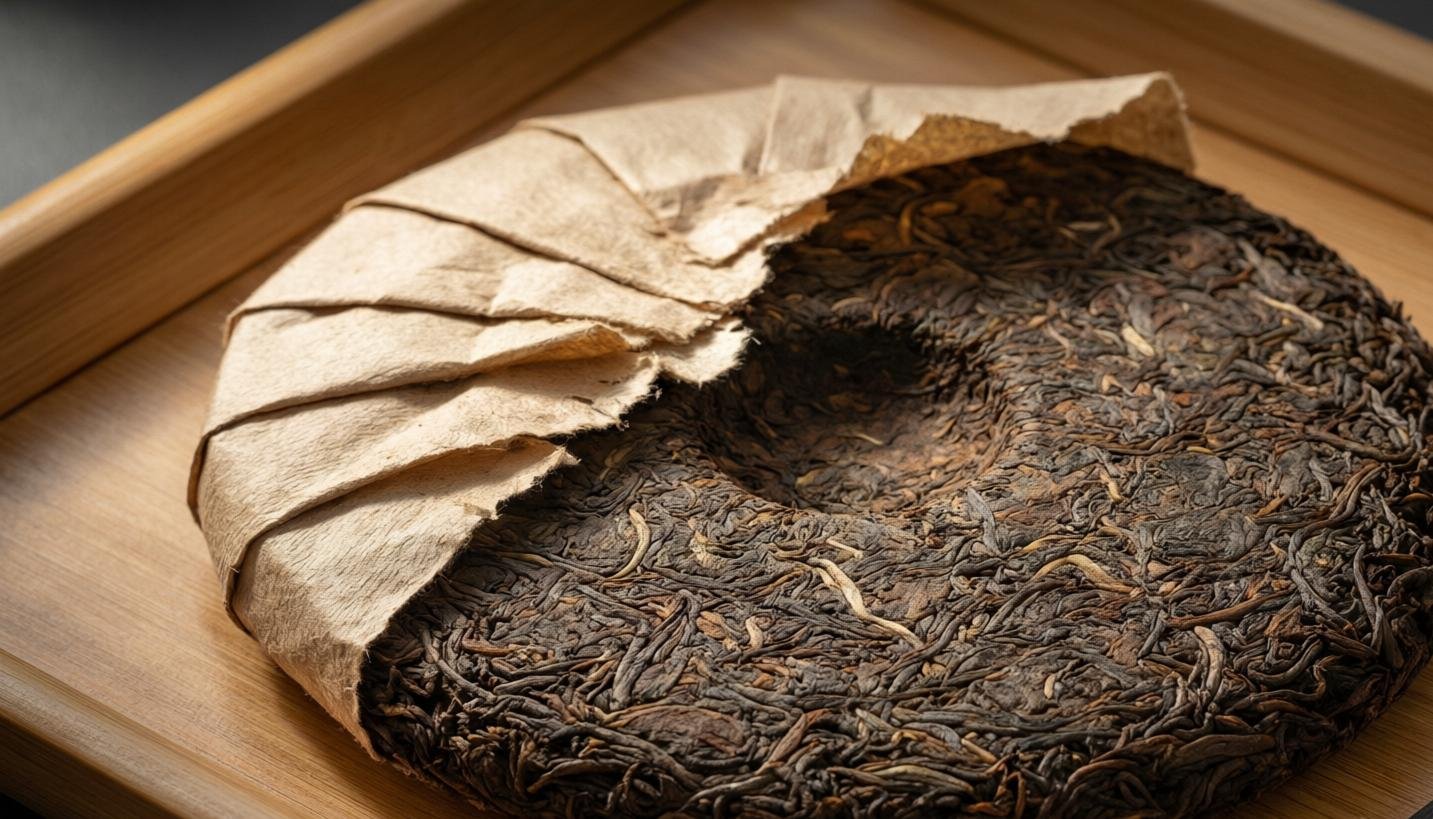
First, What "Pu-erh Green Tea" Actually Means
Pu-erh is made from Yunnan large-leaf tea trees, botanically Camellia sinensis var. assamica, and it is usually divided into two paths. Raw pu-erh, or sheng pu-erh, is heated in a kill-green step, sun-dried, and then either kept loose or pressed into cakes. Because the leaf is not fully oxidized at this stage, it stays green and often gets called green pu-erh or raw pu-erh in buyer language.
It is not a delicate green tea in the strict sense. The leaf material is thicker, older, and more robust than what goes into most pan-fired green teas, and raw pu-erh is made with aging potential in mind. But for caffeine purposes, it behaves much more like a minimally oxidized tea than like a strongly fermented one. Ripe pu-erh, or shou pu-erh, goes through an extra wet-piling fermentation step that changes the flavor and darkens the leaf [3]. When someone says "pu-erh green tea," they usually mean raw or young sheng pu-erh, not ripe pu-erh.
How Much Caffeine Is in Pu-erh Green Tea?
A useful starting point is this: caffeine content in the cup depends less on the word "pu-erh" and more on leaf weight, water temperature, steep time, and whether you drink one cup or a full session.
For context, standard database values for common brewed drinks look like this:
| Drink | Typical caffeine per 8 oz (237 mL) |
|---|---|
| Brewed green tea | roughly 28 mg [4] |
| Brewed black tea | roughly 47 mg [4] |
| Brewed coffee | 80–100 mg [2] |
| Pu-erh green tea | batch-dependent; usually in the green-to-light-oolong band |
Raw pu-erh is not given its own line in most food databases, and that is part of the problem. Lab testing of brewed teas has shown that caffeine can vary widely among brands and preparations even when the beverage is labeled the same way [5]. A young raw pu-erh made from large-leaf Yunnan assamica can sit toward the higher end of the green tea range, but a delicate long-steep green tea made from small-leaf sinensis may not be automatically weaker. The main practical difference is brewing habit.
A typical pu-erh green tea drinker does not use one tea bag in a mug. They may use 5 g, 7 g, or more of dry leaf in a small gaiwan or teapot, add near-boiling water, and repeat the steep many times. The first steep might be moderate, but the total caffeine across the session can be higher than a single Western-style cup simply because more leaf is in contact with fresh hot water again and again.
Why Brewing Changes Caffeine More Than the Leaf Does
Caffeine is water-soluble, and extraction increases as water gets hotter and contact time gets longer [5]. That means two people drinking the exact same pu-erh green tea can get very different caffeine intakes.
A few variables matter most:
- Leaf-to-water ratio: More dry leaf per milliliter of water produces a stronger infusion.
- Water temperature: Near-boiling water extracts caffeine faster than water at 80°C or 85°C.
- Steep length: A 5-minute mug steep usually extracts more caffeine than a 20-second gongfu steep.
- Total number of steeps: Short repeated steeps do not mean low caffeine. They often extract more total caffeine from the same leaves than one long steep.
- Leaf grade and breakage: Smaller or broken pieces release caffeine faster than whole broad leaves.
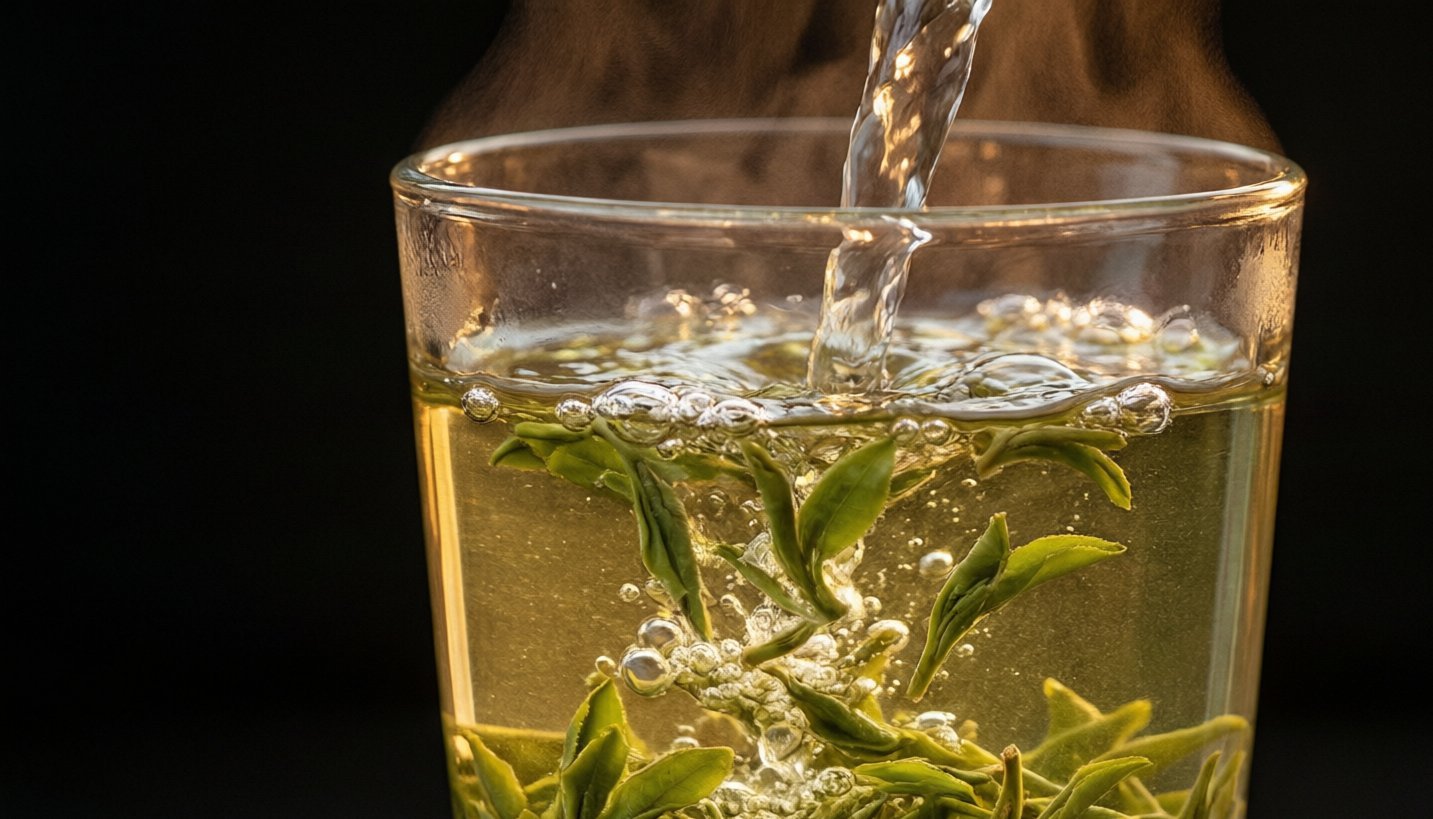
If you want a lower-caffeine pu-erh green tea session, use a lighter hand: roughly 2 g of leaf for 200 mL, water around 85°C, and a 2-minute steep. If you want a stronger morning cup, a 5–7 g gongfu session with repeated short steeps will taste bolder and deliver more caffeine overall.
Pu-erh Green Tea vs Coffee, Matcha, and Ripe Pu-erh
Coffee still tends to sit above tea in most real-world servings. An 8 oz cup of brewed coffee is commonly expected to deliver 80–100 mg of caffeine [2]. Pu-erh green tea is not normally in that range for a single ordinary cup, but a long gongfu session can narrow the gap.
Compared with matcha, the logic is different. Matcha is ingested as a suspension of fine leaf particles rather than only as an infusion, so the caffeine carried into the body can be higher than a standard steeped green tea despite using similar starting leaf weight. Pu-erh green tea is a strained infusion, even when brewed strongly.
Compared with ripe pu-erh, young raw pu-erh often has a modest caffeine edge. Wet-piling and microbial fermentation can change some of the tea's chemistry, but caffeine is relatively stable. The difference is usually smaller than the difference between a light brew and a heavy brew [3].
Sourcing note: If you are comparing pu-erh batches for a café, brand, or retail line, ask for caffeine test results that state the exact brewing ratio used in the lab. A number on a spec sheet means little without that context. We can help match you with raw pu-erh lots and current test data — email xuansc2144@gmail.com.
Does Age and Fermentation Remove Caffeine?
This is one of the most persistent myths in pu-erh buying. Aging does not turn raw pu-erh into a caffeine-free tea. Caffeine is chemically stable under ordinary dry storage, and although wet-piling used for ripe pu-erh can produce some changes in tea compounds, it is not a decaffeination process [3].
That means a 15-year-old raw pu-erh should not be marketed as "naturally decaffeinated" or "caffeine-free." It may taste softer and rounder, and the subjective effect may feel calmer because aged teas often have a different body feel, but the caffeine is still present. Buyers who need low caffeine should control the dose and brew, not assume age has done the work.
Who Should Be More Careful With Pu-erh Green Tea
Most healthy adults can enjoy pu-erh green tea within the usual daily caffeine guidance. A useful starting point is 400 mg per day from all caffeine sources for healthy adults, with a single 200 mg intake generally considered acceptable [1][2]. For pregnant women, health authorities have used around 200 mg per day from all sources as a cautious upper reference [1].
The people who need to watch pu-erh green tea most are not necessarily those who drink one cup. The real risk is the ritual drinker who does two or three gongfu sessions, drinks strong grandpa-style tea all afternoon, or pairs tea with coffee, energy drinks, or pre-workout products. In that case, caffeine from tea can add up without being measured.
People with caffeine sensitivity, anxiety disorders, reflux, or sleep problems may also want to keep pu-erh green tea sessions earlier in the day or reduce leaf weight. None of this means the tea is unusually strong in tea terms; it means the serving pattern can be.
Talk to a Supplier About Batch-Specific Caffeine Data
If caffeine positioning matters for your customers, ask for lot-specific caffeine results under a defined brewing protocol rather than a generic tea-type average. We work with Chinese tea suppliers on raw pu-erh, ripe pu-erh, and Yunnan green-style materials, and we can arrange current sample sets, lab documents, and practical brewing comparisons for your product line.
Email xuansc2144@gmail.com for current pu-erh green tea samples and testing guidance.
Frequently Asked Questions
Does pu-erh green tea have more caffeine than regular green tea?
Not necessarily. The dry leaf may sit in the same broad range as ordinary green tea, but pu-erh green tea is often brewed with more leaf and more infusions, so a full session can feel stronger than one tea-bag cup [4][5].
Does raw pu-erh have more caffeine than ripe pu-erh?
In many batches, yes, but the difference is usually modest. Wet-piling can slightly alter the tea's chemistry, while caffeine itself remains relatively stable through fermentation [3].
Is pu-erh green tea safe to drink every day?
For most healthy adults, it is generally reasonable when total daily caffeine stays around 400 mg or below and no other sensitivity is present [1][2]. People who react strongly to caffeine should watch total intake rather than counting only tea cups.
Does aging make pu-erh caffeine-free?
No. Caffeine remains largely stable in dry storage, and aging is not a substitute for decaffeination [3]. Aged raw pu-erh can feel gentler in flavor, but it is not caffeine-free.
How many milligrams of caffeine are in one pu-erh green tea serving?
There is no fixed number because the result depends on dry leaf weight, water temperature, steep time, and how many infusions you drink. A light 2 g mug steep will differ enormously from a 7 g gongfu session, so batch-level caffeine should always be requested with a defined brewing ratio [5].
References
- European Food Safety Authority. Scientific Opinion on the safety of caffeine. EFSA Journal. 2015;13(5):4102. https://www.efsa.europa.eu/en/efsajournal/pub/4102
- U.S. Food and Drug Administration. Spilling the Beans: How Much Caffeine Is Too Much? https://www.fda.gov/consumers/consumer-updates/spilling-beans-how-much-caffeine-too-much
- Lv HP, Zhang YJ, Lin Z, Liang YR. Processing and chemical constituents of Pu-erh tea: A review. Food Research International. 2013;53(2):608–618. doi:10.1016/j.foodres.2013.02.043
- U.S. Department of Agriculture, Agricultural Research Service. FoodData Central. https://fdc.nal.usda.gov/
- Chin JM, Merves ML, Goldberger BA, Sampson-Cone A, Cone EJ. Caffeine content of brewed teas. Journal of Analytical Toxicology. 2008;32(8):702–704. doi:10.1093/jat/32.8.702
No author description available.

白玉京