Meitan Cuiya Tea Grades Explained: How to Read the Labels
Meitan Cuiya is one of Guizhou’s best-known green teas, but its grade labels are not always as straightforward as they look on a supplier’s quote sheet. A “special grade” lot from one factory can differ noticeably from another, even when both use similar-looking dry leaves. This guide explains the words and numbers behind the labels so you can compare offers with less guesswork.
What Meitan Cuiya Tea Is
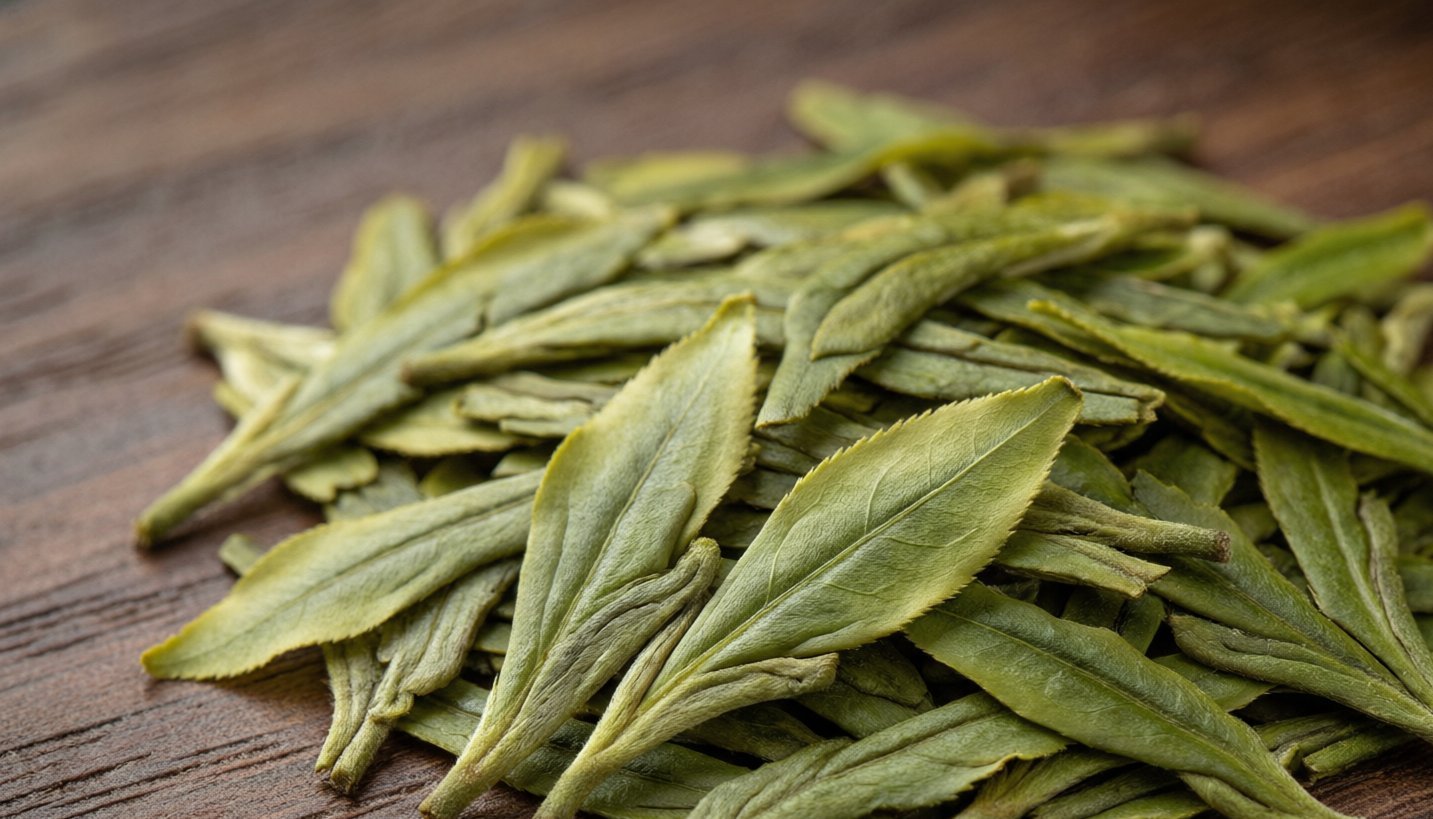
Meitan Cuiya (湄潭翠芽) is a needle-shaped green tea produced in Meitan County, Guizhou Province. The name “Cuiya” roughly translates to “emerald bud” or “green sprout,” which points to the tea’s defining style: tender buds and young leaves that are pan-fired or otherwise heat-fixed to preserve green color, then shaped into tight, straight or slightly curved needles.
Key regional markers include:
- High-elevation tea gardens, often in the range of 800 to 1,200 meters.
- Cloudy, humid conditions that slow leaf growth and concentrate amino acids.
- A strong spring harvest focus, with most commercial Meitan Cuiya picked from late February through April.
These conditions contribute to the tea’s fresh, softly vegetal character. The most recognizable visual feature, however, is the shape. Meitan Cuiya is often rolled or pressed into a flat, spear-like bud that resembles a sparrow’s tongue. Some domestic suppliers still use “que she” or “sparrow tongue” as a shape descriptor when marketing the tea.
The Core Grading Factors
Chinese green tea grading is generally not a single-number system. It works as a composite of several factors, and Meitan Cuiya labels follow the same logic [1][2].
Harvest Date
Early spring material is usually more tender, more aromatic, and more expensive than late-spring or summer material. The most common label terms are:
- Pre-Qingming (Mingqian): picked before Qingming Festival, roughly early April. This is normally the most expensive window.
- Pre-Guyu (Yuqian): picked before Guyu, roughly late April. Often good quality and better value than Mingqian.
- Spring tea / late spring: broader in character, usually softer and less delicate, but still acceptable for everyday drinking.
A label that says “pre-Qingming” without a specific date is not a guarantee. Ask the supplier for the exact harvest window or batch code.
Leaf Standard: Bud-to-Leaf Ratio
Meitan Cuiya grades often reflect how much of the plant was picked:
- Single bud (dan ya): pure buds, the most tender appearance, usually assigned to the highest commercial grades.
- One bud one leaf (yi ya yi ye): slightly more substance and a common standard for many premium lots.
- One bud two leaves (yi ya er ye): bolder and less delicate, often used in lower grades or higher-volume orders.
The leaf standard also affects brewing. A single-bud lot can be more floral and subtly sweet, while a one-bud-one-leaf lot often carries more body and a clearer aftertaste.
Tenderness and Uniformity
Grades are also judged by the proportion of intact, tender buds. Broken leaf, stems, and older leaves push a lot downward. A high-grade Meitan Cuiya should be uniform in size, color, and shape, with minimal dust in the bottom of the bag.
Color, Aroma, and Liquor
Dry leaf should be green to yellow-green rather than dull brown. The aroma should be fresh, chestnut-like, or lightly vegetal, never sour or stale. The brewed liquor is usually pale green-yellow, clear, and bright. These sensory cues often tell you more than the printed grade.
Grade Labels You’ll See
Suppliers may use several overlapping naming systems. Here is how to read the most common ones.
| Label | What It Usually Means | Typical Leaf Standard |
|---|---|---|
| Single bud / Dan ya | Pure buds, most tender | Single bud |
| Special grade / Te ji | Top-tier lot, early spring, high uniformity | Single bud or one bud one leaf |
| First grade / Yi ji | Good spring material with slight variation | One bud one leaf |
| Second grade / Er ji | Everyday quality, more leaf, less delicate | One bud one to two leaves |
| Third grade / San ji | Basic green tea, suited to iced tea or blending | One bud two leaves or older |
| Pre-Qingming / Mingqian | Early harvest, usually priced highest | Varies, often single bud |
| Pre-Guyu / Yuqian | Late April harvest, good value | Often one bud one leaf |
| Que she / sparrow tongue | Shape descriptor, may overlap any grade | Usually single bud |
These labels are useful, but they are not always controlled by a single national standard. Different producers may use the same words slightly differently, so treat them as a starting point rather than a final judgment.
How to Verify Grade Claims Before You Buy
Before paying a premium, ask for the following:
- Harvest date, not just season. Request the exact picking period and batch number.
- Bud and leaf photos. Ask for a close-up of dry leaf on a white background, with a coin or ruler for scale.
- Cupping notes. Require a short note on aroma, liquor color, aftertaste, and any off-notes.
- Brewing ratio and water temperature. A tea that requires very low temperature may be delicate; one that tolerates hotter water may be older or more robust.
- Moisture and storage details. Good green tea leaves should be crisp and breakable, and the supplier should be able to describe how the batch was stored.
Need a batch-matched sample set?
Grade words only get you so far. A side-by-side cupping is what actually separates labels that look identical on paper. If you are comparing Meitan Cuiya lots from different factories, ask for one packet per grade, matched to the same harvest batch. Chinese tea suppliers can arrange pre-shipment samples and simple cupping notes. Email 427728483@qq.com with your target grade, order volume, and destination port, and we will quote sample, FOB, and CIF options with dry-leaf photos before you commit.
Common Misconceptions
- “Pre-Qingming is always the best.” It is usually the most tender, but weather and processing matter. In a wet early spring, slightly later leaves may be cleaner and more aromatic. Compare lots before paying.
- “Single bud is always more expensive than one bud one leaf.” Often true, but not universally. A well-processed one-bud-one-leaf lot can be more enjoyable than a poorly handled single-bud lot.
- “Grade equals taste.” Grade mainly measures tenderness and uniformity, not how much you will like the flavor. Some buyers prefer one bud one leaf for more body.
Source Meitan Cuiya by Grade, Not Just by Name
When you are ready to buy, send a grading brief instead of a generic inquiry. Include the target grade, quantity, and destination port. We will match you with the right Meitan Cuiya lots, provide batch dates and dry-leaf photos, and route samples before shipment. Email 427728483@qq.com with your specifications.
FAQ
Is Meitan Cuiya the same as Biluochun?
No. Both are spring green teas with a fresh, delicate character, but Meitan Cuiya comes from Guizhou and typically has a straight or spear-like bud shape. Biluochun from Jiangsu is usually curled into tight spirals, and the two teas also differ in processing and terroir.
What does “Meitan Cuiya” mean?
“Meitan” refers to Meitan County in Guizhou Province. “Cuiya” means “emerald bud” or “green sprout.” Together, the name describes a tender green tea made mainly from early spring buds.
How should I store Meitan Cuiya?
Keep it sealed, cool, dry, and away from light and odor. For long-term storage, freeze small portions in airtight packs. Let the tea return to room temperature before opening to avoid condensation. Freshness matters most in the first 12 to 18 months.
How should I brew Meitan Cuiya?
Use about 3 grams of leaf per 150 ml of water at 80–85°C (176–185°F). Steep for 1–2 minutes. Glass or porcelain works well because the buds are part of the visual appeal.
Can I order a sample before buying wholesale?
Yes. Most suppliers will send pre-shipment samples. Ask for a cupping set that includes the grades you are comparing, along with batch dates and leaf photos.
References
[1] GB/T 14456.1-2017. Green tea — Part 1: Basic requirements. National Standard of the People’s Republic of China.
[2] GB/T 23776-2018. Methodology for sensory evaluation of tea. National Standard of the People’s Republic of China.
[3] Meitan County Tea Industry Development Center. Meitan Cuiya tea: origin and production overview. Guizhou, China.
No author description available.

白玉京