How to Tell If Fu Zhuan (Fu Brick) Tea Is Authentic: 9 Checks
Fu Zhuan (Fu Brick) tea is one of the easiest Chinese dark teas to counterfeit, precisely because its most famous feature—the golden-yellow particles called “golden flowers”—is also the feature buyers use to judge quality. Fakes pass through wholesale markets as pressed low-grade dark tea, artificially surface-treated bricks, or mislabeled hei cha, and the difference only becomes obvious when the brick is pried open, smelled, and brewed. This guide gives you nine checkpoints to separate authentic Fu Zhuan from passable imitations without relying on seller claims.
1. Know What Real Fu Zhuan Tea Is
Fu Zhuan tea is a post-fermented dark tea pressed into a rectangular brick. Its defining characteristic is the controlled growth of Eurotium cristatum, a beneficial fungus visible as bright golden-yellow particles throughout the leaf matrix [1]. Under GB/T 9833.3-2013, Fu Zhuan is produced through a sequence that includes raw material selection, blending, steaming, pressing, and fermentation under controlled temperature and humidity [1]. That production standard matters because it separates genuine Fu Zhuan from a generic compressed dark tea that simply happens to carry the name.
In China, the style is historically associated with Jingyang in Shaanxi, while Anhua County in Hunan is now the largest and most commercially important production base. Neither region is a guarantee of quality, but a label that cannot name a specific production area or that uses vague phrases like “Chinese dark tea” should be treated as an early warning sign.
2. Read the Label Before the Leaf
Chinese pre-packaged food labeling rules require the product name, ingredient list, net content, manufacturer name and address, contact information, production date, shelf life, storage instructions, food production license number, and the product standard code [2]. Authentic Fu Zhuan sold in China usually displays the standard code GB/T 9833.3-2013 [1]. Import labels may follow the destination country’s format, but a lot that cannot produce the Chinese original label or a clear production batch number is not yet verified.
Three label details matter most:
- Product standard code: should be GB/T 9833.3-2013, not a generic dark-tea code.
- SC number: a food production license number that starts with “SC” and can be checked against the manufacturer’s registered production scope.
- Production date and batch: Fu Zhuan is a fermented tea, so age and storage are part of the product. A label without a production date makes quality evaluation almost impossible.
If the seller shows only a front-facing gift box and no production label, ask for the back panel before paying for samples.
3. Examine the Brick and Leaf Grade
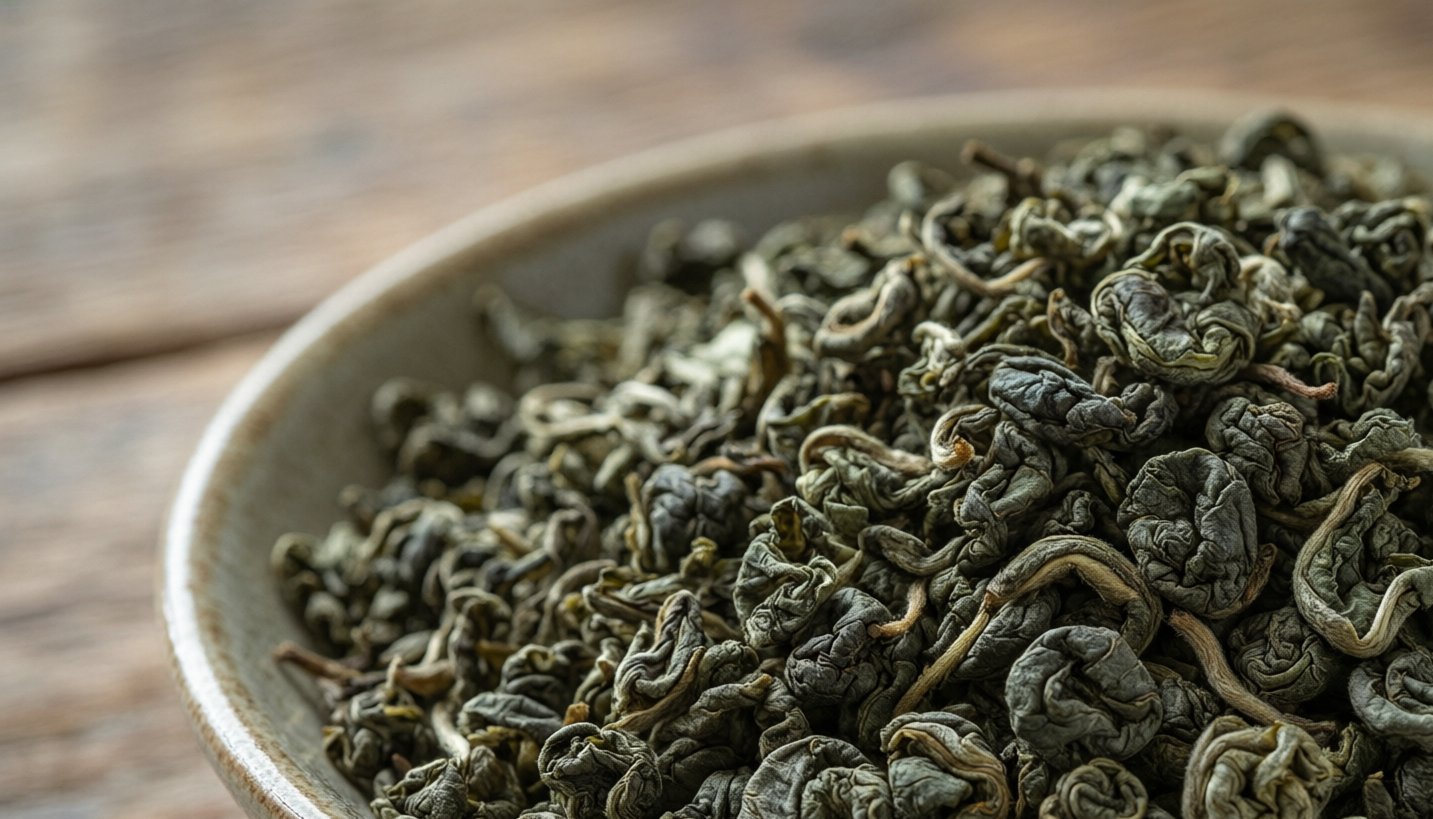
A real Fu Zhuan brick is dense but not stone-like. When you insert a tea knife or pick into the edge, it should separate along visible leaf layers rather than shatter into dust. A brick that crumbles too easily is often recompressed from broken fragments and tea dust, which reduces both flavor stability and aging potential.
Look at the dry leaf once the brick is opened:
- Authentic Fu Zhuan is dark olive-brown to near black, often with some stem material and visible leaf structure.
- The color should not be a uniform, flat jet black; that can indicate added color.
- Leaves should be dry and firm, not soft, damp, or musty to the touch.
- A heavy amount of fine dust at the center of the brick is a red flag, especially when the outside looks clean.
Real bricks often have slightly rounded edges from pressing, but the face should be even and the leaf should look layered rather than mashed into a single dark paste.
4. Verify the Golden Flowers—but Don’t Stop There
Golden flowers are the most useful authenticity signal, but they are also the most commonly imitated. Genuine golden flowers develop inside the brick, not just on the surface. When you split a brick, the bright yellow particles should appear throughout the leaf layers, scattered unevenly but consistently, like fine gold sand embedded in the tea.
Use this visual filter:
- Real: bright yellow-gold, grainy, embedded inside the leaf mass, varying slightly in size and depth.
- Fake or surface-treated: uniform dots on the outer face only, easily rubbed off, or unnaturally fluorescent yellow.
- Badly stored: gray-brown, wet-looking, or covered in white, black, or green fuzz. These are mold, not golden flowers.
A very old Fu Zhuan can have fewer visible golden flowers than a young brick, so absence alone does not prove a fake. The test is whether the flowers appear to have grown inside the leaf, not whether someone dusted them on top.
Need an objective second opinion? Send photos of the brick, the production label, and a close-up of the golden flowers to 427728483@qq.com with your target quantity and destination port. Our sourcing team will tell you whether the lot is worth a cupping sample before you spend on air freight.
5. Do the Aroma, Liquor, and Taste Test
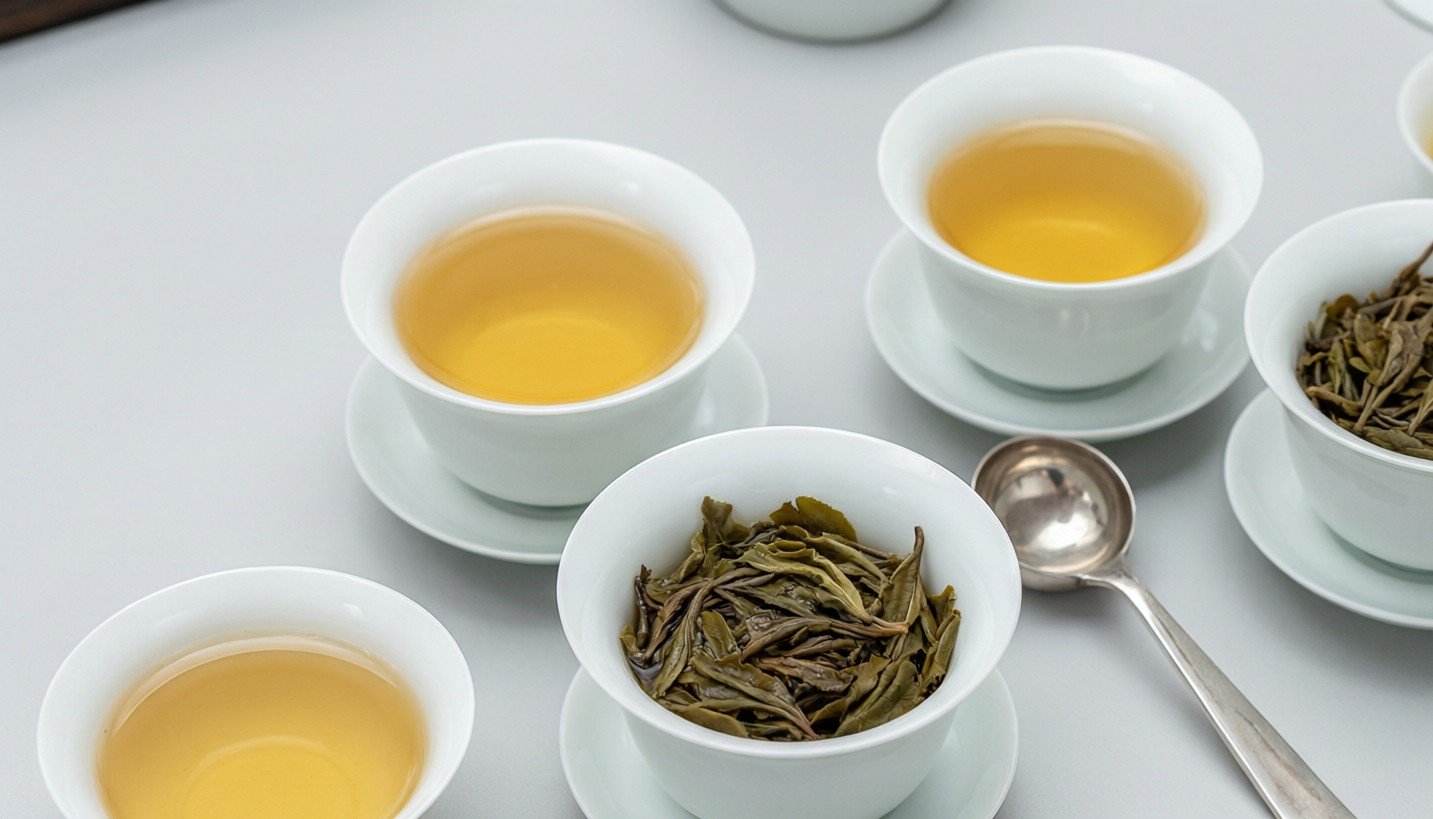
The label and leaf get you halfway, but the cup is where most imitations fail. Brew Fu Zhuan with fully boiling water, and give the brick a quick rinse before the first real infusion.
Check the aroma first. Authentic Fu Zhuan smells aged, woody, and faintly sweet, sometimes with a clean fungal or old-book note. It should not smell sour, acrid, chemical, or sharply moldy. A musty, wet basement smell is a storage problem, not a sign of age.
Watch the liquor color. It should be clear amber-red to dark red-brown with some brightness. A cloudy cup can mean excessive dust or poor microbial control. A liquor that turns almost black within seconds of the rinse should make you suspect added color.
Taste for these markers:
- Real: smooth, earthy-sweet, mellow, with a lightly grainy or fungal sweetness behind the first sip.
- Fake/off: aggressively bitter, sour, metallic, or flat and papery.
- Badly stored: damp cardboard, mold, or chemical aftertaste.
Fu Zhuan is not a delicate green tea, but a rough, astringent cup is not a sign of authenticity. The tea should feel rounded even at short steeps.
6. Check Origin, Traceability, and Storage History

Authentic sourcing requires more than a regional name on a carton. Ask the supplier to identify not just Hunan or Shaanxi, but the specific county, factory, or village-level origin, plus the raw material grade. This is normal information in Chinese wholesale tea trading; an exporter who cannot provide it is usually relabeling.
Storage history is also part of the product. Fu Zhuan should be stored off the floor, away from direct sunlight, in clean, dry conditions with reasonable air circulation. Age is only valuable when storage was controlled. A brick with a 2018 date but a damp, soft texture has lost more than it gained.
If you are importing for resale, ask for batch number and production date that match across the inner package, outer carton, and supplier invoice. Mismatched dates are a simple but common way to pass off old stock as new or vice versa.
7. Five Red Flags That Often Reveal a Fake
| Red flag | What it usually means |
|---|---|
| Label has no product standard code or SC number | Unlicensed production or repacking of unbranded dark tea |
| Golden flowers only on the surface and easy to wipe off | Surface treatment or imitation flowers |
| Brick crumbles into dust at first pry | Recompressed fragments and low-grade dust |
| Liquor turns almost black instantly or is cloudy | Possible added color or heavy dust |
| Sour, acrid, or wet-mold aroma | Poor fermentation or bad storage |
One red flag may be explained by bad handling; two or three at once is enough to reject the lot.
8. A Practical Buying Sequence for Importers
When buying Fu Zhuan for resale, do not start with a full container. Start with a test sequence:
- Request production label photos, not just the gift box.
- Ask for the SC number and product standard code.
- Get a high-resolution close-up of the face and the cross-section of a split brick.
- Request a cupping sample from the same batch, sealed and shipped separately if possible.
- Compare the sample’s dry leaf, golden flower distribution, aroma, and liquor against the photos.
- If the sample passes, book a small trial order before scaling to container volume.
9. Final Authenticity Checklist
Use this before you approve any Fu Zhuan lot:
- Label shows GB/T 9833.3-2013 [1] and a valid SC number [2].
- Production date and batch are present and match across packaging.
- Brick separates along layers and does not crumble to dust.
- Golden flowers are embedded inside the leaf mass, not only on the surface.
- No white, green, black, or blue mold is visible.
- Dry leaf is dark olive-brown to near black, not uniformly dyed-looking.
- Aroma is woody, aged, and slightly sweet; not sour or musty.
- Liquor is clear amber-red to dark red, not black or cloudy.
- Taste is smooth and earthy-sweet, without aggressive bitterness or metallic notes.
If any item fails, request a replacement sample or walk away. There is enough real Fu Zhuan on the market that a questionable lot is not worth the risk.
Source Authentic Fu Zhuan With a Pre-Shipment Check
To source authentic Fu Zhuan (Fu Brick) tea, request batch-level photos, a production lot number, a GB/T 9833.3-2013 test summary, and a sealed cupping sample from 427728483@qq.com. Our team helps importers and retailers verify golden-flower distribution, label compliance, and storage history before payment is released.
Frequently Asked Questions
Is Fu Zhuan tea supposed to have white spots?
No. White, green, black, or soft gray fuzz is mold or poor microbial control. Golden flowers should be bright yellow-gold and grainy, not fuzzy. If the tea has both golden flowers and any other colored fuzz, reject it.
Can I identify authenticity by golden flowers alone?
No. Golden flowers are an important marker, but they can be surface-treated or imitated. You still need to check the leaf matrix, label, aroma, liquor, and taste. A young brick can have abundant golden flowers and still be made from low-grade raw material.
Does real Fu Zhuan tea taste bitter?
It can have a light bitter base because dark tea is heavy, but the overall cup should be smooth and earthy-sweet. Sharp, lingering bitterness or sourness usually points to bad fermentation, low-grade leaf, or improper storage.
What is the difference between Fu Zhuan and ordinary black tea?
Fu Zhuan is a post-fermented dark tea, while black tea is fully oxidized during processing. Fu Zhuan’s aged, fungal-sweet character and its brick compression are not features of ordinary black tea. They age and brew differently.
What label should a genuine Fu Zhuan brick have?
It should carry the product name, manufacturer, production date, batch number, net weight, food production license number, and product standard code. In China, the standard code is commonly GB/T 9833.3-2013 [1], and label information should comply with GB 7718-2011 [2].
Why do some authentic Fu Zhuan bricks have few golden flowers?
Age, storage temperature, humidity, and raw material can all affect the visible amount of golden flowers. A very old or very dry-stored brick may show fewer flowers. Judge the full profile rather than rejecting a brick only because the flowers look less abundant.
Can very dark liquor mean the tea has dye?
It can. A clean Fu Zhuan liquor is amber-red to dark red-brown and usually clear. If the rinse water turns almost black in a few seconds, or the liquor is murky and leaves a heavy stain on porcelain, suspect added color or excessive dust.
How should I store Fu Zhuan tea after opening?
Keep the remaining brick in a sealed, food-grade, odor-free container away from light, moisture, and strong smells. Store at room temperature in a dry environment. Do not refrigerate the brick unless you can control humidity carefully; condensation can trigger mold.
References
[1] Standardization Administration of China. GB/T 9833.3-2013, Dark tea—Part 3: Fu zhuan brick tea. Beijing: Standards Press of China, 2013.
[2] Standardization Administration of China. GB 7718-2011, National food safety standard—General standard for the labeling of prepackaged foods. Beijing: Standards Press of China, 2011.
No author description available.

白玉京