Does Oriental Beauty Tea Improve With Age? What the Evidence Shows
Oriental Beauty, also called Dongfang Meiren, is often treated as a “drink young” oolong: fragrant, honeyed, and prized for the muscatel-like top notes created when tea jassids bite the leaves. But as aged oolong becomes more visible in specialty tea markets, more buyers are asking whether this tea improves with age. The honest answer: it can, but the evidence is more limited and more conditional than the data behind aged pu-erh or aged white tea. [1]
What Oriental Beauty Tea Is and Why It Ages Differently
Oriental Beauty is a heavily oxidized striped-leaf oolong from Taiwan, typically processed with stronger withering and a slower, deliberately controlled oxidation before firing. The defining aroma comes from leaves bitten by the tea jassid, which changes the leaf chemistry and concentrates the honeyed, ripe-fruit, and sometimes spice-like aromatics that buyers associate with the tea. [1][2]
This matters for aging because Oriental Beauty does not start from the same raw material as pu-erh. It is already a partially oxidized tea, not a green tea headed for post-fermentation. During storage, the tea’s remaining volatile aromatics decline while oxidation and slow thermal transformation continue. That means aging does not add the same pronounced “rancio” or cellar character found in well-aged pu-erh; instead, the tea tends to move toward a quieter, darker, and more unified profile. [1][2]
What Aging Changes in the Leaf
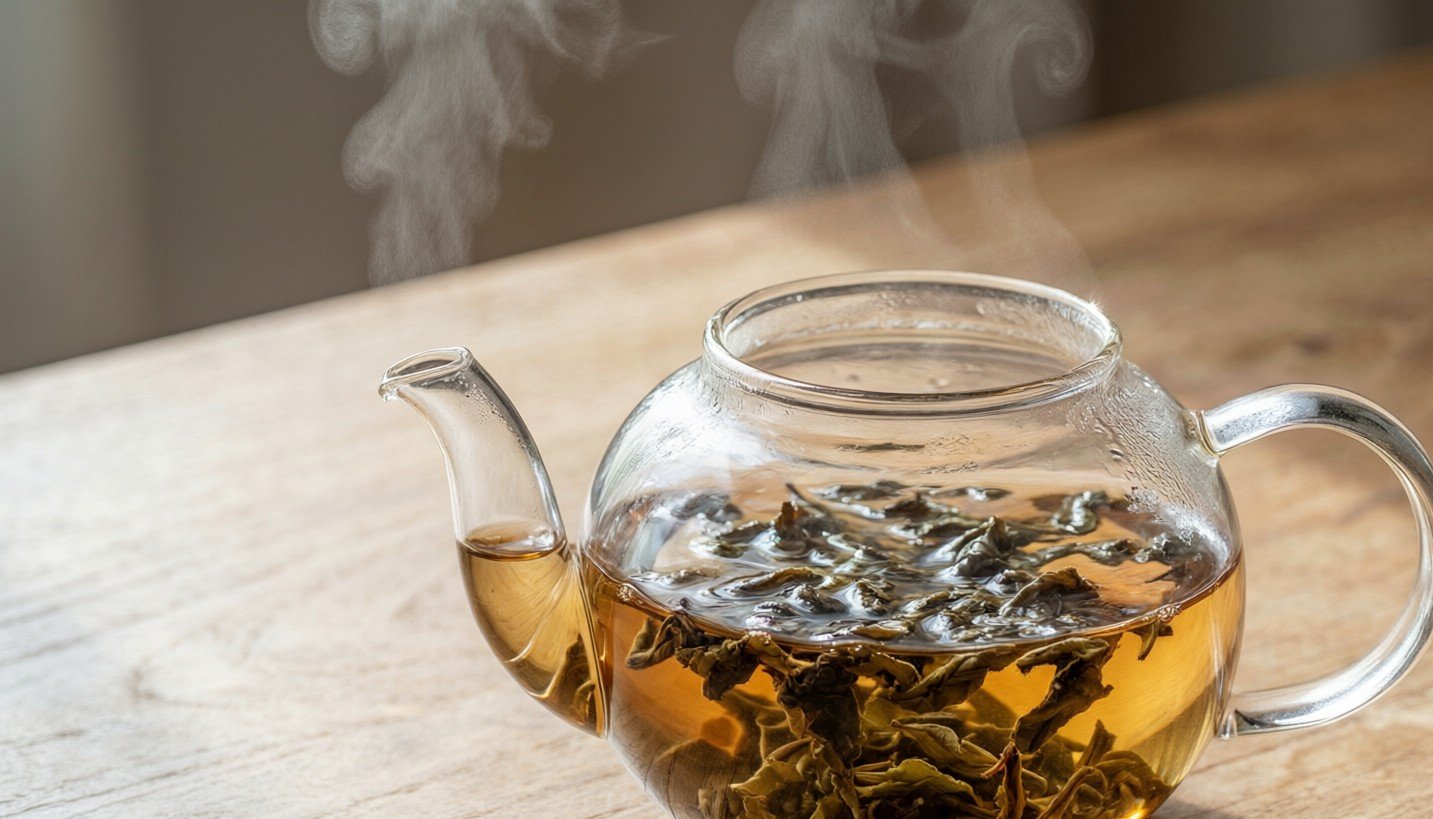
Aging changes Oriental Beauty in a sequence that is easier to observe by cupping than by reading a single chemical index. Fresh lots are dominated by top notes: honey, ripe stone fruit, muscat grape, warm spice, and sometimes a bright floral lift. Over time, those sharp aromatics soften. The liquor deepens from amber toward mahogany, and the mouthfeel becomes smoother because some of the fresh astringency drops out. [2][3]
At the same time, the finish shifts. Well-stored examples often show dried fig, dark honey, aged plum, sandalwood, and a gentle mineral edge. Poorly stored examples lose aroma and flatten quickly, which is why “aged” alone is not a quality claim. The tea must have enough body, enough initial oxidation, and enough roast structure to support the change. [3]
This is not the same as fermentation. In pu-erh, microbial activity is a primary driver of aging character. In most aged Oriental Beauty, the change is driven more by slow oxidation, the breakdown of esters and other volatiles, and the continued interaction of leaf compounds with controlled moisture and oxygen. [2][3]
What the Available Data Shows — and What It Does Not Show
The data base for aged Oriental Beauty is narrower than for aged pu-erh or aged white tea. There is no large, published longitudinal data set that tracks the same Oriental Beauty lot across many decades under controlled storage. Much of what buyers call “evidence” is actually accumulated cupping experience from Taiwan’s tea institutions, specialty sellers, and long-form storage trials. [4]
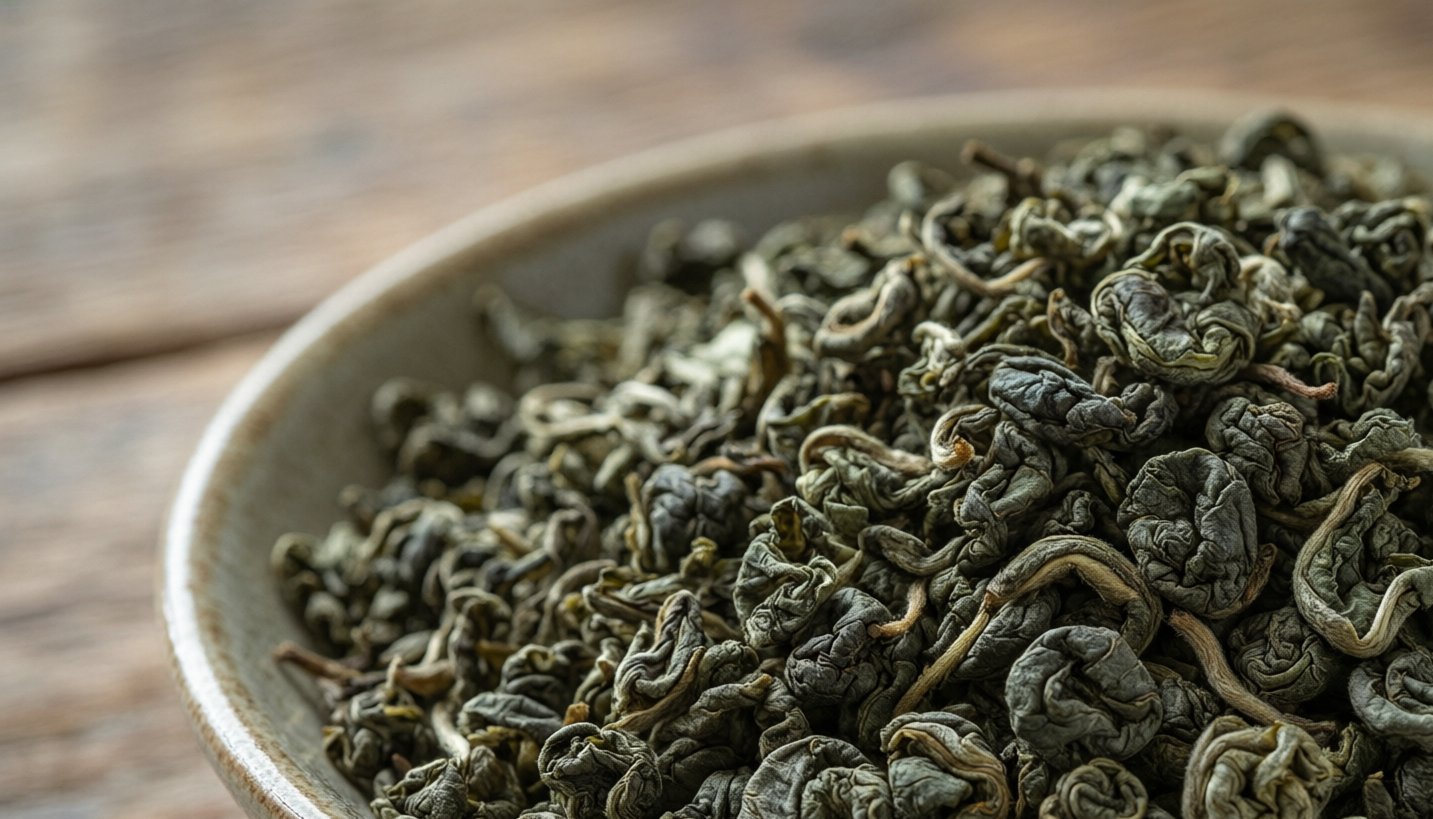
What the available evidence does show is a pattern rather than a guarantee. Heavier-oxidized, properly fired lots tend to mature into softer, deeper, and more integrated teas over the medium term. Lightly oxidized or low-roast lots often fade instead. Cups that begin with thin body, flat finish, or green sharpness rarely become impressive, regardless of how long they are held. [4]
The key finding across most cupping reports is that age is the weakest predictor of success. Oxidation level, leaf maturity, initial roast, moisture control, and the presence of the jassid bite all matter before the year on the label does. [4]
When Aging Improves Oriental Beauty — and When It Doesn’t
Aging tends to help when three conditions are present:
- The base leaf has enough material and sweetness, not just fragrance.
- The tea was oxidized and fired for structure, not only for early aroma.
- Storage is stable, dry enough to prevent mold, and sealed against outside odor and humidity swings.
Aging tends to hurt when the tea was built entirely around delicate top notes, when it was under-fired, or when it has already been held in poor storage. In those cases, the tea may simply become stale, papery, or hollow rather than mellow. [5]
If you are evaluating aged Oriental Beauty lots for import, compare batches by production year, leaf grade, oxidation level, and re-roast date rather than age alone. Our sourcing team can arrange comparison sample sets and storage reports for selected lots. Email 427728483@qq.com for direct guidance.
How Commercial Aging Is Done in Taiwan
Taiwan’s practice for aging Oriental Beauty is usually less aggressive than pu-erh warehousing. Producers who age oolong intentionally begin with a lot that has enough roast to survive storage, then hold it in humidity-controlled rooms. The tea is periodically inspected and sometimes re-roasted at a low temperature to remove surface moisture and stabilize the leaf. [1][5]
The goal of re-roasting is not to mask defects. It is to reset the moisture boundary and slow further change without cooking away the honeyed character that defines the tea. Done well, the tea keeps its identity while moving into a darker register. Done aggressively, the tea becomes roasted-toast or charcoal-like and loses the point of the style. [1][5]
Practical Buying and Storage Guidelines
For buyers, the safest approach is to treat “aged Oriental Beauty” as a sensory claim, not a fixed category. Before paying a premium, ask for:
- The original harvest year and production region.
- The estimated oxidation level and roast level.
- Any re-roast history and the reason for each re-fire.
- Storage conditions, including whether the tea was sealed or open to air.
- A comparison cup of the fresh lot, when available, so you can assess what changed.
For storage at home or in a warehouse, keep the tea away from light, heat, strong odors, and large temperature swings. Seal opened packages tightly and avoid storing aged Oriental Beauty beside green tea, pu-erh, or strongly scented teas. Moisture is the greatest risk: the tea should remain dry and free-flowing, with no sour or damp odor when opened. [3][5]
Source Aged Oriental Beauty Without Guessing
If you are buying Oriental Beauty in bulk, verify the story behind the tea instead of relying on the age label. Useful due diligence includes:
- Confirming the original oxidation and firing level.
- Requesting moisture and sensory records for any lot sold as aged.
- Comparing fresh and aged samples from the same batch.
- Asking about storage conditions and re-roast history.
- Confirming packaging and shipping conditions for long-haul transport.
Our team works with Chinese tea suppliers and Taiwan-sourced Oriental Beauty lots for wholesale and private-label programs. For sample sets, origin verification, and current supply options, contact the sourcing team at 427728483@qq.com.
FAQ
Does Oriental Beauty tea really get better with age?
Sometimes. When the base tea is substantial, well-oxidized, and properly fired, aging can mellow the cup, deepen the liquor, and replace sharp top notes with dried fruit, dark honey, and wood-like warmth. Weak or low-roast lots usually fade instead.
How many years should Oriental Beauty age?
There is no single benchmark. The tea changes noticeably within a few years under good storage, but the result depends more on base quality, oxidation, roast, and storage than on hitting a specific number of years.
Can all Oriental Beauty be aged?
No. Fragrant, light, or low-roast lots are often at their best young. Without enough body and roast structure, long storage tends to flatten the tea rather than deepen it.
Does aging reduce caffeine in Oriental Beauty?
Aging does not dramatically change caffeine levels. The tea may feel gentler because astringency and bright top notes fade, but that is a sensory change rather than strong caffeine loss.
What is the difference between aged Oriental Beauty and aged pu-erh?
Aged pu-erh develops through prolonged microbial activity and can show pronounced cellar, earth, or camphor-like character. Aged Oriental Beauty changes mainly through slow oxidation and volatile breakdown, so the profile usually stays within honeyed, stone fruit, dried fruit, and spice territory.
Where should I buy aged Oriental Beauty in bulk?
Work with a supplier who can show the harvest year, oxidation and roast level, storage conditions, and re-roast history. Compare fresh and aged samples from the same batch before placing a large order.
References
[1] Taiwan Tea Research and Extension Station, “Dongfang Meiren (Oriental Beauty) tea — production and quality characteristics,” [Online]. Available: https://www.tres.gov.tw/
[2] M. L. Heiss and R. J. Heiss, The Story of Tea: A Cultural History and Drinking Guide, Ten Speed Press, 2007.
[3] K. Gascoyne, F. Marchand, J. Desharnais, and H. Americi, Tea: History, Terroirs, Varieties, Firefly Books, 2011.
[4] Tea Guardian, “The logic of oolong tea aging,” [Online]. Available: https://teaguardian.com/
[5] Taiwan Tea Research and Extension Station, “Storage and re-firing practices for partially fermented oolong tea,” [Online]. Available: https://www.tres.gov.tw/
No author description available.

白玉京