Dianhong Tea Safety: Who Should Drink It and Who Shouldn’t
Dianhong, often called Yunnan black tea, is a fully oxidized black tea made from the large-leaf assamica cultivar in Yunnan province. Its malty, honeyed flavor and golden buds have made it a staple in specialty menus and Western tea blends. For most healthy adults who keep caffeine intake within accepted limits, moderate consumption is generally safe. But “safe for everyone” is not the right framing. Caffeine, tannins, fluoride, and individual health conditions all shape the answer.
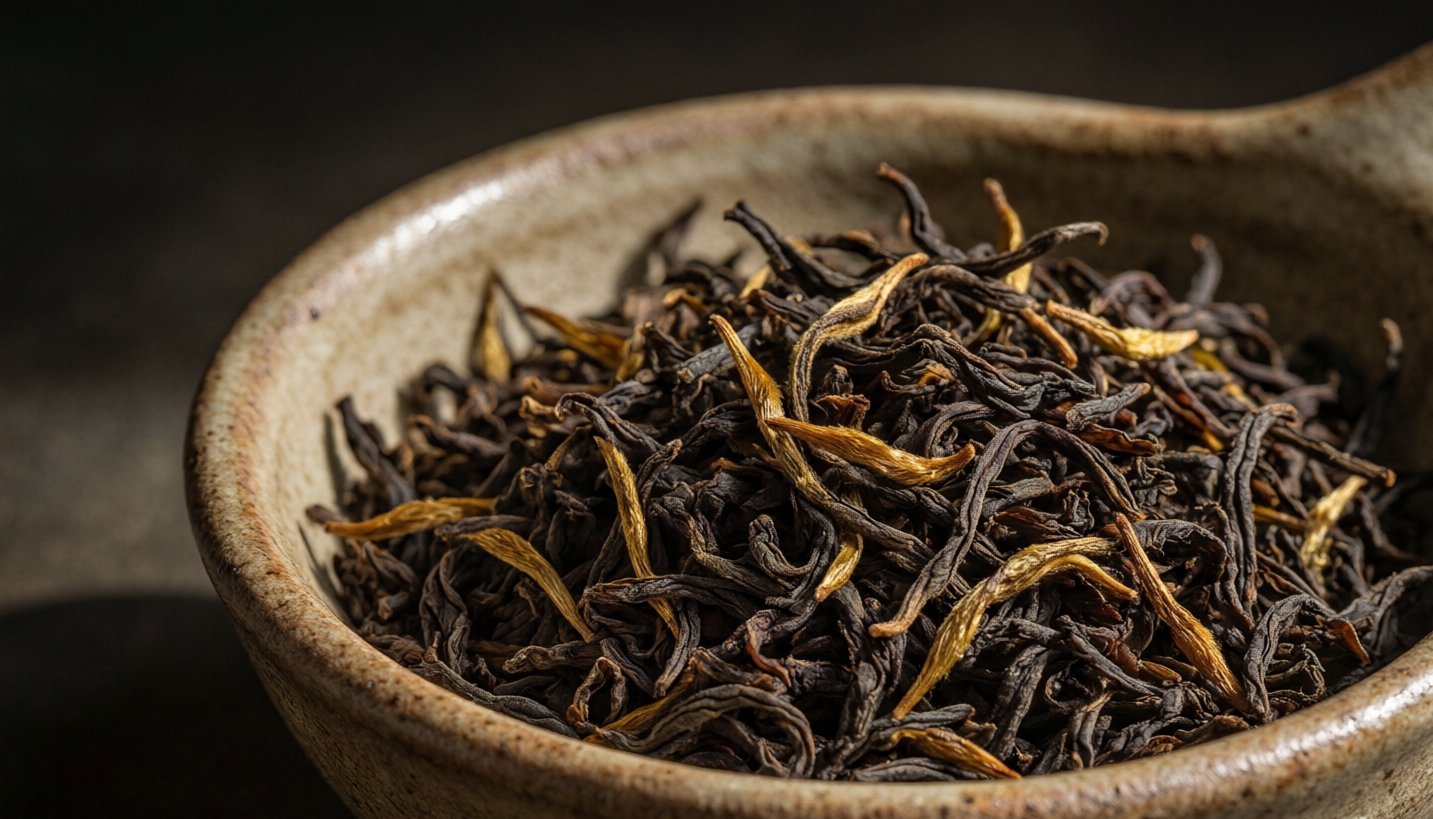
What Dianhong Tea Contains That Affects Safety
Black tea’s main safety-relevant components are caffeine, theaflavins, thearubigins, residual catechins, fluoride, and oxalates. Caffeine is the most immediate concern because it is a stimulant. Black tea in a standard 8-ounce cup typically falls in the 30–80 mg range, depending on leaf grade, water temperature, and steep time [3]. Dianhong’s large-leaf assamica base does not make it uniquely high in caffeine, but golden-bud batches and long steeps can push a cup toward the upper end of that range.
Daily Caffeine Limit: What the Evidence Supports
The European Food Safety Authority concluded that habitual caffeine intakes up to 400 mg per day from all sources do not raise safety concerns for healthy non-pregnant adults, and that single doses up to 200 mg are acceptable [1]. For pregnant women, EFSA and the American College of Obstetricians and Gynecologists point to an upper limit around 200 mg per day [1][2].
| Consumer group | Practical caffeine limit | What that means for Dianhong |
|---|---|---|
| Healthy adults | Up to 400 mg/day total | About 4–6 standard cups, fewer for strong gongfu sessions |
| Pregnant women | Up to 200 mg/day total | Roughly 2 standard cups depending on brew strength |
| Caffeine-sensitive adults | Lower; observe individual tolerance | Start with 1 cup early in the day |
| Children and adolescents | No established safe tea-specific limit | Weak, small servings are the more cautious choice |
Buying Dianhong in bulk? Safety work starts with the lot documents, not the flavor sample. If you need current caffeine, pesticide-residue, and heavy-metal test reports for a specific Dianhong lot, email 427728483@qq.com with the harvest year and target market before you order samples.
Who Should Be Cautious with Dianhong
Pregnancy and breastfeeding
Small amounts may be acceptable, but caffeine crosses the placenta and enters breast milk. Staying under 200 mg/day during pregnancy is the common clinical guidance [2]. People who metabolize caffeine slowly, or who already consume coffee, chocolate, or cola, should count all sources together.
Caffeine sensitivity, insomnia, and anxiety
Some people feel jittery or wired after relatively small amounts. If you notice sleep disruption, afternoon slumps, or increased anxiety, move Dianhong earlier in the day or reduce the cup size.
Iron-deficiency anemia
Polyphenols in black tea can inhibit non-heme iron absorption from plants and fortified foods [4]. The practical fix is separation: drink tea at least one hour away from iron-rich meals rather than eliminating it entirely.
Heart rhythm and uncontrolled hypertension
Caffeine can produce a temporary increase in heart rate and blood pressure in some people. Most regular drinkers develop partial tolerance, but people with uncontrolled hypertension, arrhythmias, or specific cardiology advice should ask before making Dianhong a daily habit.
Reflux and stomach irritation
Black tea is less astringent than green tea for many people, but hot, strong tea can still aggravate acid reflux or gastritis. Smaller cups and slightly lower steeping temperatures often help.
Medication and Nutrient Interactions
Tea is not a medicine, but it can interact. Caffeine is metabolized by the CYP1A2 pathway and can amplify stimulant medications or interact with certain asthma, heart, and psychiatric drugs. The safest step is to check with a pharmacist if you take any medication. For nutrients, the most clearly documented interaction is the reduced absorption of non-heme iron when tea is consumed around meals [4].
How to Reduce the Risks
- Control brew strength: about 3 g of leaf per 250 ml of water at 90–95°C for 3–5 minutes.
- Count total caffeine from coffee, tea, cola, energy drinks, and chocolate.
- Avoid late-day consumption if sleep is a concern.
- Separate Dianhong from iron-rich meals by at least one hour.
- Pair iron-rich meals with vitamin C-rich foods to improve non-heme iron absorption.
- Choose tested batches and ask for a certificate of analysis.
- Avoid high-dose tea extracts; brewed Dianhong is the safer form.
Brewed tea in moderation is generally safe for most people. The rare liver-injury reports are mostly associated with concentrated green tea extracts, not ordinary brewed black tea [5].
Sourcing Dianhong Tea with Safety Documentation
Before you buy to sell or import, request a lot-specific certificate of analysis covering pesticide residues, heavy metals, and moisture. This is not about making tea sound medical; it is basic due diligence. Chinese tea suppliers can help match a Dianhong lot to your market’s food-safety requirements. Email 427728483@qq.com with your target spec, package format, and order volume, and ask for the relevant test reports with the sample.
Frequently Asked Questions
Is Dianhong tea safe during pregnancy?
Most guidance allows modest caffeine intake during pregnancy up to about 200 mg/day [2]. That may mean one or two weaker Dianhong cups a day, but you should count coffee, chocolate, and other caffeine sources. Ask your obstetrician for personalized advice.
Does Dianhong tea raise blood pressure?
Caffeine can cause a short-term rise in blood pressure in some people. The effect tends to be smaller in habitual users, but if your blood pressure is uncontrolled, monitor how you respond and follow your doctor’s guidance.
Can I drink Dianhong tea if I have iron-deficiency anemia?
Yes, with timing. Tea polyphenols inhibit non-heme iron absorption [4], so keep Dianhong at least an hour away from iron-rich meals and consider vitamin C-rich foods with meals to improve absorption.
Does Dianhong tea contain more caffeine than other black teas?
It is broadly in the same range as other black teas, around 30–80 mg per 8-ounce cup [3]. Leaf grade and brewing technique usually matter more than the Dianhong origin alone.
Is Dianhong tea safe for children?
Small, weak servings are low risk for many children, but caffeine has no clear safe tea-specific threshold for young children. Water, milk, or caffeine-free herbal infusions may be better defaults.
Should I worry about fluoride or heavy metals in Dianhong tea?
Tea plants naturally take up fluoride and minerals from soil. At normal brewed-tea intake, this is usually not a problem for healthy adults. The larger concerns come from unbranded, untested batches or very high consumption of old, brick-style teas. Ask for a certificate of analysis if you drink several cups daily or buy in volume.
References
- EFSA Panel on Dietetic Products, Nutrition and Allergies. Scientific Opinion on the safety of caffeine. EFSA Journal. 2015;13(5):4102. https://efsa.onlinelibrary.wiley.com/doi/10.2903/j.efsa.2015.4102
- American College of Obstetricians and Gynecologists. Moderate Caffeine Consumption During Pregnancy. Committee Opinion No. 462. https://www.acog.org/clinical/clinical-guidance/committee-opinion/articles/2010/08/moderate-caffeine-consumption-during-pregnancy
- U.S. Food & Drug Administration. Spilling the Beans: How Much Caffeine Is Too Much? https://www.fda.gov/consumers/consumer-updates/spilling-beans-how-much-caffeine-too-much
- National Institutes of Health, Office of Dietary Supplements. Iron Fact Sheet for Health Professionals. https://ods.od.nih.gov/factsheets/Iron-HealthProfessional/
- National Center for Complementary and Integrative Health. Tea. https://www.nccih.nih.gov/health/tea
No author description available.

白玉京