Collecting Pu-erh Tea Cakes: What to Check Before You Buy
Few tea categories reward patience the way Pu-erh does. A tightly compressed cake of raw (sheng) Pu-erh is closer to a living product than a finished one: the leaf, the processing, and the storage environment keep working on it for years after pressing. For importers and serious collectors, that creates an unusual problem — most of a cake’s value is created or destroyed after you buy it, which means judging aging potential matters more than judging how the tea tastes today.
This guide walks through what actually changes in a Pu-erh cake over time, the four factors that decide whether those changes become an asset, and the checks to run before you commit to a lot.
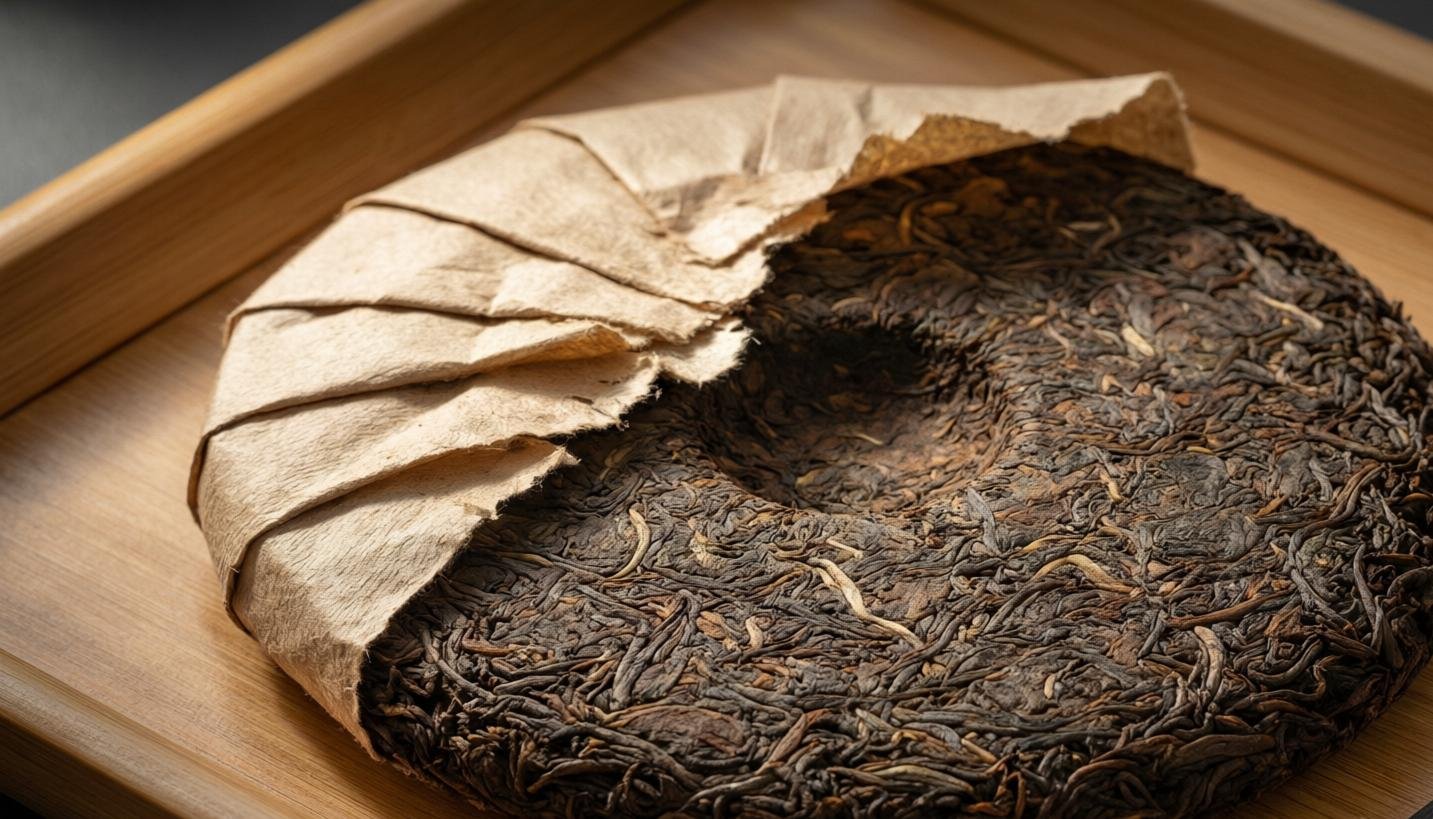
How a Pu-erh Cake Actually Changes as It Ages
Under China’s national standard GB/T 22111-2008, Pu-erh must be made from Yunnan large-leaf sun-dried green tea produced within the protected geographical area; the standard divides the category into sheng (raw) and shou (ripe) types [1]. That split matters more than anything else when you start collecting.
Sheng Pu-erh is pressed from sun-dried maocha, a tea that has been fixed and dried but not fully oxidized or fermented. Over years, enzymatic activity and ambient microflora transform its polyphenol profile: catechins decline while gallic acid, flavonoids, and theabrownins accumulate, shifting the cup from bright, astringent, and floral toward thick, mellow, and earthy [2]. This is a slow process, and its ceiling depends almost entirely on how much material substance the cake started with.
Shou Pu-erh takes a shortcut. Since the modern process was developed at the Kunming Tea Factory in 1973, shou undergoes pile fermentation, or wòdui, before pressing, which compresses years of microbial aging into weeks. By the time a shou cake is packed, the heaviest transformations have already happened. Additional years smooth rough edges, but the curve is much flatter — a well-stored shou can become more pleasant, yet it rarely re-rates the way a strong sheng does.
The Four Factors That Decide Aging Potential
Experienced collectors tend to evaluate a raw Pu-erh cake through four lenses before they think about price: material, processing, compression, and initial cleanliness.
Material is the ceiling. A cake made from whole, strong leaves with visible buds and healthy stems — especially high-altitude large-leaf assamica from Menghai, Mengla, or Lincang — carries more polyphenols and more structure to transform. In the Chinese market, the distinction between ancient-tree (gushu), big-tree (dashu), and terrace-plantation (taidi) material is shorthand for how much depth the leaf holds over time.
Processing sets the direction. Sun-drying is the traditional baseline for raw Pu-erh. Cakes that are over-baked or finished in a green-tea style often taste bright early but stall later, because the enzymes that drive long-term change have been partly destroyed. Kill-green should be thorough but not scorched, and the maocha should not carry char or smoke defects.
Compression controls the pace. A moderately pressed cake ages more evenly than a machine-hard tuo or brick, where the outside can stale while the core stays closed. Even edges and a defined shape are good early signals.
Cleanliness is a deal-breaker. Storage faults are rarely fixable. Any musty, sour, or perfume-like note in the dry leaf is a red flag, because the cake will carry that flaw into every future steep.
There is also a fifth, practical variable: the recipe. Long-running factory benchmarks such as 7542 and 8582 are blend recipes rather than vintages — a 7542 pressed in 2020 follows roughly the same formula as earlier productions, which gives buyers a stable reference for how that cake family behaves over time.
What Ages Well — and What Doesn’t
| Check | Ages well | Usually doesn’t |
|---|---|---|
| Material | Whole, strong large-leaf; old-tree or big-tree depth | Broken, powdery, or oven-baked leaf |
| Processing | Sun-dried, clean kill-green, no scorch | Over-roasted, smoky, or green-style finish |
| Compression | Moderate cake, even edges | Rock-hard bricks or tuos with closed cores |
| Type | Raw (sheng) benchmark | Ripe (shou) — mellows but rarely re-rates |
| Base aroma | Bright, floral-fruity, gentle astringency | Flat, sour, musty, or perfumed |
| Storage signs | Clean wrapper, even leaf color, dry crumble | Damp, mold spots, off odors |
The pattern is consistent: raw cakes that start with strong material and clean, moderate storage tend to gain the complexity collectors pay for; cakes that start thin, scorched, or damp tend to get worse, not better.
Storage: Where Collection Value Is Won or Lost
Even an excellent raw cake can be ruined — or a modest one quietly improved — by storage. The broad goal most collectors describe is a stable, moderately humid, mildly aerated environment. Practical targets often fall around 55–70 percent relative humidity at room temperature; sustained humidity well above that invites mold, while very dry, sealed storage preserves the tea but slows transformation to a crawl.
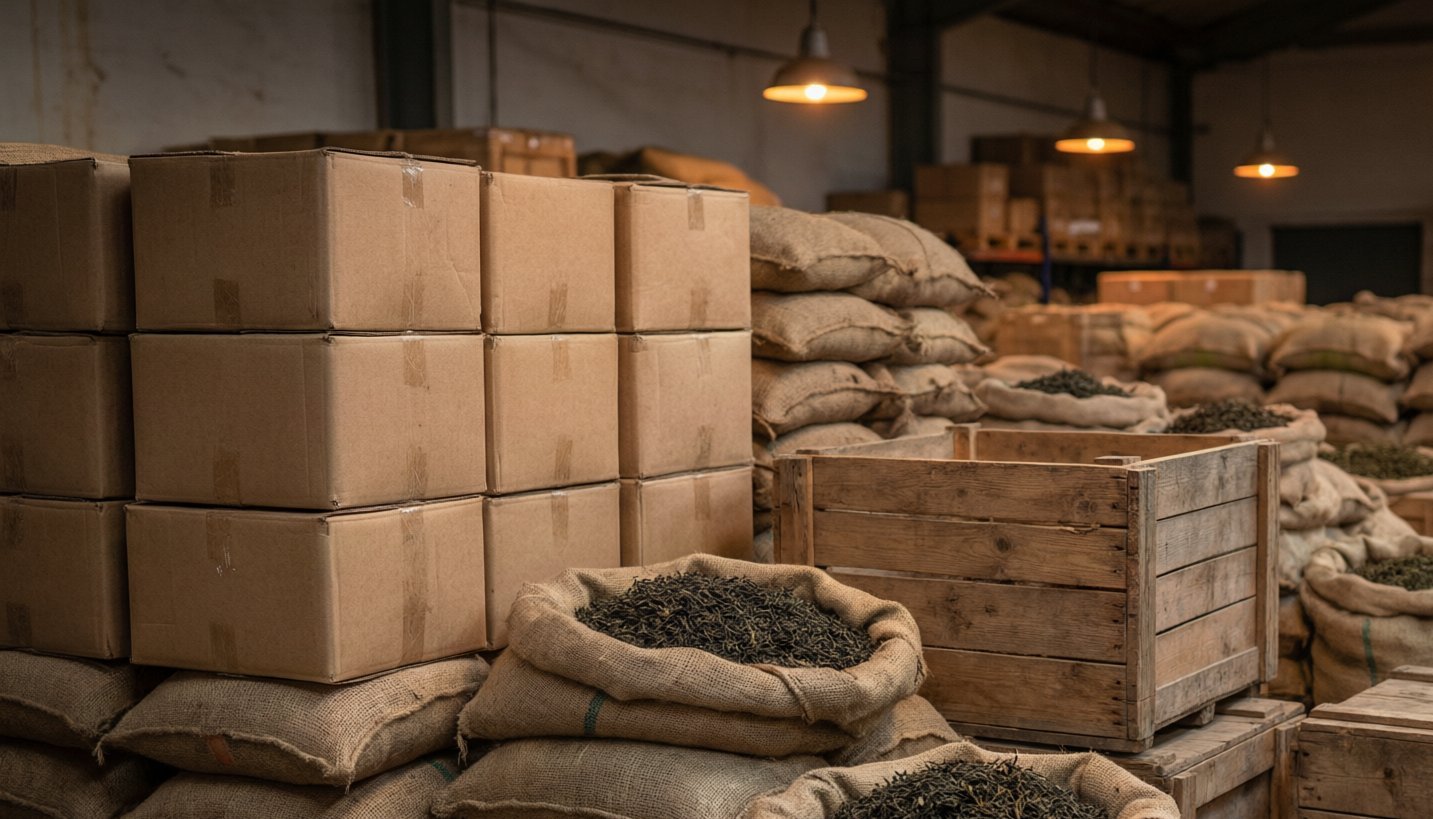
Equally important is what the cake sits next to. Pu-erh is porous and adsorbs surrounding odors quickly, so it should not share space with spices, cleaning products, perfumed packaging, or other strong-scented goods. Cakes are usually kept in their wrappers, grouped in tongs or cartons, and allowed slow air exchange rather than hard sealing.
Sampling discipline is part of storage, too. A serious collector or importer will open a cake from each lot at fixed intervals — often annually — to verify the direction of change. Off notes that strengthen over time are worse than a tea that simply transforms slowly.
Need a second opinion on a specific cake or lot? Send photos of the wrapper, neifei, and cake face to xuansc2144@gmail.com. Details on what to include are in the sourcing note at the end of this article.
Due Diligence Before You Buy
For importers, the buying decision should sit on a sample, not a story. Before committing to a lot, ask for:
- Photos of the wrapper, neifei, cake face, and edge
- Dry-leaf and wet-leaf close-ups from the exact batch on offer
- A 25–50 gram reference sample pulled from the same tong or carton
- Storage history: dry-stored where, for how long, and any warehouse changes
- For bulk orders, pesticide-residue and mold-toxin test reports from an accredited lab
In our own pre-shipment checks, for example, we ask suppliers to mark each tong and photograph the same cake from face and side before it leaves the warehouse, so the reference sample and the shipped lot stay traceable to the same batch. The goal is simple: when the cake lands, you should be able to confirm that the tea in the container is the tea you tasted.
Sourcing Pu-erh with a China-Based Team
Building a small position in well-chosen raw Pu-erh is usually smarter than chasing famous aged vintages, but only if the storage history and material can be verified at the source. That is easier from inside the market than from a distance.
If you are buying or collecting Pu-erh cakes and want an independent read on material, compression, and storage before you commit, contact our sourcing team. Send as much of the following as you can to xuansc2144@gmail.com:
- Wrapper, neifei, and cake-face photos
- A short note on the storage history and asking price
- Your target volume and destination market
We will review the lot details and advise on whether it fits the kind of aging profile covered in this guide.
Frequently Asked Questions
Is older always better for a Pu-erh cake?
No. Age only magnifies what the cake started with. A clean, well-stored raw cake with strong material tends to improve; an old cake with weak material or flawed storage often carries its defects at a higher price.
Can ripe (shou) Pu-erh cakes appreciate the way raw (sheng) cakes do?
Rarely. Shou is already fermented before pressing, so most of its transformation happens in the factory rather than in your warehouse. Good shou becomes smoother, but the step-change in value that collectors look for is mostly a sheng phenomenon.
How can I tell if a cake has storage problems?
Check the dry leaf and the wrapper first. Musty, sour, or perfumed notes, visible mold spots, darkened water staining, or oddly soft edges suggest damp storage. A clean cake should smell like dry tea and show even, firm compression.
Should a first-time importer buy young or aged cakes?
In most cases, young raw cakes with transparent material and clean storage offer the clearest route. Aged cakes are priced on provenance and storage history that is harder to verify; young material lets you control the variables that matter.
Do I need lab tests for every lot?
For personal collection, storage and sample inspection usually come first. For commercial import, pesticide-residue and mold-toxin testing is standard risk control, and some buyers make passing reports a condition of payment.
References
[1] GB/T 22111-2008, Product of geographical indication — Pu’er tea, General Administration of Quality Supervision, Inspection and Quarantine of the People’s Republic of China, 2008.
[2] H.-P. Lv, Y.-J. Zhang, Z. Lin, and Y.-R. Liang, “Processing and chemical constituents of Pu-erh tea: A review,” Food Research International, vol. 53, no. 2, pp. 608–618, 2013.
No author description available.

白玉京