Best Teas for a Home Tea Ceremony: 8 Brews Worth Serving
A home tea ceremony works best when the tea itself is interesting enough to slow down for. The teaware matters, but the leaves decide whether the session stays compelling after the third, fifth, or eighth infusion. This guide walks through eight Chinese teas that reward the kind of attention a home ceremony gives them, then shows how to brew them without turning your kitchen into a teahouse laboratory.
Why the Tea Itself Sets the Tone
Tea categories differ mainly by oxidation, leaf shape, and processing. Green tea is fixed quickly to prevent oxidation [1]. Oolong is partially oxidized, which is why it sits between green and black in aroma and body [2]. Black tea is fully oxidized for deeper color and maltiness [3]. White tea is lightly processed with minimal rolling, so it keeps soft, hay-like sweetness [4]. Ripe pu-erh goes further through pile fermentation, giving it dark liquor and earthy weight [5].
For a ceremony, whole-leaf teas are easier to work with because they release flavor gradually. Broken or fanning-grade leaves exhaust quickly, while a well-made oolong, white tea, or pu-erh can support multiple rounds. That re-steeping quality is what turns a quick cup into a seated ceremony.
8 Best Teas for a Home Tea Ceremony
If you are choosing these for a retail ceremony set or a client gifting program, email 427728483@qq.com with your target grade, volume, and delivery port. A sourcing note is worth addressing early because harvest timing and grade affect the final cup more than most teaware upgrades do.
1. Tieguanyin (Anxi Oolong)
Tieguanyin is the most forgiving introduction to oolong. Look for clean, tightly curled leaves with a floral-orchid aroma and a creamy, lingering finish. Lighter modern styles feel bright and perfumed, while traditional charcoal-roasted versions add warmth. Both work in a ceremony, but the lighter style is easier to enjoy for beginners.
2. Wuyi Rock Tea (Yancha)
Wuyi oolongs, such as Rougui, Shuixian, and Da Hong Pao, bring a mineral quality often described as yan yun, or rock rhyme. The roast adds body, cinnamon or stone-fruit notes, and a dry, elegant finish. These are teas to serve when you want structure rather than softness. Short, controlled infusions keep the roast from turning bitter.
3. Silver Needle White Tea
Silver Needle is made almost entirely from tender buds, which gives the cup a soft viscosity and honey-hay sweetness [4]. It does not need aggressive technique. Because white tea is less processed, lower water temperatures and slightly longer steeps bring out more without astringency. It is an excellent opening tea for a quiet, slow session.
4. Longjing (Dragon Well)
Longjing is a pan-fired green tea with a flat, polished leaf and a chestnut or sweet-grass character. It is one of the best green teas for a glass-bowl ceremony because the leaves can be watched as they soften and sink. Use near 80°C water and keep the first infusion short. It does not re-steep as long as oolong or pu-erh, so plan for two or three clear rounds.
5. Milanxiang Dancong (Phoenix Oolong)
Milanxiang, or honey-orchid dancong, is a high-aroma tea from Guangdong. It can be demanding: too long an infusion turns it sharply astringent. But a flash rinse followed by very short steeps releases an intense floral, honeyed liquor. This is a good choice when you want the ceremony to focus on aroma change across infusions.
6. Ripe Pu-erh (Shou)
Ripe pu-erh is pile-fermented, which gives it a dark, smooth, earthy character without the sharpness of some young sheng pu-erh [5]. It brews well with near-boiling water and tolerates a rinse before the first real steep. The texture is thick and warming, making it ideal for an evening ceremony or a post-meal session.
7. Aged White Tea (Gongmei or Shoumei)
Aged white teas made from larger leaves and buds develop dried-fruit, date, and faint medicinal notes over time. The bigger leaf material makes them more flexible than Silver Needle. They can be brewed gongfu-style or simmered at the end of a long session. This is a useful fallback tea when guests prefer something mellow but complex.
8. Yunnan Black Tea (Dianhong)
Dianhong offers honey, malt, and golden-bud sweetness with less astringency than many other black teas [3]. It is substantial enough for guests who usually drink coffee, but it still changes across the first few infusions. Brew it at around 90–95°C and keep the first round brief.
How to Brew for a Home Ceremony
A practical starting point is the standard sensory-testing ratio of 2 g of tea per 100 mL of water [6]. For ceremony-style brewing, you will likely use more leaf and shorter steeps, but that ratio helps calibrate your first attempt. The temperatures below are starting points, not fixed rules; adjust them to your leaf, vessel, and preference.
| Tea | Starting water temperature | First infusion | Re-steep potential |
|---|---|---|---|
| Tieguanyin | 95°C | 20–30 seconds | 6+ rounds |
| Wuyi Rock Tea | 100°C | 10–20 seconds | 7+ rounds |
| Silver Needle White | 85°C | 30–60 seconds | 4–5 rounds |
| Longjing | 80°C | 60 seconds | 2–3 rounds |
| Milanxiang Dancong | 100°C | 5–10 seconds | 6+ rounds |
| Ripe Pu-erh | 100°C | 10–20 seconds after rinse | 8+ rounds |
| Aged White Tea | 95–100°C | 20–30 seconds | 6+ rounds, or simmer last |
| Yunnan Black Tea | 90–95°C | 20–30 seconds | 4–5 rounds |
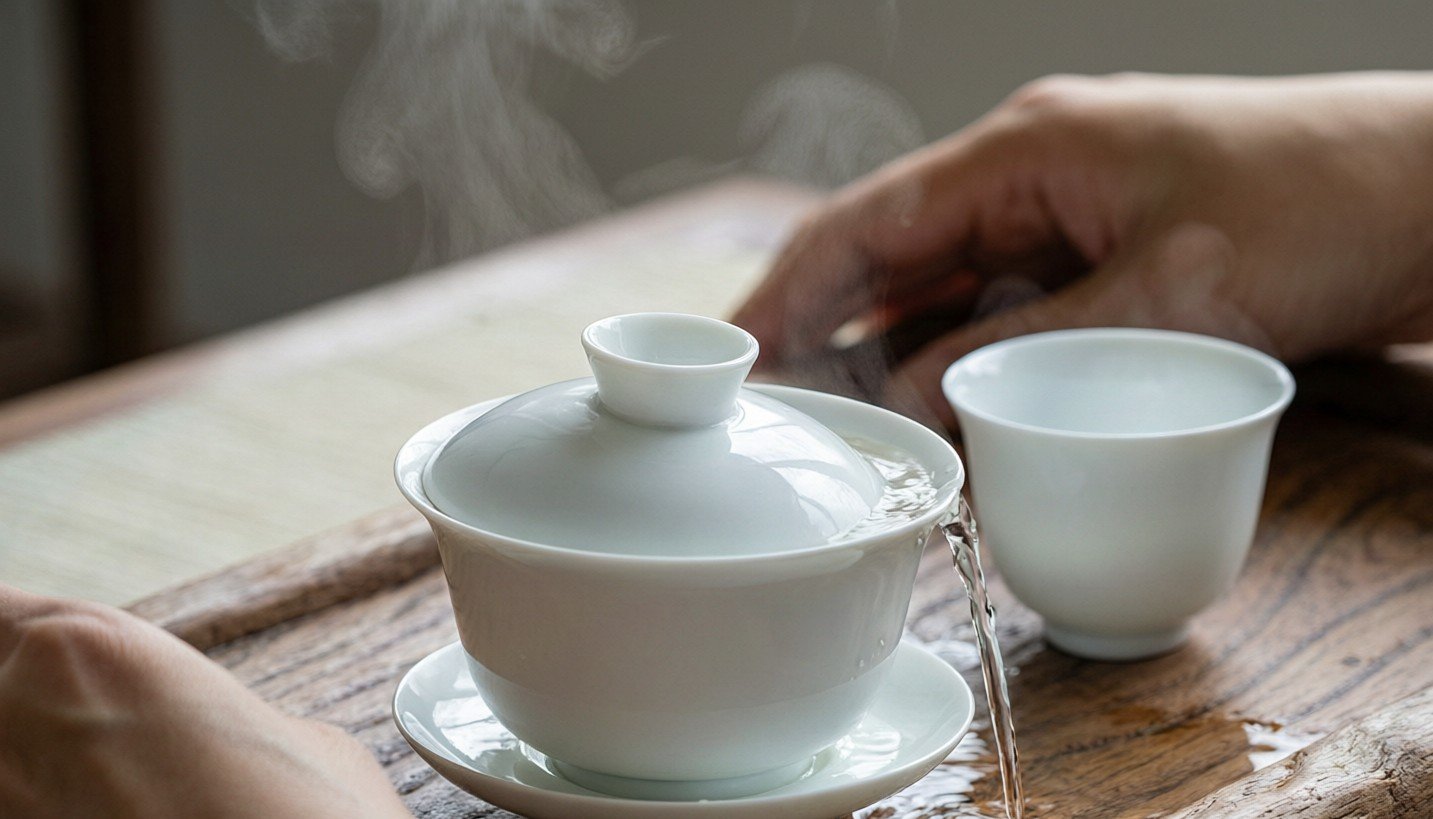
Warm the teapot or gaiwan first, pour water over the leaves, and decant almost immediately for tightly rolled oolongs and compressed pu-erh. For lighter teas, a slightly longer first steep is fine. Smell the lid or pitcher after each pour; that aroma shift is part of the ceremony.
A Simple Home Ceremony Flow
You do not need formal training to create a calm sequence. Start with a short session: warm the vessel, add whole-leaf tea, rinse once for pu-erh or dancong, then brew and share with small cups. Keep each round short enough to be pleasant, then add ten to fifteen seconds as the leaf fades. Taste before you pour, and let the second and third rounds be the center of the experience.
Serve one tea at a time until the leaves stop giving flavor. If you have two teas, move from lighter to darker: white or green first, then oolong, then black or ripe pu-erh. That progression keeps the palate clean and makes each tea easier to compare.
Source Ceremony-Grade Teas
We supply loose-leaf green, white, oolong, black, and pu-erh teas in bulk and retail-ready formats. If you are building a home ceremony collection, private-label line, or gift set, email 427728483@qq.com with the tea categories, target grade, order volume, and destination port. We will respond with grade options, packaging choices, and a clear quote.
Frequently Asked Questions
What tea is best for a first home tea ceremony?
Tieguanyin is the safest starting point because it is aromatic, forgiving, and re-steeps well. Silver Needle and ripe pu-erh are also gentle entry points for very different flavor directions.
Do I need a gaiwan, or is a teapot fine?
A small teapot or gaiwan works well. The important part is draining the liquid fully between infusions so the leaves do not sit in water and become bitter.
How much tea should I use per person?
Use roughly 2 g per 100 mL as a baseline [6]. For ceremony-style brewing, use a little more leaf and shorter steeps, then adjust to your taste.
Can I serve more than one tea in a single ceremony?
Yes. Move from light to dark: white or green first, then oolong, then black or pu-erh. Rinse the vessel between very different teas, and give each tea space to finish its rounds.
Is a home tea ceremony the same as gongfu cha?
It can be, but it does not have to be. Gongfu cha uses a high leaf-to-water ratio and short infusions. A home ceremony can be simpler and longer-steeped, as long as the focus is on tasting the tea rather than rushing through it.
References
[1] ISO 11287:2011, Green tea — Definition and basic requirements, International Organization for Standardization, 2011.
[2] ISO 20716:2021, Oolong tea — Definition and basic requirements, International Organization for Standardization, 2021.
[3] ISO 3720:2011, Black tea — Definition and basic requirements, International Organization for Standardization, 2011.
[4] GB/T 22291-2017, White tea, Standardization Administration of China, 2017.
[5] GB/T 22111-2008, Product of geographical indication — Pu'er tea, Standardization Administration of China, 2008.
[6] ISO 3103:2019, Tea — Preparation of liquor for use in sensory tests, International Organization for Standardization, 2019.
No author description available.

白玉京