Yiwu Pu-erh Tea Aging Potential: What Buyers Should Know
Yiwu is one of the most storied pu-erh producing areas in Yunnan, and its raw tea has earned a reputation for becoming softer, sweeter, and deeper with time. But aging potential is not a label on a wrapper. It is a combination of plant material, processing, compression, storage, and honest buying. Some Yiwu cakes turn ordinary; a smaller share become outstanding. This guide explains what actually changes, what to expect at each stage, and how to evaluate Yiwu tea for aging without falling for empty claims [1].
What Makes Yiwu Tea Different From Other Pu-erh?
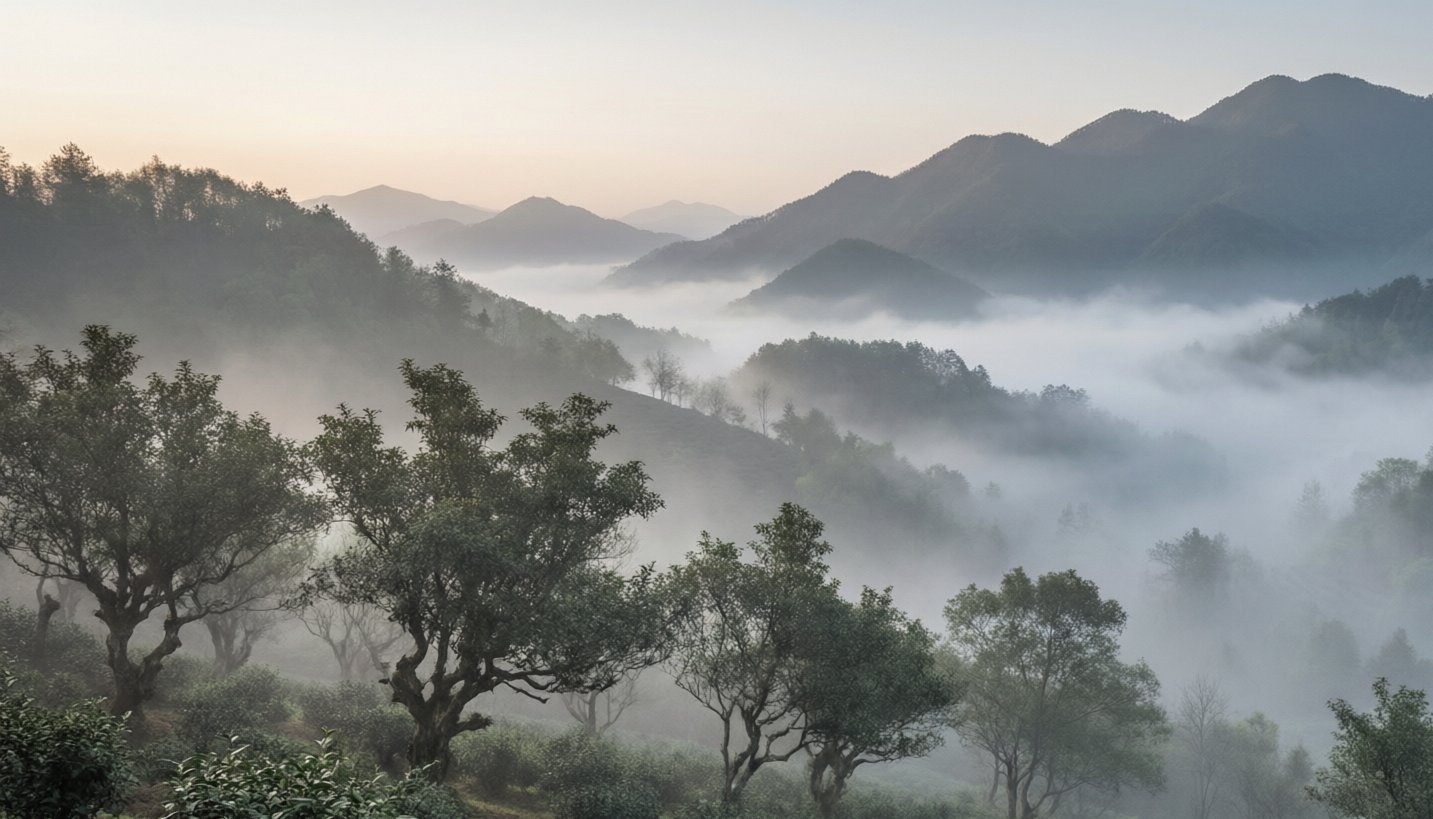
Yiwu is not a single village. It is a broad tea-growing region in Mengla County, Xishuangbanna, covering numerous villages and micro-areas. The elevation is generally moderate, the slopes are gentler than in some neighboring regions, and the forest cover is often dense. The dominant material is Yunnan large-leaf assamica, but Yiwu leaves tend to be softer, thinner in texture, and less aggressive in bitterness than Bulang or Nannuo material [1].
That matters for aging. A young Yiwu raw cake is often immediately aromatic and approachable. The bitterness is present but rarely punishing, and the aftertaste builds rather than shocks. This softer architecture means a well-made Yiwu cake can enter its first pleasant drinking window sooner than a harsher region, while still developing enough structure to reward longer storage.
The tradeoff is equally real: weak or poorly processed Yiwu material can taste friendly when young and then flatten out. Early charm is not proof of aging potential. What predicts potential is the combination of density, aftertaste, and raw material health, not just a gentle first sip.
What Actually Changes When Yiwu Raw Pu-erh Ages?
Raw pu-erh does not simply become "older." It transforms.
In the first year or two, fresh Yiwu raw tea usually shows floral, grassy, and honeysuckle-like aromas. The liquor is yellow-green, and the astringency is sharp enough to leave the mouth clean. Over the next several years, chlorophyll breaks down, catechins oxidize and polymerize, and the liquor darkens toward orange [2]. The green edge fades, and the tea becomes rounder.
From roughly years five through ten, the transformation becomes noticeable cup by cup. Floral top notes are replaced by honey, dried longan, brown sugar, and sometimes a faint camphor-like coolness. The broth grows thicker and the aftertaste lasts longer. This is the stage where many buyers begin to think the tea has finally "arrived," even though it may still have decades of development left [3].
The table below summarizes the common progression for dry-stored Yiwu raw tea.
| Age | Typical liquor | Common aromas | Mouthfeel |
|---|---|---|---|
| 0–2 years | Yellow-green | Flowers, fresh grass, honey | Bright, astringent, lively |
| 3–5 years | Golden-orange | Dried fruit, honey, fading flowers | Cleaner, softer attack |
| 6–10 years | Amber | Red dates, brown sugar, wood, camphor | Thicker, warming, long aftertaste |
| 10–20+ years | Deep amber to brown | Aged wood, medicinal notes, dark honey | Silky, deep, persistent |
These ranges are not fixed. Storage temperature and humidity can speed up or slow down each stage.
Why Yiwu Can Age Particularly Well
Three factors combine to give quality Yiwu raw tea an advantage.
First, the leaf character is naturally soft. A tea that starts with lower astringency has less harshness to lose, so the first aging plateau can arrive earlier. Second, good Yiwu material often has a strong aftertaste that emerges after the initial sweetness. That aftertaste is one of the most reliable signs that the tea has enough substance to develop over time [4].
Third, Yiwu cakes are often pressed with traditional processing, and the loose, intact leaf structure allows slow, even oxidation. Overly tight machine compression can slow aging unevenly, while loose storage risks flatness. A moderately compressed stone-pressed cake tends to hold aroma while still breathing [1].
The limiting factor is always material grade. A Yiwu cake made from tired plantation leaf, over-processed to smell sweet when young, will not gain structure. A cake made from healthy leaves with real aftertaste and clean processing has a much better chance.
Ripe Yiwu: A Different Aging Curve
Yiwu is also used for ripe pu-erh, but ripe tea ages by a different logic. Ripe pu-erh has already undergone microbial fermentation before pressing [3]. By the time it reaches a buyer, the main chemical transformation is complete.
What improves in aged ripe Yiwu is mainly the disappearance of the pile-fermentation smell and the gradual rounding of the texture. A ripe cake stored for five to ten years can become sweeter, thicker, and more comfortable to drink. But it will not climb the same value curve as raw tea, because it has less left to transform.
Buyers should not pay raw-tea vintage prices for ripe Yiwu. Aged ripe can be excellent daily tea, but it should be judged on drinking pleasure rather than investment upside.
Storage Rules That Decide Whether Your Yiwu Ages Well
Storage is the variable most likely to ruin or save a Yiwu cake.
For the dry-storage style preferred by many collectors, the cake should be kept between about 20°C and 30°C, with relative humidity around 60–70% [5]. The area should be clean, free of strong odors, and protected from direct sunlight. Tea absorbs scent quickly, so a cake stored next to spices, cardboard with ink, or cleaning chemicals will pick up those notes permanently.
Airflow matters. Sealed plastic prevents aging but also prevents off-odors. Too much airflow can make the tea thin and flat. Most collectors keep cakes in breathable paper wrappers inside boxes or clay jars, away from walls and floors that hold moisture [4].
The warning signs of bad storage include a sour or wet-paper smell, white or gray surface mold beyond the normal paper bloom, a flat or watery body, and a rust-colored liquor with no depth. If a cake smells musty in a way that does not fade after airing, walk away.
Tasting Aged Yiwu: What to Look For
When you taste an aged Yiwu sample, judge four things in order: aroma, liquor, mouthfeel, and aftertaste.
A well-stored aged Yiwu should smell clean even if the dry leaf is quiet. The liquor should be clear, not muddy. The mouthfeel should be round rather than thin, and the aftertaste should return after swallowing. The best examples show depth across multiple steeps rather than a single loud first infusion.
Warning signs include a dirty or sour top note, a one-dimensional sweetness with no structure, an empty center, or a harsh drying finish that feels like green tea rather than age. Age should smooth the tea, not simply make it dark.
What Aging Cannot Do
Aging is not a rescue operation. It cannot fix tea that was baked too hard during kill-green, over-rolled, or made from unhealthy leaves. It cannot replace missing aftertaste, and it cannot turn a flat tea into a deep one.
It also cannot turn every Yiwu cake into a classic. Some teas improve for a decade and then plateau. Others continue slowly for much longer. The honest way to think about aging is as a sorting process: time reveals which material had real substance, and which only had youthful charm.
A high price is not evidence of aging potential. Some famous village names carry premiums that assume perfect storage and confirmed provenance. Without those, age adds risk rather than value.
Buying Yiwu for Aging: A Practical Checklist
- Confirm the source. Ask which village or sub-area the material comes from, and what harvest season it represents. Vague answers do not become clearer with age.
- Taste the young cake first. Look for aftertaste, body, and clean processing. If the tea is only sweet and disappears immediately, it is unlikely to deepen.
- Request a storage history. Where was the cake kept, for how long, and in what conditions? Good sellers know the answer.
- Buy samples before cases. One cake will not tell you much. Buy small quantities from several years of the same tea and taste them side by side.
- Check compression and leaf integrity. Whole, flexible leaves with a moderate press tend to age more evenly.
- Set a realistic window. Most dry-stored Yiwu raw tea enters a comfortable drinking stage around five to ten years, with further development possible but not automatic [2].
Source Yiwu Pu-erh With a Clear Aging Plan
If you are buying Yiwu pu-erh for aging or for a retail program, we recommend working from samples first and documenting storage conditions from the beginning. For direct wholesale inquiries, contact Chinese tea suppliers at xuansc2144@gmail.com with your target volume, preferred age range, and storage requirements. We can help you source raw or ripe Yiwu, arrange pre-shipment samples, and discuss packaging formats that suit your market.
FAQ
How long should Yiwu raw pu-erh age before drinking?
There is no single answer. Many dry-stored Yiwu cakes become approachable between three and five years, with a fuller aged character emerging around ten years. The best approach is to taste the tea every year rather than waiting for a fixed date.
Does Yiwu ripe pu-erh improve with age?
Ripe Yiwu improves more subtly than raw Yiwu. The pile-fermentation smell fades, the texture thickens, and the sweetness becomes cleaner over five to ten years. It is worth buying for drinking, but it should not be priced like raw vintage tea.
What storage conditions are best in a Western home?
Dry storage is the safest choice for most Western buyers. Keep the cake around 20–25°C, at 60–70% relative humidity, away from light, moisture, and strong odors. Avoid refrigerators and sealed plastic unless the cake is already fully dry and you are only trying to slow further change.
How can I tell if an aged Yiwu cake has potential?
Judge the young tea before judging the age claim. Good potential usually shows a thick body, clean processing, and a long aftertaste. If the young version is thin or flat, no amount of waiting will fix it.
Is Yiwu better for aging than Bulang or Bingdao?
Better is the wrong word. Yiwu tends to age toward softness, honey, and wood, while Bulang often keeps more bitterness and blooms later. Bingdao can age into a rich, sweet, full-bodied tea but commands much higher prices. The regions offer different aging styles, not a single winner.
Do all Yiwu teas age well?
No. Only material with real structure, clean processing, and correct storage ages well. The Yiwu name alone is not a guarantee.
References
[1] Standardization Administration of China, GB/T 22111-2008: Product of Geographical Indication—Pu'er Tea, Beijing, 2008.
[2] H. Zhang, X. Li, and J. Chen, "Dynamic changes of main quality components during raw Pu-erh tea aging," Journal of Tea Science, 2011.
[3] L. Chen, "Microbial community and chemical changes during post-fermentation of Pu-erh tea," Food Microbiology, 2015.
[4] Y. Wang, "Aroma evolution and sensory attributes of stored raw Pu-erh tea," LWT - Food Science and Technology, 2020.
[5] Food and Agriculture Organization of the United Nations, "Tea: trade and standards," FAO, 2018.
No author description available.

白玉京