Best Duyun Maojian Tea Brands Ranked: An Honest Buyer’s Guide
Duyun Maojian is one of Guizhou's most recognizable green teas, but most "best brand" lists fail B2B buyers. They confuse retail packaging with verified origin, or they repeat brand names without checking a single compliance document. If you buy by volume—for private label, foodservice, retail, or export—the best Duyun Maojian brand is the one that can prove origin, grade, pesticide compliance, and batch consistency at your target volume. This ranking is organized by buying scenario, not by marketing hype, and no supplier pays for placement.
What Duyun Maojian Tea Actually Is
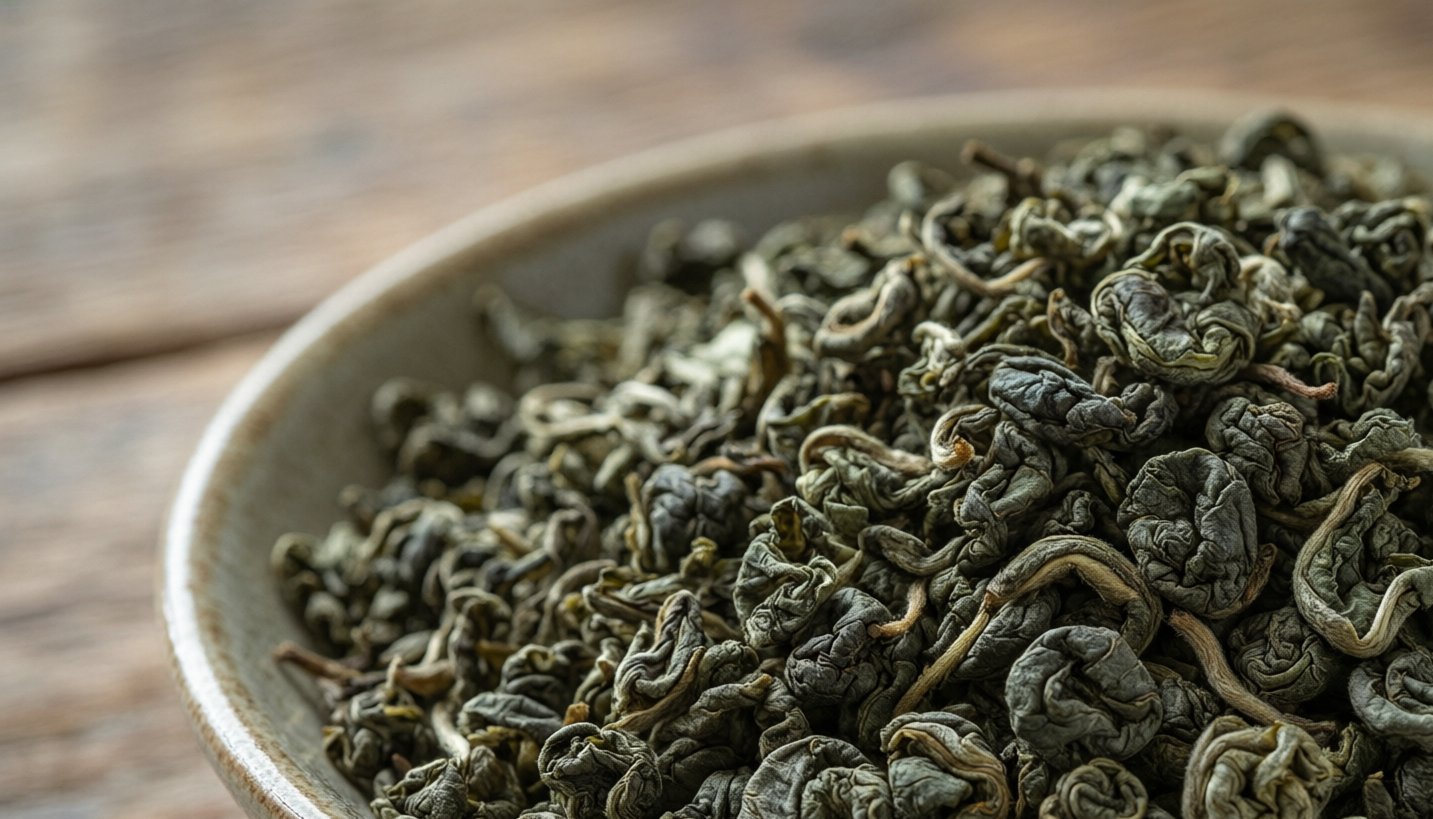
Duyun Maojian is a curly-tip green tea from Duyun City and the surrounding tea areas in Qiannan Buyi and Miao Autonomous Prefecture, Guizhou Province. It is protected under China's geographical indication framework and is generally produced from local tea cultivars with a picking standard centered on one bud or one bud with young leaves [1]. The finished dry leaf is typically tightly curled, dark green with visible downy tips, and the liquor tends toward bright green-yellow with a fresh, chestnut-like or umami-led profile [1][2].
That profile separates it from other "Maojian" style teas. Xinyang Maojian, for example, comes from Henan, uses different cultivars, and shows a thinner, needle-like shape with a sharper, more vegetal character. A Duyun Maojian buyer should never accept a Henan or generic Guizhou lot as Duyun Maojian simply because the leaf looks green and curly. Origin is the first gate—not the last.
Why Generic "Top Brand" Lists Fail Buyers
Most consumer-facing rankings reward retail polish: recognizable gift boxes, attractive marketing, broad e-commerce distribution. Wholesale buying success depends on the opposite: factory registration, GI authorization, harvest date, grade consistency, pesticide test reports, and the ability to replicate a lot at scale.
A brand can be famous and still not be the right supplier for you. Conversely, a low-profile factory brand in Duyun City may be the safest partner for a private-label program because it controls leaf source, processing, packing, and export documentation under one roof. The honest approach is to rank brand types against your procurement problem, then audit the shortlisted suppliers.
How We Ranked These Brands
We ranked candidates against five verification points that matter in procurement:
| Ranking criterion | What a strong supplier can show |
|---|---|
| Origin integrity | GI authorization, Duyun-region farm or factory address, batch-level origin records [1][2] |
| Grade discipline | Clear bud-to-leaf ratio, harvest window, and visual grade reference against GB/T 19460 [1] |
| Compliance proof | Pesticide residue screening, EU/US market MRL checks, food safety registration [2][3] |
| Batch traceability | Lot numbers linked to harvest date, processing date, and packing date |
| Scale stability | Ability to reproduce a sample across full commercial order volume |
A supplier that cannot document even one of these points should drop down or off your list, regardless of brand visibility.
Best Duyun Maojian Tea Brands by Buying Scenario
1. Best for GI-Traceable Wholesale: Established Duyun Producer-Exporters
For importers who need verifiable origin and stable supply, the strongest candidates are Guizhou-registered tea groups and Duyun-based producer-exporters licensed to use the GI mark. These companies usually maintain factory records tied to local tea gardens, hold export registration, and can supply provincial or municipal origin documentation. Ask for the GI authorization or the producer's place on the official GI user list, not just a printed logo on a bag [2].
2. Best for Small-Batch Specialty: High-Altitude Garden-Direct Batches
Specialty buyers should look for single-batch, garden-direct Duyun Maojian from core production villages such as Tuan Shan and Luo Si Ke. These lots are usually smaller, more seasonal, and more expressive, but they demand stronger sampling discipline. The brand may be modest—a family workshop or small factory—but the value lies in the harvest date and garden specificity. This is the only tier where a "single-origin" claim carries real weight, and it should be supported by a lot card rather than a marketing phrase.
3. Best for Private Label and OEM: Guizhou Factory Partners
Buyers building their own tea brand should prioritize factories that offer blank or custom packaging, flexible MOQs, and the ability to hold a grade standard across production runs. The "brand" you are ranking here is really the factory's production system: withering, fixing, rolling, drying, and grading consistency. Request a factory audit, a previous production sample, and a comparison of the sample against the mass-produced lot before committing to a private-label program.
4. Best Value for Everyday Blends and Foodservice: Late-Spring Grades
Not every application needs a pre-Qingming one-bud set. For tea bags, cold brew programs, foodservice, or entry-level retail SKUs, late-spring one-bud-two-leaf or two-leaf material often delivers acceptable Duyun Maojian character at a much lower cost. The best supplier here is the one that labels the grade honestly and does not market late-spring material as early-spring bud tea. Mislabeled grade is one of the most common margin traps in Maojian sourcing.
5. Brands to Scrutinize
Be cautious with brands that use "Duyun Maojian" prominently but cannot show a Guizhou address, a GI authorization, or a batch-level pesticide report. Also scrutinize any supplier whose price is dramatically below comparable grades. In Maojian sourcing, low price often means blended origin, lower leaf standard, or older inventory—not a better deal [3].
Duyun Maojian Quality Checks Before You Order
Before paying, confirm seven items:
- GI authorization or producer registration tied to the Duyun region [1][2].
- Grade reference against GB/T 19460, including bud-to-leaf ratio and harvest window [1].
- Pesticide residue report for the destination market, not a generic domestic test only [3].
- Moisture and storage proof to avoid stale or improperly stored green tea.
- A physical sample of the exact lot offered, not a "representative" sample from another batch.
- Lot number and harvest date on the commercial invoice and carton label.
- A pre-shipment sample to hold against the mass delivery.
Duyun Maojian Price Tiers: What You Are Really Paying For
Duyun Maojian pricing moves far more by harvest timing and leaf grade than by brand. Pre-Qingming one-bud material generally sits at a substantial premium over late-spring two-leaf material, and the gap can be several multiples in export quotes. Altitude, hand-picking, organic certification, and the level of sorting also move price.
The practical rule for buyers: compare price only after locking the grade basis. A low price on "Duyun Maojian" means nothing until you know whether it is pre-Qingming bud, late-spring two-leaf, machine-sorted, or blended. Ask suppliers to quote the same grade parameters so you are comparing lots, not labels.
Need a verified Duyun Maojian lot with GI origin, pesticide reports, and batch traceability? Contact Chinese tea suppliers at 427728483@qq.com with your target grade, annual volume, and destination market. We will quote FOB/CIF options, send cupping samples, and provide the compliance document chain before you commit.
How to Verify a Duyun Maojian Brand Before You Pay
Run this document check before signing or wiring funds:
- Business license and food production or export registration.
- GI authorization or official confirmation of GI user status [2].
- Third-party pesticide residue report valid for your destination market [3].
- Testing certificate confirming compliance with GB/T 19460 [1].
- A dated sample with matching lot number.
- Written confirmation that mass production will match the approved sample.
If a brand is famous but cannot produce these records, you are paying for marketing, not verification.
Build a Duyun Maojian Supply Chain That Actually Verifies
Do not buy a brand story—buy the document chain. When you contact us, include:
- Target grade and estimated annual volume.
- Packaging format: bulk, tea bags, retail-ready, or gift sets.
- Destination market and required certifications.
- Budget per kilogram and contract terms.
Email: 427728483@qq.com. We will respond with available lots, cupping notes, pricing by grade basis, and compliance documentation so you can compare suppliers objectively.
FAQ: Duyun Maojian Tea Brands
Is Duyun Maojian a green tea?
Yes. Duyun Maojian is a green tea, meaning the fresh leaves are fixed early to prevent oxidation. The result is a fresh, green-yellow liquor with a chestnut-like or umami character, produced under Duyun Maojian's geographical indication standards [1][2].
Which Duyun Maojian brand is best for wholesale buying?
There is no single correct answer. For GI-traceable wholesale, choose a Duyun-registered producer-exporter. For specialty retail, choose a high-altitude garden-direct lot. For private label, choose a stable OEM factory. The "best" brand is the one that matches your grade, volume, certification, and traceability requirements.
What is the difference between Duyun Maojian and Xinyang Maojian?
Both are green teas, but they come from different provinces and tea systems. Duyun Maojian comes from Guizhou, usually with a tighter curl and a chestnut-like, umami-led profile. Xinyang Maojian comes from Henan and is typically thinner, needle-like, and more sharply vegetal. Origin and cultivar drive most of the difference.
How much does honest Duyun Maojian cost?
Price depends mainly on harvest window, bud-to-leaf ratio, altitude, and certification. Pre-Qingming one-bud lots are the most expensive tier, while late-spring two-leaf material is far more affordable. Always compare quotes on the same grade basis and request a sample before accepting a price.
How can I verify the GI mark?
Ask the supplier for GI authorization or proof of GI user status, and cross-check the producer's name on the official GI user list where available [2]. A printed logo alone is not sufficient verification.
What should a first bulk order include?
A first order should be small enough to validate the supplier but large enough to test production consistency. Request a pre-production sample, a pre-shipment sample, batch-level documentation, and a pesticide report valid for your destination market before scaling volume.
References
[1] GB/T 19460-2008, Product of geographical indication—Duyun Maojian tea, National Standard of the People's Republic of China. https://std.samr.gov.cn/
[2] European Commission, EU-China bilateral agreement on geographical indications and related GI register documents. https://ec.europa.eu/info/food-farming-fisheries/food-safety-and-quality/certification/quality-labels/eu-china-gi-agreement_en
[3] European Commission, EU Pesticides Database, maximum residue levels for tea. https://ec.europa.eu/food/plant/pesticides/eu-pesticides-database_en
[4] FAO Intergovernmental Group on Tea, Tea market situation and outlook reports. https://www.fao.org/economic/est/est-commodities/tea/en/
[5] ISO 11287:2011, Green tea — Definition and basic requirements. https://www.iso.org/
[6] Duyun Municipal People's Government, Duyun Maojian tea industry overview. https://www.duyun.gov.cn/
No author description available.

白玉京