Baishaxi Dark Tea Explained: Facts, Myths, and Buying Tips
Baishaxi is one of the most recognized names in Anhua dark tea, but it is surrounded by more shorthand, folklore, and mislabeling than almost any other tea category in wholesale. Some buyers treat "Baishaxi" as a type of tea, some assume everything from the brand is heavily aged, and many confuse dark tea with pu-erh. This guide separates what Baishaxi dark tea actually is, what it is not, and what to check before you buy or import it.
What Baishaxi Dark Tea Actually Is
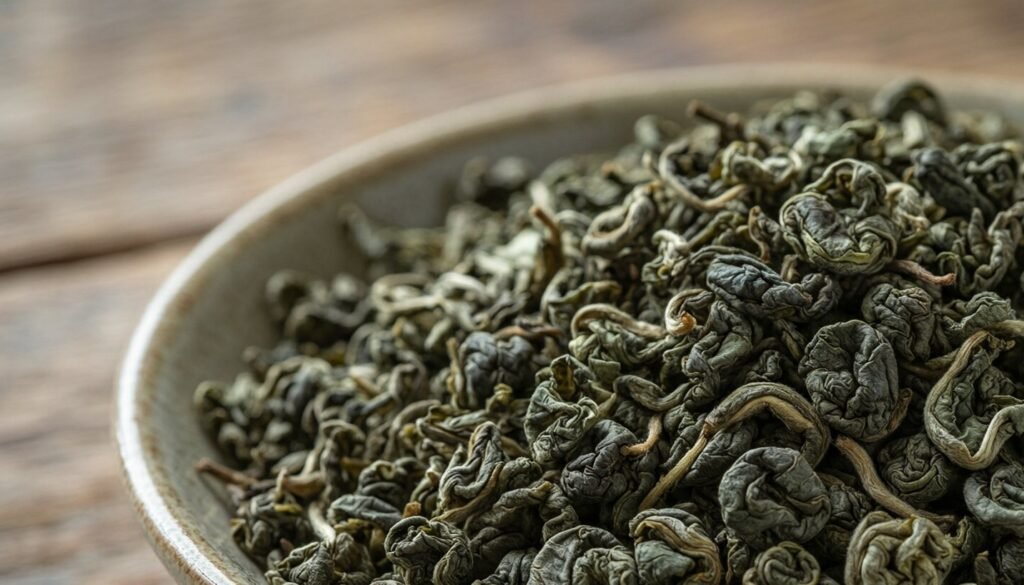
Baishaxi is a tea brand and producer, not a tea cultivar or a grade. The name comes from the Baishaxi area in Anhua County, Hunan Province, a historic dark-tea production region. The factory traces its history to 1939, when it was established as an Anhua dark-tea factory, and it remains closely associated with traditional Hunan hei cha.
Dark tea, under China's national dark-tea standard, is a post-fermented tea made through kill-green, rolling, piling or microbial fermentation, and drying, with some products later compressed into bricks, cakes, or cylinders [1]. That post-fermentation step is what separates dark tea from fully oxidized black tea, which is called "red tea" in Chinese. If a supplier tells you dark tea and black tea are the same thing, that is an immediate red flag.
The key point for buyers is this: Baishaxi dark tea is not one product. The factory and brand span several category lines with different leaf grades, processing methods, compression formats, and aging behavior.
What Baishaxi Dark Tea Is Not
There are five common misconceptions worth clearing up before you evaluate samples.
It is not pu-erh. Both are post-fermented teas, but they come from different regions and traditions. Pu-erh belongs to Yunnan and is usually made from large-leaf varieties, while Anhua dark tea comes from Hunan and has its own piling, pressing, and aging conventions.
It is not all golden-flower tea. Golden flowers are the yellow fungal colonies of Eurotium cristatum and are characteristic of Fu Zhuan brick tea, specifically defined in China's compressed dark-tea standard [2]. Tian Jian, Hei Zhuan, Hua Zhuan, and rolled Qian Liang styles do not reliably carry golden flowers, and their absence is not a defect.
It is not automatically highly aged. Many Baishaxi products sold wholesale are fresh production or lightly aged inventory. Age claims need proof: production date, storage conditions, and batch records. "Old" packaging alone is not evidence.
It is not a single quality level. Baishaxi-like branding can appear on everyday factory production and on limited aged batches. Price differences usually reflect grade, age, compression format, and storage, not just the brand label.
It is not medicine. Dark tea is marketed for digestion and gut comfort, and it does contain tea polyphenols and post-fermentation metabolites, but it is a beverage ingredient, not a treatment. Responsible wholesale language should avoid disease claims.
The Main Baishaxi and Anhua Dark Tea Product Lines
Anhua dark tea is a family of formats. When you source, specify the product line first; asking for "Baishaxi dark tea" without this information often gets you whatever inventory the seller wants to move.
| Product line | Form | What to look for | Common misconception |
|---|---|---|---|
| Tian Jian, Gong Jian, Sheng Jian | Loose leaf, often basket-packed | Clear leaf grade, clean pile smell | Higher-numbered names are not automatically rare |
| Hei Zhuan | Compressed dark brick | Dense brick, dark-brown liquor | Not a pu-erh brick |
| Hua Zhuan | Patterned compressed brick | Clean pressing, readable batch code | The pattern is aesthetic, not proof of quality |
| Fu Zhuan | Brick with golden flowers | Visible golden flowers or lab note for Eurotium cristatum | Golden flower should not be used to describe every dark tea |
| Qian Liang, Bai Liang, Shi Liang | Rolled cylindrical tea | Firm roll, intact wrapping, harvest year | Weight class differences do not all mean the same quality |
How Aging and Storage Actually Work
Dark tea can improve with age, but aging is a storage result, not an automatic guarantee. Good aging smooths the pile flavor, deepens the liquor, and can add woody, herbal, or dried-fruit notes. Bad aging creates mustiness, sourness, staleness, or off odors.
For wholesale inventory, the practical rules are simple: store dark tea in a clean, odor-free environment; keep it away from direct sunlight, damp walls, and strong-smelling goods; allow gentle air exchange but not constant draft; and inspect batches periodically. If compressed tea is wrapped in breathable paper or bamboo, keep that protective layer intact.
Do not pay an aged premium unless the supplier can show the original production year and how it was stored. A twenty-year-old brick kept in a humid, uncontrolled room is usually worth less than a five-year-old brick kept in a clean warehouse.
How to Spot Genuine Baishaxi versus Mislabeled Inventory
Budget for testing, not just tasting. When sampling, request the full product name, production date, batch number, standard code, factory name, and packaging photos. Legitimate compressed dark tea should be traceable to a compliant product standard. Fu Zhuan, for example, falls under its own compressed dark-tea standard [2].
Check the liquor: decent Anhua dark tea should be clear, deep amber to reddish-brown depending on age, with an earthy, sweet, or woody aroma rather than sharp mold or chemical notes. Rinse once and taste the second steep before judging.
Be cautious with prices that look too good for aged Qian Liang or golden-flower bricks. If a seller cannot explain why the price is far below market, the likely explanation is mislabeling, younger tea blended into an aged claim, or poor storage.
If you are comparing product lines and need batch-level specifications, contact our sourcing team at 427728483@qq.com with the formats, grades, and annual volume you are evaluating.
How to Brew Baishaxi Dark Tea Well
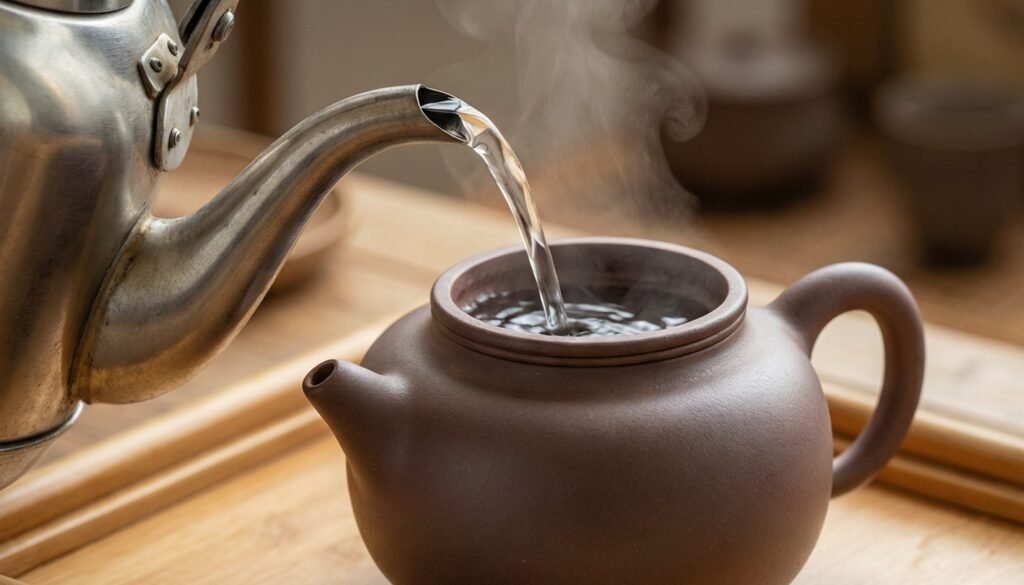
A bad brewing test can make good tea taste flat or sour. Use a thick ceramic gaiwan, a Yixing-style clay pot, or a glazed teapot. Filtered water at a full boil works best for most dark tea.
A practical starting point is 5 grams of tea per 100 ml of water. Rinse quickly once to wake the leaves, then keep initial steeps short, adding time only if the liquor thins. Pressed tea may need a slightly longer first steep after the rinse because the leaves need to open. Taste before lengthening the steep; over-brewing dark tea often produces a flat, papery bitterness.
Sourcing Baishaxi Dark Tea for Wholesale
If you are buying for import, private label, or retail, specify product line, production year, compression format, and expected storage. Ask for batch photos, packing details, and the relevant product standard before committing to a large order. Request samples from the exact batch you will receive, not a showroom sample from a different lot.
For direct inquiry on Baishaxi and Anhua dark tea sourcing, volume pricing, and supplier verification, email 427728483@qq.com and include your target format, grade, quantity, and destination market.
FAQ
Is Baishaxi dark tea the same as pu-erh?
No. Both are post-fermented teas, but Baishaxi dark tea comes from Anhua in Hunan and follows Hunan dark-tea processing and pressing traditions, while pu-erh comes from Yunnan.
Does every Baishaxi dark tea have golden flowers?
No. Golden flowers (Eurotium cristatum) are associated mainly with Fu Zhuan brick tea. Other lines, such as Hei Zhuan, Hua Zhuan, Tian Jian, and Qian Liang styles, generally do not carry golden flowers.
Is older Baishaxi dark tea always better?
Not necessarily. Age can improve flavor when storage is clean and stable, but poorly stored old tea can be musty, sour, or stale. A verified production year and storage history matter more than age alone.
Is Baishaxi a type of tea or a brand?
It is a brand and producer name linked to the Baishaxi area of Anhua County, Hunan. It is not a tea cultivar, a grade, or a regional denomination that covers all Anhua dark tea.
What should wholesale buyers check before ordering?
Confirm the exact product line, production date, batch number, product standard, factory name, packaging condition, and storage details. Cup the specific batch you plan to import before finalizing volume.
Can dark tea replace medication or guarantee weight loss?
No. It is a tea ingredient with characteristic post-fermentation compounds, not a medical treatment. Avoid suppliers who make disease-treatment or guaranteed weight-loss claims.
References
[1] Standardization Administration of China. GB/T 32719.1-2016, Dark tea – Part 1: Basic requirements. Beijing: Standards Press of China, 2016.
[2] Standardization Administration of China. GB/T 9833.3-2013, Compressed dark tea – Part 3: Fu zhuan tea. Beijing: Standards Press of China, 2013.
No author description available.

白玉京