5 Raw Pu-erh Brewing Mistakes That Turn Sheng Tea Harsh
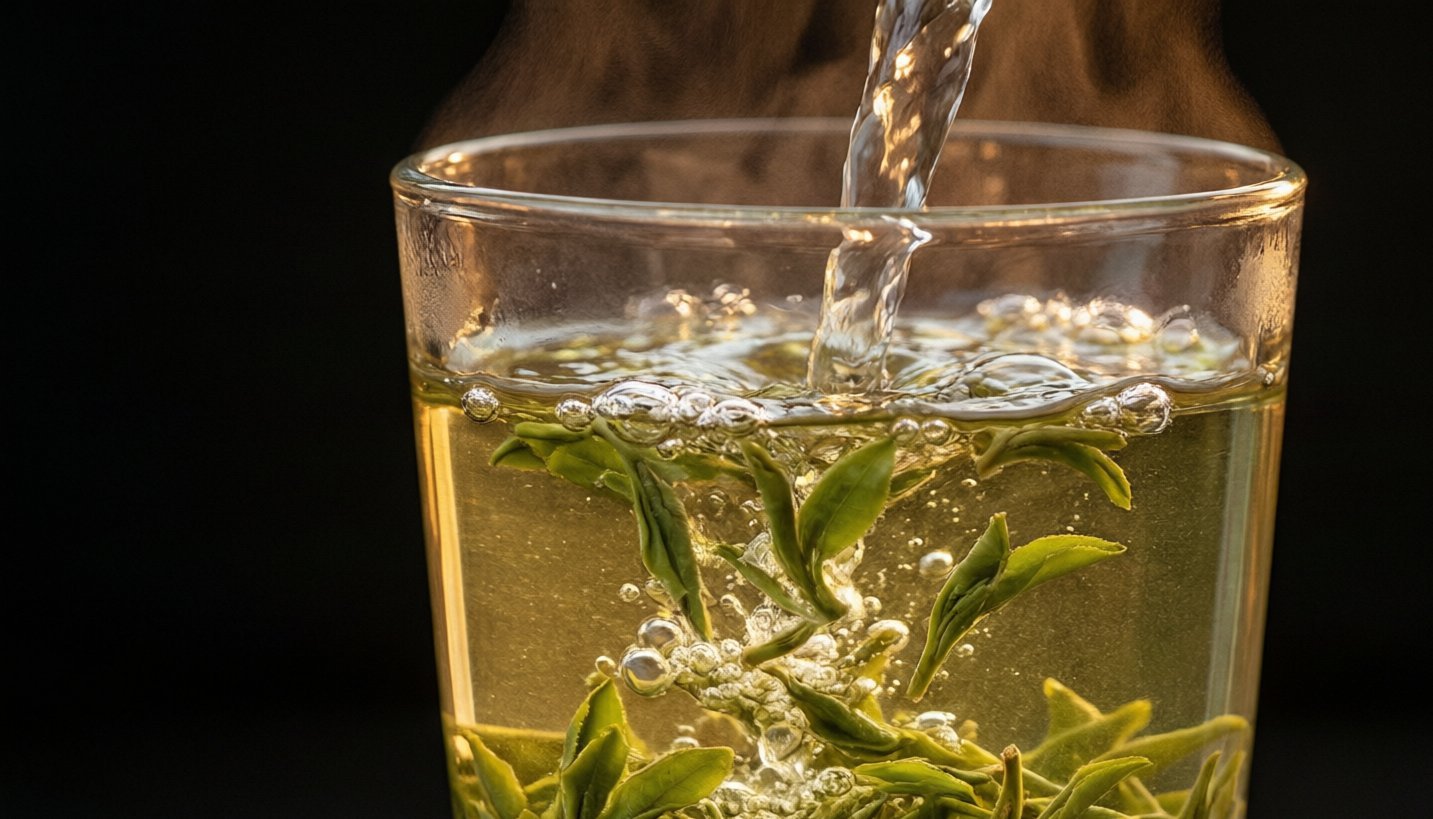
Raw pu-erh, also called sheng cha, punishes loose brewing more than almost any other Chinese tea. Ripe pu-erh can absorb a few extra seconds of heat and still behave. Young raw pu-erh will not: too much heat, too much leaf, or too long a steep turns a floral, bitter-sweet cup into something sharp, dry, and sour. The same tea can also taste flat if the brewer overcorrects and brews it too cold.
The five mistakes below are the ones we see most often when buyers, café staff, and importers move from oolong or black tea into raw pu-erh. Each fix is simple, but each changes the cup more than most people expect [1][2].
Why Raw Pu-erh Punishes Brewing Errors
Raw pu-erh sits between two identities. When young, it is still close to a sun-dried green tea: high in polyphenols, bright, aromatic, and easily over-extracted. Over several years, dry-stored sheng slowly changes through oxidation and light microbial activity, becoming rounder, darker, and more tolerant of heat [1][3].
That dual identity explains most brewing failures. The same water temperature that opens up a 12-year-old raw pu-erh cake can scorch a 2024 spring maocha sample. A rinse that is perfect for aged material can strip the top notes from young sheng. Raw pu-erh does not require ceremony, but it does require a decision about which type of raw pu-erh is in the pot.
The 5 Raw Pu-erh Brewing Mistakes
1. Pouring Boiling Water Straight from the Kettle
Fully boiling water is the most common killer of young raw pu-erh. It releases polyphenols and bitter compounds so fast that the first steep can become aggressively astringent before the sweetness and aroma have a chance to develop.
For raw pu-erh under about three years old, let boiling water rest for 30 to 60 seconds, or use a temperature-controlled kettle set between 90 and 95°C. Aged, dry-stored sheng can handle water at 95 to 100°C because much of its early sharpness has already softened. The practical rule is not complicated: young sheng, cooler water; old sheng, hotter water.
Avoid a related mistake: adding water, waiting, and then pouring more boiling water into the pot to reheat the leaves mid-session. Keep the water temperature steady rather than swinging between hot and cold.
2. Skipping the First Rinse or Letting It Soak
Raw pu-erh should almost always be rinsed once before drinking. The rinse wakes compressed or tightly rolled leaves, removes surface dust, and prepares the leaf for even extraction. Skipping it often produces a first steep that is both murky and uneven: one side of the cup tastes weak while the other tastes bitter.
The more common version of this mistake is rinsing too long. A 20- or 30-second first soak is not a rinse; it is a full first steep. Young raw pu-erh loses much of its best character in those seconds. A correct rinse is short: pour, let the water touch the leaves for about 3 to 5 seconds, then discard it completely.
For tightly compressed cakes, especially aged sheng packed in hard layers, a short double rinse may help. Rinse once, discard, let the leaves rest for a few seconds, then rinse again briefly before the first real steep.
3. Overloading the Leaf and Over-Steeping
Raw pu-erh is intense. Using the same leaf-to-water ratio as a rolled oolong or a whole-leaf black tea often produces a cup that is too strong to evaluate cleanly.
In gongfu brewing, a starting point of 5 to 7 grams per 100 ml of vessel capacity works for most dry-stored raw pu-erh. In a western-style pot, use about 2.5 to 3 grams per 200 ml. These are reference points based on standard tea liquor preparation practice, not fixed rules [2]. The right ratio changes with leaf age, leaf grade, and whether the tea is loose or compressed.
Once the ratio is correct, keep the first real steeps short. For young sheng in a gaiwan, start around 10 seconds and add 5 to 10 seconds per infusion. Let the tea tell you when to adjust: if the cup is thin, add time; if it is aggressively bitter, pull back the ratio or lower the temperature.
If you are sourcing raw pu-erh for a café, hotel, or retail blend and need a lot that cups cleanly at your target parameters, contact Chinese tea suppliers at xuansc2144@gmail.com with your target profile, monthly volume, and brewing format. We will set up a comparative cupping set so the brewing parameters and the material are tested together.
4. Ignoring Material Age and Storage Style
Not all raw pu-erh wants the same treatment. Young maocha, young cakes, dry-stored aged sheng, and wet-stored sheng all extract differently.
A 2024 loose-leaf raw pu-erh from Lincang may taste fresh, floral, and slightly green. It needs cooler water and shorter steeps. A 2010 cake stored in Kunming may be darker, fuller, and more tolerant of heat. A traditionally wet-stored cake from Guangdong or Hong Kong may open with an earthy, cellar-like note and can turn sour if steeped too long.
The mistake is to memorize one raw pu-erh recipe and apply it to every cake in the shop. Instead, read the material first: dry leaf compression, age, storage aroma, and whether the open leaf breaks easily or resists. Then adjust water temperature and steep length by one small step at a time.
5. Using a Stale Pouring Rhythm or the Wrong Teaware
Raw pu-erh responds to pouring rhythm. In gongfu brewing, the water should go in and come out without long pauses. Holding water in the pot too long is functionally the same as over-steeping, even if the timer was set correctly.
Teaware also matters. For young sheng, porcelain, glass, or a thin clay gaiwan preserves the high aromatics and makes it easier to control heat. Thick unglazed clay pots can hold too much heat and strip the delicate top notes. For aged raw pu-erh, a well-used Yixing or similar clay pot can round the liquor and reduce storage roughness, but it should not be used as a shortcut for bad brewing.
If you brew raw pu-erh in a small pot or gaiwan, keep the lid open between infusions so the leaves do not steam. Stewing between steeps is a quiet mistake that flattens the next round.
Quick Brewing Reference for Raw Pu-erh
Use this as a starting point, then adjust based on the specific cake or loose sample.
| Raw pu-erh condition | Water temperature | Gongfu ratio | First rinse | First steep rhythm |
|---|---|---|---|---|
| Young, 0–3 years, dry stored | 90–95°C | 5–7 g per 100 ml | 3–5 s, discard | 10 s, add 5–10 s per infusion |
| Aged, 5+ years, dry stored | 95–100°C | 6–8 g per 100 ml | 5 s, discard | 8–15 s, extend after 4 steeps |
| Wet-stored or traditionally stored | 95–100°C | 6–8 g per 100 ml | 5 s, discard; double rinse if musty | 10–15 s, watch for sourness |
| Young raw pu-erh, western pot | 90–95°C | 2.5–3 g per 200 ml | 3 s, discard | 60–90 s first steep |
Water quality matters as much as temperature. Soft, neutral-tasting water lets raw pu-erh show its sweetness. Hard or heavily mineralized water can make the tea taste rougher and more astringent than it actually is.
Get a Consistent Raw Pu-erh Supply
Most raw pu-erh brewing problems are solved by matching the right material to the right parameters. If your current samples are too harsh, too sour, or too thin no matter how you adjust, the issue may be the lot itself rather than the brewer.
Chinese tea suppliers is a sourcing partner for importers, cafés, and private-label brands that need consistent raw pu-erh across harvests and price points. Contact us at xuansc2144@gmail.com with your target cupping notes, preferred storage style, monthly volume, and packaging format. We will prepare a focused sample set with age, storage, and brewing notes for each tea.
FAQ
Will lower water temperature make raw pu-erh taste weak?
Not if the ratio and steep time are adjusted. Cooler water extracts fewer bitter compounds, so the cup can actually taste cleaner and sweeter. If it becomes thin, add a little more leaf or a few more seconds before raising the temperature.
Should I always rinse raw pu-erh before drinking?
Yes, with a short rinse of 3 to 5 seconds. The rinse removes dust, opens compressed leaf, and prepares the material for even extraction. The key word is short; a long first contact with water is not a rinse.
Can I brew raw pu-erh in a glass teapot?
Glass and porcelain work well for young raw pu-erh because they hold less heat and preserve aroma. For aged raw pu-erh, clay can add body, but a neutral porcelain gaiwan is still the most reliable way to taste the tea accurately.
How many infusions should I expect from raw pu-erh?
A good raw pu-erh brewed gongfu style will usually give 6 to 10 infusions, sometimes more for aged or high-quality material. If the tea collapses after two or three steeps, check the leaf ratio, water temperature, or the quality of the material itself.
Does raw pu-erh need to age before it is enjoyable?
No. Young raw pu-erh can be fresh, floral, and bitter-sweet when brewed with control. Age changes the character rather than simply fixing it. A well-brewed young sheng should not taste punishingly bitter.
References
[1] GB/T 22111-2008, Product of Geographical Indication — Pu'er Tea, General Administration of Quality Supervision, Inspection and Quarantine of China.
[2] ISO 3103:1980, Tea — Preparation of Liquor for Use in Sensory Tests, International Organization for Standardization.
[3] Lv, H.-P., Zhang, Y.-J., Lin, Z., & Liang, Y.-R. (2013). Processing and chemical constituents of Pu-erh tea: A review. Food Research International, 53(2), 608–618.
No author description available.

白玉京