Xigui is one of those Pu-erh names that sounds larger than it is. It is not a mountain range, not a county, and not a processing method. It is a village-level origin in western Yunnan, and that small scale is exactly why the tea commands attention from serious Pu-erh buyers.
Understanding Xigui means understanding a specific piece of the Lancang River valley: how the air moves there, how the old leaf stock behaves, and why nearby tea carried the same broad label does not automatically taste like Xigui.
What Is Xigui Tea?
Xigui tea is raw Pu-erh made from Mengku large-leaf tea trees grown in and around the Xigui natural village. Most production is sun-dried sheng maocha, though a small amount is pressed into cakes, bricks, or dragon balls later. It is not a green tea in the ordinary retail sense, even though premium fresh Xigui can drink with surprising sweetness and fragrance while young [1][2].
Within Lincang, Xigui is frequently mentioned alongside Bingdao as a benchmark for premium raw Pu-erh. The two are quite different in character: Bingdao is usually softer and more immediately sweet, while Xigui tends to be more aromatic and structured, with a quick returning sweetness after an initial bitter edge.
The Exact Origin of Xigui Tea
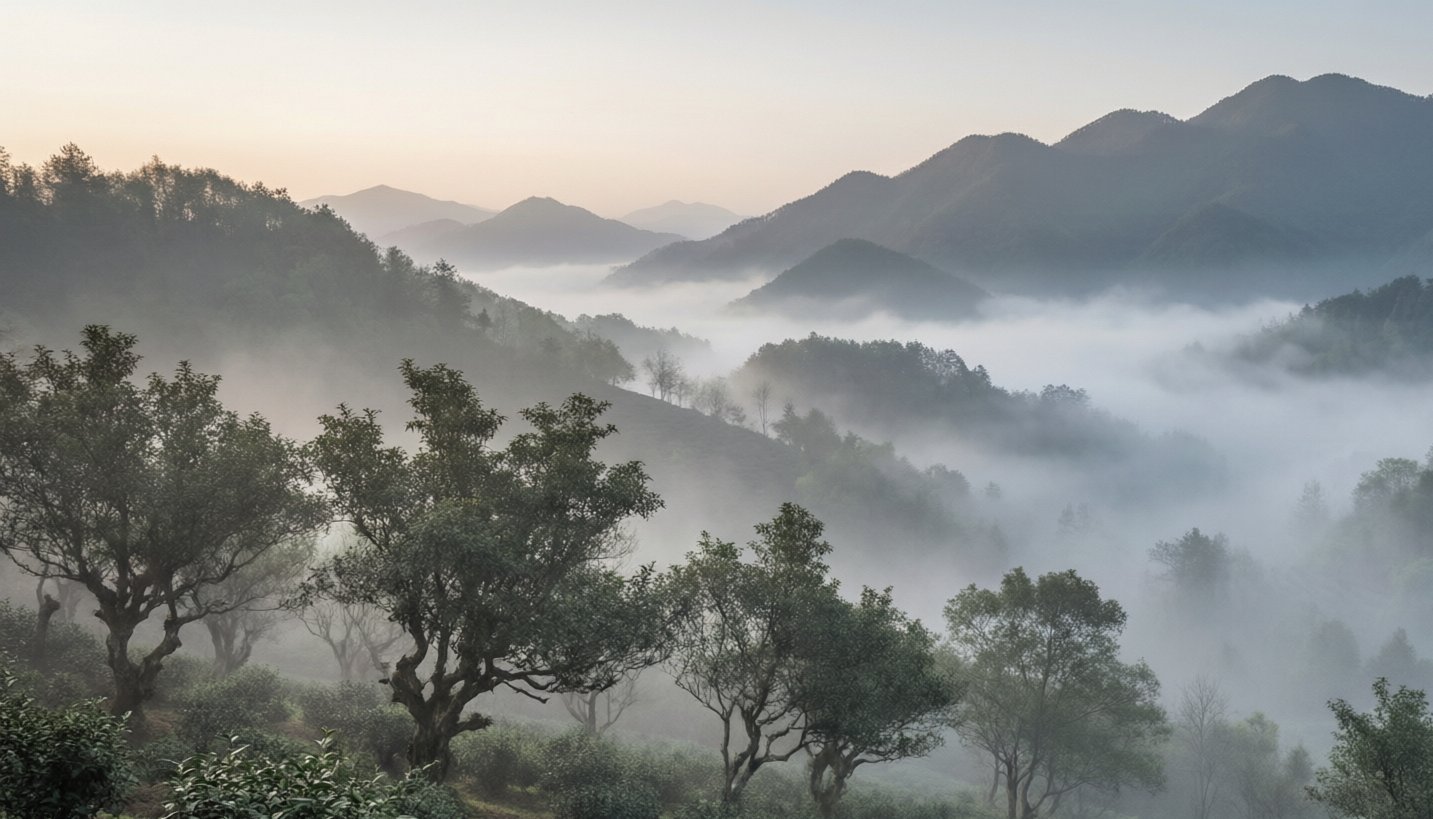
Xigui belongs administratively to Bangdong Township, Linxiang District, Lincang City, Yunnan Province. The tea-producing area lies along the Lancang River, where narrow valleys, high humidity, and forest-edge gardens create a distinctive microclimate [1].
This matters because “Bangdong tea” and “Xigui tea” are not interchangeable. Bangdong is the larger township; Xigui is one specific, highly regarded tea-producing point inside it. Sellers sometimes use the broader name when the material is not from Xigui itself, which is why village-level traceability is the first thing a serious buyer should request.
Xigui is also protected by the wider Pu-erh geographical indication system. Under China’s Pu-erh tea standard, Pu-erh must come from designated production areas in Yunnan, and its raw material must be large-leaf tea processed through specific steps. Xigui sits inside that protected origin scope [2].
Terroir and Why Xigui Tastes Different
Xigui is unusual because it does not rely on extreme altitude to produce premium tea. Many famous Pu-erh areas are marketed as high-mountain gardens, but Xigui’s reputation comes more from river-valley humidity, mature tree stock, and the interaction between the large-leaf cultivar and the local environment [1][3].
The table below summarizes the points that distinguish Xigui in practical sourcing terms.
| Attribute | Xigui profile |
|---|---|
| Chinese name | 昔归 |
| Tea category | Raw Pu-erh, mainly sheng |
| Location | Bangdong Township, Linxiang District, Lincang, Yunnan |
| Official scope | Inside the Pu-erh geographical indication area [2] |
| Cultivar family | Mengku large-leaf tea [3] |
| Growing environment | Lancang River valley, forest-edge gardens, humid microclimate [1] |
| Harvest focus | Spring first flush; limited autumn material |
| Typical character | Strong aroma, dense liquor, pronounced huigan and salivation |
| Common formats | Loose maocha, 200/357/400 g cakes, dragon balls |
| Market role | Lincang premium benchmark often compared with Bingdao |
Spring Xigui generally has the clearest floral top notes and the strongest body. The early spring flush is the reference point most experienced buyers use when evaluating a new lot [4]. Autumn material can be broader and softer, but it usually lacks some of the spring material’s aromatic lift.
How Xigui Tea Is Processed
Like other raw Pu-erh, Xigui moves through five main stages before it reaches a buyer: picking, withering, kill-green, rolling, and sun-drying. The result is maocha. Compression into cakes or bricks is a later, optional step that does not change the tea’s fundamental character [2].
Three processing decisions matter most for Xigui quality. The first is picking standard: top-grade lots use a bud-and-two-leaf or bud-and-three-leaf pluck from mature trees, with minimal broken leaf. The second is kill-green control: too little can leave the tea vegetal and unstable; too much can flatten the signature aroma. The third is sun-drying rather than forced hot-air drying, which preserves more of the tea’s long-term aging potential.
When buyers compare Xigui spring and autumn lots side by side, the spring lot usually shows more top-note floral aroma and faster returning sweetness, while the autumn lot can feel broader but slightly less dense. That side-by-side cupping is the most affordable way to learn the origin premium without committing to a large purchase.
What Genuine Xigui Should Taste Like
Real Xigui is most recognizable in its aftertaste rather than its first sip. The liquor is usually golden and dense, with a pronounced orchid or honey-like aroma. There is often a brief, pleasant bitterness on entry, but it changes quickly into huigan—the returning sweetness at the back of the mouth—along with strong salivation. The finish tends to last longer than the initial flavor, which is one of the reasons aged Xigui has gained a following among collectors.
A tea labeled Xigui that is simply soft, flat, or one-dimensionally sweet from the first sip should be examined carefully. Lower-grade Bangdong teas or blended Lincang material can taste pleasant, but they do not show the same aromatic depth and structured aftertaste [4][5].
How to Buy Xigui Tea Without Getting Burned
The most useful buying rule is to source by village, not by the word “Lincang.” Ask for the specific production point, the harvest season, and the year. If the seller cannot provide those three pieces of information, treat the lot as generic Bangdong or Lincang material rather than as true Xigui.
Second, ask for batch-level documentation. A credible Xigui lot should be traceable to a tea garden or at minimum to a production area inside Bangdong Township. The Pu-erh geographical indication provides a baseline, but it does not by itself prove that the tea is from the Xigui village core [1][2].
Third, evaluate the dry leaf and the liquor together. Mature-tree Xigui often has long, relatively tight strips, visible bud tips, and a clean aroma even before rinsing. After brewing, look for a full mouthfeel and a quick transformation from bitterness to sweetness. Avoid focusing only on fragrance: some heavily aromatic lots have weak body and fading aftertaste [5].
Need to verify Xigui at village level? Send us your target format, quantity, harvest year, and destination market at 427728483@qq.com. We will help you compare current spring lots, storage history, and batch documents before quoting.
Talk to a Xigui Sourcing Specialist
If you are buying Xigui for wholesale, private label, or collection, send the following with your inquiry:
- Format: loose maocha, 200 g cakes, 357 g cakes, or custom pressing
- Harvest: spring, autumn, or aged material
- Quantity and target price range
- Destination market and required compliance documentation
Email 427728483@qq.com with “Xigui sourcing” in the subject line, and include any sample preferences you have.
FAQ
Is Xigui a green tea or Pu-erh?
Xigui is raw Pu-erh. It is made from large-leaf tea and sun-dried after processing, which places it in the Pu-erh category rather than the green tea category [2].
Where exactly is Xigui located?
Xigui is in Bangdong Township, Linxiang District, Lincang City, Yunnan Province. The tea gardens lie along the Lancang River valley in western Yunnan [1].
Why is Xigui tea so expensive?
Expense comes from small production scale, mature tree stock, strong demand, and village-level recognition. Because true Xigui is a narrow origin rather than a broad administrative area, verified material is limited.
How can I verify that the tea is real Xigui?
Request the specific village-level production point, harvest season, and batch documentation. Then cup the tea for the characteristic floral aroma, dense body, and fast huigan. Broad “Lincang” labels should not be accepted as proof of Xigui origin [1][5].
Does Xigui tea age well?
Good raw Pu-erh material generally ages well if stored under stable temperature and humidity. Xigui’s strong structure and long aftertaste make it a common choice for aging, but storage conditions matter more than the label alone.
References
[1] Lincang Municipal People’s Government. “Linxiang District Bangdong Township Xigui Tea Industry Overview.” lincang.gov.cn, accessed 2026. https://www.lincang.gov.cn/
[2] GB/T 22111-2008. Product of Geographical Indication—Pu’er Tea. Standardization Administration of China, 2008.
[3] Tea Research Institute, Yunnan Academy of Agricultural Sciences. “Lincang Large-Leaf Tea Resources and Cultivar Distribution.” yaas.org.cn, 2021.
[4] Lincang Agriculture and Rural Affairs Bureau. “Lincang Tea Harvest and Microclimate Bulletin.” lincang.gov.cn, 2025.
[5] China Tea Marketing Association. “2025 China Tea Production and Market Report.” ctma.com.cn, 2025.