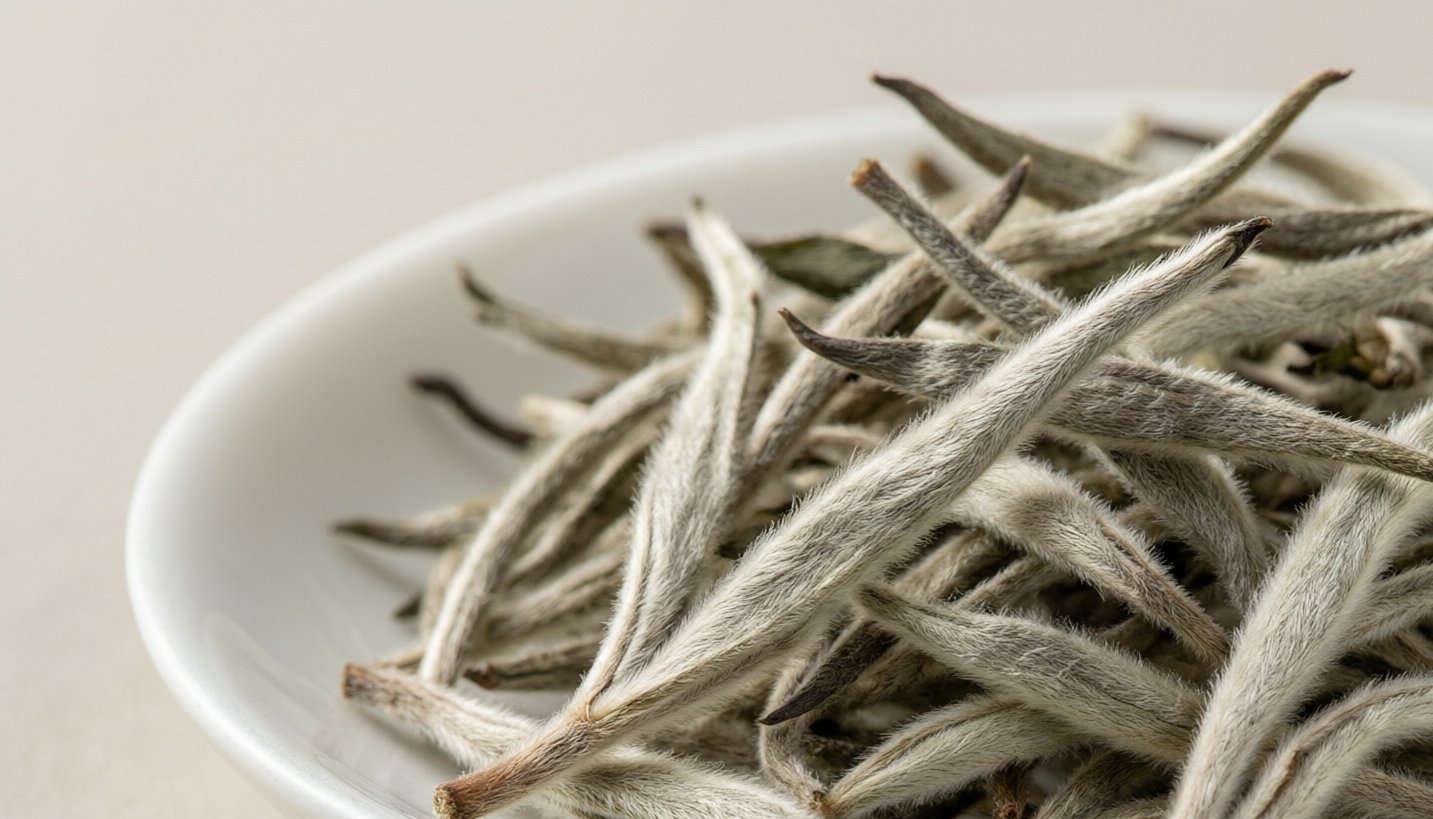
White tea cake is not loose silver needle with different packaging. The pressing changes how water enters the leaf, and a cake’s age changes how quickly flavor releases. Brew it like a loose white tea and you get a thin, flat cup; treat it like raw pu-erh and you can scorch the delicate buds [3]. The five mistakes below are the most common reasons a white tea cake tastes pale, sharp, dusty, or simply disappointing.
The 5 White Tea Cake Brewing Mistakes That Ruin Flavor
1. Waking the cake with boiling water
Tightly compressed white tea needs a gentler start than loose white tea. Boiling water hits the compressed surface hard, over-extracting the broken leaf edges before the inside has opened. Delicate buds and young white tea leaves contain polyphenols and amino acids that turn sharp or bitter when shocked by heat [3]. Start with water around 85°C for a young cake, and let the first rinse be a quick wake-up rather than a full boil.
2. Breaking the cake into chunks instead of flat flakes
How you separate the cake matters as much as the tea itself. A tea knife should slide along the compression layers and lift thin, flat flakes. Chunks under-extract on the outside and over-extract where water has already forced its way in. The result is a cup that tastes weak at first and harsh later. Flat flakes open evenly and give you more balanced infusions.
3. Guessing the dose instead of calibrating for compression
A compressed cake extracts more slowly than loose leaf of the same weight on the first infusions, so both under-dosing and overpacking are common. The ISO sensory method uses 2 g of tea per 100 ml as a neutral comparison baseline [2], but that is a testing standard, not a brewing rule. For a tightly pressed white tea cake, start with enough flat flakes to make a light single layer in the bottom of a gaiwan, then adjust by taste rather than by habit.
4. Over-steeping early rounds because the liquor looks light
White tea cake often brews pale in the first infusions. Pale color does not mean the cup is empty. If you add a minute or two because the liquor looks weak, you will pull out a dusty, woody, or astringent character. Start with short infusions of about 10–15 seconds, pour completely, and trust the second and third rounds to build body.
5. Ignoring age and compression level when setting time and temperature
Not all white tea cakes brew the same way. A young, loosely pressed cake behaves more like a fresh loose white tea. An older, tightly pressed cake can need slightly hotter water and longer rest time between rinses. The national standard for compressed white tea defines the category and its basic forms, but the brewing curve still depends on the specific cake in front of you [1]. Always ask the supplier about pressing date, compression level, and storage before setting a fixed recipe.
Not sure where your cake falls? That is the most useful question to resolve before you buy. Our team at Chinese tea suppliers regularly helps buyers calibrate starting brew profiles for white tea cakes from Fuding and other production areas. Send a photo of the cake, wrapper details, or pressing date to 427728483@qq.com and we will reply with a practical starting point.
A Better Brewing Routine for White Tea Cake
Use one single layer of flat flakes for your vessel.
- Warm the gaiwan or teapot first.
- Rinse the flakes briefly with water around 85°C, then pour off and rest for 30 seconds.
- Start the first real infusion at 10–15 seconds for younger cakes.
- Add about 5 seconds per round after the third infusion.
- If the tea turns sour, bitter, or drying, reduce heat or time before adding more leaf.
Get White Tea Cake That Brews Clean
A well-pressed white tea cake should release honey, hay, light florals, and soft sweetness over several infusions. If you are sourcing cakes, ask for these before ordering:
- Pressing date and storage history
- Compression level and leaf grade
- A recommended starting brewing ratio from the supplier
- A sample for cupping before a full case order
Contact Chinese tea suppliers at 427728483@qq.com with your needs, and ask for a white tea cake sample set with brewing guidance.
Frequently Asked Questions About Brewing White Tea Cake
What water temperature should I use for white tea cake?
Start around 85°C for young white tea cakes. Older or tightly pressed cakes can often handle slightly hotter water, but boiling water is rarely the best starting point.
How much white tea cake should I use per cup?
Use a light single layer of thin, flat flakes rather than a fixed weight for your first session. The exact amount depends on compression, age, and vessel size, so adjust by taste after the first two infusions.
Should I rinse white tea cake before brewing?
Yes. A brief rinse around 85°C helps open the pressed flakes and removes surface dust. Pour the rinse off quickly and let the leaves rest before the first real infusion.
Can I brew white tea cake western-style?
You can, but the results are usually less balanced. Western-style brewing uses longer contact time, which can pull harsh notes from compressed white tea. Short, repeated infusions give you more control.
Does older white tea cake need hotter water?
Often, but not always. Older cakes are usually more mellow and can benefit from a few degrees more heat or a longer rest after the rinse. Taste the first two infusions before changing temperature.
References
[1] GB/T 31751-2015, “Compressed white tea,” Standardization Administration of the People’s Republic of China, Beijing, China, 2015.
[2] ISO 3103:1980, “Tea — Preparation of liquor for use in sensory tests,” International Organization for Standardization, Geneva, Switzerland, 1980.
[3] Y. Hilal and U. H. Engelhardt, “Characterisation of white tea—Comparison to green and black tea,” J. Verbr. Lebensm., vol. 2, no. 4, pp. 414–421, 2007.