Tieguanyin aged tea is not a single product with one storage rule. A tightly rolled, lightly roasted Tieguanyin behaves differently from a mature Chen Xiang Tieguanyin that has been re-roasted over several years. If you are asking how to store Tieguanyin aged tea so it stays fresh, the practical answer is: keep it sealed against moisture and kitchen odors, hold it at a cool, dark, stable temperature, and control air exchange instead of letting the leaves sit in an open canister.

Why Aged Tieguanyin Stores Differently from Fresh Tieguanyin
Fresh jade-style Tieguanyin is usually vacuum-packed and refrigerated because its green floral character is fragile. Aged Tieguanyin — often called Lao Tieguanyin or Chen Xiang Tieguanyin — has already gone through slow oxidation and repeated low-temperature roasting. Its appeal is the deepened roast, dried fruit, mineral, and honeyed body rather than the high green aroma.
For aged Tieguanyin, the storage goal is stability: preserve the roast character, prevent moisture pickup, and avoid cross-contamination. The Anxi Tieguanyin product standard sets grade-specific requirements for appearance, moisture, and sensory character [1]. In a warehouse or retail stockroom, holding the tea close to the condition it left the factory matters more than trying to “age” it quickly.
The Storage Rules That Matter
Seal and portion
Air is the biggest risk in day-to-day storage. Oxygen slowly softens roast aromatics, while repeated opening exposes the leaf to humidity. Keep working inventory in smaller, well-sealed packs and leave the master lot untouched. A 250 g pouch opened every day loses character faster than the same tea portioned into four 60 g packs.
Keep it dark
Light accelerates browning and breaks down delicate aromas. Use opaque canisters or keep clear packaging inside a closed cabinet. This is especially important for retail display: a well-lit shelf can fade a tea’s top notes in weeks.
Manage moisture
Tea is hygroscopic. It picks up moisture from ambient air, which can lead to flat flavor and, past a threshold, mold risk. Most tea storage guidance targets a stable relative humidity in the 50–60% range for aged oolong, with no condensation inside the container [2]. If the stockroom is humid, use a dehumidifier and monitor the room rather than relying on small desiccant packets inside each retail pack.
Isolate odor
Aged Tieguanyin’s roasted and fruity profile easily absorbs nearby smells. Do not store it next to spices, coffee, smoked teas, cleaning chemicals, or heavily aromatic dark teas unless each lot is independently sealed. Even a shared shelf can transfer odor through thin packaging over time.
Keep temperature stable
A cool room is better than a warm, fluctuating one. In practical warehouse terms, 10–25°C is a workable band for aged Tieguanyin. Avoid placing tea near ovens, radiators, windows, or shipping doors where temperature swings create condensation. Stability is more important than chasing an exact number for most buyers [3].
Choosing the Right Container
Container choice depends on how long you plan to hold the tea and how often you open it.
| Container | Best use | Notes |
|---|---|---|
| Glazed ceramic jar with inner lid | Long-term aging and display | Stable, breathable enough for slow maturation; keep away from damp walls |
| Food-grade tinplate canister | Daily working stock | Strong light and odor barrier; check the inside coating |
| Aluminum foil pouch, heat-sealed | Portioning and export packs | Excellent moisture barrier; avoid punctures and crushed seals |
| Porcelain jar with a tight-fitting lid | Medium-term retail storage | Neutral material, no aroma transfer |
| Clear glass jar | Short-term display only | Poor light protection; keep in a closed cabinet |
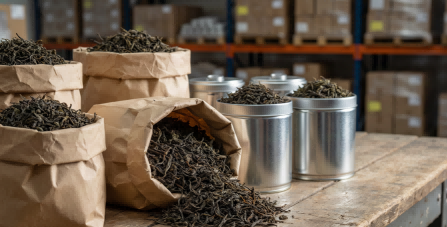
For long-term aging, many Anxi producers and collectors prefer a glazed ceramic or stoneware vessel because it allows very slow air exchange without creating a damp microclimate. For export and wholesale, the more reliable choice is a heat-sealed aluminum foil pouch inside a rigid carton. The outer carton protects the barrier film from handling damage.
Need wholesale storage specs? If you are bringing in aged Tieguanyin by the carton, send the lot size, current packaging, and destination climate to 427728483@qq.com and ask for a storage and shelf-life recommendation before you commit. This is faster than correcting moisture pickup or flat aroma after the tea has landed.
Long-Term Aging vs Short-Term Freshness
Decide first whether you are holding the tea to sell soon or to age deliberately.
For short-term freshness, use the most impermeable packaging available and open as little as possible. Once a retail pack is opened, aim to use it within 60–90 days for the strongest aroma, or transfer the remainder into a smaller tin so the leaf is not sitting in a large airspace.
For intentional aging, the rules shift slightly. Some slow oxygen exchange helps round the roast and deepen the body, but uncontrolled airflow leads to stale, papery notes. Keep the tea around 50–60% RH, avoid large temperature swings, and check the leaf periodically for dryness, aroma, and any off notes. Aging should be a controlled stock rotation, not neglect.
Common Storage Mistakes
Watch for these in warehouses, tea shops, and home storage.
- Storing next to strong odors. Roasted teas pick up smoke, spice, and coffee notes quickly.
- Refrigerating aged Tieguanyin as if it were fresh jade Tieguanyin. This can introduce condensation and stall the tea’s intended rounded profile.
- Leaving a large tin half-empty. More air volume means faster aroma loss and more moisture exchange.
- Storing directly against a wall or on a concrete floor. This creates a cooler surface where moisture can condense around the packaging.
- Ignoring the shipping container on arrival. If cartons arrive cold or damp, let them stabilize in a dry room before opening the inner packs.
Source Aged Tieguanyin That Stores Well
Storage begins before the carton leaves the warehouse. A lot that is already too wet, unevenly roasted, or poorly sealed at origin will not improve in your stockroom. When you request samples, ask for the moisture content, harvest year, roast notes, and recommended storage window — then store against those specs from day one.
For wholesale lots of Anxi Tieguanyin and aged oolong, contact Chinese tea suppliers at 427728483@qq.com with your target pack size and market. Our team can match a lot that arrives stable and holds its aroma, body, and resale value through your sales cycle.
FAQ
Should Tieguanyin aged tea be refrigerated?
No routine refrigeration is needed for aged Tieguanyin. Fresh jade-style Tieguanyin often benefits from cold storage, but aged and re-roasted Tieguanyin should be held at a cool, stable room temperature. Refrigeration can create condensation when the pack is opened and disturb the tea’s roasted balance.
What is the best container for long-term Tieguanyin aged tea storage?
A glazed ceramic jar with an inner lid works well for controlled aging, while a food-grade tinplate canister or heat-sealed aluminum foil pouch is better for daily working stock and export portions. The key is a good seal plus protection from light and odor.
How long does opened Tieguanyin aged tea stay fresh?
Aim to use an opened pack within 60–90 days for the fullest aroma. Portion larger quantities into smaller sealed packs so the rest of the lot is not repeatedly exposed to air and humidity.
What humidity level is safe for Tieguanyin aged tea?
A stable relative humidity of roughly 50–60% is a practical target. Below 40% the leaf can become brittle and lose some aromatic presence; above 70% the risk of mold and flat character rises sharply.
Can Tieguanyin aged tea be stored with other oolongs?
Only if the other teas share a similar roast level and clean character, and each lot is independently sealed. Do not store aged Tieguanyin alongside smoked or heavily fermented teas, coffee, spices, or cleaning materials without a strong barrier.
Does Tieguanyin aged tea improve with more air exposure?
No. Slow, limited oxidation is part of traditional aging, but open, uncontrolled air exchange flattens roast aromatics and introduces moisture and odor risk. Keep the tea mostly sealed, and monitor it periodically if aging deliberately.
References
[1] General Administration of Quality Supervision, Inspection and Quarantine of the People’s Republic of China. GB/T 19598-2006, Product of geographical indication — Anxi Tieguanyin tea. Beijing, 2006.
[2] International Organization for Standardization. ISO 20715:2023, Tea — Classification of tea types. Geneva, 2023.
[3] Tocklai Tea Research Institute. Tea storage and packaging guidelines. Jorhat, Assam.