Taiwan high mountain tea (gaoshan cha) is often marketed as a single category, but it actually spans several distinct mountain ranges, each with its own altitude band, microclimate and cup character. For buyers sourcing this tea in bulk, the practical question is not just where it comes from, but how to verify that a lot truly deserves the name. This guide maps the producing regions, explains why altitude matters, and gives B2B buyers a checklist for confirming origin before they commit to a contract.
What Actually Counts as Taiwan High Mountain Tea?
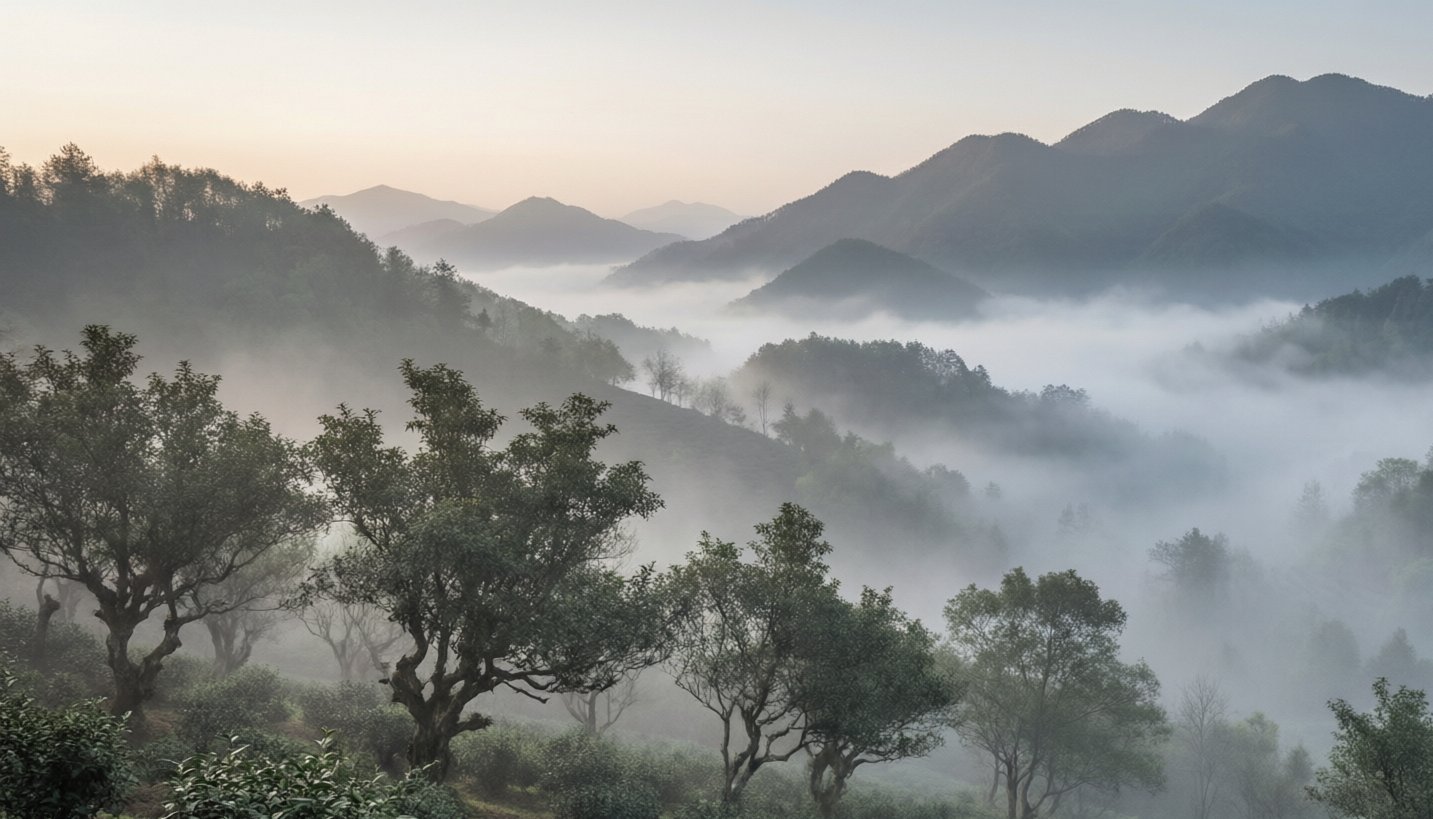
Taiwan’s tea industry generally defines high mountain tea as oolong grown at elevations of 1,000 meters or above [1]. Below that line, teas are usually classified as lowland or mid-elevation oolong. The distinction is not cosmetic. At higher elevations, cooler temperatures slow leaf growth, concentrating amino acids and aromatic compounds while keeping catechin levels relatively low. That shift is what gives high mountain oolong its signature floral, buttery, high-mountain “yun” character [3].
The dominant cultivar across most high mountain gardens is Qingxin (Chin Shin) Oolong, sometimes written as Qingxin Wulong. Jin Xuan, known for its milky aroma, appears in some Alishan and lower-elevation plantings but is less common above 1,600 meters [1]. Buyers should always ask which cultivar a lot contains, because cultivar affects both price and flavor more than many importers expect.
The Main Producing Regions
Taiwan high mountain tea is not spread evenly across the island. Production clusters in a handful of central and southern mountain areas, each with a recognisable profile.
| Region | Elevation range | Primary cultivar | Typical cup character |
|---|---|---|---|
| Alishan (Chiayi) | 1,000–1,500 m | Qingxin Oolong, some Jin Xuan | Floral, light body, approachable |
| Shanlinxi (Nantou) | 1,200–1,800 m | Qingxin Oolong | Green floral, creamy finish |
| Lishan (Taichung) | 1,600–2,200 m | Qingxin Oolong | Thick, orchid, long aftertaste |
| Dayuling (Hualien/Taichung border) | 2,200–2,500 m | Qingxin Oolong | Intense high-mountain aroma, rare |
| Yushan (Nantou/Chiayi) | 1,200–1,800 m | Qingxin Oolong | Clean, crisp, mineral |
Dayuling is often the most expensive because its plantable area is small, access is difficult, and weather risk is high [2]. Lishan and Dayuling lots frequently sell out before the spring harvest even finishes, which is why forward contracts and long-standing farm relationships matter for importers.
Why Origin Determines Price
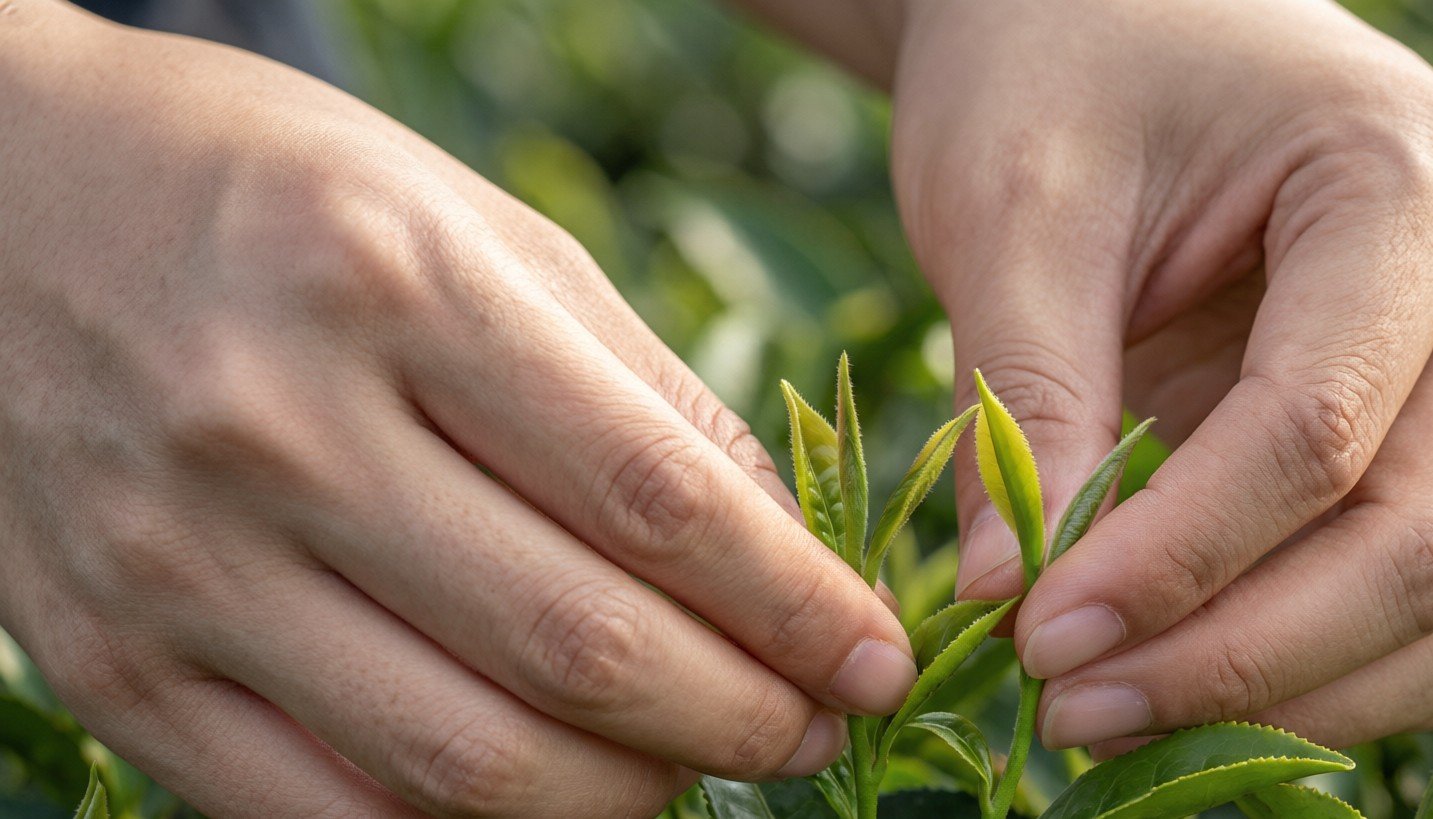
Three factors push high mountain tea prices far above lowland oolong. First, labor: steep slopes mean hand-picking is the only option, and skilled pickers are in short supply [2]. Second, weather risk: spring frosts, typhoons and fog-bank shifts can wipe out a single garden’s entire flush. Third, domestic demand: Taiwan’s own specialty tea market absorbs a large share of top-tier high mountain lots before exporters can access them [5].
For buyers, this means that unusually cheap “Dayuling” or “Lishan” offers are usually a sign of mislabeling. A verified lot from a named producer, with a harvest date and elevation documented, will always carry a premium. That premium is not marketing; it is the cost of scarcity.
How to Verify an Authentic High Mountain Tea Lot
Authentication is the biggest risk in this category. Lowland oolong is sometimes re-labelled as high mountain, or Alishan tea is sold as Lishan. Buyers should require at least four pieces of evidence:
- Garden or producer name. A legitimate lot can be traced to a specific farm or cooperative, not just a vague “Taiwan high mountain” label.
- Elevation and harvest date. Spring and winter harvests are the main commercial flushes; a missing harvest date is a red flag.
- Origin certificate or export documentation. Taiwan’s traceability systems and export records should match the invoice description [4].
- Physical leaf check. High mountain leaves are often thicker, with tighter rolling and a brighter green appearance, though this alone is not conclusive.
Working with a supplier who cups the tea before shipment is the fastest way to avoid origin fraud. Request a pre-shipment sample and compare it against the lot’s documented elevation and cultivar.
Sourcing Taiwan High Mountain Tea for B2B Buyers
For importers, Taiwan high mountain tea is a low-volume, high-margin category that rewards direct relationships over spot-market buying. Typical MOQs for single-garden lots range from 20 to 60 kg depending on the region and grade, while blended high mountain oolong can be offered in larger volumes [5].
Seasonality drives supply. Spring harvest runs roughly from late March to early May depending on elevation, and winter harvest from late October to November. If you want named-origin lots, plan contracts at least three months before the harvest. For generic “Alishan-style” oolong, year-round purchasing is easier but authenticity questions multiply.
Mid-body inquiry: if you are comparing high mountain oolong suppliers, send your target region, volume and price band to 427728483@qq.com. We can provide current harvest availability, cupping notes and documented origin details before you commit.
FAQ
Is all Taiwan oolong high mountain tea?
No. Taiwan produces many oolong styles, including Dongding, Oriental Beauty and Baozhong, most of which grow below 1,000 meters. High mountain tea is a specific subcategory defined by elevation and cultivar [1].
What is the highest Taiwan high mountain tea region?
Dayuling, at approximately 2,200–2,500 meters, is generally considered the highest commercial tea-growing area, followed closely by select Lishan gardens [2].
Which cultivar is used for most high mountain oolong?
Qingxin Oolong is the dominant cultivar. Jin Xuan appears in Alishan and lower elevations but is less common above 1,600 meters [1].
Why is Alishan tea cheaper than Lishan or Dayuling?
Alishan has more plantable area, a lower average elevation and a broader supply base. Lishan and Dayuling have smaller gardens, higher elevations and stronger domestic demand, which pushes prices up [5].
Can lowland tea be passed off as high mountain?
Yes, and it happens frequently. Twisted or heavily rolled leaves, vague origin claims and unusually low prices are common warning signs. The most reliable protection is a documented garden name, elevation and harvest date.
References
[1] Taiwan Tea Research and Extension Station. Cultivation and Processing of High Mountain Oolong Tea: Technical Guidelines. 2022.
[2] Council of Agriculture, Executive Yuan. Taiwan Tea Industry Production and Trade Statistics 2023.
[3] Chen, Y.-C., et al. “Effect of Elevation on Chemical Composition and Sensory Quality of Oolong Tea.” Journal of Food Science, vol. 86, no. 4, 2021, pp. 1520–1530.
[4] Taiwan External Trade Development Council. Taiwan Tea Export Guide and Traceability Handbook. 2022.
[5] USDA Foreign Agricultural Service. Taiwan Tea Annual Report 2023. GAIN Report TW2023-0036.
Ready to source Taiwan high mountain oolong with documented origin? Contact us at 427728483@qq.com with your target region, volume and harvest preference. We supply verified lots from Alishan, Shanlinxi, Lishan and Dayuling, and provide cupping notes and origin documentation with every shipment.