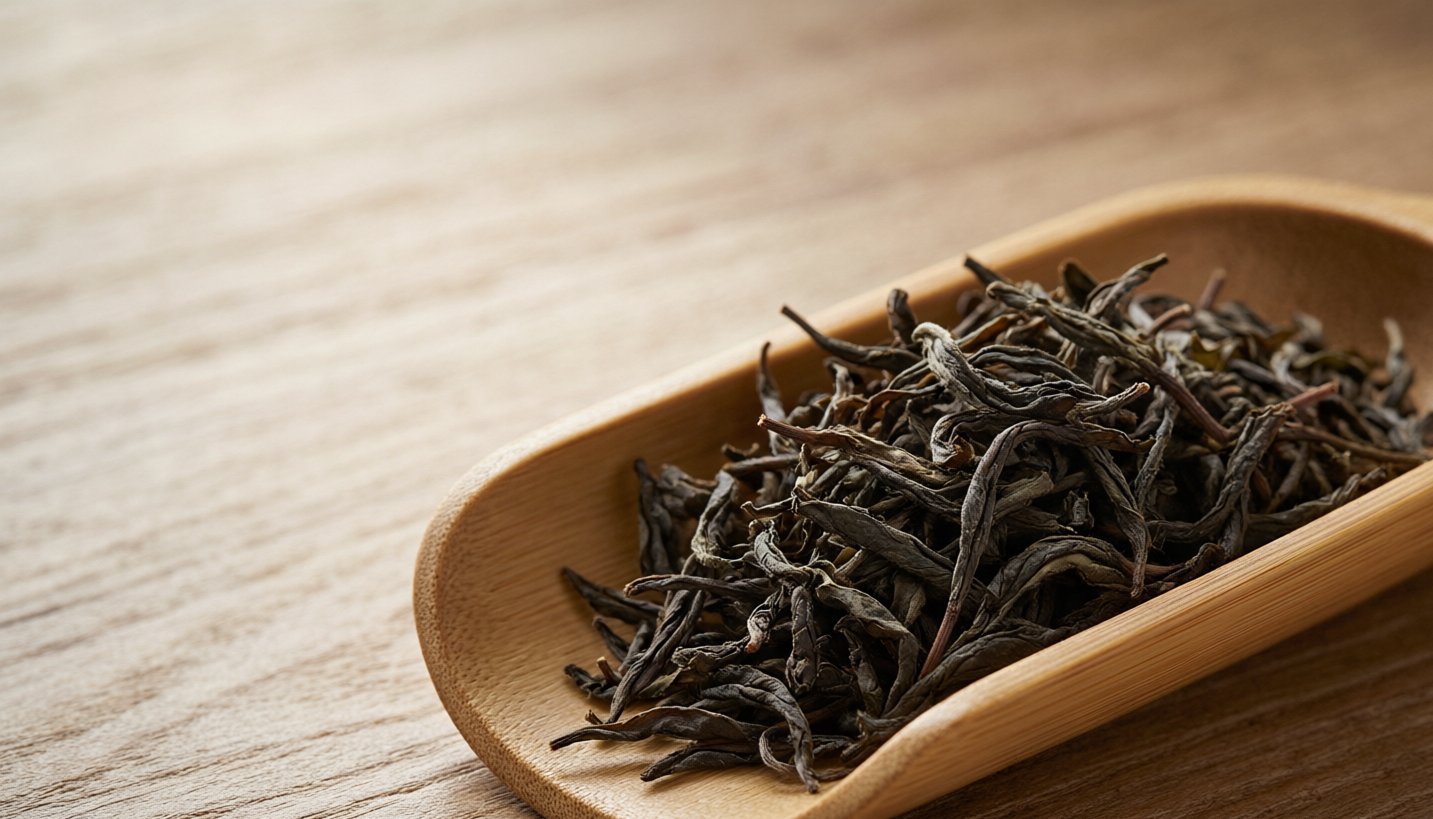
Steamed green tea — from Hubei’s Enshi Yulu to Japanese sencha — is often sold as a detoxifying, fat-burning, longevity-promoting drink. The reality is more specific and less dramatic. Steamed green tea does contain compounds with plausible health effects, but many of the most aggressive claims surrounding it outrun the clinical evidence.
All green tea comes from Camellia sinensis. The key difference is fixation, or “kill-green.” Steamed teas are treated with high-temperature steam to stop enzymatic oxidation quickly, which protects the bright green color and helps the leaf retain a higher share of its catechins [1]. Those catechins — especially epigallocatechin gallate, or EGCG — are the most-studied compounds behind green tea health claims. Caffeine and L-theanine also contribute [1].
Why Steaming Changes the Health Profile
Steaming affects tea chemistry in two main ways. First, rapid steam denatures polyphenol oxidase, the enzyme responsible for browning. Second, short steam exposure may preserve native catechins better than slower firing methods [1].
However, “helps preserve” is not the same as “proven healthier.” Catechin content also depends on cultivar, plucking standard, harvest season, and how the tea is brewed. The clearest difference from steaming is sensory: steamed green tea tends to taste more vegetal, marine, and umami-driven than pan-fired green tea.
What the Evidence Actually Supports
Heart and Blood Vessel Health
Observational data suggest that regularly drinking green tea is associated with a lower risk of cardiovascular death in tea-drinking populations. In the Ohsaki cohort study in Japan, people who drank more green tea — with the strongest association at five or more cups per day — had lower cardiovascular disease mortality than people who drank less than one cup daily [4].
That is an association, not proof that steamed green tea prevents heart disease. But cardiovascular research is where the population-level signal is strongest.
Weight Management: Modest, Not Miraculous
A Cochrane review found that green tea preparations produced a small, statistically significant reduction in body weight compared with placebo in overweight or obese adults. The effect existed, but it was not large enough to be clinically meaningful for most people [3].
Green tea is not a standalone weight-loss treatment. It may sit usefully inside an overall diet and exercise plan, but it is not a metabolic switch.
Mental Alertness
Green tea contains caffeine and L-theanine, a combination that may support calm, sustained attention [1]. This effect is plausible and reasonably well accepted, but it is not unique to steamed tea. Ordinary brewed green tea delivers the same caffeine chemistry.
Where the Hype Outpaces the Data
Detox
No clinical trial demonstrates that green tea “detoxifies” the body in the way wellness marketing implies. Detoxification is a normal liver and kidney function, not something tea performs as a targeted intervention [5].
Cancer Prevention
Laboratory studies have produced interesting results with catechins, but human evidence is mixed and has not supported broad cancer-prevention claims [5]. Agencies and specialist health organizations have not endorsed green tea as a cancer prevention treatment.
Fat-Burning and Thermogenesis
Green tea catechins and caffeine may slightly increase energy expenditure, but the overall effect on body weight is small [3]. Any realistic benefit comes from the whole beverage and regular use, not from a single “fat-burning” compound.
Supplement Extracts vs. Brewed Tea
High-dose green tea extracts — especially concentrated EGCG supplements taken on an empty stomach — have been linked to rare liver injury in safety assessments [2]. This is primarily a supplement issue rather than a brewed-tea issue.
Steamed vs. Pan-Fired: Does the Health Difference Matter?
Steaming can be a more efficient way to retain catechins during processing, at least mechanistically [1]. But there are no large human outcome trials demonstrating that steamed green tea is clearly healthier than pan-fired green tea [5].
In practice, a supplier’s processing method should be treated as a flavor and quality point, not a health promise. Buyers should choose steamed or pan-fired tea based on taste, product positioning, and batch consistency.
How Much and How to Choose
In long-term cohort studies, the strongest health signals appear with several cups per day rather than occasional use, but more is not universally better [4]. Brewed tea is generally well tolerated; concentrated green tea extracts carry different risks, especially for the liver [2].
A practical stance is that 3–5 cups of brewed steamed green tea falls within the range frequently studied, subject to caffeine tolerance and individual medical advice.
Sourcing tip: ask for evidence, not adjectives
For wholesale buyers, the easiest way to avoid health hype is to ask for product-level documentation instead of marketing text. A serious supplier should be able to provide cultivar, harvest date, pesticide residue test results, and — when a health position matters — a catechin or polyphenol specification.
Our team at Chinese tea suppliers helps buyers compare steamed green tea lots on these technical points, not on miracle claims. Contact us at 427728483@qq.com for origin and lab-supported sourcing options.
Get the Right Steamed Green Tea for Your Market
If your retail or private-label line needs a steamed green tea — from Enshi Yulu to other steamed green styles — we can help you build an offer around transparent origin, fresh-harvest quality, and lab reports. Email Chinese tea suppliers at 427728483@qq.com and tell us your target format, volume, and market.
Frequently Asked Questions
Is steamed green tea healthier than pan-fired green tea?
Not in a way that is clearly proven. Steaming may help preserve catechins during processing [1], but there are no strong human trials showing steamed tea is healthier overall [5]. Choose the style for flavor and product goals.
Does steamed green tea help you lose weight?
Only modestly. A Cochrane review found that green tea preparations produced a small, statistically significant reduction in body weight compared with placebo in overweight or obese adults, but the effect was not clinically meaningful for most people [3].
Is “detox” a real benefit of steamed green tea?
No. There is no clinical evidence that any green tea performs a bodily “detox” in the way wellness marketing claims. The liver and kidneys handle detoxification continuously on their own [5].
How much steamed green tea is safe to drink daily?
Brewed green tea is generally safe for most adults at several cups per day, but no single number fits everyone because caffeine tolerance varies. High-dose green tea extract supplements are different and have been associated with rare liver injury [2].
Should I take green tea extract instead of drinking tea?
Usually not for health promotion. Concentrated extracts, especially when taken on an empty stomach, carry a documented risk signal for liver injury [2]. The strongest population data relate to brewed tea consumed regularly [4], not isolated supplements.
References
[1] J. V. Higdon and B. Frei, “Tea catechins and polyphenols: health effects, metabolism, and antioxidant functions,” Critical Reviews in Food Science and Nutrition, vol. 43, no. 1, pp. 89–143, 2003.
[2] EFSA Panel on Food Additives and Nutrient Sources added to Food (ANS), “Scientific opinion on the safety of green tea catechins,” EFSA Journal, vol. 16, no. 4, e05239, 2018. https://efsa.onlinelibrary.wiley.com/doi/10.2903/j.efsa.2018.5239
[3] T. M. Jurgens, A. M. Whelan, L. Killian, S. Doucette, S. Kirk, and E. Foy, “Green tea for weight loss and weight maintenance in overweight or obese adults,” Cochrane Database of Systematic Reviews, no. 12, CD008650, 2012. https://doi.org/10.1002/14651858.CD008650.pub2
[4] S. Kuriyama, T. Shimazu, K. Ohmori, N. Kikuchi, N. Nakaya, Y. Nishino, Y. Tsubono, and I. Tsuji, “Green tea consumption and mortality due to cardiovascular disease, cancer, and all causes in Japan: the Ohsaki study,” JAMA, vol. 296, no. 10, pp. 1255–1265, 2006. https://doi.org/10.1001/jama.296.10.1255
[5] National Center for Complementary and Integrative Health, “Green Tea,” U.S. Department of Health and Human Services. https://www.nccih.nih.gov/health/green-tea