Single-origin tea comes with a place, a harvest date, and a story. Blended tea comes with a formula, a flavor target, and a supply chain. Both can build strong brands — but they build different kinds of brands. For importers and private-label buyers working with Chinese tea suppliers, the decision is not which one is better. It is which one matches your margin model, your buyer, and your operational reality.
What “Single-Origin” and “Blended” Actually Mean
A blended tea is assembled from leaves of more than one origin, harvest, or grade to hit a consistent target. Blending is a standard industry practice for maintaining a repeatable product against a defined specification [1]. The blend can be simple — several lots of one tea type from different gardens — or complex, such as a flavored tea with a fixed base, aroma, and finish.
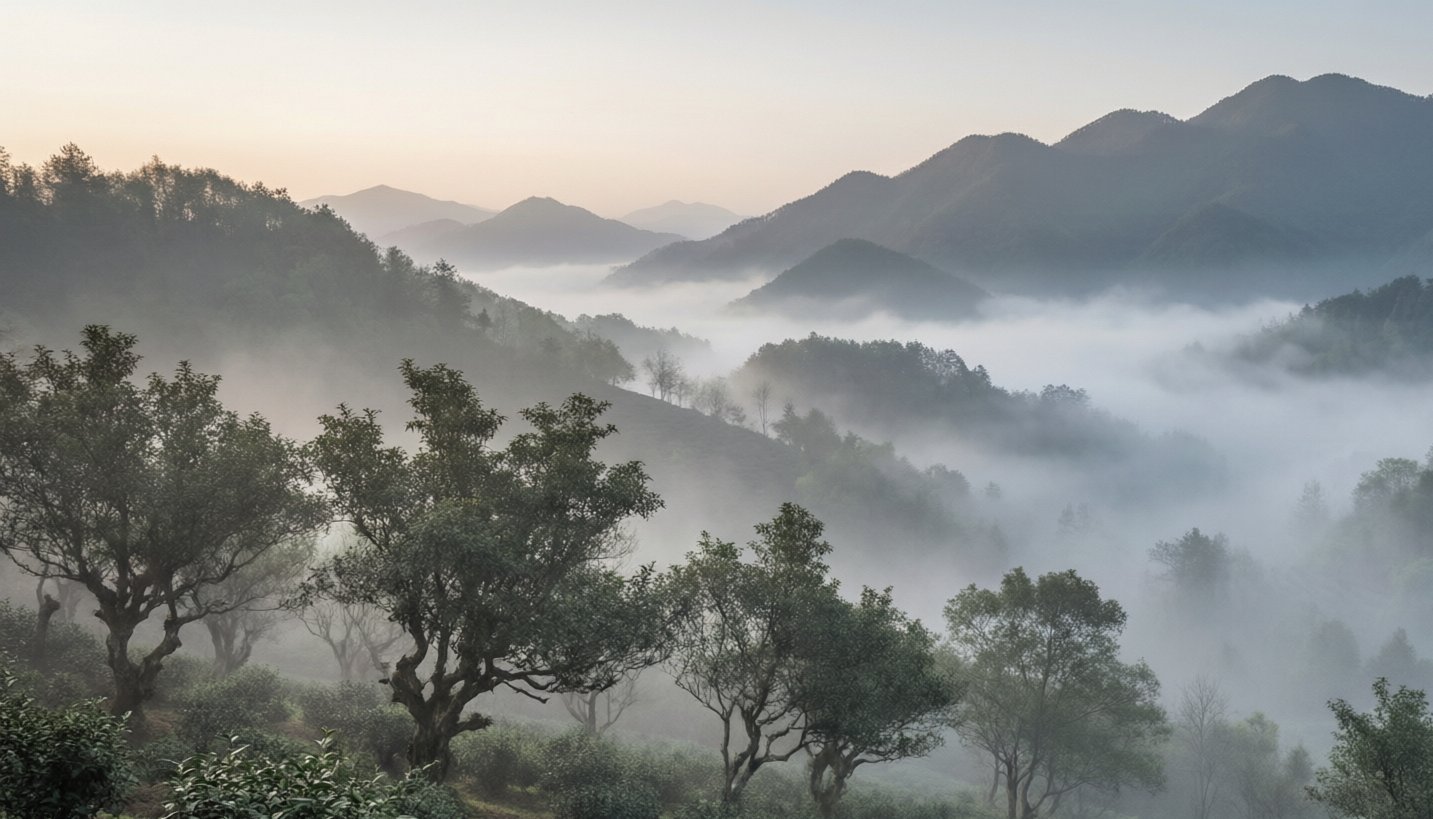
A single-origin tea is tied to one region, farm, harvest, or processing batch. In China, that often means one protected origin name, village, mountain, or even a single garden. Many of these place-based names carry legal or reputational protection as geographical indications [2]. Anxi Tieguanyin, Wuyi rock tea, Fenghuang Dancong, and West Lake Longjing all draw their brand value from this model.
The core difference is control. A blend gives you control over flavor and cost. A single-origin lot gives you a stronger story, but it also locks you into whatever that harvest produced.
Where Single-Origin Builds a Stronger Brand
Single-origin tea supports a premium brand narrative because every lot can be described precisely: the mountain, the harvest window, the cultivar, the processing method, and sometimes the producer. That traceability gives buyers a credible reason to pay more.
China is the world’s largest tea-producing country, according to FAO trade data, and its most valuable teas are usually sold as origin-specific products rather than as anonymous blends [3]. The origin itself becomes part of the product. A buyer with a specialty retail audience can use that story to create limited releases, seasonal menus, and educational content.
Single-origin also aligns with the current demand for transparency in specialty food and beverage. A brand that can show farm-level documents, production dates, and test reports has a stronger position in premium channels. The framework for this kind of place-based branding is already established through geographical indication systems [2].
However, single-origin has real limitations. Production is finite, lot sizes vary, and flavor changes from harvest to harvest. That makes it harder to keep a shelf-stable retail product identical over time. It also exposes you to crop risk and price movement in one region. Single-origin works best when the brand is willing to tell the story of each lot, not when the buyer expects the same cup every time.
Where Blended Tea Builds a Stronger Brand
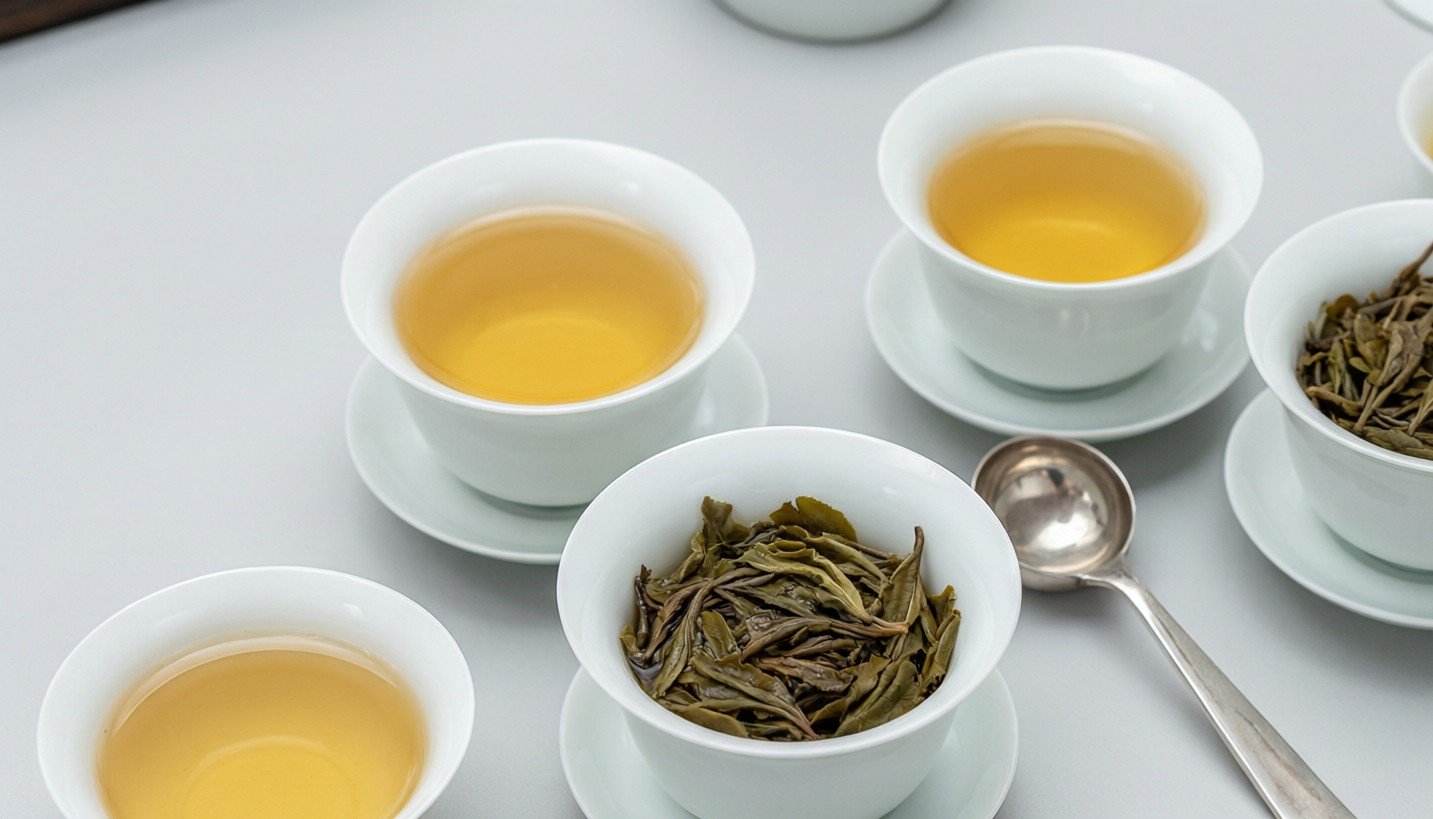
Blended tea builds a different kind of asset: a house style that belongs to the brand, not to any single farm. The recipe is the identity. If your goal is a product that tastes the same in month one and month twelve, blending is the more reliable tool. Green tea and black tea quality requirements are defined separately from origin claims, which gives blenders a clear technical baseline to work against [4].
Blending also gives you better control over margin. When one origin becomes expensive or short, you can adjust the blend within the quality specification. That flexibility protects annual contracts, foodservice menus, and private-label programs. For a buyer selling into cafes, offices, or grocery, consistency usually matters more than provenance.
The strongest blended tea brands are not cheap tea brands. English Breakfast, chai, and many jasmine green tea lines are blends with strong identities. They compete on reliability, ritual, and accessibility rather than scarcity. A blended Chinese tea program can still emphasize regional character — for example, a Keemun-forward breakfast blend or a Tieguanyin-based jasmine blend — but the brand owns the final profile.
The risk is commoditization. If the blend is too generic, there is little reason for a buyer to choose you over the next supplier. The solution is usually to build the blend around a defined quality standard, a documented base composition, and a repeatable cupping result.
Decision Factors at a Glance
| Decision factor | Single-origin | Blended |
|---|---|---|
| Brand story | Place, harvest, producer | House recipe and consistency |
| Traceability | Usually stronger | Depends on documented origin mix |
| Flavor consistency | Varies by lot | High |
| Supply risk | Concentrated in one region | Diversified |
| Cost control | More volatile | Easier to stabilize |
| Premium ceiling | High for rare origins | Moderate to high for proprietary recipes |
| Scalability | Limited by lot size | Nearly unlimited |
A Practical Decision Framework for Chinese Tea Buyers
The simplest way to decide is to separate your portfolio into two jobs: the flagship SKU and the volume SKU. A flagship single-origin tea can carry the brand story and win premium shelf space. A blended workhorse can protect cash flow and keep the operation scalable.
If you are sourcing from China, request two things from any supplier: the single-origin lot card and the blend sheet. The lot card should show harvest date, processing date, origin, grade, and test status. The blend sheet should show component origins, percentages, and the cupping specification. Without those documents, you are buying a name, not a sourcing strategy.
If you are already sourcing from China, run a parallel sample test on both models before committing to volume. Request the single-origin lot information, the blend sheet, and the QC limits for each SKU. Email 427728483@qq.com with your target product format, annual volume, and price band, and we will match you with single-origin or blended supply options and sample sets.
Get Sourcing Clarity on Single-Origin or Blended Tea
The right answer is usually a portfolio, not a single SKU. Send your target profile — product format, annual volume, price band, and whether you need farm-level traceability or blend consistency — to 427728483@qq.com. Our Chinese tea supplier network can provide single-origin lots, private-label blends, or both under one QC program.
Frequently Asked Questions
Is single-origin tea always higher quality than blended tea?
No. Quality depends on grade, freshness, processing, and handling. A well-made blend can outperform a poorly processed single-origin lot. The best approach is to judge quality by cupping and lab results, not by the product label alone.
Can a brand offer both single-origin and blended teas?
Yes. Many strong tea brands use a flagship single-origin line for storytelling and a blended line for volume and consistency. This balances margin, differentiation, and supply stability.
How do I verify a single-origin claim from a Chinese supplier?
Ask for lot-level traceability, including harvest date, processing date, factory or garden location, and test reports. For high-value origins, request the origin certificate or protected-origin documentation. A factory audit or sample verification trip adds further confidence.
Does blending hide low-quality tea?
It can, but proper blending is not designed to hide defects. A responsible blend uses defined base teas to hit a flavor target and QC limit. If a supplier refuses to share component origins or the blend sheet, treat that as a red flag.
Which model is easier for a private-label tea brand?
Blended tea is usually easier to launch because it delivers consistency and stable pricing from the first order. Single-origin tea requires more sourcing and storytelling work, but it offers stronger differentiation in premium channels.
References
[1] International Organization for Standardization, ISO 3720:2011, Black tea — Definition and basic requirements, Geneva, Switzerland, 2011.
[2] World Intellectual Property Organization, “Geographical indications,” WIPO, Geneva, Switzerland. [Online]. Available: https://www.wipo.int/geo_indications/en/
[3] Food and Agriculture Organization of the United Nations, “Tea: market situation and outlook,” FAO Markets and Trade, Rome, Italy. [Online]. Available: https://www.fao.org/markets-and-trade/commodities/tea/en/
[4] International Organization for Standardization, ISO 11287:2011, Green tea — Definition and basic requirements, Geneva, Switzerland, 2011.