Plantation tea is the quiet engine of the Chinese tea trade. While collectors chase ancient-tree pu-erh and rare rock oolong, most tea exported from China is grown on managed plantations: evenly spaced bushes, standardized harvest schedules, and yields designed for consistent supply. That consistency matters when you are buying by the container, but it also creates a wide pricing band. How much does plantation tea actually cost in 2026? The honest answer depends on category, harvest date, grade, certification, and how far the tea travels before you take ownership.
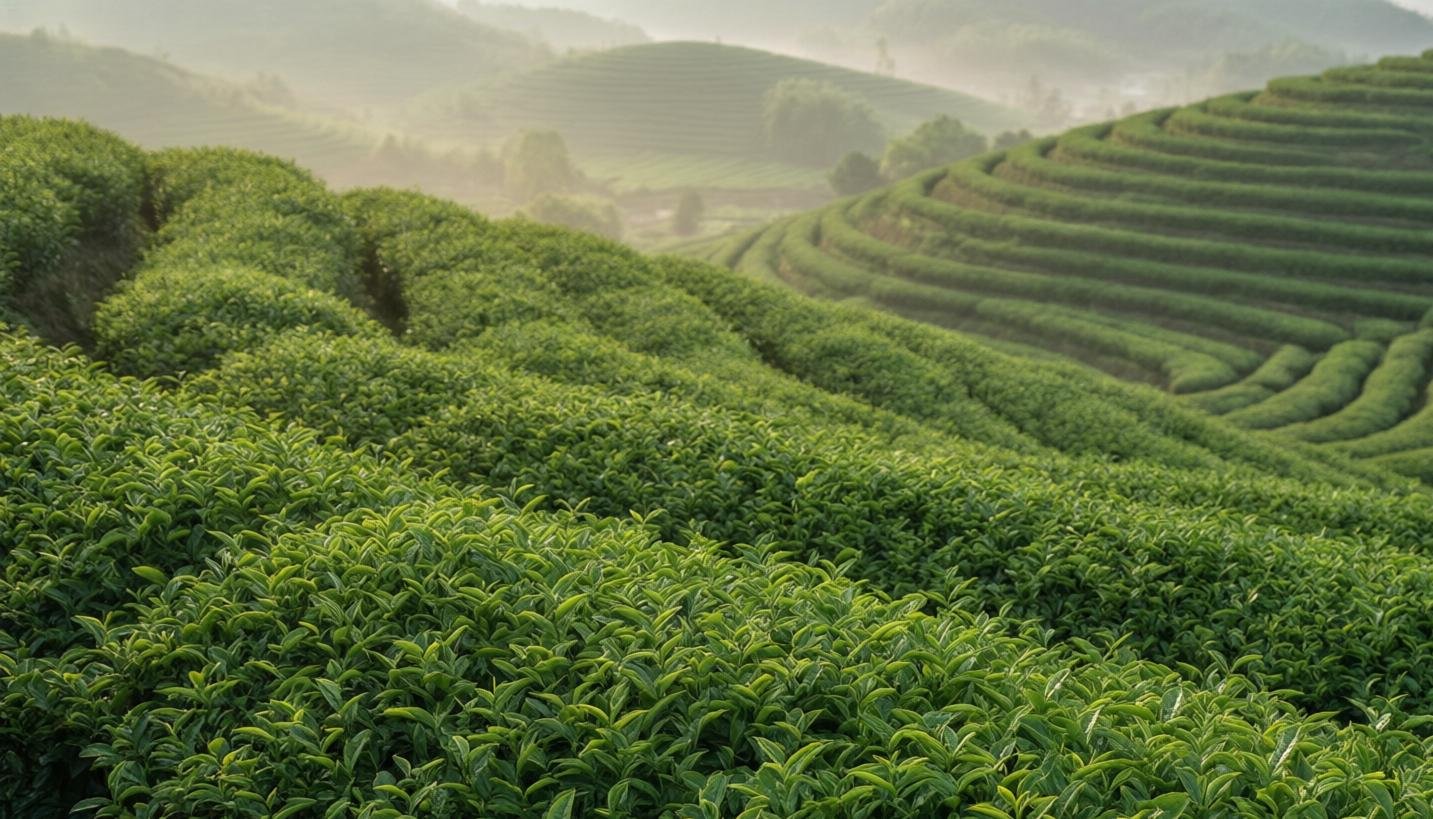
What Counts as Plantation Tea in the Chinese Market
In Chinese sourcing, “plantation tea” usually refers to tea from regular cultivated gardens rather than old-growth, wild, or semi-wild tea trees. The term is most common in pu-erh discussions, where plantation maocha is the everyday material used in blended cakes, ripe fermentation, and lower-cost pressed teas. But the same logic applies across green, black, oolong, and white tea: predictable bushes, higher density, and lower per-kilogram raw leaf cost.
That does not make plantation tea low quality by default. Many modern plantation gardens are well-managed, mechanically or semi-mechanically harvested, and processed under strict hygiene controls. The practical difference is economic: plantation tea trades on efficiency, batch consistency, and availability, while ancient-tree tea trades on scarcity and terroir [4].
Plantation Tea Price Range in 2026 at a Glance
The figures below are indicative FOB China wholesale bands for standard export-grade lots, not retail prices. Actual quotes move with harvest timing, exchange rates, and order size [3].
| Category | Typical FOB price range (USD/kg) | What the range usually reflects |
|---|---|---|
| Plantation green tea, everyday grade | $3.50–$10 | Large-leaf or machine-picked, simple drying |
| Plantation green tea, high-grade spring | $10–$25 | Early spring, cleaner plucking, better leaf shape |
| Plantation black tea | $4–$18 | CTC to whole-leaf styles |
| Plantation oolong | $6–$35 | Light oxidation to rolled or roasted styles |
| Plantation white tea | $8–$30 | Shoumei-style to higher-grade bai mudan |
| Plantation pu-erh maocha | $5–$25 | Blended sheng or ripe raw material |
| Organic certified plantation tea | $12–$45 | Certification, audits, and smaller batch handling |
| EU-compliant plantation tea | Add 15–40% | Pesticide testing, lower-residue sourcing, documentation |
These are broad commercial bands. A single 20-foot container of ordinary green tea is not purchased at the same price as 500 kg of early-spring plantation buds [2].
Five Factors That Move Plantation Tea Prices
Origin and Growing Environment
Even within plantation tea, place changes price. Higher-altitude gardens in Fujian, Yunnan, Sichuan, or Zhejiang often yield slower-growing leaves with more concentrated aroma, and buyers pay a premium for recognized origins [4]. Elevation is not a guarantee of quality, but it consistently influences farm-gate pricing.
Harvest Season and Timing
Spring-picked plantation tea is almost always the most expensive window. Pre-Qingming grade material can cost several times more than summer or autumn harvests from the same garden. For volume buyers, the smart move is often not the earliest spring lot, but a stable early-to-mid spring crop that balances taste and price [3].
Leaf Grade and Plucking Standard
Pure bud or one-bud-one-leaf grades command higher labor costs. Machine-cut leaves are cheaper but less uniform. The grade designation on the spec sheet should match the physical leaf: broken leaf, stem content, and oxidation levels all affect value [7].
Processing Method and Batch Size
Simple sun-dried or machine-dried teas cost less than labor-intensive rolled, roasted, or repeatedly shaped styles. Small experimental batches, charcoal-roasted lots, or custom processing runs add cost because the fixed labor is spread over fewer kilograms.
Certification and Compliance
A standard export-grade tea may only need basic food-safety documentation. A certified organic lot or an EU MRL-compliant lot adds testing, audit, segregation, and traceability costs. In 2026, buyers shipping into Europe should expect pesticide-residue compliance to be a central part of the quote, not a line item to confirm later [6].
Where the Hidden Costs Appear in a Wholesale Quote
The price per kilogram is only part of the landed cost. Moisture content changes net weight after drying. Sorting losses occur when tea is cleaned and graded again. Packaging type—kraft bulk bags, foil-lined cartons, or retail-ready packs—shifts unit cost. Then comes freight, insurance, customs clearance, and testing in the destination market [5].
A practical quote should show FOB price, estimated moisture ceiling, packaging specification, payment terms, and inspection conditions. If these items are missing, the apparent price advantage may disappear before the tea reaches your warehouse.
How to Buy Plantation Tea Without Overpaying
Start with a cupping brief, not just a price list. A reliable supplier can match leaf grade, harvest period, origin, and processing style to your target cost before samples are sent. Request at least three graded samples, cup them blind if possible, and compare against a reference lot. Then ask for a full specification sheet covering moisture, stems, broken leaf percentage, and pesticide testing scope.
For a first order, resist the temptation to jump to the lowest quote. Test small lots, verify consistency, and only then scale to container volume. If you are sourcing plantation tea as a base for blends, private label, or foodservice, consistency often matters more than a small per-kilogram saving.
Mid-article inquiry point: If you are building a plantation tea program and need a supplier who can hold grade, moisture, and packaging standards across multiple lots, send your target specification and annual volume to 427728483@qq.com. A clear brief—tea type, grade, destination market, and certification needs—is the fastest way to get a workable FOB range.
End CTA
Chinese tea suppliers works with plantation tea buyers across green, black, oolong, white, and pu-erh categories. If you need a 2026 price reference, sample shortlist, or full production quote, send your requirements to 427728483@qq.com. A useful inquiry includes:
- Tea type and target grade
- Annual or trial order volume
- Destination market and certification requirements
- Packaging format
- Target FOB or landed-cost ceiling
We will respond with available lots, current pricing, and a realistic plan for your market.
Frequently Asked Questions
What is the cheapest plantation tea available for wholesale?
Everyday plantation green tea and lower-grade CTC black tea usually sit at the bottom of the price curve, often in the $3.50–$10 per kilogram FOB range for large orders. The final cost still depends on sorting, moisture, packaging, and destination-market testing.
Why is plantation tea cheaper than ancient tree tea?
Ancient tree tea relies on scarce old-growth resources and limited harvest windows, so supply is capped. Plantation tea is grown at much higher density with standardized management, producing larger, more predictable yields. That supply difference, not necessarily a quality defect, is the main reason plantation tea costs less [4].
Do organic certification and EU testing significantly raise the price?
Yes. Organic plantation tea typically costs 30–60% more than comparable conventional tea at farm level, and EU MRL-compliant sourcing can add another 15–40% once testing, documentation, and segregation are included [6]. Buyers should ask for the certification and testing breakdown separately from the base tea price.
What MOQ should a first-time buyer expect?
For standard plantation tea, many Chinese suppliers can start at 20–50 kg for trial lots, while container-level pricing often begins around 1–5 metric tons depending on the category. Smaller trial orders are useful for cupping and market testing before committing to annual volume.
Does plantation tea improve with age?
Most green and lightly oxidized plantation teas are designed to be consumed fresh. Some plantation white teas and certain plantation pu-erh materials can mellow or develop sweetness over a few years if stored cleanly, but plantation tea generally does not show the dramatic age-driven price appreciation associated with premium old-tree pu-erh.
References
[1] FAO Intergovernmental Group on Tea, “World tea production, consumption and trade: current situation and medium-term outlook,” Rome, Italy, 2025.
[2] International Tea Committee, Annual Bulletin of Statistics 2025, London, U.K., 2025.
[3] China Tea Marketing Association, “2025 China tea production and sales report,” Beijing, China, 2025.
[4] H. Wang, “Determinants of tea farm-gate prices in Yunnan Province,” Journal of Tea Science, vol. 44, no. 2, pp. 118–129, 2024.
[5] United Nations Comtrade, “Trade data for HS 0902 tea,” accessed 2026.
[6] European Commission, “Regulation (EC) No 396/2005 on maximum residue levels of pesticides in or on food and feed,” consolidated version, 2025.
[7] ISO 3720:2011, Black tea — Definition and basic requirements, International Organization for Standardization, Geneva, Switzerland, 2011.