Laoshan tea is one of China’s most distinctive northern green teas. Grown in the cool, coastal hills of Qingdao’s Laoshan District, it develops a mellow, sweet cup with far less bitterness than many southern greens. That reputation is exactly why it gets counterfeited: lower-cost green tea from other provinces is often re-labeled as “Laoshan” and sold at a premium.
The problem is not just wasted money. A relabeled tea will not have the aroma, mouthfeel, or storage character you based your buying decision on. If you are sourcing for a tea program, a private label, or a wholesale order, authenticity checks need to happen before the invoice is paid.
Why Authentic Laoshan Tea Is Easy to Mislabel
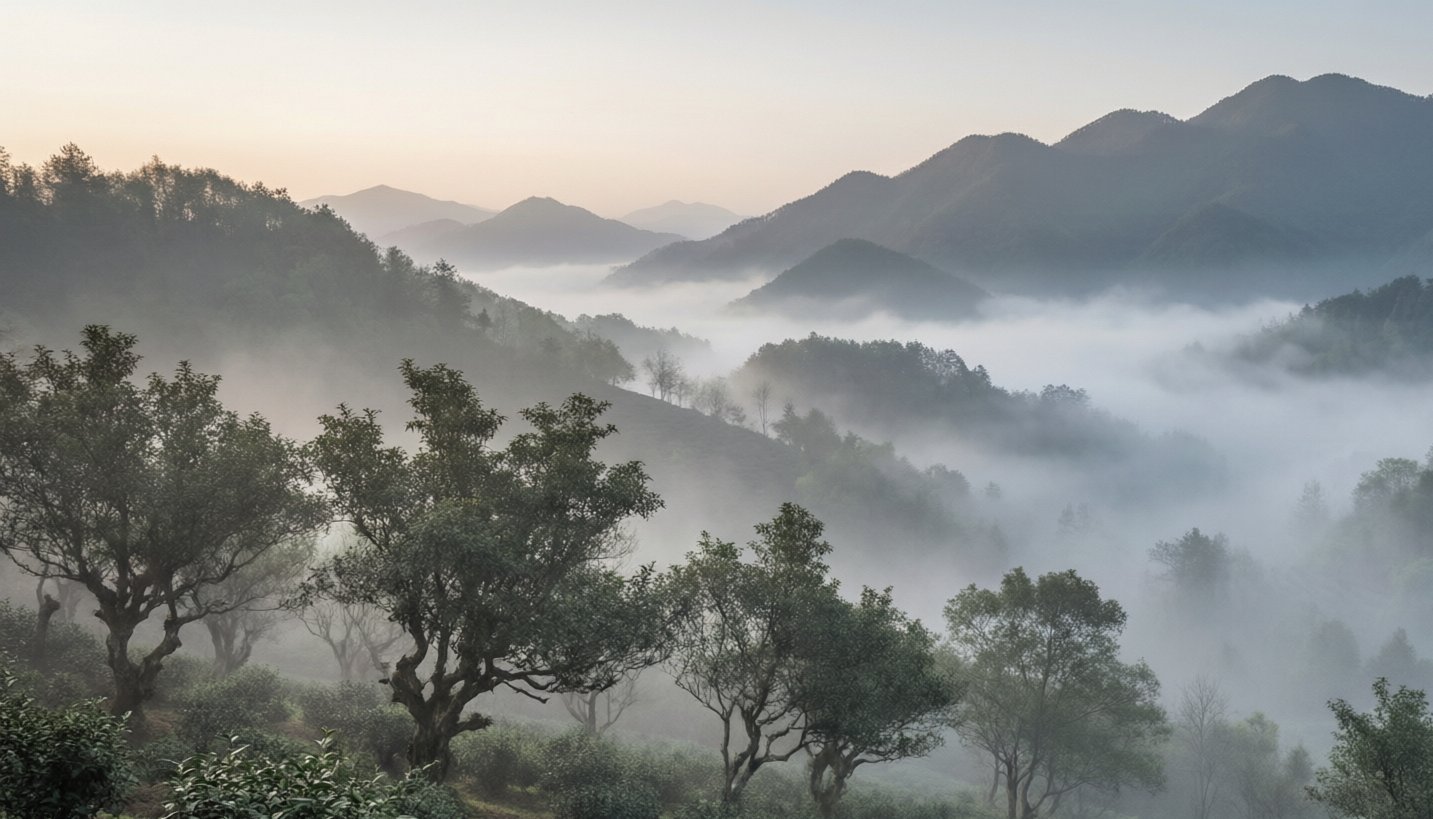
Laoshan tea comes from a limited growing area with a short spring harvest window and relatively small annual output. Qingdao sits at a high northern latitude for tea cultivation, so the leaves grow more slowly under strong light, fog, and marine influence. This produces a tea that tastes rounder and sweeter than many mainland greens.
At the same time, green tea is one of the easiest categories to counterfeit because the dry leaf can look broadly similar across origins. A vendor only needs packaging, a story, and a buyer who does not verify the source. China’s geographical indication framework exists to reduce this risk, but it only works when buyers actually ask for the underlying proof [3].
Check 1 — Verify the Village, Not Just “Qingdao”
The first red flag is vague origin language. “Qingdao tea” or “Shandong green tea” is not the same as tea grown in the Laoshan area. Ask the supplier to name the specific production village or town, such as Wanggezhuang, Beizhai, or another Laoshan-area location.
A reliable supplier should be able to tell you:
- Which harvest period the lot came from.
- Which village or processing site handles the leaves.
- Whether the tea is authentic Laoshan material or a blended lot.
- Whether the seller can provide a purchase record from the processing site.
If the answer keeps circling back to “high mountain,” “premium grade,” or “northern tea” without a specific place name, treat it as an unverified claim.
Check 2 — Look for Northern Leaf Character
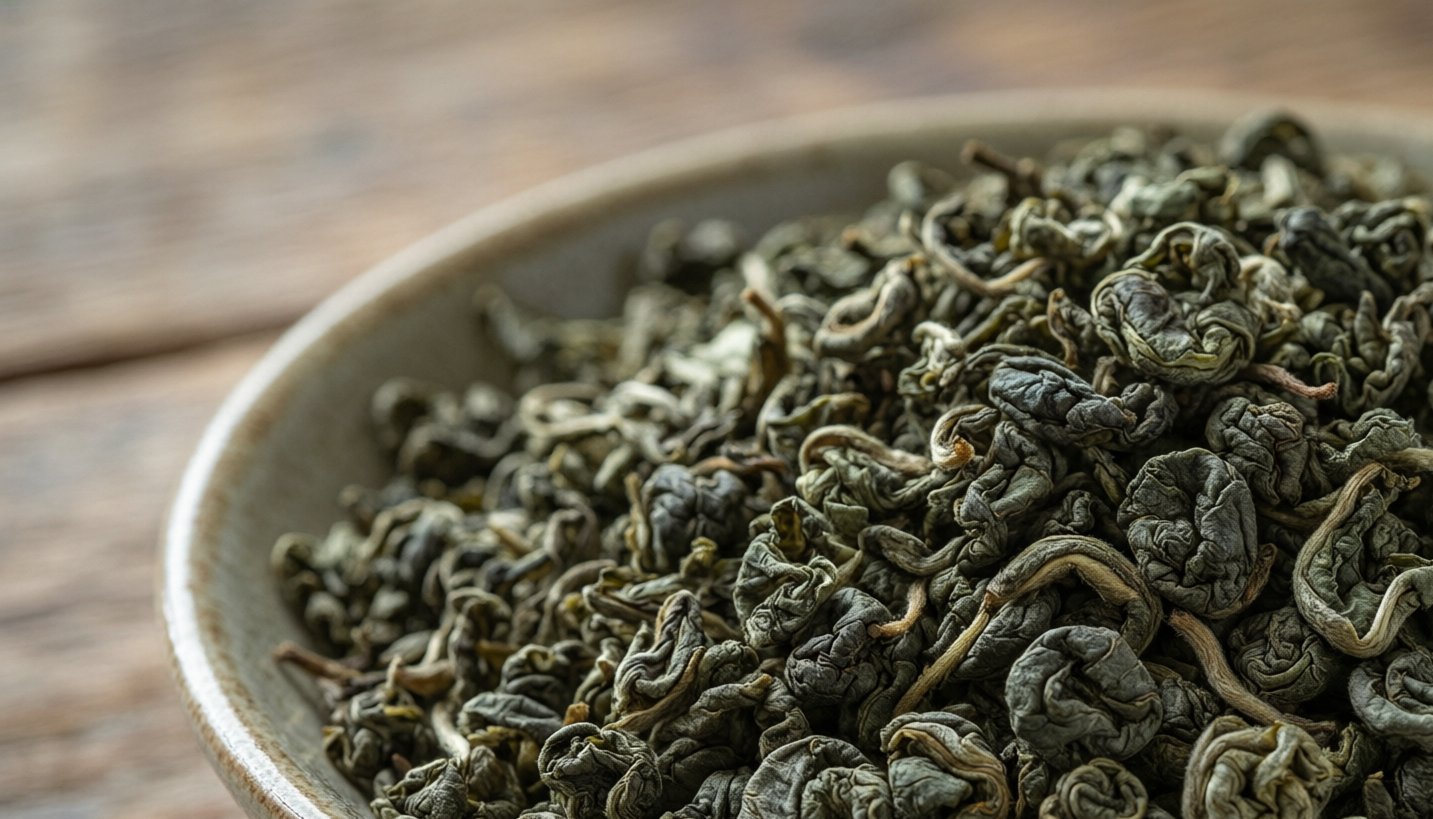
Laoshan leaf is not just generic green tea from another province. The cooler climate and slower growth tend to produce smaller, thicker leaves that release their flavor over multiple infusions.
| Attribute | Authentic Laoshan Tea | Common Counterfeit |
|---|---|---|
| Dry leaf | Small, tightly shaped, dark green with consistent sheen | Overly bright, dusty, pale, or mixed particle sizes |
| Dry aroma | Clean, nutty or roasted-chestnut sweetness | Sour, stale, grassy, or artificially perfumed |
| Brew color | Pale jade to clear yellow-green | Dull yellow, brownish, or cloudy |
| Taste | Mellow, sweet, low astringency, mineral finish | Bitter, thin, harshly vegetal, or flat |
| Wet leaf | Whole bud-and-leaf sets, even expansion | Broken, torn, stem-heavy, or poorly sorted |
| Season logic | Concentrated around spring harvest | Uniform all year, often at unusually low prices |
Use the table as a screening tool, not a final verdict. Counterfeits improve every year, and some high-quality green teas from other origins can look convincing.
Check 3 — Taste for Sweetness, Not Bitter Grassiness
The reason Laoshan tea developed its following is the cup itself. An authentic lot should be soft on the palate, with a clear sweet return after swallowing and only mild astringency. The liquor should stay aromatic and stable through at least two or three infusions; authentic Laoshan leaf tends to release flavor slowly rather than collapsing after the first steep.
Under the basic definition for green tea, the product must have the characteristic appearance, aroma, and liquor of its declared type, without foreign matter or off-odors [1]. That gives you a simple standard: if the cup tastes like an aggressive, bitter grocery-store green tea, it may still be green tea, but it probably is not authentic Laoshan.
Brew the comparison test properly. Use around 80°C water, a short first steep, and the same leaf-to-water ratio for both teas. Judge the difference side by side.
Check 4 — Demand Batch-Level Traceability, Not Just Paper
A label that says “Laoshan” is only as good as the batch record behind it. Serious suppliers can provide lot-level information that connects the tea to a season and a processing site.
When you receive a sample, ask for:
- A confirming origin statement from the processor.
- The production date and harvesting period.
- The specific grade and processing style.
- A current pesticide-residue or food-safety test report.
- The supplier’s food business or export license.
Geographical indication protection in China works through registration and product standards, not through a printed logo alone [3]. Packaging that simply shows a mountain illustration and the word “Laoshan” proves nothing by itself.
If you are sourcing by volume, request a sealed counter-sample that you can compare against the delivered lot. Without a retained sample, disputes over substituted leaf are difficult to resolve later.
Sourcing note: Before paying a premium, send the supplier three questions: Which village and harvest period does this lot come from? Can you provide the processor’s batch record? Will you send a sealed counter-sample with the bulk order? If the answers are vague or the documents do not match the label, slow the order down. For sourcing support and verification guidance, contact us at 427728483@qq.com.
Check 5 — Compare Season and Price Logic
Authentic Laoshan tea is primarily a spring product. The earliest spring material is limited, and genuine lots sell through quickly at higher prices. Later-flush material exists, but it is less aromatic and less valuable.
A tea offered as “premium Laoshan” all year round, in unlimited quantity, at a price far below direct-from-Qingdao wholesale quotes, should raise suspicion. That does not mean every expensive tea is authentic, but genuine regional tea has real seasonal and supply constraints.
Ask the supplier what happens when the current lot sells out. A trader with a stable, unlimited supply of a high-priced regional tea is describing a blend, a substitution, or a marketing story.
Check 6 — Inspect the Label and Standard Number
Chinese prepackaged food labeling rules require clear information such as the product name, ingredient or tea category, production date, shelf life, storage conditions, and the producer’s name and address. A compliant tea should also show a relevant product standard.
For green tea, look for a standard reference such as GB/T 14456.1 on the label, which sets basic requirements for Chinese green tea [2]. If the packaging claims a specific region, it should point to the corresponding regional or protected-product rules rather than only generic marketing copy.
Also check the safety layer. The seller should be able to show that the lot meets current pesticide-residue limits; a credible lot will have been tested against the national food-safety requirements for pesticide limits in food [4]. No single document makes a tea authentic, but a missing or contradictory document is a clear exit signal.
Check 7 — Run a Basic Brew Test
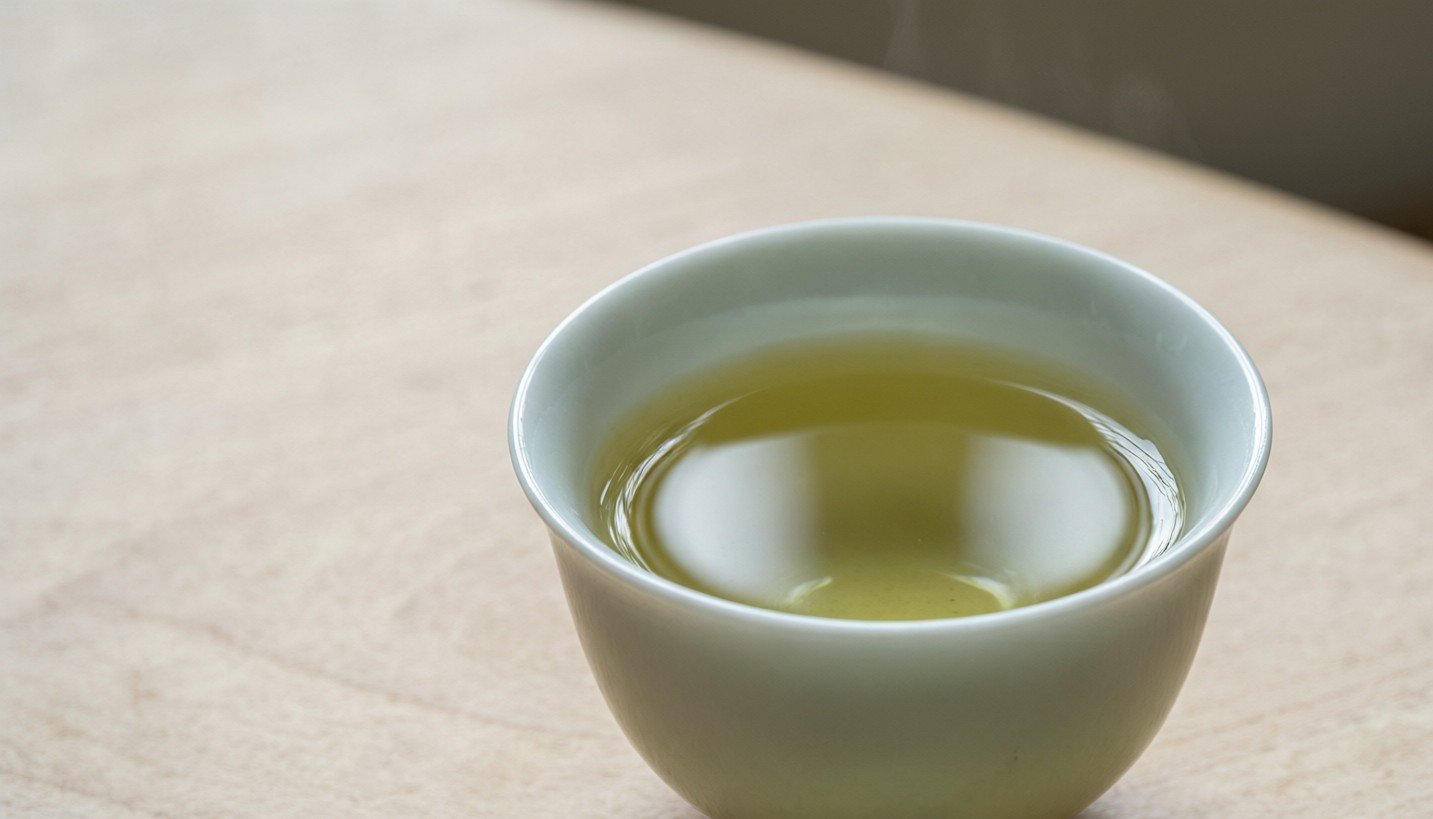
A simple cupping session will expose many substitutions before they become an expensive mistake. Use a white porcelain cup so you can judge color accurately, and follow the same brewing method for every sample.
Observe:
- Dry aroma after the cup is warmed. Authentic lots usually smell clean and sweet, never stale or sharp.
- Liquor clarity in the first 30 seconds. It should be clear, not murky.
- Aroma after the first brew. Expect roasted chestnut, sweet snap pea, or soft mineral notes.
- Second and third infusions. The tea should not collapse into bitter, colorless water immediately.
- Wet-leaf appearance. Leaves should look whole and even; heavy breakage or stems suggest poor sorting or a blended batch.
What to Do When the Sample Fails
If a sample fails two or more checks, reject the lot. Do not negotiate authenticity after a substitution has already been detected. A supplier who sends a mislabeled sample once may send a worse substitution in the bulk shipment.
Move to a supplier who can show batch-level origin records, a sealed counter-sample, and consistent cup quality across two or three separate shipments. The issue is rarely a single weak sample; it is whether the supplier has a system that can prove where the tea came from.
Source Authentic Laoshan Tea Without Guesswork
You do not need to become a tea master to buy authentic Laoshan tea, but you do need a verification habit. Keep a concise checklist: specific origin, leaf character, flavor stability, batch documents, seasonal logic, label compliance, and a controlled brew test. Run the same checks on every sample and keep records.
If you are buying for wholesale, private label, or retail, work with suppliers who treat traceability as a normal part of the quote. At a minimum, request a current lot record and a sealed sample before you commit.
Contact us at 427728483@qq.com with your volume, target grade, and destination market. We can help you compare authentic Laoshan material, verify batch documentation, and structure the sampling and inspection steps before your first bulk order.
FAQ
Is Laoshan tea always green tea?
Most Laoshan tea on the market is processed as green tea, but the region can also produce black tea and other styles depending on the maker and season. The authenticity issue is about origin and material, not only processing type.
What does real Laoshan tea taste like?
Authentic Laoshan green tea is generally mellow and sweet, with a soft mineral or roasted-chestnut note and low astringency. It should remain aromatic through multiple infusions rather than turning bitter and empty after the first steep.
Why is authentic Laoshan tea more expensive than generic green tea?
Authentic Laoshan tea comes from a limited northern growing area with a short spring window and smaller yields. The cost reflects real seasonal and regional supply, not the cost of a more colorful label.
Can I verify Laoshan tea by the dry leaf alone?
Rarely. Dry leaf can indicate quality and processing consistency, but it cannot prove origin. Use the dry leaf as one check alongside origin documents, seasonal logic, and a controlled side-by-side brewing test.
References
[1] International Organization for Standardization. ISO 11287:2011, Green tea — Definition and basic requirements. Geneva: ISO, 2011.
[2] Standardization Administration of China. GB/T 14456.1-2017, Green tea — Part 1: Basic requirements. Beijing: SAC, 2017.
[3] General Administration of Quality Supervision, Inspection and Quarantine of the People’s Republic of China. Measures for the Protection of Geographical Indication Products, Order No. 78. Beijing: AQSIQ, 2005.
[4] National Health Commission of the People’s Republic of China; Ministry of Agriculture and Rural Affairs. GB 2763-2021, National food safety standard — Maximum residue limits for pesticides in food. Beijing: Standards Press of China, 2021.
[5] European Commission Joint Research Centre. Food fraud in the tea supply chain. Knowledge Centre for Food Fraud and Quality, 2022.