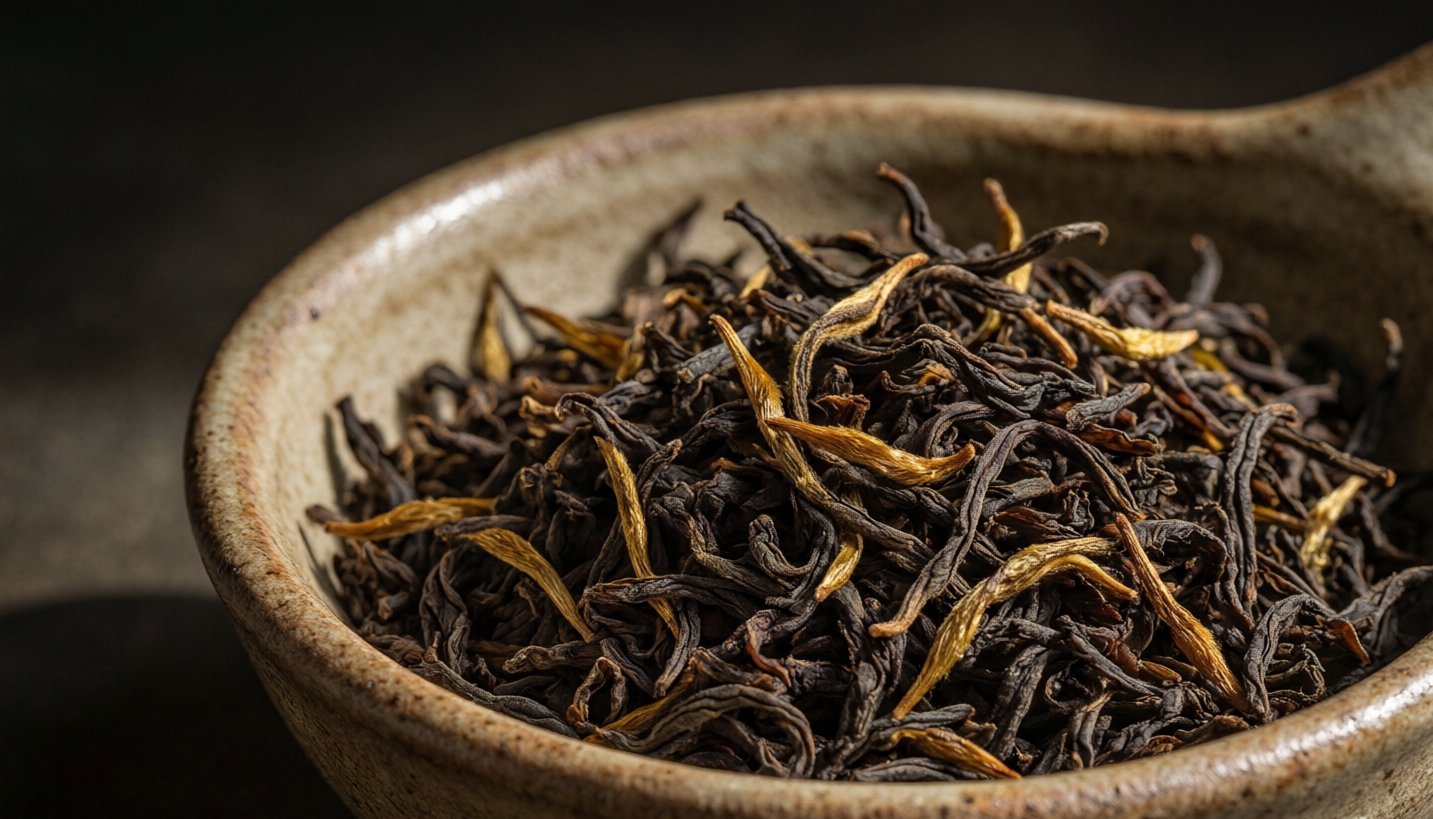
Chinese black tea is called hong cha, or “red tea,” in China because of the reddish-amber color of the brewed liquor. It is fully oxidized, which gives it the sweet, malty, honeyed, or cocoa-like character that separates it from green, white, and oolong teas. But the same leaves can taste flat, sharp, or one-dimensional when the brewing parameters are wrong. This guide walks through the professional method: water, ratio, vessel, timing, and the small adjustments that matter most.
What Chinese Black Tea (Red Tea) Demands From Brewing
Chinese black tea is not one uniform product. A bud-heavy Jinjunmei behaves differently from a smoky Lapsang Souchong, a malty Dianhong, or a winey Keemun. In general, the tea is more forgiving than green tea because the oxidation process has stabilized many of the compounds that cause bitterness, but it still rewards precision in three areas:
- Water temperature
- Leaf-to-water ratio
- Steep time and pour rhythm
Most brewing problems come from treating all black teas the same. The professional approach is to adjust these three variables by leaf grade and brewing style.
Water Temperature and Water Chemistry
Most Chinese black teas brew best between 90°C and 95°C (194°F–203°F). Delicate, bud-heavy styles such as Jinjunmei often improve at 85–90°C (185–194°F), while robust Dianhong can take the higher end of the range without turning harsh. Rolling-boil water is usually hotter than needed and can push the liquor toward tannic sharpness, especially with broken or finely cut leaf.
| Chinese black tea style | Suggested temperature | Flavor focus |
|---|---|---|
| Dianhong / Yunnan black tea | 90–95°C (194–203°F) | Malt, cocoa, honey |
| Keemun / Qimen | 90–93°C (194–199°F) | Winey, floral, lightly smoky |
| Lapsang Souchong | 88–92°C (190–198°F) | Smoke, pine, dried fruit |
| Jinjunmei / bud-heavy | 85–90°C (185–194°F) | Soft malt, sweet potato, honey |
Water quality matters as much as temperature. Hard, heavily chlorinated water can flatten aroma and exaggerate astringency, while distilled water often makes the cup taste empty. Many professionals prefer filtered water with a moderate mineral content, because mineral salts help carry flavor and mouthfeel [3].
Tea-to-Water Ratios for Different Brewing Styles
The classic sensory standard ISO 3103 uses 2 g of tea per 100 ml of boiling water [1]. Chinese sensory evaluation methods commonly use 3 g per 150 ml, which is close to the same strength [2]. For everyday brewing, you can use those numbers as anchors and adjust from there.
| Brewing method | Leaf amount | Water volume | Steep time |
|---|---|---|---|
| Professional cupping | 3 g | 150 ml | 5 minutes |
| Gongfu small-pot | 5 g | 100–120 ml | 5–10 seconds first steeps |
| Western teapot | 2–3 g | 250 ml | 3–4 minutes |
| Cold brew | 5 g | 500 ml | 6–8 hours |
Gongfu ratios are much more concentrated because the contact time is short. Western brewing uses a lower ratio and a longer single steep. If a cup tastes too weak, add leaf rather than extending the steep time aggressively; over-steeping is what usually introduces bitterness.
Step-by-Step: Gongfu Brewing Method
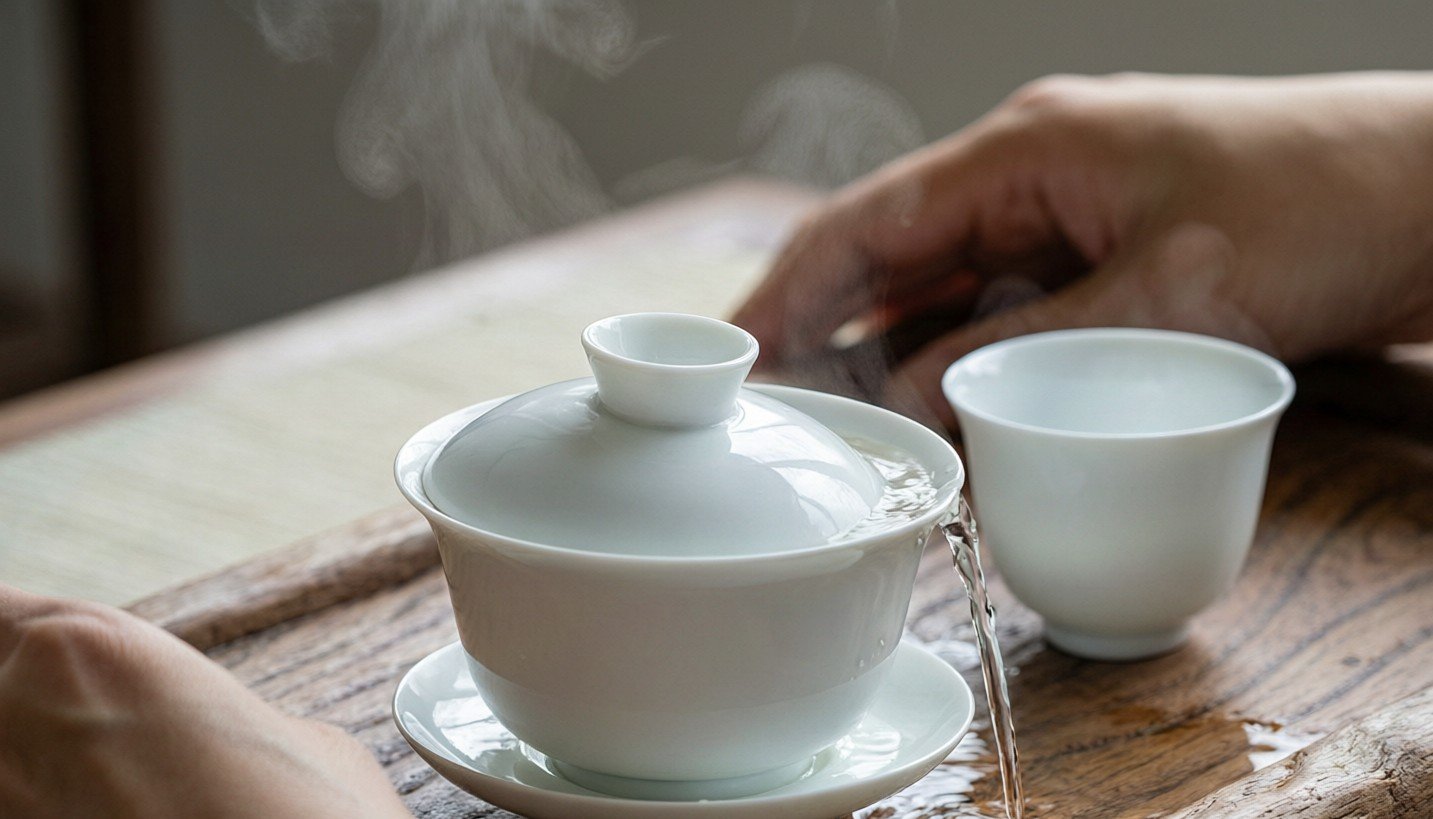
Gongfu brewing is the best way to see how a Chinese black tea changes across multiple infusions. It uses a small vessel, a high leaf ratio, and short pours.
- Preheat the gaiwan or small teapot. Pour hot water in, let it sit for a few seconds, then pour it out. A cold vessel drops the brew temperature immediately.
- Weigh the leaf. For a 100–120 ml gaiwan, 5 g is the standard starting point.
- Optional rinse. Pour water over the leaf and discard after 1–2 seconds. This wakes the leaf and removes surface dust. For delicate bud teas, many professionals skip the rinse to preserve the first aromatic infusion.
- Start the first steep. Use water at 90–95°C, or lower for bud-heavy styles. Steep 5–10 seconds.
- Pour completely. Do not leave water sitting on the leaf between steeps; it keeps extracting and can make the next infusion bitter.
- Increase the time gradually. Add roughly 5 seconds per steeping, or more in later rounds as the leaf loses strength.
- Smell the lid and the empty cup. This is a quick quality check; the aroma should be clean and layered, not sour or flat.
- Repeat until the tea thins out. Good whole-leaf Chinese black tea often gives four or more distinct infusions.
Step-by-Step: Western Teapot Brewing
For an office, cafe, or high-volume service, a Western teapot is the more practical method.
- Preheat the teapot and cups.
- Use 2–3 g of leaf per 250 ml. If the tea is broken or finely cut, lean toward the lower end.
- Pour water at 90–95°C over the leaf.
- Cover and steep for 3–4 minutes. Taste at the 3-minute mark rather than relying on the clock alone.
- Remove the leaves or decant the tea. Leaving the leaf in the pot causes the second cup to be much more astringent than the first.
- For a stronger pot, add more leaf instead of steeping for five or six minutes.
Need a consistent Chinese black tea supply for your cafe, private-label program, or wholesale accounts? Request a cupping set, current lot samples, and a wholesale price list at 427728483@qq.com.
The 6 Most Common Brewing Mistakes
- Using fully boiling water for every black tea. This works for some broken grades, but it can scald bud-heavy styles and flatten their sweetness.
- Leaving the leaf in the water too long. Bitterness in black tea usually comes from time, not from the leaf itself.
- Using too little leaf and then over-steeping. The cup becomes harsh before it becomes strong.
- Brewing in a cold vessel. Heat loss changes extraction and makes the result uneven.
- Using poor water. Chlorine, hardness, or a stale kettle can hide the tea’s best notes.
- Treating one infusion as the whole session. Many Chinese black teas are built to be re-steeped, and the second or third infusion is often the most balanced.
Re-Steeping and Session Structure
Whole-leaf Chinese black teas generally re-steep better than CTC or broken grades. A typical gongfu session might look like this:
| Infusion | Steep time | Character |
|---|---|---|
| 1 | 5–10 seconds | Aromatic, lighter body |
| 2 | 10–15 seconds | Fuller, sweeter |
| 3 | 15–20 seconds | Balanced, complex |
| 4 | 20–30 seconds | Softer, earthy |
| 5+ | 30–60 seconds | Gentle finish |
The key is to lengthen the time in small increments. Pouring completely between steeps is one of the simplest ways to avoid a sharp, over-extracted cup.
Choosing Leaf Grade and Vessel
Porcelain, glass, and glazed ceramic vessels are the safest choices for Chinese black tea because they do not retain flavor from previous teas. A small porcelain gaiwan or teapot works well for gongfu brewing, while a larger porcelain or glass teapot suits Western service.
Leaf grade also changes the parameters. Whole-leaf and bud-heavy teas reward slightly cooler water and shorter steeps. Broken or sorted grades extract faster, so they need a lower leaf ratio and closer attention to time. For wholesale buying, requesting a cupping sample is the most reliable way to see how a lot performs before committing to volume.
Source Chinese Black Tea Directly for Your Business
If you are buying Chinese black tea for retail, foodservice, or private label, start with a clear sourcing conversation. A professional supplier should be able to provide:
- Specific leaf grade and harvest information
- A cupping sample from the exact lot under consideration
- MOQ, packaging options, and current price terms
- Lead time and export documentation support
Contact us at 427728483@qq.com to request samples and current wholesale pricing for Chinese black tea.
Frequently Asked Questions About Brewing Chinese Black Tea
What water temperature is best for Chinese black tea?
Most Chinese black teas brew best at 90–95°C (194–203°F). Bud-heavy styles such as Jinjunmei often perform better at 85–90°C (185–194°F).
How much tea should I use per cup?
For Western-style brewing, use 2–3 g per 250 ml. For gongfu brewing in a 100–120 ml vessel, use about 5 g. Adjust by leaf grade rather than by steeping much longer.
Why is Chinese black tea called red tea?
In China, tea is named by the color of the brewed liquor rather than the dry leaf. Chinese black tea produces a reddish-amber infusion, so it is called hong cha, meaning “red tea.”
How many times can Chinese black tea be re-steeped?
Whole-leaf Chinese black tea often re-steeps well for three to five infusions with short, gradually lengthening pours. Broken or CTC grades usually give one or two strong brews.
Should I rinse Chinese black tea before brewing?
A quick 1–2 second rinse is common in gongfu brewing to wake the leaf and remove surface dust. For delicate bud teas, many professionals skip the rinse to keep the first aromatic infusion.
Does Chinese black tea need milk or sugar?
It depends on the style and the market. Malty Dianhong and strong broken grades can handle milk, while high-grade Jinjunmei and delicate whole-leaf styles are usually drunk plain to preserve their aroma.
References
[1] ISO 3103:1980, Tea — Preparation of liquor for use in sensory tests, International Organization for Standardization, 1980.
[2] GB/T 23776-2018, Methodology of sensory evaluation of tea, Standardization Administration of China, 2018.
[3] Tea Research Association, Brewing recommendations and water quality for black tea, Tocklai Tea Research Institute.