Few tea names confuse buyers as quickly as “Fenghuang” when it appears on a quote. It can mean a blended everyday oolong or a single-bush, old-tree lot that sells for more than many wine vintages. The wholesale market moved sharply in 2026 as spring-frost risk, rising picking wages, and strong domestic demand pushed premiums higher across the Dancong category [1]. This guide explains the real cost layers so you can benchmark supplier quotes without overpaying.
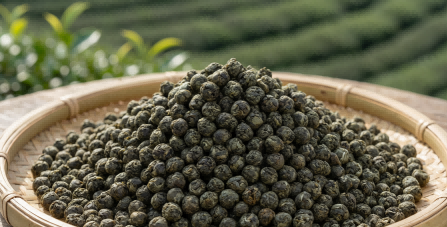
What Fenghuang Tea Actually Means in a Price Quote
Fenghuang is not a grade — it is a geographic and stylistic label for oolong made around Fenghuang town in Chaozhou, Guangdong. Under the Chinese geographical-indication standard for Fenghuang Dancong, the product is single-bud or one-to-two-leaf material processed in the Dancong oolong style [2].
In practice, a workable quote should specify at least five fields:
- Cultivar: Mi Lan Xiang, Ya Shi Xiang, Xing Ren Xiang, Zhi Lan Xiang, Ba Xian, Song Zhong, and other named selections.
- Mountain layer: lowland, mid-mountain, or Wudong high mountain.
- Bush age: planted bush, old bush, or named ancient mother-bush descendants.
- Picking date: pre-Qingming spring, late spring, autumn, or winter leaf.
- Processing finish: light, medium, or heavy roast, including whether the lot is single-bush or blended.
Any quotation that says only “Fenghuang Dancong” without these fields is not precise enough for price comparison. This is the first place wholesale buyers lose money: two lots can share a label and differ in cost by several hundred percent.
2026 Wholesale Price Ranges by Grade and Origin
The ranges below reflect clean, exportable material collected from Fenghuang-area sourcing and auction records in the 2025–2026 cycle. They are not farm-specific offers; each line is a band, and actual FOB quotes depend on volume, moisture, sorting, and packaging [3].
| Grade / origin | 2026 wholesale reference (USD/kg) | What usually drives the price |
|---|---|---|
| Blended Dancong, commercial aroma | 8–25 | Larger batches, standard material |
| Single-origin low-mountain | 20–70 | Named cultivar, mixed season leaf |
| Mid-mountain Mi Lan Xiang | 60–180 | Spring picking, stronger aroma |
| High-mountain Wudong Dancong | 150–400 | Elevation, steep-slope hand picking |
| Old-bush / old-tree lots | 300–1,500 | Bush age of 50–100+ years |
| Auction or competition lots | 2,000–10,000+ | Scarce named bush, very small lot |
For regular export-grade lots, customs and trader-level data show most Fenghuang Dancong shipments cluster in the $12–80/kg band. The high-mountain and old-bush segment is small by volume but dominates total value, so it pulls the perceived “average price” upward in industry reporting [4].
Request a Current Fenghuang Dancong Quote
Because Fenghuang Dancong is sold by cultivar, picking date, lot size, and roast, a generic price list rarely holds for more than a few weeks. To get a 2026 benchmark for your target grade, send the cultivar, volume, destination port, and packaging format to 427728483@qq.com. State whether you need FOB or CIF terms, and whether your market requires EU MRL, FDA, or organic documentation.
Why Fenghuang Dancong Prices Keep Climbing
Several structural factors push Fenghuang Dancong costs higher than most oolong:
- Fresh leaf is expensive on the Wudong high-mountain slopes. The terrain forces manual picking, and rising labor costs transfer directly into the leaf price [5].
- Frost, drought, and irregular spring weather reduced high-mountain volume in parts of 2024–2025, leaving less material available for premium spring 2026 production [5].
- A small number of named old-bush lots set headline auction prices. Those results do not reflect everyday trade, but they lift expectations for the entire old-tree tier [6].
- Roasting and sorting reduce finished yield. Heavy-roast styles lose more moisture and broken leaf during processing, so the finished per-kilogram cost rises even when the raw leaf price is unchanged.
None of these factors alone explains a quotation. Together, they explain why a buyer cannot simply take a retail number and subtract a fixed margin.
Seasonal Timing Changes Everything
Fenghuang Dancong is highly seasonal. Early spring, especially pre-Qingming material, carries the highest leaf price because the buds are scarce and the aroma is fresh. Late spring can be just as aromatic and often better value, but suppliers do not always distinguish between the two unless the buyer asks. Autumn material is more affordable and can perform well for flavored or blended applications, while winter “Xue Pian” leaf is typically the most economical [1], [3].
If a quote does not state the picking window, assume the lot may be blended across seasons. That is not necessarily a defect, but it should change the price. The buyer’s target format matters: high-end tea bags, premium loose-leaf retail, and specialty wholesale all need different seasonal sourcing strategies.
How to Compare Fenghuang Tea Quotes Without Overpaying
A disciplined quote comparison is the most effective way to avoid inflated Fenghuang Dancong pricing.
- Require the five specification fields listed above, with the GB/T 19598 geographical-indication reference where available [2].
- Ask for a physical or brewed sample from the exact lot being quoted. A sample collected before final roasting may not represent the shipped product.
- Break the quote into layers: leaf cost, processing, sorting loss, packaging, domestic logistics, export documentation, and margin.
- For container-volume orders, request FOB terms with inspection certificate, moisture report, and residue testing. This gives a more honest comparison than a single CIF number [4].
- Treat “Wudong” priced under $100/kg with caution. At that level, the lot is likely blended, lower-mountain, or otherwise carrying a loose origin claim.
The goal is not to chase the lowest number. In Fenghuang Dancong, discounts usually appear somewhere: cultivar, origin, season, or roast. A clear specification lets you see where the trade-off was made.
Sourcing Fenghuang Dancong Tea for 2026
If you are comparing offers and need a second opinion on whether a grade is priced correctly, contact our sourcing desk at 427728483@qq.com. Include the requested cultivar, picking season, order volume in kilograms, packaging format, and destination. Our team can check current Fenghuang-area pricing and arrange samples before you commit to a supplier.
Frequently Asked Questions
What does “Fenghuang tea” usually refer to?
Fenghuang tea usually refers to Fenghuang Dancong, an oolong style from the Phoenix Mountain area in Chaozhou, Guangdong. The name covers many cultivars, so a specific quote must include the cultivar, mountain layer, picking date, and roast.
Why are auction-grade Fenghuang Dancong teas so expensive?
Auction-grade lots usually come from named old bushes with very small annual yields. Their prices reflect scarcity, provenance, and competition among collectors and retailers rather than everyday production cost. They should not be used as a benchmark for regular wholesale buying.
How much should a new wholesale buyer budget for a workable Fenghuang Dancong order?
A safe entry point for a commercial-quality blended or mid-mountain lot is roughly $12–80/kg depending on cultivar and season. Single-origin high-mountain spring material requires a meaningfully higher budget, normally $150/kg and up for genuine Wudong lots.
Does Fenghuang Dancong improve with age, and does that affect price?
Light-roast Dancong is generally meant for near-term drinking, while properly stored medium or heavy-roast lots can soften and deepen over time. Aged batches with verified storage sometimes command a premium, but age alone is not proof of quality.
How can I verify a Fenghuang Dancong grade before paying a premium?
Request the exact cultivar, origin layer, picking date, roast, and batch sample. Compare the brewed leaf against a reference sample and, for large orders, ask for inspection and residue documents. This is more reliable than relying on packaging claims or auction stories.
References
[1] China Tea Marketing Association, “2026 Spring Tea Production and Price Monitoring Report,” Beijing, China, 2026.
[2] General Administration of Quality Supervision, Inspection and Quarantine of China, “Product of Geographical Indication—Fenghuang Dancong Tea,” GB/T 19598-2006, Beijing, China, 2006.
[3] Guangdong Provincial Department of Agriculture and Rural Affairs, “Chaozhou Fenghuang Dancong Tea Industry Data Bulletin 2025,” Guangzhou, China, 2025.
[4] General Administration of Customs of China, “China Tea Export Data 2025,” Beijing, China, 2026.
[5] FAO Intergovernmental Group on Tea, “Medium-Term Outlook for the World Tea Market 2024–2033,” Rome, Italy, 2024.
[6] Chaozhou Municipal Agriculture and Rural Affairs Bureau, “2026 Fenghuang Dancong Old-Tree Auction Results Summary,” Chaozhou, China, 2026.