Big tree tea was once a quiet category inside Yunnan’s wholesale market. In 2026 it is one of the fastest-moving lines for importers, specialty retailers, and high-end teahouses. The question is not simply how much it costs, but what you are actually paying for: tree age, origin, harvest timing, processing, and proof. This guide walks through the real market ranges and the factors that move them [1].
What “Big Tree Tea” Actually Means
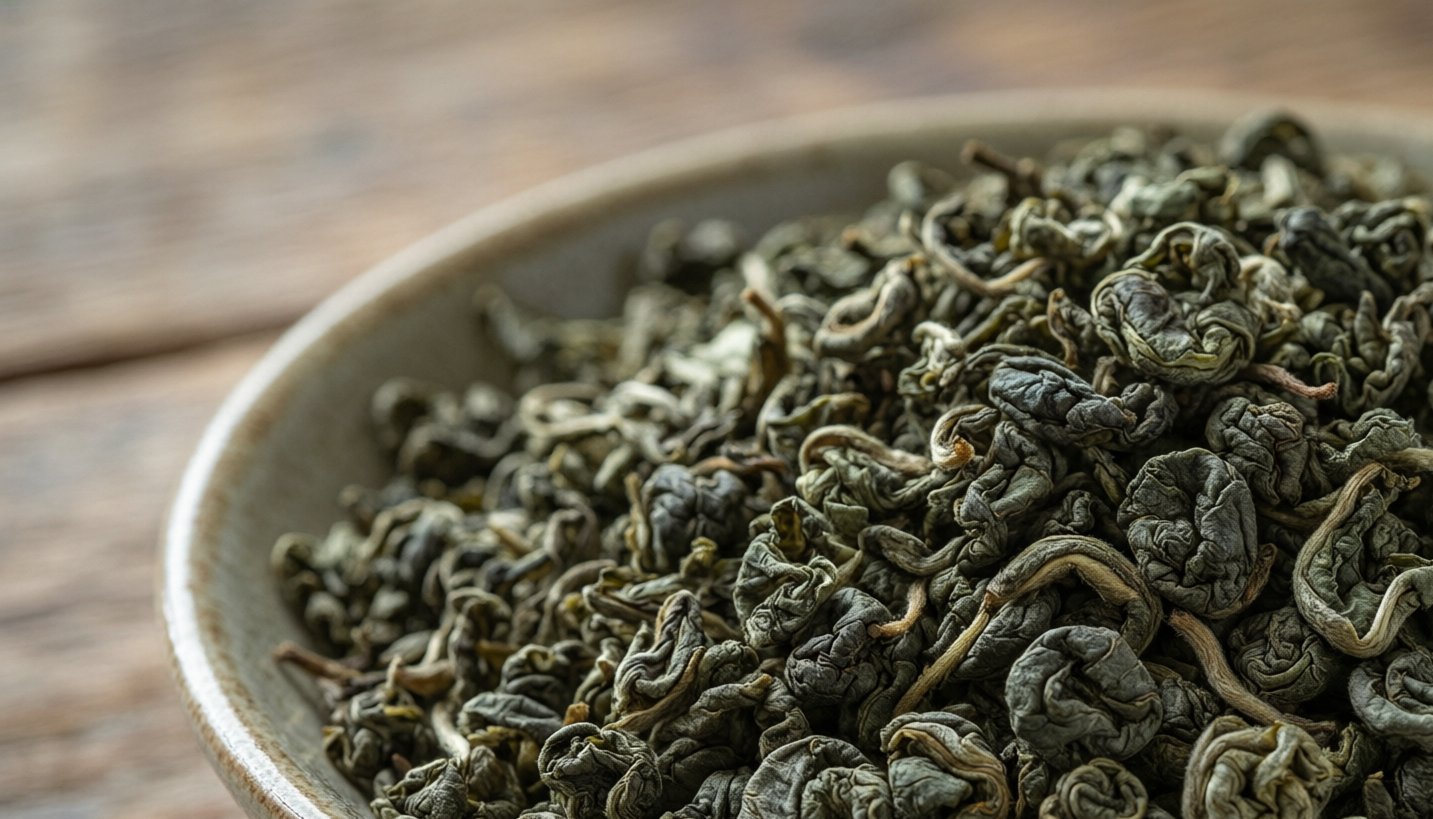
Big tree tea translates from the Chinese term dàshù chá (大树茶). It usually refers to leaf from arbor or semi-arbor tea trees with deep root systems and lower planting density than plantation bushes. The trees are often decades or centuries old, but the term is not legally standardized across Yunnan, Fujian, or Guangdong [3].
Three labels appear frequently in wholesale documents:
- Taidi cha (plantation tea): dense bush planting, high yield, lower unit price.
- Dashu cha (big tree tea): larger arbor or semi-arbor trees, commonly 50–200+ years old depending on the seller’s definition.
- Gushu cha (ancient tree tea): older trees, often 200 years or more, with smaller harvest volumes.
Big tree material can be processed into pu-erh, Yunnan black tea, white tea, or occasional oolong. In most price guides, the greatest price spreads appear in raw pu-erh and single-origin black tea because those categories reward terroir and age claims [2][4].
Big Tree Tea Price Ranges in 2026
The table below shows the price band a wholesale buyer should expect before shipping and import costs. Ranges are compiled from 2024–2025 trade observations and adjusted for the 2026 spring market [2][4][6].
| Grade or format | Typical wholesale range (USD/kg) | What the price usually reflects |
|---|---|---|
| Young big tree / loose leaf | $45–$120 | Semi-arbor leaf, blended batches, lower age certainty |
| Established big tree | $120–$400 | Clear origin, harvest date, stronger age documentation |
| Registered ancient tree / gushu | $400–$1,200 | Single village or small micro-area, limited lot size |
| Famous micro-territory lots | $1,500–$8,000 | Named villages such as Bingdao, Xigui, Mansong, Laobanzhang |
| Big tree Yunnan black tea | $80–$300 | Dianhong-style processing, often spring or autumn leaf |
These are not retail prices. A specialty retailer often applies a markup of two to four times the wholesale figure, depending on packaging, brand position, and the market [5].
Why Big Tree Tea Prices Vary So Much
Price differences come from more than age. The most consistent drivers in 2026 are:
- Tree age and verification: documentation, GPS mapping, or lot-level traceability can raise the price even when the leaf looks similar [3].
- Origin: famous villages and micro-territories carry scarcity premiums. The same age class from a less famous mountain may cost 50–70% less [4].
- Harvest season: first flush spring material usually commands the highest price. Autumn leaf is often less expensive but still fully saleable [2].
- Processing risk: old-tree leaf is frequently processed in small batches. Poor weather during withering or firing can reduce the sellable share of a lot.
- Demand shifts: specialty tea demand in North America, Europe, and Southeast Asia has kept upper-tier big tree lots competitive even when total tea export volume is flat [6].
- Climate pressure: dry conditions in parts of Yunnan during recent spring seasons have tightened available first-flush volume, supporting higher asking prices for well-documented lots [1].
Lot size also matters. A 100 kg trial order rarely receives the same per-kilogram price as a 1,000 kg container program, but for old-tree material the reverse is sometimes true: large volumes of verified gushu do not exist, so bigger orders may force a buyer to accept blended or lower-tier leaf [4].
Need a lot-specific quote instead of a market guess? Send your target grade, tree age, and volume to 427728483@qq.com. We return pricing with harvest date, batch number, and FOB/CIF options.
What Buyers Actually Pay: Wholesale, Retail, and Auction
The wholesale price is only the starting point. In 2026, a buyer should compare three channels:
- Direct factory or farmer group sourcing: lowest base price, but requires larger volume, sampling discipline, and stronger quality control.
- Licensed wholesale suppliers: moderate markup, with lot documentation and export paperwork included.
- Auction or private sale: the top named-village lots often move outside open wholesale lists. Buyers may pay a premium for provenance and scarcity [5].
Retail consumers seldom see true big tree tea below $0.20 per gram, and high-end cake listings can exceed $3.00 per gram once packaging and retail margin are added. Importers should model landed cost, not sticker price [5].
How to Read a Big Tree Tea Quote
A complete quote separates the leaf from the logistics. A useful breakdown includes:
- Leaf and primary processing
- Sorting, grading, and pressing or rolling
- Packaging, labels, and compliance documentation
- Freight, insurance, and import formalities
The leaf itself often accounts for 55–75% of the landed cost on premium lots, while freight and compliance become more significant for entry-level material [5]. When comparing quotes, ask whether the price is FOB, CIF, or DDP. FOB keeps shipping and import risk on the buyer; CIF includes freight and insurance to the destination port; DDP pushes most of the responsibility to the seller and usually carries a higher unit price.
For a first order, budget for a paid sample phase before committing to volume. A 500 g–2 kg sample set allows cupping across three to five lots. After that, many buyers test the market with 50–100 kg before scaling. This staged approach costs more at the start but avoids a container of mislabeled leaf [3].
Red Flags That Inflate Big Tree Tea Prices
Several common issues cause buyers to overpay:
- Vague age claims without harvest date or batch number
- Famous village names used on blended lots
- “Old tree” labels applied to 20–30-year semiarborescent material
- No photos of wet leaf, oxidation level, or cake interior
- Prices too low for the claimed origin, which usually signals substitution
Ask for a lot number, harvest season, processing date, and origin documentation. If the supplier cannot connect the leaf to a specific batch, treat the age and origin claim as unverified [3].
Start with a sample, not a gamble. If you are comparing big tree tea quotes, email your target grade, volume, and destination port to 427728483@qq.com. We will send lot-level photos, lab reports, and a landed-cost worksheet before you commit.
Frequently Asked Questions
Are big tree tea and ancient tree tea the same thing?
They overlap but are not identical. Big tree tea usually refers to larger arbor or semi-arbor trees, while ancient tree tea implies greater age and stricter provenance. Definitions vary by supplier and region [3].
Does an older tree always produce better tea?
No. Tree age can contribute depth and complexity, but harvest timing, processing, weather, and storage matter just as much. A well-processed young big tree lot can outperform a poorly handled ancient tree lot.
How do I verify tree age claims?
Request the lot number, harvest season, specific mountain or village, and any GPS or cooperative certification documents. Cross-check the leaf appearance, wet-leaf color, and stamina during repeated steeps. Third-party inspection adds confidence [3].
Why do 2026 big tree tea prices look higher than 2024?
A combination of tighter first-flush supply in some Yunnan areas, rising specialty demand, and stronger documentation requirements has pushed upper-tier prices upward. Entry-level big tree material has risen more modestly [1][6].
Is big tree tea worth the premium over plantation tea?
For buyers serving specialty retailers, tea bars, or gifting markets, the premium can be justified by flavor, origin story, and limited supply. For high-volume commodity blending, the premium is usually harder to recover.
What is a realistic first-order budget?
A buyer comparing verified big tree lots should expect to spend roughly $5,000–$30,000 on a staged first program, including samples, 50–100 kg of trial stock, freight, and compliance testing. The range depends heavily on grade and destination [5].
References
[1] Food and Agriculture Organization of the United Nations. “World tea production and trade: Current and future developments.” 2025. https://www.fao.org/markets-and-trade/commodities/tea/en/
[2] International Tea Committee. “Annual Bulletin of Statistics.” 2025. https://inttea.com/
[3] Yunnan Academy of Agricultural Sciences. “Classification and quality characteristics of Yunnan arbor tea resources.” 2023.
[4] USDA Foreign Agricultural Service. “China Tea Annual.” 2025. https://apps.fas.usda.gov/
[5] United Nations Comtrade. “China tea export unit values.” 2025. https://comtradeplus.un.org/
[6] China Agricultural University. “Price transmission and demand trends in Yunnan Pu-erh markets.” 2024.