Most “best organic pu-erh brands” lists go stale before the page finishes loading. Organic status is not awarded to a brand in general; it is checked by product, processing facility, and certificate scope. If you are buying raw or ripe pu-erh for retail, wholesale, or private label, a credible ranking has to be built on evidence that survives a compliance audit, not on packaging adjectives.
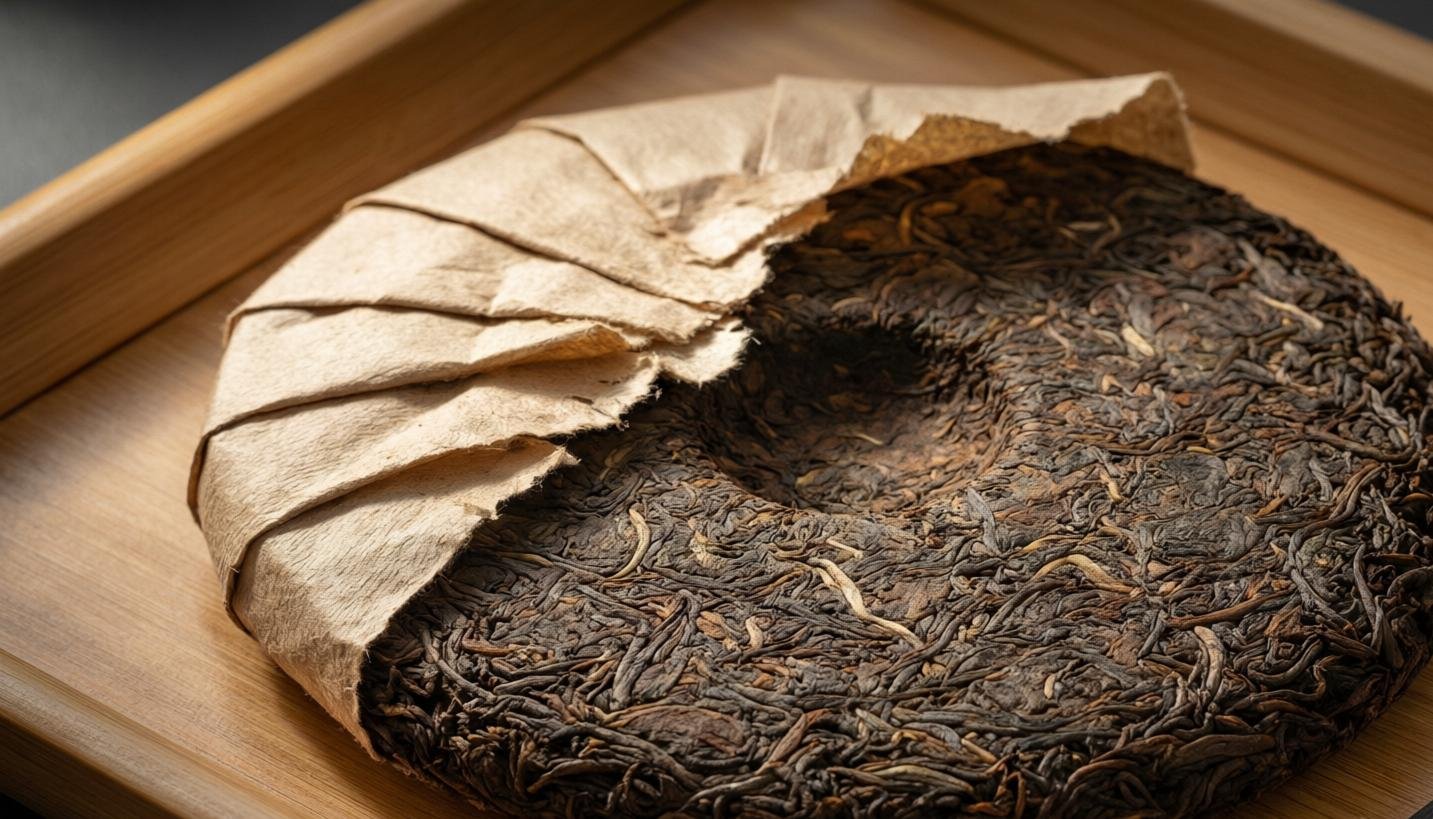
What “Organic” Actually Means for Pu-erh Tea
Under the USDA National Organic Program, a tea sold as organic in the United States must be produced and handled according to 7 CFR Part 205, including annual inspection and approval of allowed inputs [1]. In the European Union, Regulation (EU) 2018/848 sets the legal baseline for organic production and labelling [2]. China has its own organic production standard, GB/T 19630-2019, which covers production, processing, labelling, and management requirements [3].
For pu-erh specifically, the product standard GB/T 22111-2008 defines the basic identity and quality framework for raw and ripe pu-erh tea [4]. Organic certification does not replace that product standard. It adds a layer of production control.
The practical point for buyers is this: organic certification reduces the risk of prohibited pesticide use, but it does not guarantee zero residues. Residues can still appear from soil history, water, airborne drift, or handling. That is why a current lot-level laboratory report matters as much as the certificate.
The 3-Tier Ranking Framework
Because organic certificates are tied to lots and facilities, a shortlist of brand names is less useful than a tier model. Rank any organic pu-erh supplier against these three levels.
Tier 1: Certified, Lot-Specific, Fully Traceable
A Tier 1 organic pu-erh offer should include:
- A current USDA, EU, or China organic certificate with the operation name, address, and product scope.
- The certificate number and validity period, not a supplier-level statement.
- A lot-level lab report for pesticide residues, heavy metals, and moisture.
- A named origin: village, mountain, harvest year, and raw or ripe processing.
- Storage history and aging notes, especially for pressed cakes.
This is the purchase class to prioritize when you need verifiable organic claims in regulated markets.
Tier 2: Certified but Less Specific
Tier 2 covers genuinely certified product that is still broad. For example, the certificate may cover tea processing, but the finished lot blends material from multiple Yunnan counties and is sold as generic “Yunnan pu-erh.”
It can be acceptable for private label or cost-sensitive blends, provided the certificate remains active and the blend profile is consistent. The trade-off is traceability. If your customer asks which village the leaves came from, Tier 2 often cannot answer with confidence.
Tier 3: Organic Language Without Certification
Terms such as “wild,” “natural,” “clean,” “eco-friendly,” or “traditional garden” are not organic certification. In most regulated markets, only certified product may legally carry an organic claim [1], [2]. A Tier 3 offer should not be used for an organic-labelled finished product, no matter how clean the seller says the tea is.
How to Vet a Brand Before You Buy
Work from documentation, not from the wrapper.
- Check the certificate number in the USDA Organic Integrity Database or with the relevant EU control body [5].
- Confirm the certificate scope includes tea processing and the specific facility, not only the farm.
- Ask for a product-level organic certificate, not a supplier-level trading certificate.
- Match the lot number on the lab report to the lot number on the invoice and wrapper.
- Screen residue limits against your destination market using the EU Pesticides Database or the equivalent national database [6].
| Check | Why It Matters | Acceptable Evidence |
|---|---|---|
| Certificate validation | Expired or revoked certificates are common | Active record in the Organic Integrity Database [5] |
| Batch traceability | Prevents lot swapping | Same lot number on report, invoice, and label |
| Pesticide residue screen | Organic claim still requires MRL compliance | Residues below destination-market limits [6] |
| Heavy metal screen | Tea can accumulate lead and cadmium | Quantified results on a lab report |
| Product standard | Organic label does not define pu-erh quality | GB/T 22111-2008 reference on specification [4] |
Why Lab Tests Matter More Than the Word “Organic”
A certificate is an audit of practices. A lab report is product data. For post-fermented tea such as ripe pu-erh, many importers also ask for moisture, water activity, and where relevant, mycotoxin screening. The exact list depends on the destination market and the age of the cake.
If a supplier is reluctant to share the most recent batch report, treat that as a larger red flag than a missing marketing story. Legitimate export-oriented suppliers are used to providing test reports with batch numbers.
Need a shortlist of verified organic pu-erh cakes matched to your market rules? Send your destination country, target grade, and planned MOQ to 427728483@qq.com and ask for current lot-level certificates and lab reports. The reply should be a narrowed set of compliant options, not a catalogue dump.
Start with the Lot, Not the Label
An organic pu-erh ranking should reward documentation quality, not brand storytelling. Before you compare price, lock down the certificate scope, batch traceability, and lab results. If the lot evidence is weak, a lower price is not saving you money; it is shifting compliance risk into your own warehouse.
To compare current organic raw and ripe options with verified documentation, contact 427728483@qq.com with your target market and volume. Ask for the certificate first, the lab report second, and the sample third.
FAQ
What does “organic pu-erh” actually mean?
It means the tea was produced and handled under an organic program such as USDA NOP, EU organic, or China’s GB/T 19630-2019 [1], [2], [3]. The certificate must cover the specific product and facility, not just the farm.
Does USDA organic certification mean zero pesticide residue?
No. Certification means production followed the allowed practices and inputs under the relevant standard [1]. Residues can still occur from historical soil, drift, or handling, which is why lot-level testing remains necessary.
Can aged pu-erh be organic?
Only if the tea was produced under an active organic certificate for that lot and maintained organic integrity during storage. Age alone does not make tea organic, and older material may pre-date certification.
How do I verify an organic certificate before a bulk order?
Look up the certificate number in the USDA Organic Integrity Database or confirm it with the EU control body listed on the document [5]. Then check that the scope covers tea processing and the facility named on the invoice.
Is organic pu-erh always better quality?
No. Organic status regulates production practices. Quality is determined separately by leaf grade, processing, storage, and sensory characteristics defined under standards such as GB/T 22111-2008 [4].
References
[1] USDA Agricultural Marketing Service, “Organic Regulations, 7 CFR Part 205.”
[2] European Parliament and Council, “Regulation (EU) 2018/848 on organic production and labelling of organic products.”
[3] State Administration for Market Regulation, “GB/T 19630-2019, Organic products—Requirements for production, processing, labelling and management system.”
[4] Standardization Administration of China, “GB/T 22111-2008, Product of geographical indication—Pu’er tea.”
[5] USDA Agricultural Marketing Service, “Organic Integrity Database.”
[6] European Commission, “EU Pesticides Database, Maximum Residue Levels.”