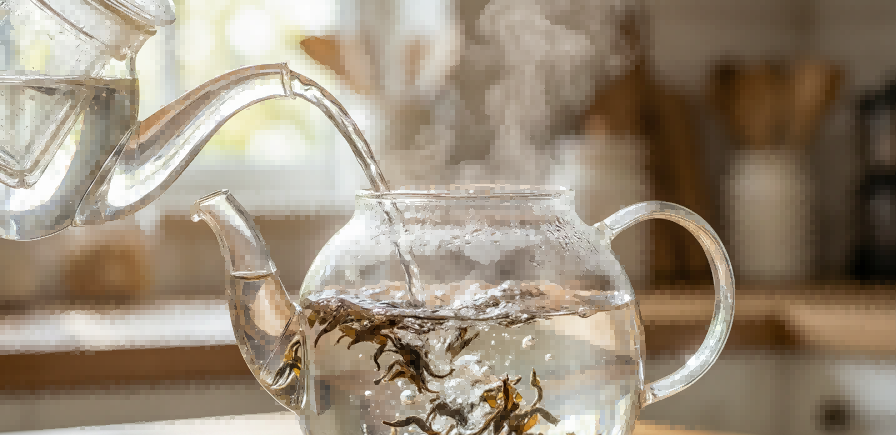
Yellow tea is the quiet specialist of Chinese tea: less grassy than green tea, softer than white tea, and often carrying a warm chestnut, honeysuckle, or cooked grain sweetness. That character comes from a rare processing step called men huan, or sealed yellowing, which tames the leaf after firing.
That same delicacy also means yellow tea punishes rough brewing. Water that is too hot makes it bitter. Too much leaf makes it heavy. Too much time in the pot flattens its sweetness and leaves a cooked, tired taste. This guide gives you the professional brewing parameters, step-by-step workflow, and style-specific adjustments used by tea buyers, café trainers, and wholesale suppliers.
Why Yellow Tea Is Brewed Differently From Green Tea
Yellow tea is often grouped with green tea, but it does not brew like a green tea.
Green tea is fixed quickly after plucking to lock in fresh, grassy, slightly astringent notes. Yellow tea goes through an additional damp, warm resting phase. That extra step lowers the bite, deepens the sweetness, and shifts the aroma toward cooked greens, hay, nuts, and floral honey rather than raw grass.
For brewing, this has two practical consequences.
First, yellow tea tolerates slightly more heat than ultra-delicate green buds, but it still cannot handle boiling water. The professional range is almost always between 75°C and 85°C, depending on the tea style.
Second, yellow tea rewards gentle extraction over long soaks. A short, controlled steep brings out the sweet middle without pulling the dry, astringent finish that emerges when the leaves stay in water too long.
The Professional Framework: Temperature, Ratio, and Timing
Professional yellow tea brewing rests on three variables. If you control these, you control the cup.
Water Temperature
Use 75–85°C water. For bud-only teas such as Junshan Yinzhen, stay closer to 75–80°C. For leaf-grade teas such as Huoshan Huangya or Mengding Huangya, 80–85°C works well.
If you do not have a variable-temperature kettle, bring water to a boil and let it rest for roughly two to three minutes before pouring into a cooling pitcher. In a cool room, always confirm with a thermometer rather than guessing.
Tea-to-Water Ratio
The standard western cup ratio is 1:50, meaning 3 grams of yellow tea for every 150 millilitres of water. This produces a clean, aromatic cup that is easy to reproduce across a café menu.
For gongfu-style brewing, use a higher ratio of roughly 1:20 to 1:25, or 4–5 grams per 100 millilitre gaiwan. Because the water volume is smaller and the leaf concentration is higher, steeping times must stay much shorter.
Steeping Time
In a western cup or teapot, the first infusion should be 2–2.5 minutes for most yellow teas. Later infusions can add 30–45 seconds each time.
In a gaiwan or small pot, the first steep should be only 30–45 seconds. Yellow tea leaves open quickly, so the first gaiwan infusion should never be left to sit for minutes.
| Brewing method | Leaf dose | Water volume | Ratio | Water temperature | First steep | Later steeps |
|---|---|---|---|---|---|---|
| Western cup or teapot | 3 g | 150 ml | 1:50 | 75–85°C | 2–2.5 min | +30–45 sec |
| Gongfu or gaiwan | 4–5 g | 100 ml | 1:20–1:25 | 75–80°C | 30–45 sec | +10–20 sec |
| Café batch brewing | 10–12 g | 500–600 ml | 1:50 | 80°C | 2.5 min | Decant fully |
Step-by-Step Professional Brewing Method
Follow this sequence for a repeatable, clean cup.
- Warm every piece of teaware with hot water: cup, lid, sharing pitcher, and strainer.
- Dose the leaf accurately. A 0.1-gram scale is more reliable than a spoon for professional service.
- Heat fresh water to the target temperature. Avoid reboiling water that has sat in the kettle for a long time.
- Pour the water over the leaves in a steady, controlled stream. If you are using a glass cup, pour along the side to avoid churning the buds.
- Start the timer as soon as the water touches the leaf.
- At the end of the first steep, decant the tea completely. Do not leave leaves sitting in water between infusions.
- For later infusions, keep the same temperature and increase the time slightly. Most yellow teas give three to four good infusions.
- Taste, record, and adjust. If the cup is bitter, lower the temperature on the next attempt. If it is thin, add a little leaf or extend the first steep by 20 seconds.
Brewing Parameters by Yellow Tea Style
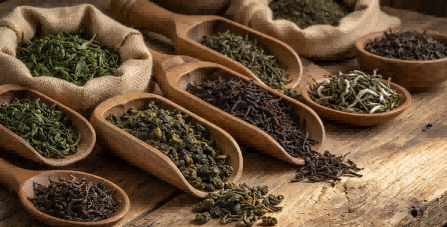
Yellow tea is not one product. A bud-only Junshan Yinzhen needs different handling from a larger-leaf Huoshan Huangya.
| Yellow tea style | Leaf form | Water temperature | Western steep | Gongfu steep |
|---|---|---|---|---|
| Junshan Yinzhen | Bud only | 75–80°C | 2–2.5 min | 30–40 sec |
| Mengding Huangya | Bud or one bud one leaf | 78–82°C | 2–2.5 min | 30–45 sec |
| Huoshan Huangya | One bud one or two leaves | 80–85°C | 2.5–3 min | 40–50 sec |
| Mogan Huangya | One bud one leaf | 80–85°C | 2–2.5 min | 35–45 sec |
| Pingyang Huangtang | One bud one leaf | 78–82°C | 2–2.5 min | 35–45 sec |
| Aged or larger-leaf yellow tea | More open leaf | 82–85°C | 2.5–3 min | 45–55 sec |
The table is a starting point, not a fixed law. Every new lot should be cupped and adjusted for leaf size, roast level, and age.
Choosing Water and Teaware
Water
Use soft, neutral-tasting, low-mineral water. Hard water or heavily chlorinated tap water makes yellow tea taste chalky, dull, or metallic.
If your local water is not suitable, use a clean spring water or a good filtered water. Do not use distilled water alone; a completely flat mineral profile tends to produce a hollow cup.
Teaware
Glass and porcelain are the safest choices for yellow tea. Glass lets you watch the buds stand and settle, which is useful for customer presentation. Porcelain keeps heat even and does not steal aroma.
Avoid unglazed clay pots for delicate yellow teas unless you are testing a dedicated pot. Porous clay can mute the top notes and absorb the tea’s lighter sweetness.
Tools
A variable-temperature kettle, a 0.1-gram scale, and a timer are the core professional tools. If you serve yellow tea in a café or tea room, a simple brewing spec sheet removes most inconsistencies between staff members.
Common Yellow Tea Brewing Mistakes
The same faults appear again and again in yellow tea service. They are easy to fix.
- Water too hot. This creates a sharp, stewed, or bitter edge and hides the tea’s natural sweetness.
- Too much leaf. A heavy dose makes the liquor thick and astringent before the aroma can develop.
- Steeping too long. Yellow tea does not improve with long western steeps. Longer time usually adds dryness, not richness.
- Skipping the preheat. Cold cups pull heat from the water immediately, making the first infusion weak.
- Using stale or poorly stored tea. Yellow tea is sensitive to light, air, and humidity. If the dry leaf smells flat or papery, no brewing adjustment will restore it.
- Treating all yellow teas the same. Bud-only and leaf-grade lots need different temperatures and times.
- Leaving leaves in the water. If you brew in a glass cup, drink or decant the first infusion when ready. Repeated infusions should be poured off fully.
Dialing In a New Lot Like a Professional Buyer
Wholesale buyers and café trainers do not trust a printed brewing guide alone. They cup each new lot before putting it on a menu.
Start with the supplier’s recommended parameters. Then run a side-by-side trial: same leaf dose, but one cup at 75°C and one at 82°C. Taste both. If the lower-temperature cup is thin and the higher-temperature cup is astringent, the true range lies in the middle.
Write down the winning formula for that specific lot. Record the leaf weight, water volume, temperature, steep time, and whether the tea was rinsed. This becomes your house standard.
If you are buying yellow tea for volume service, ask your supplier for a brewing spec sheet and target grade rather than a generic description. A professional lot should come with enough product information to set the ratio and temperature before the first cup is made.
Need lot-specific yellow tea brewing parameters or wholesale samples for a menu or retail line? Contact us at 427728483@qq.com with your target grade, annual volume, and packaging requirement. We can provide sample lots and practical brewing notes for the teas we supply.
Frequently Asked Questions About Brewing Yellow Tea
What is the best water temperature for yellow tea?
Use 75–85°C. Bud-only yellow teas such as Junshan Yinzhen brew best at 75–80°C, while leaf-grade teas such as Huoshan Huangya and Mengding Huangya handle 80–85°C.
How much yellow tea should I use per cup?
Use 3 grams of yellow tea per 150 millilitres of water for a western cup. This 1:50 ratio is the most reliable starting point for professional service.
Can yellow tea be brewed multiple times?
Yes. Most yellow teas give three to four good infusions. Keep the water temperature stable and add 30–45 seconds to the western steeping time for each later infusion.
Does yellow tea need to be rinsed before brewing?
For most high-grade yellow tea, a rinse is not necessary. If you do rinse, use a very short 3–5 second rinse at the same temperature and discard the water immediately.
What teaware is best for yellow tea?
Glass and porcelain are the best choices. Glass is excellent for presentation, while porcelain gaiwans keep heat even and are easy to control for multiple short infusions.
How should yellow tea be stored to keep it brew-ready?
Keep yellow tea sealed, cool, dry, and away from light and strong odours. Once opened, use it within a few months for the clearest aroma and the most consistent brewing performance.
Source Yellow Tea That Brews Consistently
Professional brewing starts with professional leaf. If you are an importer, café buyer, tea shop owner, or private-label brand looking for Chinese yellow tea, we can help you build a repeatable program.
Contact us at 427728483@qq.com with your target grade, leaf style, annual volume, packaging format, and destination port. We will respond with product options, sample availability, and brewing guidance matched to the lot.