Taiwan black tea is one of the clearest examples of how a small island can produce a disproportionately expensive tea. For buyers coming from large-volume black tea programs in Sri Lanka, India, Vietnam, or Kenya, the first quote can look like a mistake. The reality is that Taiwan black tea is not a commodity leaf. It is a short-supply, hand-managed specialty crop with a different cost structure from the farm gate onward.
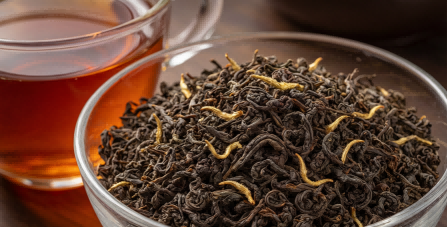
Taiwan Black Tea Is a Niche, Not a Commodity Crop
Taiwan’s total tea garden area has stayed in the low 10,000-hectare range for years, and black tea occupies only a portion of that land [2]. Green and oolong teas, especially high mountain oolong, compete for the same labor, the same processing facilities, and the same domestic demand. That competition alone puts a floor under prices.
The main black tea zones are Sun Moon Lake in Nantou, plus smaller areas in Hualien, Taitung, and a few northern foothill districts [6]. Sun Moon Lake black tea is anchored by cultivars bred by the Taiwan Tea Research and Extension Station, most famously TTES No. 18, better known as Ruby Black or Hong Yu [1]. TTES No. 8, an earlier Assam-type selection, remains important for more traditional black tea profiles, while TTES No. 21 Hong Yun gives buyers a malt-sweet option.
What separates Taiwan from mass-market black tea origins is not just cultivar. It is the default production model: small plots, selective plucking, short harvest windows, and processing designed to preserve single-origin character rather than standardize leaf.
The Price Drivers That Matter Most
Buyers tend to focus on flavor, then ask why the price is high. The better approach is to read the price backwards from the production risks.
| Price driver | What it does | Typical wholesale impact |
|---|---|---|
| Hand-plucking labor | Specialty black tea requires selective picking rather than machine shearing. | 35–55% of FOB cost |
| Cultivar yield | No. 18 and high-bud-standard No. 21 produce less marketable leaf per hectare than commodity Assam selections. | 20–40% above basic black tea leaf |
| Weather risk | Typhoons, prolonged spring rain, and heat stress shrink usable flush. | Spot spikes of 10–30% in affected lots |
| Processing time | Slow withering, careful rolling, full oxidation, and multiple drying passes extend production time. | 10–20% vs fast machine-processed black tea |
| Traceability and testing | Lot-level origin records, harvest date gaps, and MRL testing add cost but reduce reject risk. | 5–10% |
| Domestic competition | Taiwanese tea shops, gift retailers, and local consumers bid against exporters. | Keeps FOB offers firm |
Labor is the most important lever. Taiwan’s minimum monthly wage rose to NT$28,590 in January 2025, with a corresponding hourly rate of NT$190 [3]. Specialty tea does not pay minimum wage, but the legal floor drags the entire agricultural labor market upward. When a black tea lot is plucked by hand over several passes, labor is not a rounding error; it is the largest single line item.
Cultivar and Terroir: Why Ruby Black No. 18 Commands a Premium
Ruby Black No. 18 is a hybrid with Assam tea parentage and Taiwan’s wild native tea lineage [1]. It typically shows malt, dried fruit, cinnamon, mint, and sometimes camphor-like top notes. Those aromatics make it recognizable, but they come from a cultivar that is not the highest yielder.
Buyers should not confuse Ruby Black with honey black tea. Honey black tea, often made from smaller-leaf cultivars under leafhopper pressure, leans into honeyed, muscatel-like notes. Ruby Black is a more structured black tea with stronger malt and spice character. Both can be expensive, but for different reasons: Ruby Black for cultivar identity and cup distinctiveness, honey black for the insect-stress conditions that reduce usable leaf.
Terroir at Sun Moon Lake does not rely on the extreme altitude of Taiwan’s high mountain oolong. The lake’s microclimate, afternoon humidity, and mild diurnal shift give the tea a softer astringency and a rounder body than many high-grown Chinese or Indian black teas [6]. That regional style is part of the value, but it also means the tea cannot simply be replicated at lower cost in another origin while keeping the same name.
From Farm Gate to FOB: Where the Money Goes
A simplified cost chain for a specialty Taiwan black tea lot usually runs like this:
- Fresh leaf — priced by cultivar, plucking standard, and flush quality.
- Processing — withering, rolling, oxidation, and drying, often in small batches.
- Sorting and grading — stem removal, sieve grading, and visual inspection.
- QC and testing — moisture, pesticide residue, and cup confirmation.
- Packaging and export documentation — food-grade bagging, cartons, phytosanitary or buyer-required documents.
- Freight and insurance — premium air or consolidated sea freight depending on volume and freshness.
Here is an illustrative example, not an offer: if a 60 kg batch of sun-withered fresh Ruby Black leaf is purchased at a selective-plucking price, processed into roughly 12–13 kg of finished tea after moisture loss and sorting, and then packed into 5 kg food-grade bags, the per-kilo cost before margin and freight can easily pass US$60–90. Handmade, competition-grade, or micro-lot versions go materially higher. The point is not the exact number; it is that buyers should compare the full lot card, not just the per-kilo sticker.
Need to benchmark a specific Taiwan black tea offer? Send lot details, target grade, and volume to 427728483@qq.com. Our Chinese tea suppliers team cross-checks harvest dates, MRL reports, and current FOB quotes for Sun Moon Lake and Hualien lots before you commit.
How Buyers Can Evaluate Whether the Premium Is Justified
Taiwan black tea is worth the premium when the lot is verifiable and correctly graded. The most important checks are:
- Harvest date and flush — winter and spring lots often show cleaner floral notes; summer lots can be more robust but must be priced accordingly.
- Plucking standard — bud-and-one-leaf or bud-and-two-leaf affects yield and cup concentration.
- Oxidation level — bright liquor with good clarity usually indicates careful oxidation control rather than over-oxidized stewing.
- MRL and moisture reports — request lot-specific results rather than factory-wide statements.
- Cup-to-leaf ratio — a high price should survive multiple infusions, not collapse after the first steep.
When the documentation is weak, an expensive Taiwan black tea is just an expensive risk. When the documentation is strong, the premium is defensible because the buyer is paying for controlled supply, identifiable cultivar, and lower rejection probability.
Sourcing Taiwan Black Tea at a Defensible Price
For importers, the goal is not to find cheap Taiwan black tea. It is to find a lot where the price matches the grade, the harvest, and the cup. That usually means working with a sourcing partner that can separate genuine Ruby Black from blended or mislabeled material, compare weather-affected lots, and move quoted prices into a landed-cost model rather than a vague FOB number.
Our team regularly benchmarks Sun Moon Lake black tea offers against processing dates, plucking standards, and current export demand. Send yours to 427728483@qq.com for a practical landed-cost breakdown.
Frequently Asked Questions
Is Ruby Black No. 18 always more expensive than other Taiwan black teas?
Usually, but not always. TTES No. 8 can be produced in larger volume at a lower per-kilo cost, while No. 18 typically carries a premium for its aromatic profile and smaller supply. A poorly made No. 18 should not automatically command more than a well-made No. 8.
Does leafhopper damage make black tea more expensive?
Yes, in the specific case of honey black tea. Leafhopper-stressed leaves show distinctive honeyed and muscatel-like notes, but the insect pressure reduces yield and raises sorting labor. Ruby Black No. 18 does not depend on leafhopper damage for its core character.
Why are Taiwan black tea prices less flexible than those from Vietnam or India?
Taiwan has higher labor costs, smaller planted areas, strong domestic demand, and a production model built around small batches rather than commodity output. Suppliers often hold limited inventory and do not need to discount aggressively to move it.
How should importers verify harvest date and authenticity?
Request the lot card, harvest date, cultivar name, plucking standard, processing date, and lot-specific MRL report. Cup the tea against a known reference sample, and check that the liquor, spent leaf, and dry leaf all support the stated cultivar and grade.
Which Taiwan black tea format is best for first-time importers?
Most buyers start with 5 kg or 10 kg food-grade bags. This protects freshness, simplifies air or consolidated freight, and allows the importer to test multiple lots before committing to larger volume.
References
- Taiwan Tea Research and Extension Station, “Taiwan Tea Cultivars,” TRES, 2024. Available: https://www.tres.gov.tw/en/
- Ministry of Agriculture, Executive Yuan, “Agricultural Statistics Yearbook,” 2024. Available: https://agrstat.moa.gov.tw/
- Ministry of Labor, Taiwan, “Minimum Wage Adjustment,” 2025. Available: https://www.mol.gov.tw/
- Ministry of Agriculture, Executive Yuan, “Tea Industry Survey Report,” 2023. Available: https://www.moa.gov.tw/
- Taiwan External Trade Development Council, “Taiwan Tea Export Profile,” 2024. Available: https://www.taitra.org.tw/
- Nantou County Government, “Sun Moon Lake Black Tea Industry Overview,” 2023. Available: https://www.nantou.gov.tw/