Xiaguan pu-erh occupies a strange corner of the pu-erh market. It is respected, widely distributed, aggressively compressed, and often priced below prestige regions such as Laobanzhang, Bingdao, or Yiwu. That combination makes buyers ask a practical question: will those relatively affordable Xiaguan cakes and tuo become more complex, smoother, and more valuable over time?
The short answer is yes for raw Xiaguan, but conditionally. Aging is not a guarantee attached to the brand name. It is the interaction of processing, compression, storage, and time. Ripe Xiaguan is a different story: it typically softens for a few years after production, then stabilizes rather than transforming.
Before spending money on an aging experiment, it helps to separate what changes chemically, what changes on the palate, and where Xiaguan fits in the wider pu-erh picture.
What Xiaguan Tea Means in This Debate
Xiaguan Tea Factory, based in Dali, Yunnan, has been a major state-era and post-state pu-erh producer for decades. It is best known for compressed formats: tuo cha, iron cakes, and Tibetan brick tea. Much of its raw pu-erh uses blends rather than single-village declarations. That blending is important because it changes how the tea ages.
Single-origin raw pu-erh from a famous village often ages in a specific direction shaped by one terroir. Xiaguan blends, by contrast, tend to age toward a house style: smoke, bitterness that softens into plum, tobacco, honey, and a distinctive cooling aftertaste. The praise is not that every Xiaguan becomes a masterpiece; it is that many batches become enjoyable, drinkable, and more rounded than their aggressive young form.
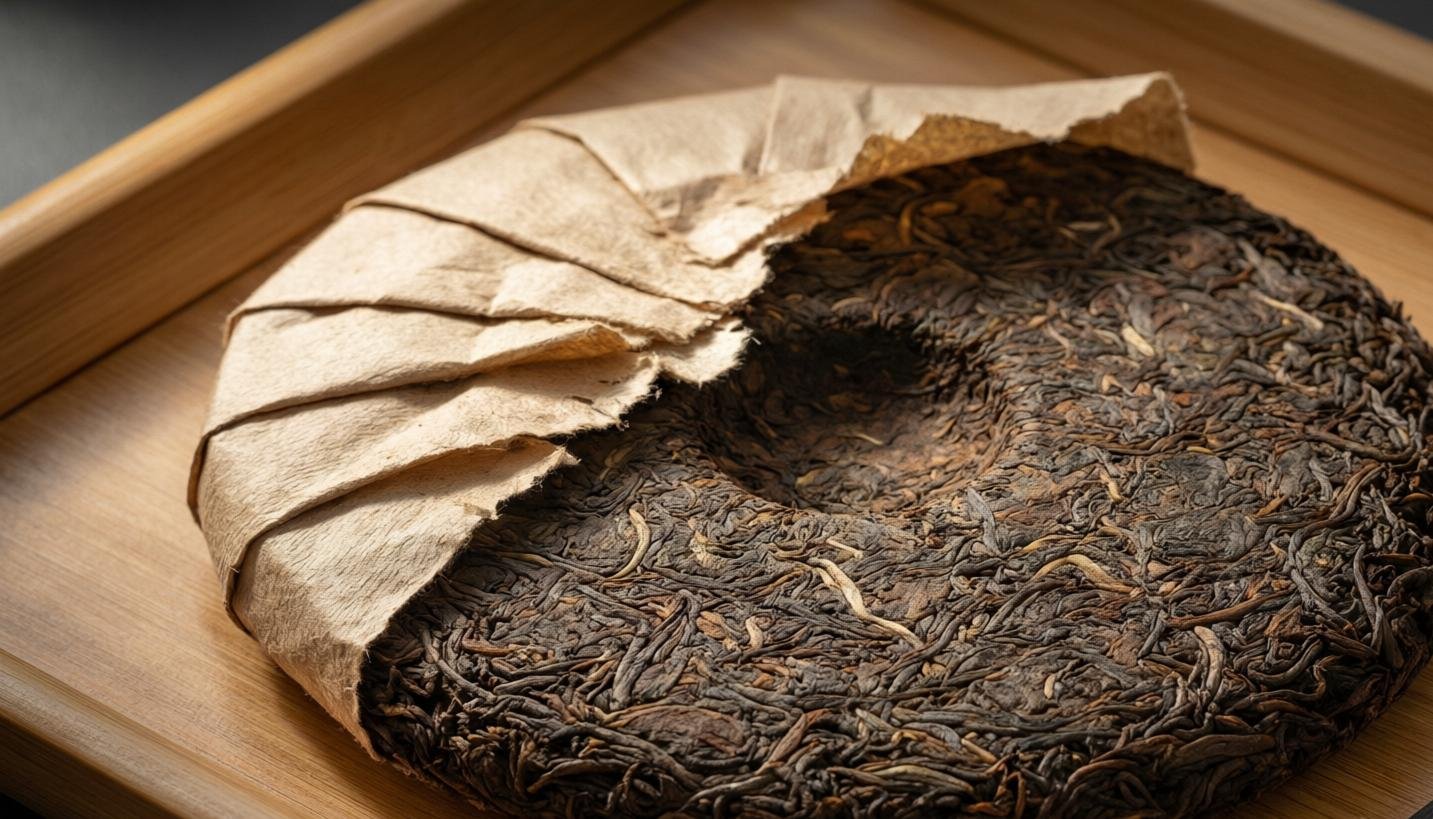
The first distinction to draw is between raw and ripe Xiaguan. Raw Xiaguan is the only category where long-term aging meaningfully improves the tea. Ripe Xiaguan is already fermented and can improve through a short resting phase, but it does not follow the same decades-long arc.
The Chemistry That Makes Aging Possible
A raw pu-erh cake is not static after pressing. Heat, moisture, oxygen, and the cake’s own microbial community slowly change its chemistry. A review of pu-erh processing and constituents reports that aging can reduce astringent catechins and increase gallic acid and other breakdown products [1]. As those changes accumulate, the tea becomes softer, darker in the cup, and less sharply bitter.
Metabolomics research comparing pu-erh samples at different aging stages found clear separations between young and aged material. The changes were not only cosmetic: the chemical profiles shifted in ways consistent with oxidation, microbial activity, and the gradual breakdown of larger polyphenols [3].
Raw Xiaguan follows the same basic mechanism. Its initial harshness comes partly from the material and partly from the factory’s processing and compression choices. Time does not eliminate the tea’s structure; it rebalances it. The smoke and bitterness do not disappear. They undergo a kind of movement, moving from the front of the palate toward the back of the throat, and their edges become rounder.
Ripe Xiaguan behaves differently because its key processing transformation has already occurred. The standard definition separating sheng and shou pu-erh is recognized in China’s geographical indication product standard [2]. Ripe tea is designed to imitate age through controlled fermentation, so additional years add much less complexity than they would to raw tea.
The Tasting Arc: Young, Transitional, Mature, Fully Aged
Raw Xiaguan aging tends to follow a recognizable sequence, although storage conditions can slow or distort each stage.
0–3 years. The tea is often punchy, smoky, lightly bitter, and tightly structured. Infusions may be yellow-amber. The most common complaints are sharp astringency in the finish and smoke that tastes more like fumes than integration.
3–8 years. The smoke begins to soften into tobacco or peaty notes. Bitterness stays present but no longer dominates the session. The liquor darkens toward orange-amber, and the mouthfeel becomes thicker. This is often the first stage where drinkers notice the trade-off: some early high notes are gone, but depth has increased.
8–15 years. The tea enters a softer middle period. Plums, honey, camphor, and older wood notes often emerge. The cooling aftertaste becomes more apparent. This is the window where many Xiaguan batches show the largest change in perceived value, especially if the storage was clean.
15+ years. Well-stored raw Xiaguan can develop a darker liquor and a composed, almost medicinal calm. Not every cake reaches this stage successfully. Some decline because the material was not strong enough or because storage introduced off notes.
These age bands are not formal quality grades. They describe general patterns reported by drinkers and echoed in aging studies, but individual cakes vary widely.
Xiaguan-Specific Aging Traits
Xiaguan cakes age differently from loosely pressed Yiwu or soft Bulang cakes for two practical reasons: compression and blend structure.
Xiaguan iron cakes are famously tight. High compression reduces air exchange inside the cake, which can slow oxidation relative to loosely pressed tea. Tuo cha are also dense, especially at the core. The practical result is that Xiaguan often starts harsh and takes longer to open up, but the slow curve can produce a more gradual, stable transformation when storage is correct.
The blend structure also matters. Xiaguan raw pu-erh frequently includes material selected for strength rather than early sweetness. That is why young Xiaguan is not always pleasant, but it also means the tea has enough backbone to evolve for years without collapsing into empty softness.
A useful rule for buyers is to taste Xiaguan before buying it as an aging candidate. If the tea is only bitter with no aftertaste, no cooling sensation, and no sweetness around the bitterness, time may not repair it. If the bitterness is intense but supported by sweetness, aroma, and a long finish, aging is more likely to reward the wait.
If you are comparing Xiaguan batches for long-term storage, ask for the production year, storage city, and a small brewed sample before committing to volume. For wholesale buyers building an aged-tea program, work with Chinese tea suppliers who can provide storage history and cupping notes. Contact us at 427728483@qq.com for current Xiaguan compressions and sample sets.
Storage: When Aging Becomes Ruining
Storage matters more than the name on the wrapper. Raw pu-erh needs moderate humidity, stable temperature, and enough air movement to age without mold.
Natural dry storage tends to preserve aroma and produce a cleaner, slower transformation. The risk is that dry-stored tea can remain harsh or thin for years. Wet or humid storage accelerates softening and darkens the tea quickly, but it can introduce mustiness, sourness, or an aggressive mellowing that flattens the tea’s structure in later years.
Good Xiaguan storage usually sits between those extremes. The tea needs enough moisture to support microbial activity and oxidation, but not so much that the paper wrapper sticks, the cake smells musty, or the surface grows visible mold. A stable environment with moderate airflow is safer than a hot, sealed container or a damp basement.
When evaluating an aged Xiaguan cake, check the nose first. Clean aged tea smells like dried fruit, beeswax, old wood, or warm leaves. A sharp sour note, a damp cardboard smell, a lingering chemical sweetness, or a moldy top note is a reason to avoid the lot no matter how old it is.
How to Buy and Store Xiaguan for Aging
The most reliable approach is to buy raw Xiaguan young, taste it for underlying sweetness and aftertaste, and then store it under conditions you control.
Store cakes away from direct sunlight, strong odors, and wide temperature swings. Avoid sealing raw pu-erh completely in plastic for long periods. Keep humidity moderate and inspect the tea every few months. The wrapper is not decoration: staining, looseness, or brittleness tells you something about how the cake was kept.
For drinkers who want aged results without waiting, buying a known clean-stored batch is usually a better value than buying a famous aged label without proof of storage. Ask for the storage region, approximate humidity range, and a current brewed sample. A photograph of the wrapper is not enough to judge whether a tea has aged well.
Source Xiaguan Pu-erh with Storage History You Can Verify
If you are sourcing Xiaguan pu-erh for resale, private label, or an aged-tea collection, request the following before confirming an order:
- Production year, factory batch code, and exact compression format
- Storage city and storage type, including dry or humid storage notes
- One brewed sample from the exact lot, not a representative photo
- Cupping feedback on bitterness, aftertaste, smoke integration, and liquor color
- Moisture or storage inspection notes for older material
Email us at 427728483@qq.com with your target market, desired age profile, and packaging requirements. We work with verified Chinese tea suppliers and can help you compare Xiaguan batches, storage histories, and wholesale pricing before you commit.
FAQ
Does ripe Xiaguan improve with age?
Only modestly. Ripe Xiaguan often benefits from resting for several months to a few years after production, which lets the pile-fermentation character settle. After that, it changes slowly. It does not develop the same layers of aged complexity as raw Xiaguan.
At what age does raw Xiaguan usually taste best?
Many drinkers find the 8-to-15-year window most interesting under clean storage. The tea is no longer dominated by sharp smoke and bitterness, but it still retains structure and depth. Some cakes peak later, and some are already enjoyable at five years.
Is wet-stored Xiaguan better or worse?
It depends on what you want. Wet storage ages tea faster and creates a darker, heavier, often mustier style. It is not automatically bad, especially for traditional Hong Kong-style drinkers, but it is harder to evaluate and easier to get wrong. Clean storage is a safer starting point for most buyers.
Does Xiaguan need special aging conditions compared with other pu-erh?
Because Xiaguan cakes are tightly compressed, they can take longer to open up than loose-pressed cakes. They respond well to stable humidity and moderate air exchange. The same principles apply as with other raw pu-erh, but patience is more important.
Is older Xiaguan always more valuable?
No. Age alone does not create value. The tea must have been decent raw material, pressed cleanly, and stored well. A poorly stored old cake can be worth less to buyers than a clean younger one. Age is a multiplier, not a guarantee.
References
[1] H. Lv, Y. Zhang, Z. Lin, and Y. Liang, “Processing and chemical constituents of Pu-erh tea: A review,” Food Research International, vol. 53, no. 2, pp. 608–618, 2013.
[2] GB/T 22111-2008, Product of geographical indication—Pu’er tea, Standardization Administration of China, 2008.
[3] K. M. Ku, J. Kim, H. J. Park, K. H. Liu, and C. H. Lee, “Metabolomics analysis reveals the compositional differences of Pu-erh tea with different aging periods,” Journal of Agricultural and Food Chemistry, vol. 58, no. 1, pp. 4181–4186, 2010.