If you source green tea for retail, food service, or private label, Zhejiang is the origin buyers name most often — and the one most often mislabeled. The honest ranking below is written from the wholesale seat: what a brand or estate label reliably delivers, what it hides, and how to verify it before you wire money.
What “Zhejiang Green Tea” Actually Means
Zhejiang green tea is not one tea. It is a family of regional greens grown across eastern China’s Zhejiang province, a strip of humid hills and high-altitude gardens whose soil and cloud cover produce teas with a distinctive chestnut-and-orchid sweetness. The name most buyers know — Longjing — sits inside this family, but a competent ranking treats Longjing, Anji Baicha, Kaihua Longding, Jingshan, and Huiming as separate products with separate price logic.
The category is anchored by formal protections. GB/T 18650-2008 sets the geographical scope, cultivar rules, grade definitions, and processing requirements for Longjing tea [1]. That standard is the only national product-of-geographical-indication benchmark covering Zhejiang’s most famous green tea, and it is why honest suppliers specify production zone and grade on the label rather than selling “Longjing-style” tea. Any ranking that ignores this standard is ranking marketing language, not tea.
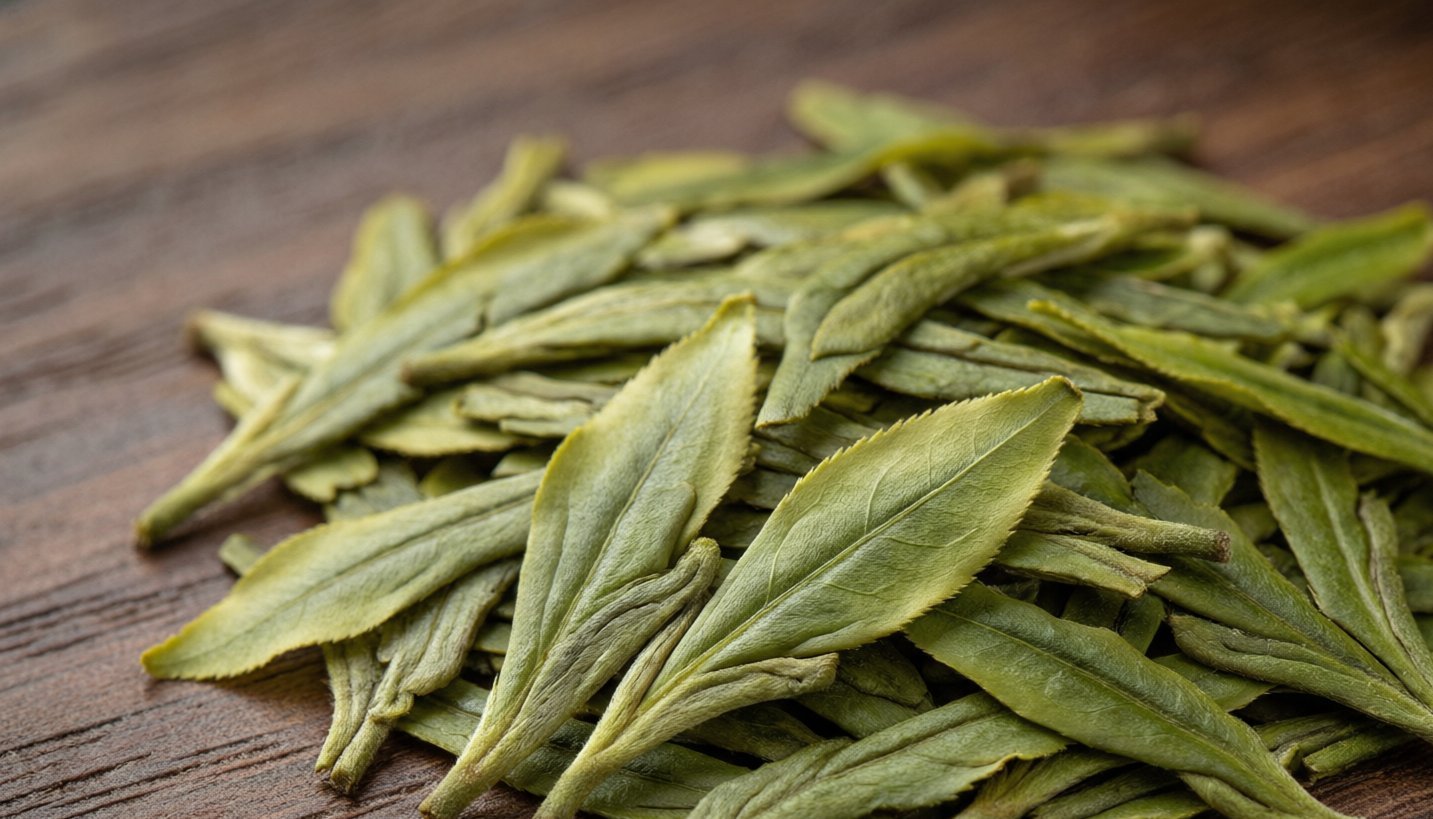
For wholesale buyers, “Zhejiang green tea” therefore means three practical questions on every offer: which county or village, which cultivar, and which harvest window. Sellers who cannot answer all three in writing are usually selling a blend of convenience, not an origin.
How We Ranked These Brands
Most published “best brand” lists rank packaging. This one ranks what an importer can enforce in a contract. A brand scores well here if it passes five tests: an auditable origin trail, compliant lot documentation, sensible grade-to-price spread, batch-to-batch consistency, and a supplier willing to hold a reference sample.
The cupping benchmark we use matches the national sensory evaluation method, GB/T 23776-2018, which standardizes how leaf appearance, liquor color, aroma, taste, and infused leaf are scored [2]. A brand that refuses comparative cupping against an agreed reference lot is not a brand worth ranking at all.
We also weight one factor most consumer lists ignore: how much of the quoted price reflects traceable leaf versus a gift-ready tin. A famous retail wrapper does not lower a buyer’s risk; a lab report and a defined production area do.
The Honest Ranking: Seven Categories Buyers Should Know
Rankings are grouped by what the label category actually delivers for importers, from most verifiable to most promotional.
| Rank | Category | Notable examples / areas | Reliable for | Watch out for |
|---|---|---|---|---|
| 1 | West Lake Longjing GI estate labels | Shifeng, Meijiawu, Wengjiashan, Longjing village lots | Strongest origin verification, high aroma | Highest price, tiny harvest window |
| 2 | Qian Tang / Yuezhou Longjing GI lots | Xinchang, Shengzhou, Shaoxing areas | Better volume-to-authenticity balance | Often blended, weaker estate identity |
| 3 | Anji Baicha GI brands | Baiye No. 1 cultivar lots from Anji | User-friendly flavor, modern compliance culture | “Anji-style” imitations from other provinces |
| 4 | Kaihua Longding GI production | Kaihua county gardens | Nutty, value-driven, dependable bulk | Less retail name recognition |
| 5 | Jingshan and Huiming regional teas | Jingshan temple-area, Jingning county | Solid cost-per-cup, private-label potential | Loose grading discipline among small mills |
| 6 | National retail brands | Lu Zhenghao, Wu Yu Tai, Gushan-grade offerings | Stable retail format, fast market entry | Higher markup, thinner origin transparency |
| 7 | Generic “Zhejiang Longjing-style” exports | Various trading companies | Price | Highest counterfeit exposure |
West Lake estate labels sit at the top for a reason beyond taste. Their GI registrations, administered through China’s national intellectual property framework, tie the name to a defined production zone with formal certification, which makes an origin audit possible [3]. The honest caveat is volume: authentic first-flush West Lake lots are small, so any seller offering unlimited kilograms of “Shifeng” at a flat price is describing a story, not a harvest.
Anji Baicha earns the third slot on compliance culture rather than age. The Anji Baicha GI similarly binds the name to a place and cultivar, and its modern production base has been quicker to adopt batch records and pesticide documentation [3]. That matters more to an importer than a one-point flavor difference.
Kailong, Jingshan, and Huiming teas are where honest private-label value lives. They rarely carry the counterfeit premium of famous names, which means the ratio of real origin to price is often better — provided the buyer enforces cupping against a sealed reference sample.
Price Realities and Red Flags That Trip Up Buyers
Price in this category moves almost entirely on four levers: production zone, harvest date, cultivar, and whether the lot is early spring bud-set or later leaf. Early-harvest core-estate lots command a steep premium; late-season and outlying-district material trades at a fraction. There is no honest fixed price list, only honest lot-by-lot quotes tied to those levers [1].
The red flags are structural, not subtle. A label that says “Longjing” but declines to name a defined production area under GB/T 18650 is a compliance problem before it is a taste problem [1]. A batch with no pesticide residue test keyed to GB 2763-2021, the national food-safety maximum residue limit standard, should be treated as unverified stock [4]. Anji Baicha offered in unlimited volume from outside Anji’s GI boundary is, by definition, not Anji Baicha in the protected sense [3].
One additional warning from years of sourcing: the most dangerous counterfeits are not obviously fake. They are real green teas from adjacent provinces, shaped and fired to imitate Longjing, then priced just below the authentic lot. Only side-by-side cupping with a known reference exposes them.
How to Vet and Buy Zhejiang Green Tea
Work backward from the standard, not from the sales sheet. Request the GI-zone certificate or production-area declaration, the harvest window, the cultivar, a batch-specific MRL report under GB 2763, and a physical reference sample sealed against the signed contract. Cup incoming lots against that reference using GB/T 23776 scoring for both dry leaf and liquor [2][4].
For first orders, start with one grade and one defined production area rather than a catalog spread. It is easier to hold a supplier to quality when your repeat orders are tied to a documented reference than when every lot is a new negotiation.
If you need an honest counterparty rather than another catalog, our team at Chinese tea suppliers sources Zhejiang green tea on a lot-by-lot basis with documentation you can audit. Write to us at 427728483@qq.com with your target grade, volume, and destination market, and we will return a quote tied to a defined production area, harvest window, and reference sample — not a story.
Work With Chinese Tea Suppliers
Our sourcing desk covers the Zhejiang, Fujian, and Yunnan ranges for importers and private-label programs. Tell us your market, annual volume, and target margin, and we will shortlist lots you can verify.
- Email: 427728483@qq.com
- Include: destination country, target grade or price band, annual volume estimate
- We reply with: GI documentation status, harvest window, sample availability, and a cupping-ready reference
FAQ
Is West Lake Longjing the only “real” Zhejiang green tea?
No. West Lake is the most famous protected sub-zone, but Zhejiang produces several legitimate GI teas, including Anji Baicha, Kaihua Longding, Jingshan tea, and Huiming tea. The distinction that matters for buyers is whether any of them is backed by an origin declaration, not whether it carries the Longjing name.
What does a buyer’s honest ranking actually rest on?
It rests on verifiable documents and comparative cupping: a defined production area, a harvest window, a batch-specific residue report, and a sealed reference sample scored under GB/T 23776. Anything less is a preference list, not a ranking [2].
What should a first-time importer budget for?
There is no honest fixed number. Early-harvest core-estate material is priced many times higher than later-harvest or outlying-district leaf. Request quotes tied to zone, harvest date, and grade, then compare the grade-to-price spread across suppliers [1].
How do I verify an origin claim?
Ask for the GI-zone certificate or production-area declaration, then confirm the lot’s residue report against GB 2763-2021 and cup a physical sample against a sealed reference. If a seller offers only a story about misty mountains, treat that as pricing risk [3][4].
How should Zhejiang green tea be stored after purchase?
Keep it cool, dry, sealed, and away from light and strong odors. Fresh green tea degrades faster than roasted or post-fermented tea, so buy in volumes you can turn within a realistic selling window rather than warehousing spring lots for years.
References
[1] GB/T 18650-2008, Product of geographical indication — Longjing tea, Standardization Administration of China.
[2] GB/T 23776-2018, Methodology for sensory evaluation of tea, Standardization Administration of China.
[3] Geographical indication registrations for West Lake Longjing and Anji Baicha, China National Intellectual Property Administration.
[4] GB 2763-2021, National food safety standard — Maximum residue limits for pesticides in food, National Health Commission of the People’s Republic of China.